
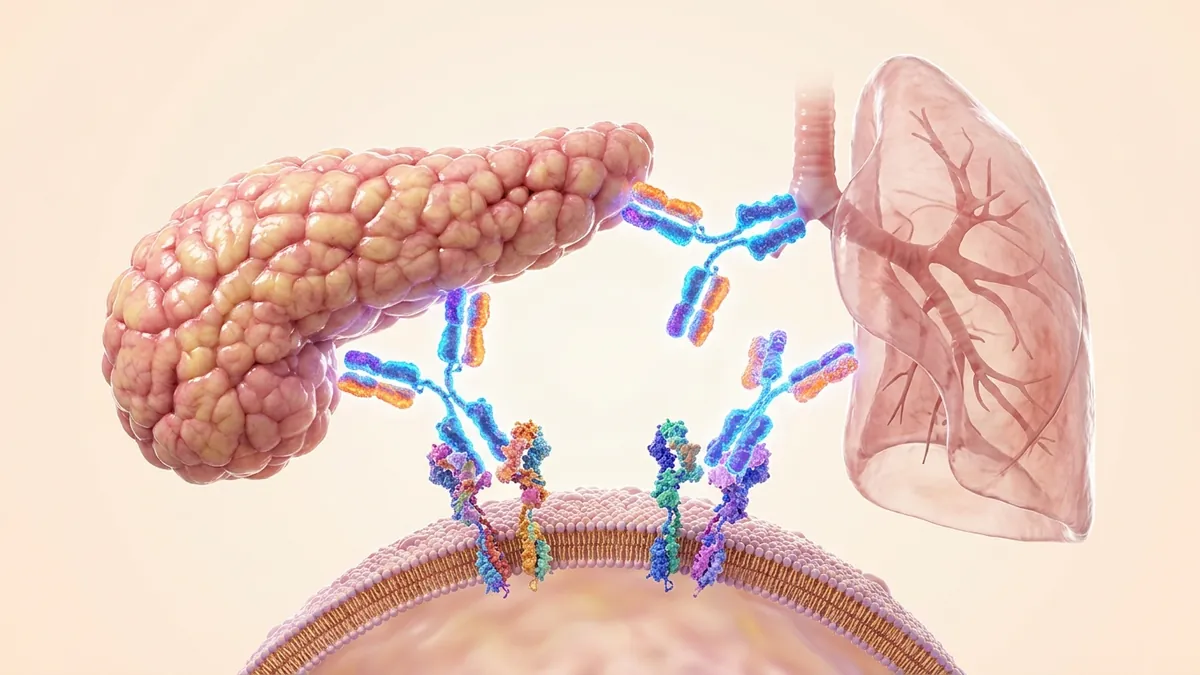
Finding out you or someone you love qualifies for Bizengri (Zenocutuzumab-zbco) HER2/HER3 Bispecific Antibody for NRG1 Fusion-Positive Lung and Pancreatic Cancer often brings a wave of relief mixed with dozens of practical questions. When standard chemotherapy or immunotherapy stops holding a tumor back, hearing that your cancer harbors an ultra-rare genetic change present in less than 1% of solid tumors sounds intimidating at first. Yet in precision cancer care, uncovering a specific target is one of the most encouraging breakthroughs we doctors hope to see on a pathology report.
Think about it for a second: instead of flooding every rapidly dividing cell in your body the way traditional chemotherapy does, this dual-target antibody acts like a custom-cut security lock on the exact growth switches driving your tumor. Granted accelerated approval by the U.S. Food and Drug Administration (FDA), it represents the very first systemic targeted medication approved specifically for adults with advanced, unresectable, or metastatic lung or pancreatic tumors carrying a neuregulin 1 (NRG1) gene fusion. Pretty remarkable progress, right?
Whether you are preparing for your first hospital infusion or helping a family member review molecular test results alongside your Primary Care Physician (PCP) / family GP clinic and specialist oncology team, clear answers make everything less stressful. Let us walk together through how this medication works, why specialized genetic testing matters, what infusion days look like, and how we keep you safe at home.
📌 Key Takeaways at a Glance
- First-in-Class Precision Therapy: Bizengri (zenocutuzumab-zbco) is the first FDA-approved targeted therapy for adults with advanced non-small cell lung cancer (NSCLC) or pancreatic adenocarcinoma carrying an NRG1 gene fusion after prior systemic treatment.
- Dual "Dock and Block" Action: Unlike single-target antibodies, it binds to both HER2 and HER3 cell-surface receptors simultaneously, stopping abnormal NRG1 fusion proteins from switching on cancer growth.
- RNA Testing Finds What DNA Misses: Standard DNA-only tumor panels frequently overlook NRG1 rearrangements; RNA-based next-generation sequencing (RNA NGS) is the gold standard for finding this biomarker.
- Predictable Biweekly Infusion: Patients receive a fixed 750 mg intravenous (IV) infusion over 4 hours once every 2 weeks at an oncology infusion clinic, preceded by simple allergy and fever premedications.
- Heart, Lung, and Pregnancy Safeguards: Because HER2/HER3 blockade can affect heart pumping strength, lung tissue, and fetal development, baseline heart scans (echocardiograms) and strict contraception are essential.
What Is Bizengri (Zenocutuzumab-zbco) HER2/HER3 Bispecific Antibody for NRG1 Fusion-Positive Lung and Pancreatic Cancer?
Bizengri (zenocutuzumab-zbco) is a targeted intravenous prescription antibody used to treat adults with advanced, unresectable, or metastatic non-small cell lung cancer and pancreatic adenocarcinoma carrying an NRG1 gene fusion. Prescribed after prior systemic chemotherapy or immunotherapy stops working, it locks onto HER2 and HER3 proteins to halt tumor growth.
To understand why oncologists welcomed this medication so enthusiastically, look at what patients faced before its arrival. Both advanced non-small cell lung cancer (pulmonary carcinoma / NSCLC) and pancreatic cancer (pancreatic ductal adenocarcinoma / PDAC) driven by NRG1 fusions historically responded poorly to standard platinum chemotherapy and immune checkpoint inhibitors. Have you ever wondered why two patients with the same cancer name respond so differently to the exact same drip? Their tumors run on completely different internal wiring.
In the landmark international Phase 2 eNRGy clinical trial supporting FDA accelerated approval, zenocutuzumab-zbco shrank tumors significantly across heavily pretreated adults. Specifically, FDA-reviewed trial cohorts showed an overall response rate of 33% in NRG1-positive NSCLC with a median response duration of 7.4 months, and an impressive 40% response rate in NRG1-positive pancreatic adenocarcinoma lasting between 3.7 and 16.6 months. Even better, side effects were predominantly mild to moderate, allowing nearly all participants to stay on therapy without quitting due to drug toxicity. Encouraging news for a tough diagnosis, isn't it?
How Does This HER2/HER3 Bispecific Antibody Work Against NRG1 Gene Fusions?
Let us break down the biology in plain, everyday terms. Inside healthy cells, the NRG1 gene makes a signaling protein called neuregulin 1, which helps nerves and heart muscle develop normally. Occasionally, two chromosomes break and rejoin by mistake, fusing the NRG1 gene onto a neighbor gene such as CD74 or ATP1B1. That hybrid gene acts like a stuck accelerator pedal, anchoring abnormal NRG1 fusion proteins right onto the tumor cell surface.
Look at what happens inside the cell next: that abnormal NRG1 protein grabs onto a surface receptor called human epidermal growth factor receptor 3 (HER3), forcing HER3 to pair up in a tight molecular handshake with its partner, HER2. Once HER2 and HER3 lock together (heterodimerization), they fire up a powerful internal survival chain known as the PI3K-AKT-mTOR pathway, telling the cancer cell to multiply nonstop.
Standard single-target antibodies struggle to pry that handshake apart when NRG1 levels are sky-high. Bizengri solves this using a clever "Dock and Block" design:
- Step 1 — Docking onto HER2: One arm of this Y-shaped bispecific immunoglobulin G1 (IgG1) antibody anchors firmly onto nearby HER2 proteins on the tumor surface.
- Step 2 — Blocking HER3 and NRG1: Its second arm swings right into position to shield HER3, physically blocking the NRG1 fusion protein from landing and stopping HER2 and HER3 from pairing up.
- Step 3 — Recruiting Immune Cells: Engineered as a low-fucose antibody, it also flags the tumor cell so natural killer immune cells can destroy it directly (antibody-dependent cellular cytotoxicity / ADCC). Now that makes sense, right?
Why Is RNA Next-Generation Sequencing Essential to Detect an NRG1 Fusion?
Before anyone can receive zenocutuzumab-zbco, laboratory testing on tumor tissue must confirm an NRG1 gene fusion. Here is something we rarely stop to think about, do we? Not all "comprehensive genetic panels" read your tumor's code the same way, and relying solely on an older DNA test can accidentally miss this exact target.
Why does DNA sequencing miss it so often? The NRG1 gene contains massive stretches of non-coding filler DNA (large introns) where chromosome breaks hide like needles in a haystack. When a hospital pathology lab uses RNA-based next-generation sequencing (RNA NGS), all that filler is already spliced out, allowing the machine to spot the fused active message clearly. In major cancer center studies where tumors underwent both tests, RNA sequencing caught over 90% of pathogenic NRG1 fusions that DNA-only panels missed!
We doctors encourage you to ask your oncologist specifically about RNA fusion testing if your biopsy shows either of two classic clues:
- KRAS Wild-Type Pancreatic Cancer: Over 90% of pancreatic ductal adenocarcinomas carry a KRAS mutation, especially in older adults. When a patient — often younger — has KRAS wild-type (normal KRAS) pancreatic cancer, the odds of finding an actionable NRG1 fusion jump dramatically.
- Driver-Negative Mucinous Lung Adenocarcinoma: Non-smokers or light smokers diagnosed with invasive mucinous adenocarcinoma of the lung whose initial tests are negative for common targets like EGFR, ALK, or ROS1 carry a much higher rate of NRG1 fusions.
What Is the Exact Dosing Schedule, Premedication, and Heart Screening for Bizengri?
Remember how we talked earlier about normal NRG1 proteins supporting healthy heart muscle? Because HER2 and HER3 receptors also sit on heart muscle cells, your oncology team and your Primary Care Physician (PCP) / family GP clinic follow a structured checklist before and during therapy. What do you think — isn't it reassuring to know safety checks happen proactively before your very first drip?
Pre-Treatment Medical Checklist
- Baseline Heart Pumping Scan: Every patient needs a baseline heart ultrasound (transthoracic echocardiogram) or nuclear heart scan (MUGA scan) to measure left ventricular ejection fraction (LVEF — the percentage of blood pumped out with each heartbeat), repeated periodically during treatment.
- Pregnancy Testing and Contraception: Bizengri carries an FDA Boxed Warning for embryo-fetal toxicity. Women who could become pregnant require a negative pregnancy test before starting and must use reliable birth control during treatment and for 2 months after the final infusion (and avoid breastfeeding during that same window).
Biweekly Infusion Schedule and Regional Access
Unlike weight-based chemotherapy, Bizengri uses a flat adult dose of 750 mg diluted and infused intravenously over 4 hours once every 2 weeks until the cancer progresses or side effects require stopping. Before each drip, nurses give premedications — acetaminophen (paracetamol, 1,000 mg), an H1 antihistamine, and before the first dose (optional later) dexamethasone (10 mg) — to prevent chills or infusion reactions, followed by a 1-hour observation after your first infusion. In the United States, it is prescribed under FDA accelerated approval; in the United Kingdom, Canada, and Australia, where national routine formularies differ, specialist cancer centers explore clinical trials, named-patient programs, or pathways such as Health Canada's Special Access Program.
How Do Clinical Findings, Side Effects, and Safety Checks Guide Your Care?
Most people receiving zenocutuzumab-zbco tell their care teams it feels noticeably gentler than multi-drug chemotherapy. Still, staying ahead of minor digestive shifts, lab changes, and heart or lung warnings keeps your treatment on schedule without unnecessary pauses. Notice that dose reductions are not used with this drug; instead, oncologists pause an infusion temporarily if a moderate reaction occurs and restart once your body recovers.
The 2-column guide below summarizes key clinical findings and exact action steps to discuss with your oncology clinic or GP:
| Clinical Finding or Side Effect | What It Means & Practical Action Step |
|---|---|
| Infusion-Related Chills, Fever, or Flushing | Mild-to-moderate infusion reactions (occurring most often during the first 4-hour drip) reflect temporary immune sensitivity to the antibody. What you should do: Alert your infusion nurse right away; the nurse can pause the drip, give soothing medication, and safely resume at 50% speed once symptoms settle. |
| Loose Stools, Mild Nausea, or Fatigue | Diarrhea (around 18% of trial patients), tiredness (12%), and mild nausea (11%) are the most common everyday effects of HER2/HER3 blockade in gut lining cells. What you should do: Sip clear broths, weak ginger tea, or oral rehydration fluids, eat bland low-fiber foods like white rice, plain oatmeal, bananas, or baked chicken, and ask your oncology team about anti-diarrheal tablets. |
| Drop in Heart Pumping Score (LVEF Below 50%) | If follow-up echocardiograms show LVEF between 45%–49% with a 10% or greater drop from baseline, or LVEF under 45%, the heart muscle needs a rest. What you should do: Your oncologist will pause Bizengri and repeat your heart scan within 3 weeks, restarting with 12-week monitoring only if pumping strength rebounds safely. |
| New Dry Cough or Breathlessness | Can signal lung tissue inflammation (interstitial lung disease / pneumonitis), an uncommon side effect that requires prompt distinction from tumor changes or infection. What you should do: Contact your oncology triage line the same day or visit Urgent Care / ER so doctors can arrange a chest scan and start steroid treatment promptly if needed. |
| Blood Count or Liver/Electrolyte Shifts | Routine labs may pick up mild low red blood cells (anemia), low platelets, low sodium or magnesium, or elevated liver enzymes like GGT before you feel anything. What you should do: Attend every pre-infusion blood draw at your clinic or local GP lab, and never take over-the-counter mineral supplements without checking with your cancer pharmacist first. |
Between hospital visits, simple home habits go a long way. Keep a small notebook or phone log of daily bowel movements, energy levels, and morning ankle appearance. Sharing that quick log with both your oncology nurse and your Primary Care Physician (PCP) / family GP clinic helps everyone spot subtle fluid retention or dehydration days before it turns into a bigger hurdle.
✔️ What You Should Do & ❌ What to Avoid
- ✔️ Do ask specifically for RNA fusion profiling: If standard DNA testing found no targetable mutation in lung adenocarcinoma or KRAS wild-type pancreatic cancer, ask your oncologist whether tissue RNA sequencing was completed.
- ✔️ Do keep every scheduled heart scan and blood test: Routine echocardiograms and pre-infusion blood panels catch quiet LVEF shifts, low sodium, or liver enzyme rises while they are still easy to reverse.
- ✔️ Do eat gentle, hydrating meals around infusion days: Small portions of dry toast, saltine crackers, plain porridge, mashed potatoes, applesauce, and baked poultry settle mild nausea or loose stools nicely.
- ✔️ Do use dependable contraception consistently: Maintain effective birth control throughout treatment and for a full 2 months after your final dose.
- ❌ Don't ignore swollen ankles or sudden weight jumps: Gaining several pounds or kilogrammes over a few days or noticing tight socks can be an early clue of heart fluid retention.
- ❌ Don't self-medicate with herbal remedies or supplements: Unchecked supplements can strain liver enzymes or mask electrolyte shifts; always clear new pills with your oncology pharmacist first.
- ❌ Don't tough out persistent vomiting or diarrhea at home: Waiting more than 12 hours when you cannot keep fluids down risks dangerous dehydration and kidney strain.
🚨 When to Seek Immediate Emergency Care (Red-Flag Symptoms)
If you or someone near you develops any of these red-flag symptoms, do not wait — call 911 (or 999 in the UK / 000 in Australia) immediately or go straight to the nearest hospital Emergency Room (ER / A&E):
- Sudden or worsening shortness of breath, wheezing, chest pain, or a persistent new cough with fever — potential signs of acute lung inflammation (pneumonitis) or severe cardiopulmonary distress.
- Swelling of the face, lips, tongue, or throat, hives, dizziness, or trouble breathing during or after an infusion — warning signs of a severe allergic reaction (anaphylaxis).
- Rapid swelling in both legs and ankles, sudden breathlessness when lying flat, or racing/irregular heartbeats — red flags for acute congestive heart failure.
- Yellowing of the whites of your eyes or skin (jaundice), tea-colored dark urine, or severe upper-right belly pain — signs of acute liver toxicity or bile duct blockage.
- Inability to keep liquids down for over 12 hours, fainting, or extreme confusion — signs of severe dehydration or critical electrolyte imbalance.
💡 Key Take-Home Message
- Targeted Hope for a Rare Biomarker: Bizengri (zenocutuzumab-zbco) turns a once hard-to-treat NRG1 gene fusion into an actionable target with meaningful tumor shrinkage and durable responses in lung and pancreatic cancers.
- Smart Testing Unlocks Access: Confirming an NRG1 fusion — ideally via RNA next-generation sequencing — is the essential key that qualifies patients after initial systemic therapy.
- Teamwork Protects Your Well-Being: Pairing biweekly 4-hour oncology infusions with steady heart scans, lab checks, and everyday support from your family GP keeps treatment as smooth and safe as possible.


No comments yet. Be the first to share your question or experience below.