
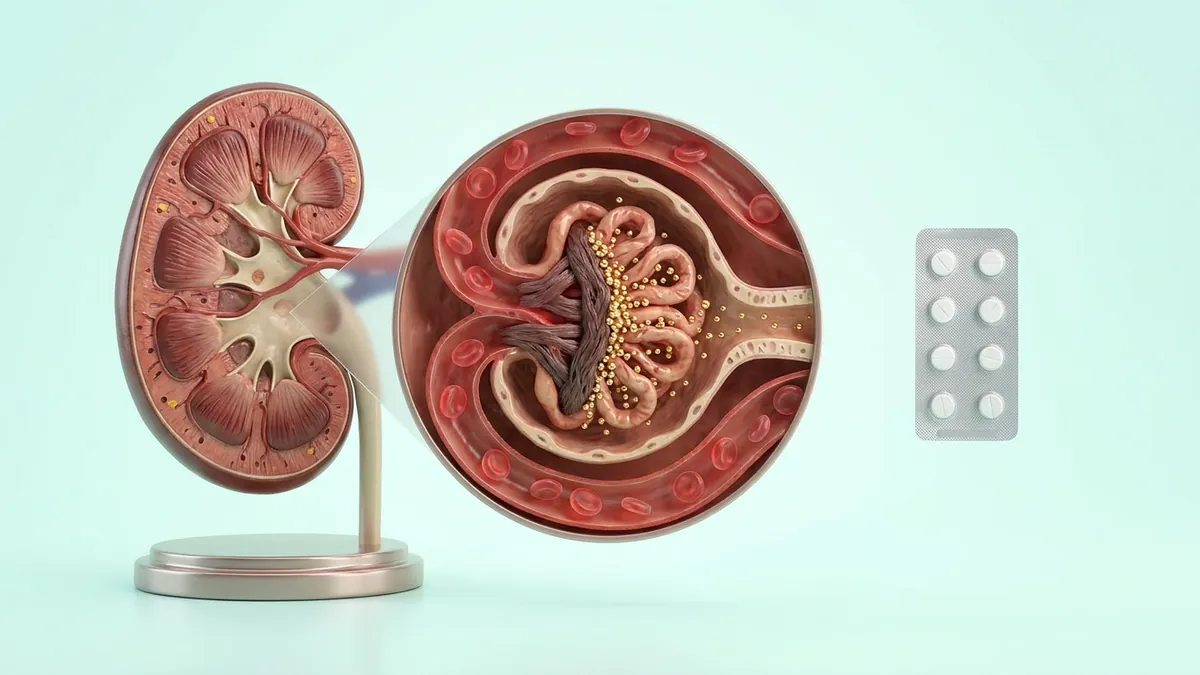
When your kidney specialist brings up Filspari (Sparsentan) Dual Endothelin-Angiotensin Blocker in IgA Nephropathy: Lowering Urine Protein & REMS Liver Tests, all those clinical terms can sound pretty intimidating at first, can't they? Yet behind that mouthful of medical wording sits one of the most encouraging advances we doctors have seen in decades for adults living with immune-related kidney filter inflammation (primary immunoglobulin A nephropathy, or Berger's disease).
Have you ever wondered why foamy urine matters so much even when you feel completely fine day to day? When excess protein in the urine (proteinuria) keeps spilling through delicate kidney filters month after month, that leaked protein physically scars the microscopic tubes downstream. For years, we doctors mainly relied on single-pathway blood pressure tablets or high-dose steroids that carried tough whole-body side effects.
Filspari changes that conversation by tackling two separate kidney-damaging hormone pathways inside one once-daily pill — without suppressing your immune system. Whether you get your care through a Primary Care Physician (PCP) in the United States, a family GP clinic across the UK, Canada, or Australia, or a hospital kidney clinic, understanding how this tablet works and why liver checks matter puts you firmly in control.
📌 Key Takeaways at a Glance
- Dual-pathway protection: Filspari (sparsentan) blocks both endothelin-1 and angiotensin II receptors inside one daily tablet, calming filter pressure and scarring without steroid immune suppression.
- Proven urine protein drop: In the landmark PROTECT trial, adults cut urine protein by roughly 50% at 36 weeks — more than triple the drop seen with maximum-dose irbesartan — and slowed long-term kidney decline.
- Never stack with ACEs or ARBs: You must stop standard blood pressure blockers like lisinopril, ramipril, losartan, or irbesartan before starting Filspari.
- Streamlined 3-month liver checks: Under updated FDA REMS safety rules, you need simple liver blood tests before starting and every 3 months during treatment.
- Strict pregnancy prevention: Because sparsentan can cause severe birth defects, reliable contraception is mandatory during therapy and for 2 weeks after your final dose.
What Is Filspari (Sparsentan) Dual Endothelin-Angiotensin Blocker in IgA Nephropathy and How Does It Lower Urine Protein?
Filspari (sparsentan) is a once-daily, non-immunosuppressive prescription tablet that slows kidney function decline and cuts excess urine protein by roughly 50% in adults with primary IgA nephropathy. It works by simultaneously blocking both endothelin-1 and angiotensin II receptors inside your kidney filters while requiring routine REMS liver blood tests every three months.
Think about it for a second: until recently, even patients faithfully taking top doses of standard blood pressure pills often watched their urine protein stay stubbornly high. After winning accelerated US approval in 2023, Filspari earned full FDA approval in September 2024 once two-year data confirmed it genuinely slows long-term loss of kidney function in adults at risk of progression. Across the Atlantic, the UK's MHRA and NICE (TA1074) have also backed sparsentan for eligible NHS patients, while kidney specialists (nephrologists) in Canada and Australia coordinate access through specialist renal programs.
In everyday practice, we family doctors work hand in hand with your nephrologist. Your specialist confirms your diagnosis and initiates the prescription through a certified specialty pharmacy, while your Primary Care Physician or family GP helps track your home blood pressure, ankle fluid, routine blood panels, and everyday medications so nothing clashes. Makes team-based care much smoother, right?
How Does Dual Endothelin and Angiotensin Blockade Protect Your Kidney Filters Compared to Standard Blood Pressure Tablets?
To see why this tablet performs differently, look closely at what happens inside your tiny kidney filtering units (glomeruli). In IgA nephropathy, your immune system produces slightly sticky, sugar-deficient immunoglobulin A antibodies that clump together and lodge inside the delicate support mesh of your kidney filters. Often, patients first notice pink or cola-colored blood in the urine (hematuria) right after a sore throat or chest cold, followed by persistent foamy urine.
Once those antibody clumps settle in, your kidneys panic and release two powerful chemical messengers: angiotensin II and endothelin-1. Angiotensin II squeezes the exit vessels of your filters, driving internal filter pressure sky-high, while endothelin-1 inflames filter cells, cracks open the protein barrier, and lays down stiff scar tissue. Standard blood pressure pills — like ramipril, lisinopril, losartan, or irbesartan — block angiotensin II alone, leaving endothelin-1 completely untouched to keep damaging the filter! Pretty surprising, right?
Sparsentan belongs to a class called Dual Endothelin Angiotensin Receptor Antagonists (DEARAs), selectively blocking both the endothelin-1 type A receptor (ETAR) and the angiotensin II type 1 receptor (AT1R) at the same time. Before prescribing it, your nephrologist uses a kidney biopsy to distinguish primary IgA nephropathy from look-alike conditions such as focal segmental glomerulosclerosis (FSGS), lupus nephritis, or post-infectious kidney inflammation. Clinicians generally target sparsentan when your urine protein-to-creatinine ratio (UPCR) stays at or above 0.75 to 1.0 g/g (roughly 88 to 113 mg/mmol in UK, Canadian, and Australian labs) despite supportive care, aiming to push protein loss well below 0.5 g/day — and ideally under 0.3 g/day.
What Is the Exact Filspari Dosing Schedule, Stepwise Titration, and Preparation Routine Before Starting?
Starting sparsentan is never a rush job — we doctors follow a careful checklist before you swallow tablet number one. First, if you can become pregnant, you must have a negative pregnancy test and have reliable contraception in place. Second, your team checks baseline blood work: your kidney filtering speed test (estimated glomerular filtration rate, or eGFR — typically at least 30 mL/min/1.73 m² at initiation), blood potassium, hemoglobin, and baseline liver enzymes (ALT, AST, and total bilirubin).
Third comes a golden safety rule: stop your existing ACE inhibitor or ARB before taking your first Filspari dose. Because sparsentan already contains a built-in angiotensin receptor blocker, taking it alongside losartan, valsartan, irbesartan, lisinopril, ramipril, aliskiren, or another endothelin blocker can cause dangerous drops in blood pressure, spikes in high blood potassium (hyperkalemia), or sudden kidney strain.
Once cleared, adult dosing for IgA nephropathy follows a gentle two-step climb:
- Days 1 to 14 (Starter Dose): Take 200 mg orally once daily so your blood vessels adjust smoothly.
- Day 15 Onward (Target Maintenance Dose): If your blood pressure, fluid balance, and labs look steady, step up to 400 mg orally once daily.
- Meal Timing Rule: Swallow your tablet whole with water prior to your morning or evening meal — and stick consistently to that same meal every single day so drug absorption stays predictable.
In the 404-patient PROTECT study, this 400 mg daily target slashed urine protein by 49.8% at 36 weeks versus just 15.1% on max-dose irbesartan, while preserving precious eGFR filtering capacity over two full years.
Why Does Filspari Require REMS Liver Blood Tests, and How Often Do You Need Monitoring Now?
Be honest — when you hear a medication carries an FDA Boxed Warning and requires enrollment in a Risk Evaluation and Mitigation Strategy (REMS) program, your stomach drops a little, doesn't it? Let's unpack why that safeguard exists and share some genuinely welcome news about how much simpler those blood tests have become.
Remember how we talked earlier about sparsentan blocking endothelin receptors? Historically, older medications in the endothelin-blocker family occasionally irritated liver cells, causing liver stress risk (hepatotoxicity). In clinical trials of Filspari, blood liver enzymes (ALT or AST) rose past 3 times the Upper Limit of Normal (3x ULN) in up to 3.5% of patients — yet almost all resolved cleanly without permanent liver damage once the tablet was paused.
When Filspari first launched in the US, patients had to get blood drawn every single month. However, in August 2025, the FDA updated the Filspari REMS program based on reassuring safety data:
- Quarterly Liver Blood Draws: You now check ALT, AST, and total bilirubin before starting treatment and once every 3 months thereafter (note that some UK, Canadian, or Australian renal clinics may still check monthly during the first few months based on local hospital protocol).
- Clear Pause Cutoffs: Avoid starting if baseline liver enzymes already exceed 3x ULN. If ALT or AST rises above 3x ULN during therapy, your doctor pauses Filspari and rechecks within days; if enzymes top 8x ULN or bilirubin climbs past 2x ULN alongside symptoms, the drug stays off permanently.
- Pregnancy Safety Without Monthly REMS Paperwork: While the FDA removed formal REMS pregnancy registry reporting, the Boxed Warning against pregnancy stands firm — effective birth control before starting, throughout therapy, and for 2 weeks after stopping remains essential.
How Can You Tell Expected Adjustments Apart From Warning Side Effects in Daily Life?
Just like we mentioned at the beginning, knowing which mild body shifts are routine — and which ones need a quick phone call to your family GP or renal nurse — takes the guesswork out of treatment. Below is a clear two-column guide you can check comfortably on your phone.
| Clinical Finding, Lab Shift, or Drug Interaction | What It Means in Your Body & Your Next Step |
|---|---|
| Mild dizziness when standing up | Because sparsentan relaxes blood vessels, low blood pressure (hypotension) is common during the first two weeks or right after stepping up from 200 mg to 400 mg. What you should do: Rise slowly from bed or chairs, stay sensibly hydrated unless fluid-restricted, log home blood pressure readings, and call your clinic if you feel faint. |
| New ankle puffiness or sudden 3–5 lb (1.5–2 kg) weight jump | Endothelin blockers can prompt kidneys to hold extra sodium and water, causing swelling in the ankles or feet (peripheral edema). What you should do: Weigh yourself each morning, cut salty foods, and alert your doctor promptly — a mild water tablet (diuretic) adjustment usually settles fluid retention quickly. |
| Liver enzymes (ALT/AST) above 3x ULN on quarterly labs | Signals silent chemical stress on liver cells, seen in roughly 3.5% of treated adults before any physical symptoms appear. What you should do: Pause Filspari immediately only as directed by your prescriber, avoid alcohol and unnecessary supplements, and repeat liver blood tests within 48 to 72 hours. |
| Serum potassium creeping above 5.0–5.2 mmol/L (mEq/L) | Blocking angiotensin II reduces potassium excretion in urine, increasing high blood potassium risk. What you should do: Ditch potassium-based "low-sodium" salt substitutes immediately and ask your doctor or renal dietitian whether to trim high-potassium foods or add a potassium binder. |
| Slight dip in hemoglobin (mild anemia) or initial eGFR dip | Mild fluid dilution can slightly lower red blood cell counts, and lowering filter pressure often causes a small, protective 10–15% initial dip in eGFR that stabilizes afterward. What you should do: Keep scheduled lab checks so your nephrologist confirms the numbers plateau safely rather than dropping past 30%. |
| Heartburn remedies, NSAID painkillers, or grapefruit | Acid reducers lower stomach acidity needed to absorb sparsentan, ibuprofen-style painkillers clamp down kidney blood flow, and grapefruit boosts drug levels excessively. What you should do: Space antacids 2 hours before or after Filspari, ask your doctor before using PPIs like omeprazole, skip NSAIDs completely, and avoid grapefruit juice. |
In everyday life across the US, UK, Canada, and Australia, simple kitchen habits supercharge how well Filspari lowers urine protein. Aim to keep daily sodium under 2,000 mg — hidden salt lurks everywhere from deli turkey, bacon, and canned soups to frozen pizzas, takeaway curries, pub meals, and savory yeast spreads like Vegemite or Marmite! Watch out for supermarket "heart-healthy" salt substitutes (such as LoSalt or Nu-Salt), since they swap sodium for potassium chloride and can push blood potassium dangerously high. And have you ever reached for ibuprofen (Advil, Motrin, or Nurofen) or naproxen (Aleve) for a headache without thinking twice? On sparsentan, stick to doctor-approved options for mild aches so you never squeeze kidney blood flow.
✔️ What You Should Do & ❌ What to Avoid
- ✔️ DO take your tablet before the same meal daily: Taking Filspari with water right before breakfast (or dinner) every day keeps blood levels steady.
- ✔️ DO keep every 3-month REMS liver appointment: Put quarterly lab dates in your phone calendar so pharmacy refills never stall and silent enzyme shifts get spotted early.
- ✔️ DO track morning weight and home blood pressure: Catching a sudden 2 kg (4–5 lb) fluid jump early lets your Primary Care Physician or renal team tweak care before swelling worsens.
- ❌ DON'T combine with ARBs or ACE inhibitors: Never restart leftover losartan, irbesartan, ramipril, or lisinopril bottles at home.
- ❌ DON'T take over-the-counter NSAIDs or potassium salt substitutes: Avoid ibuprofen, naproxen, diclofenac, grapefruit products, and potassium-enriched table salts.
- ❌ DON'T risk pregnancy: Stop the tablet and contact your specialist urgently if a period is missed or pregnancy is suspected.
🚨 When to Seek Immediate Emergency Care (Red-Flag Symptoms)
If you or someone near you develops any of these red-flag symptoms, do not wait — call 911 (or 999 in the UK / 000 in Australia) immediately or go straight to the nearest hospital Emergency Room (ER / A&E):
- Signs of acute liver injury: Yellowing of your skin or the whites of your eyes (jaundice), dark tea-colored urine (unrelated to a familiar mild cold-triggered IgAN flare), severe upper-right belly pain, persistent vomiting, fever, or sudden extreme exhaustion.
- Severe fluid overload: Sudden shortness of breath, needing extra pillows to breathe lying flat, or rapid swelling spreading up your legs or abdomen.
- Dangerous high potassium or blood pressure crash: Chest tightness, fluttering or irregular heartbeats, sudden muscle weakness, confusion, or fainting upon standing.
- Sudden kidney shutdown signs: Passing very little or almost no urine over 12 to 24 hours (for non-life-threatening after-hours advice in the UK, you can also dial 111, or visit a local Urgent Care center for mild symptoms, but never delay an ER / A&E visit for breathing, chest, or jaundice red flags).
💡 Key Take-Home Message
- Filspari (sparsentan) tackles both angiotensin II and endothelin-1 inside one daily non-steroid pill, cutting IgA nephropathy urine protein by roughly half and slowing long-term kidney loss.
- Stopping old ACE/ARB pills first, stepping smoothly from 200 mg to 400 mg before a consistent daily meal, and keeping simple 3-month REMS liver and potassium blood tests keep treatment safe.
- Pairing your prescription with low-salt meals, zero NSAID painkillers, and regular follow-up with your family GP and nephrologist gives your kidneys their strongest long-term protection.



No comments yet. Be the first to share your question or experience below.