
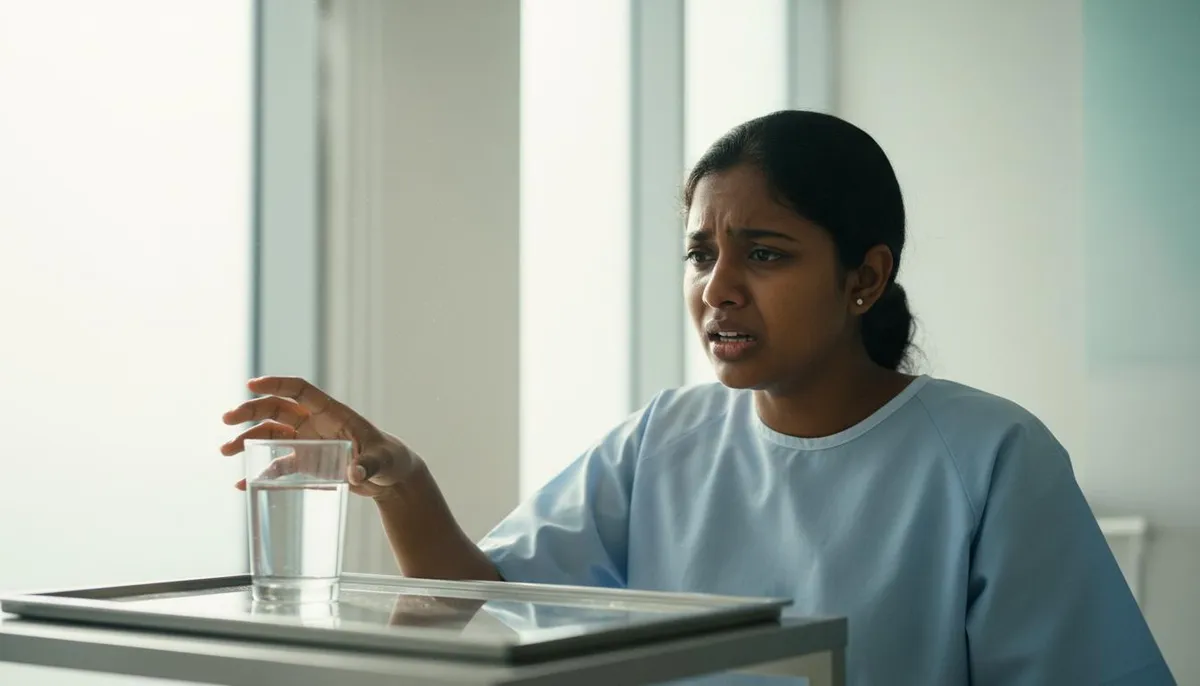
Do you also have an unbearable thirst? Do you feel like you can't drink enough water? Do you also have to go to the bathroom many times a day, sometimes even once or twice an hour? If you have to get up at night to urinate without sleeping properly, this is not something to be taken lightly. Today we are going to talk about a rare but treatable condition that shows similar symptoms. Previously, this was called 'Diabetes Insipidus'.
HbA1c ukax wilan glucosa ukar mayjt’ayi. HbA1c (%), mmol/mol, ukhamaraki glucosa promedio wilanxa mg/dL ukhamaraki mmol/L ukjamaraki mä ratuki mayjt’ayaña.
What is Arginine Vasopressin Disorder?
Simply put, this condition is when your body is producing too much urine. This means that your body is unable to retain enough water. The main reason for this is a problem with a hormone called Arginine Vasopressin (AVP) . Doctors also call this hormone AVP the Antidiuretic Hormone (ADH) . This AVP hormone plays a very important role in keeping the amount of fluid in the body balanced through our kidneys.
There are two main types of these situations:
1. AVP deficiency (AVP-D): This is when your body does not produce enough of the hormone AVP.
2. AVP resistance (AVP-R): This is when your kidneys don't respond properly to the hormone AVP. This means that even though the hormone is present, the kidneys don't use it.
What are the symptoms of this condition?
The main symptoms of AVP deficiency and AVP resistance are:
- Frequent need to urinate: A key symptom of this is having to get up to urinate not only during the day but also at night (Nocturia) .
- Passing large amounts of light-colored or watery urine: Normally, a person passes between 1 and 3 liters of urine per day. However, a person with this condition can pass up to 20 liters of urine per day. Imagine how much that is!
- Excessive thirst (Polydipsia): Feeling like you are not quenching your thirst no matter how much water you drink.
These symptoms are a strong signal that something is not working properly in your body. It is very important to seek medical advice as soon as possible.
How do these symptoms affect young children?
If this condition occurs in young children, the symptoms may be slightly different. Some of them include:
- Severe dehydration .
- Constipation.
- Vomiting.
- Frequent fevers.
- Showing a very agitated and irritable attitude.
- Growth faltering / Failure to thrive.
If babies or young children have these symptoms, they should definitely be seen by a doctor immediately.
Why do these arginine vasopressin disorders occur?
The reasons are varied, depending on the type mentioned earlier.
Causes of AVP deficiency (AVP-D)
Previously called central diabetes insipidus , this is caused by a lack of the hormone arginine vasopressin (AVP). This is the most common type.
This may be due to:
- Damage to the hypothalamus or pituitary gland (these are important parts of the brain that control hormones). This damage can occur from surgery or a head injury.
- Some genetic variations (Inherited gene variation)
- Formation of tumors .
- Inflammation / Granulomas caused by certain medical conditions, such as sarcoidosis or tuberculosis.
- Sometimes, the cause may not be found (idiopathic) . This means that in about half of the patients, the cause is unknown.
Causes of AVP resistance (AVP-R)
This type was previously called nephrogenic diabetes insipidus . In this case, the pituitary gland produces the hormone AVP, but the kidneys do not respond to it properly.
There are several reasons for this:
- Some genetic changes.
- Blocked urinary tract.
- Long-term use of certain medications , especially lithium .
- Increased calcium levels in the blood (Hypercalcemia) .
- Low potassium levels in the blood (Hypokalemia) .
A special type that occurs during pregnancy
This is called Gestational Arginine Vasopressin Disorder (gAVP-d) . This is very rare. During pregnancy, the placenta produces too much of an enzyme that breaks down the hormone AVP.
You are more likely to have this condition, for some reason :
- If you are carrying twins or more children .
- If you have a condition that affects liver function, such as preeclampsia or HELLP syndrome .
The good news is that this gAVP-d condition usually goes away two to three weeks after delivery.
What are the complications of this condition?
The main complication of AVP-D and AVP-R is dehydration , which is the loss of fluids and electrolytes needed for the body to function.
You can usually control your urine output by drinking more water than you need, but if you don't, you can become dehydrated very quickly.
Dehydration can be life-threatening. If you have symptoms of dehydration, such as dizziness, nausea, or extreme fatigue, go to the nearest hospital as soon as possible.
How do doctors detect this?
Because frequent thirst and urination can be caused by other common conditions, doctors first rule out other conditions when diagnosing AVP-D or AVP-R. If you have these symptoms, your doctor will likely order several tests.
When diagnosing this condition, it is necessary to determine whether it is AVP-D or AVP-R and what the cause is.
Diagnostic tests
- Water deprivation test: This is the most reliable way to diagnose AVP-D or AVP-R. You will be monitored closely during this test, as this can lead to dehydration. This test involves not drinking any fluids for several hours and seeing how your body responds. If you have this condition, you will continue to pass large amounts of watery, light-colored urine. If you do not have this condition, you will only pass a small amount of concentrated, dark yellow urine.
- Copeptin blood test: Copeptin is a byproduct of the hormone AVP.
- Blood glucose test: This is done to check for diabetes mellitus, which also has similar symptoms.
- Urinalysis: This tests the osmolality ( concentration of urine) and ketones in the urine.
- Imaging tests such as MRI scans (MRI - Magnetic Resonance Imaging): These are done to see if there is any damage to the pituitary gland or hypothalamus.
How are these AVP-D and AVP-R treated?
Treatment depends on whether you have AVP-D or AVP-R. Regardless of the treatment, it is important to drink plenty of water to avoid dehydration.
AVP-D (Deficiency) Treatment
Desmopressin is the main treatment for AVP-D. It is a drug that works in the same way as the hormone AVP. It can be taken in different forms (e.g., as a nasal spray, as a pill).
Desmopressin is sometimes used for the rare pregnancy condition (gAVP-d)''. However, sometimes during pregnancy, it can be controlled by drinking more water.
AVP-R (Resistance) Treatment
Treating AVP-R is a bit complicated. Sometimes several methods need to be used together. For example:
- Thiazide diuretics(Although these are a type of medication that increases urination, they work differently in this situation)
- Nonsteroidal anti-inflammatory drugs (NSAIDs)
If the AVP-R condition is caused by a medication you are taking, your doctor may be able to treat the condition by switching you to another medication.
When should I see a doctor?
If you have AVP-D or AVP-R, it is very important to see your doctor regularly for advice. This way, your doctor can perform tests to monitor your condition and make sure your treatment is working properly.
You may find it helpful to ask your doctor these questions:
- Do I have AVP-D or AVP-R?
- What is the reason for this?
- Is this a chronic (long-lasting) condition or a temporary one?
- What treatment options do I have?
- How much water should I drink a day?
- What else can I do to manage this situation?
- Is my family also at risk of developing arginine vasopressin disorder?
What can I expect if I have AVP-D or AVP-R?
The outlook (outcome) for AVP-D and AVP-R conditions is generally good. If you take proper treatment and drink enough water, you should not have any serious problems.
However, these people are at higher risk of complications:
- Babies
- People over 65 years of age
- People with certain mental health conditions or developmental disabilities
These people may have difficulty recognizing their thirst, or may be unable to take action on it.
Why isn't this called 'Diabetes Insipidus' now?
In 2022, several medical organizations decided to change the name of Diabetes Insipidus to Arginine Vasopressin Deficiency and Arginine Vasopressin Resistance. The main reason for this was the confusion caused by the word diabetes and the adverse health effects it caused.
When most people simply say "diabetes", they mean diabetes mellitus . It is caused by high blood sugar levels. It also has symptoms such as frequent thirst and urination. However, it is much more common than the conditions AVP-D and AVP-R (formerly called Diabetes Insipidus). Also, the treatment for diabetes mellitus is completely different from the treatment for AVP-D and AVP-R.
The word "diabetes" comes from the Greek word "diabetesine," which means "to pass through." That name is used because, as in diabetes, fluids pass through the body too quickly, which is what happens in these disorders of arginine vasopressin.
💡 Finally, I have to tell you... (Take-Home Message)
If you have AVP-D (arginine vasopressin deficiency) or AVP-R (arginine vasopressin resistance), you may feel like you spend most of your life in the bathroom, unable to quench your thirst no matter how much water you drink. But the good news is that these conditions can be controlled.
Your doctor will develop a treatment plan that works for you, and will also tell you how much water you need to drink per day to stay hydrated. Don't panic. Get your doctor's support and guidance. Remember, this is not "diabetes." That's why it's important to get a proper diagnosis and treatment. You're not alone, stay informed, and stay strong.






Janiw kuna arsuwinakas jichhakamax uñt’ayatäkiti. Aka chiqanx amuyt’awim jan ukax jiskt’awim yapxatañamawa.