

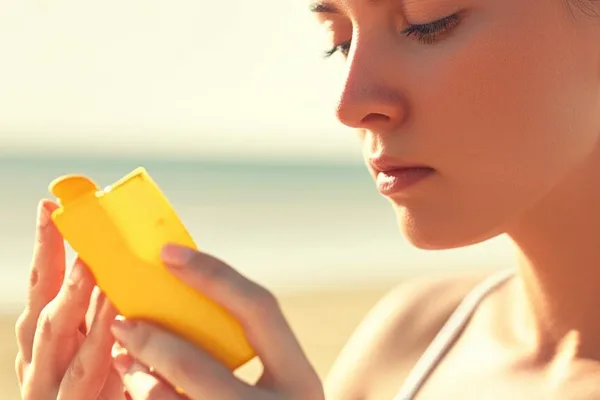
Remember that bottle of sunscreen you bought on your trip last year that's sitting in your cupboard? You probably want to use it before you go out in the sun again. But wait a minute... Before you put it on, remember to check the expiration date on the bottle. Because most sunscreen bottles have an expiration date printed on them. Once that date passes, we can't be sure of the protection it provides.
Generally, sunscreen products are supposed to maintain their original quality for up to three years by law. So, if your sunscreen bottle is not three years old, it’s okay to use it. But if the bottle doesn’t have an expiration date, write the date you bought it on the bottle with a permanent marker. That way, you’ll know exactly how long you can use it. Also, it’s best to store sunscreen bottles at room temperature. If you notice a change in color, smell, or consistency, it’s best to throw it away and get a new bottle. Okay, so before you buy a new bottle, let’s talk about some things that will help you choose the best sunscreen for you.
What should a good sunscreen contain?
There are a few key things to consider when choosing a sunscreen that will provide the best protection for your skin. Let's look at them one by one.
1. Does it say "broad-spectrum"?
The first thing you should look for when choosing a sunscreen is whether it is "broad-spectrum." Simply put, these protect our skin from both harmful UVA and UVB rays from the sun.
- UVA rays: These penetrate deep into the skin and are the main reason why the skin becomes wrinkled and looks older than it is.
- UVB rays: These are what cause the skin to burn, become red, and become painful.
A sunscreen labeled as broad-spectrum will protect you from both types of rays, so it's important to look for this word.
2. What is the SPF value?
The next most important thing to look for is the SPF (Sun Protection Factor) value. This measures the sunscreen's ability to protect your skin from UVB rays without burning.
Imagine, if you go out in the sun without sunscreen, your skin will turn red in 15 minutes. If you apply a sunscreen with SPF 30, you will be protected for 30 times that time, which is about 450 minutes.
MedicalExperts recommend choosing a sunscreen with at least SPF 30. Although there are values higher than SPF 50 (e.g. SPF 100), the additional protection they provide is not much different from SPF 50.
| SPF value | Protection from UVB rays |
|---|---|
| SPF 30 | Approximately 97% protection |
| SPF 50 | Approximately 98% protection |
| SPF 100 | Approximately 99% protection |
But remember, if you're playing in the water or sweating a lot, the sunscreen won't provide as much protection. So you'll have to reapply it more often.
3. Is it water resistant? (Water Resistance)
Not all sunscreens are water resistant. If you're going to be in the ocean, swimming pool, or sweating while playing sports, choose one that's labeled "Water Resistant."
- Water Resistant : These usually provide protection even if you stay in water for about 40 minutes.
- Very Water Resistant: These can provide protection for about 80 minutes.
But these are not "waterproof", only "water resistant". This means that their effectiveness will decrease after a while. Therefore , it is essential to reapply sunscreen after getting out of the water or after wiping off sweat.
Types of sunscreen and what they contain
Sunscreen can be divided into two main types: chemical and mineral . The ingredients and functions of these two are different.
| Type | Chemical Sunscreen | Mineral Sunscreen (Physical Sunscreen) |
|---|---|---|
| How it works | The skin absorbs the sun's rays, turns them into heat, and releases them through the skin, like a sponge. | The skin creates a physical barrier on the surface of the skin, reflecting and deflecting the sun's rays, like a mirror. |
| Main ingredients | Chemicals like Oxybenzone, Avobenzone, Octinoxate, Octocrylene. | Minerals called Zinc Oxide and Titanium Dioxide. |
| Things to watch out for | Research suggests that some chemicals can enter the bloodstream through the skin, but it is not yet known whether they have any long-term effects on humans. | These are generally considered safe, but can sometimes leave a white layer on the skin. They are best for people with sensitive skin. |
If you're not too keen on chemicals, you can opt for a mineral sunscreen. They're also called "natural sunscreen."
How to apply sunscreen correctly?
Even if you have the best sunscreen, it won't work if it's not applied properly.
Quantity: Apply a generous amount (about the size of a shot glass) to your entire body that will be exposed to the sun. Don't forget to apply generously to your face, neck, and ears.
Timing: Apply sunscreen at least 15 minutes before going outside. This gives it time to absorb into the skin and take effect.
Reapplication: Sunscreen should be reapplied every two hours . Reapply even sooner if you shower, sweat, or towel dry.
There are several types of sunscreen:
- Gel
- Cream
- Lotion
- Spray
- Stick
Choose the one you like the most and the one that is easiest for you to use. The most important thing is to apply it in the right amount and at the right time.
Don't forget, it's important to wear sunscreen even on cloudy days, as UV rays can penetrate through clouds and damage your skin.
Take-Home Message
- Always check the expiration date before using a sunscreen. If there is no date, write the date you bought it on the bottle.
- Choose a sunscreen with at least SPF 30 and that says "broad-spectrum."
- Apply a palm-sized amount thoroughly 15 minutes before going out.
- Reapply every two hours and after sweating or bathing.
- If you're unsure about which sunscreen is right for your skin or if you have any skin concerns, talk to your doctor.




💬 Comments (0)
No comments have been posted yet. Add your comment here for the first time.
Add your comment