
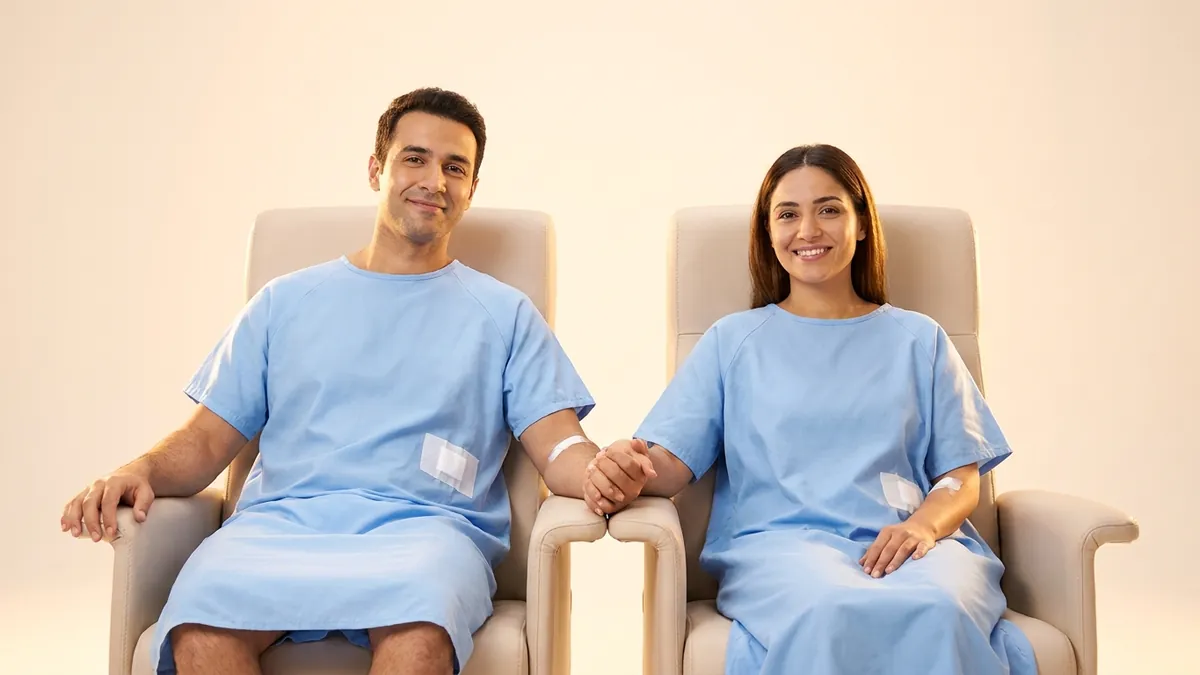
Our bodies are truly amazing creations. However, there is one organ in our body that can regenerate itself, that is, grow back. That is, our liver . Just like a gecko's severed tail can regrow, if a part of the liver is removed, that part will grow back to its full size. Because of this amazing ability, a person can donate a part of their healthy liver to another person whose liver is failing while they are still alive. This is what we call living liver donation .
What is living liver donation?
Simply put, this is two surgeries that happen at the same time. One for a healthy person (the donor) who donates their liver, and the other for a patient with a failing liver (the recipient). If you volunteer as a donor, a surgeon will remove a portion of your liver (usually a slice, or even less for a small child) and transplant it into the other patient right away.
The amazing thing is that after this surgery, the remaining part of your liver, and the part of the liver that was transplanted to the other patient, will grow back to their full size within a few months. That means you will have one healthy liver, two healthy livers. Isn't that amazing?
Can I also donate my liver? What are the qualifications?
If you have a healthy body and a healthy liver, you too can be a life-saving donor. But this is not something you can do on the spur of the moment. For this, you need to undergo a complete medical examination to make sure that you are suitable for this.
Let's look at some of the key qualifications. To understand these clearly, see the table below.
| Eligibility | Description |
|---|---|
| Age | You must be between the ages of 18 and 60. Those younger or older do not have the opportunity to apply. |
| Drug and alcohol use | You cannot be addicted to alcohol or drugs. These directly affect the health of the liver. |
| Physical health | You must be in good physical condition. Some medical conditions (e.g. diabetes, obesity, heart disease) make this type of surgery risky. Your fitness will be assessed through blood tests and heart tests. |
| Liver health | You can have liver disease even if you don't have any symptoms. That's why special tests are done to make sure your liver is healthy. |
| Mental health | This is a big responsibility. Therefore, you need to be in good mental health. The medical team will ensure that you fully understand the risks and sacrifices involved, and that no one is forcing you. |
| Lack of money or profit | It is illegal to accept money or other gifts in exchange for donating a liver. You must prove that you are doing this completely voluntarily. |
How does this process happen?
If you are interested in becoming a donor, you should first speak with a coordinator at a hospital that performs liver transplant surgeries. They will take some basic information from you and answer your questions. If they think you are a good fit, they will refer you to the hospital for further testing.
There you will have to see various specialist doctors.
- Anesthesiologist
- A doctor who specializes in liver diseases (Hepatologist)
- Transplant surgeon
- A psychiatrist or psychologist
After all these tests and interviews, two independent medical teams will review your request. One team will look at your safety. The other team will make the final decision on whether you are a suitable donor and who will receive your donated liver.
Who will receive the liver part I donate?
You can donate your liver to someone you know, for example a family member. This is called “Directed Donation.” But your blood type and liver size must match the patient.
Imagine that one of your relatives needs a liver, but your blood type is not compatible. In that case, there are ways to swap donors by joining forces with another incompatible donor-recipient pair, just like you.
You can also donate your liver to someone you don't know at all. This is called a "Non-directed Donation." The hospital will then give your liver to the most suitable patient on the waiting list. You can remain anonymous if you want, or you can meet up later if you both agree.
How to prepare for surgery?
Once you and the recipient have been selected, the medical team will meet with you to schedule the surgery. You will need to stay in the hospital for about a week after the surgery. It will take about 6 weeks to fully recover after you go home. So you will need to plan ahead, such as taking time off from work and finding someone to help with household chores.
Before the surgery,
- Make changes to your diet, medications, and other lifestyle changes as directed by your doctor.
- Get a CT scan or MRI scan to even get 3D images of the liver.
- Sign legal documents expressing your willingness to become a contributor.
What happens during the surgery?
You and the recipient of the liver will be taken into the operating room at the same time. While one surgical team removes part of your liver, another team removes the patient's dysfunctional liver and prepares the new part for transplantation. Your surgery will take about 4-6 hours. You will be given general anesthesia , so you will not feel anything.
The surgery can be done in two ways:
1. Laparoscopic surgery : This is a procedure where a camera and instruments are inserted through a few small incisions, rather than a large incision. This method results in faster recovery and less scarring.
2. Open abdominal surgery: If laparoscopic surgery is not possible, this surgery is performed through a 6-12 inch incision in the abdomen.
What are the benefits of this noble act?
There are thousands of patients in our country waiting for a liver transplant. Some are in a situation where their lives could be lost in a matter of days due to sudden liver failure. Others need a liver because of cancer. Time is precious for all of them.
They may become even more ill while waiting for a deceased liver. But if there is a living donor, they can save a life by scheduling the surgery quickly, without having to wait on that waiting list.
In addition, as a contributor, you also get great mental satisfaction.
- Their self-esteem increases.
- It adds great meaning to life.
- Surveys have shown that almost 100% of donors say they would make the same decision if given the chance again.
Are there any risks to this surgery?
Like any major surgery, there are some risks involved. But remember, your safety is the top priority of the medical team. They will not allow you to have surgery if there is even a small risk.
Common risks include:
- Bleeding
- Blood clotting
- Infections
- Postoperative pain
There are some specific risks associated with liver surgery. But they are very rare. Talk to your doctor about this openly and ask any questions you may have.
How is the recovery time?
After surgery, your life will gradually return to normal.
- First week: You will have to stay in the hospital. You will be given painkillers and saline. You can gradually start walking and eating.
- Weeks 2-3: You will be able to drive a car after you go home.
- Weeks 2-6: Surgical scars heal.
- Weeks 6-8: You can return to normal daily activities.
- 2-3 months: Your liver grows back to full size.
Throughout this time, your doctor will regularly examine you and provide you with necessary advice.
Take-Home Message
- A living, healthy person can save another person's life by donating part of their liver. This is a very noble act.
- The remaining part of your liver and the transplanted part will fully grow back in a few months.
- To become a donor, you must be between the ages of 18-60, in good health, and drug-free.
- This is a big decision, so talk to your doctor about it, listen to everything that's on your mind, and make a decision after understanding all the information.
- The medical team will take utmost care of your safety and well-being throughout this process.






Janiw kuna arsuwinakas jichhakamax uñt’ayatäkiti. Aka chiqanx amuyt’awim jan ukax jiskt’awim yapxatañamawa.