
Is it really a good idea to dye your hair when you're expecting a baby? Let's talk about this!

Is it really a good idea to dye your hair when you're expecting a baby? Let's talk about this!

A big question that comes to mind for many mothers, especially when they are about to have a baby, is whether it is good to dye their hair, that is, use `(Hair Dye)`, or not, and whether it will cause any harm to the little one in the womb. Sometimes you think, "Oh my God, will these `(chemicals)` get into your body and harm the baby?" So today, let's talk about all these fears and problems that you have in your mind and clarify them.
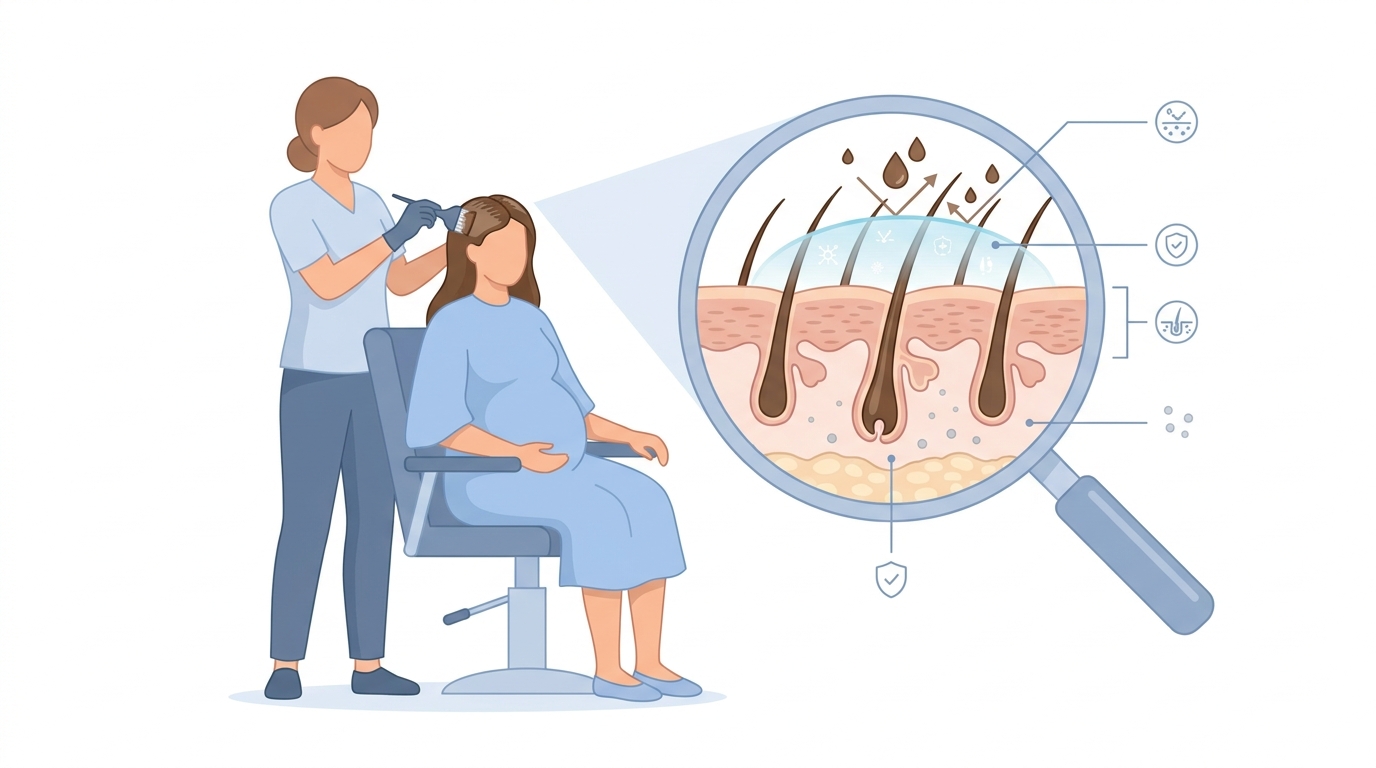
So, is it really safe to dye your hair during pregnancy?

Simply put, yes, it is mostly safe . The American College of Obstetricians and Gynecologists (ACOG), the world's leading association of gynecologists and obstetricians, says the same thing. The main reason for this is that only a very small amount of the dye we apply to our hair is absorbed into our bodies through our scalp. Imagine, that amount is so small that it is very unlikely to affect the fetus in the womb. That is why doctors say that generally, dyeing your hair during pregnancy is not a big problem.

But, when we say "mostly safe," it doesn't mean "completely 100% risk-free." It's good to be careful about the little things, especially during such a precious time.

Why are so many people afraid of this? What are the ingredients in this `(Hair Dye)`?

Actually, these `(Hair Dye)` contain various chemicals . Some are very harsh, some are a little less so. Let's see what the main types of `(dye)` are and what their effects are.

1. Permanent Hair Dyes

These are the oldest types of ``dye`` that go deep into the hair and change the color. These usually use harsh chemicals like ammonia and hydrogen peroxide. But as mentioned earlier, since the amount absorbed by the skin is small, there is no great risk if used correctly.

2. Semi-Permanent and Temporary Dyes

These types of `(dye)` are not as harsh as the permanent `(dye)`. These remain on the outside of the hair strands. After a while, they will fade away after washing your hair. Since the chemicals used in these are relatively less, these may be a better option during pregnancy .

3. Doing `(Highlights)` and `(Streaks)`

Instead of coloring the entire hair, only selected sections of hair are colored. In this method, the amount of `(dye)` that is applied to the scalp is very small. This is because `(foil)` is usually used to avoid touching the skin. So this is also a good thing to consider during pregnancy.

4. Bleaching hair

Bleaching is a method used to remove the natural color of hair and make it white. This also uses harsh chemicals. It is best to avoid this during pregnancy if possible, or do it very carefully and in a well-ventilated area.

5. Coloring your hair with natural products

Some people use natural ingredients like henna to dye their hair. There is usually no problem with using pure henna . However, some "black henna" products on the market contain a chemical called PPD (para-phenylenediamine) to give it a deep black color. This PPD can be severely allergic to some people and is also harmful to the skin. Therefore, if you use henna, it is very important to check exactly what it contains and buy it from a trusted source.

Important: Whatever `(dye)` you use, do a `( patch test )` on a small area to see if you are `(allergic)` to it. Our skin can be very sensitive, especially during pregnancy.

When is the best time to color your hair? Do you need to be especially careful during the first three months?

Many people, especially doctors, advise against coloring your hair during the first trimester , which is around 12 weeks. Why is that?

Think about it, these first three months are the time when the most important organs of the baby's body are formed . The baby's brain, heart, nervous system , limbs, eyes, ears, and everything else is basically formed during this time. So, during such a sensitive time, it is wise to protect the baby from as many chemicals and unwanted influences as possible. That is why many people say, "Let's wait a little longer, until the first `(trimester)` is over."

In the second and third trimesters, that is, after three months, the baby's organs are largely developed. Then the risks of coloring hair become even less.

Keep these things in mind to safely color your hair during pregnancy!

Okay, so you've decided to dye your hair anyway. So, keep these things in mind to do it as safely as possible:

1. Do this in a well-ventilated area: To reduce the risk of inhaling the fumes from the chemicals in the `(Dye)`, do this in a well-ventilated area with the windows and doors wide open. It is also better to do it outdoors if possible.

2. Wear gloves: Be sure to use gloves to prevent the dye from getting directly on your skin.

3. Reduce direct contact with the scalp: If possible, choose a method like `(highlights)`. Then the `(dye)` will be less likely to be applied to the scalp.

4. Follow the manufacturer's instructions exactly: Follow the instructions on how long to leave the dye on your hair and how to wash it out. Don't leave it on too long.

5.Rinse thoroughly: Once you're done dyeing, rinse your hair very well with water to remove any remaining dye.

6. If possible, get an experienced person to do it: It can be safer to go to a salon and get an experienced person to do it for you than to do it yourself. They know exactly how to do it without damaging your skin.

7. Think natural: Also consider things like henna (which doesn't contain the aforementioned `PPD`).

I dyed my hair without knowing I was pregnant, what do I do now?

This is also something that happens to many people. Imagine that you dyed your hair without knowing it, and only then did you find out that you were having a baby. Please don't panic, don't be afraid! As we have already talked about, since the amount of chemicals absorbed through the skin is very small, the chance that doing it once will have a big impact on the baby is very small. But still, you should talk to your doctor about this. Be a little more careful from next time.

If you are a hairdresser?

If you work as a hairstylist while pregnant, you'll be dealing with these chemicals every day. In that case, you need to take a few extra precautions than everyone else.

  • Always work in a well-ventilated area.
  • Be sure to wear gloves.
  • If possible, wear a mask.
  • When eating or drinking, do those things a little away from where you are working.

A word about other hair treatments

In addition to hair coloring, chemicals are also used in hair straightening and perming. Although there aren't many studies on these, the general consensus is that it's best to avoid them for the first three months if possible. If you do them after that, follow the safety precautions mentioned above.

Finally, the most important thing to remember! (Take-Home Message)

Okay, so from everything we've talked about, it's probably clear to you that coloring your hair during pregnancy isn't something to be too afraid of.

Simply put, yes, you can dye your hair during pregnancy. But, be smart and careful.

  • It's best to be patient for the first trimester .
  • If you do it later, do it in a well-ventilated area, wear gloves , and choose a method that is gentle on the skin, such as `highlights` , if possible.
  • Consider natural dyes , but be aware of what they contain.
  • If you have any doubts or concerns , be sure to talk to your doctor . He or she is the person who can give you the best advice.

As a mother, there's nothing wrong with wanting to look beautiful. Also, it's very important to think about the safety of your baby . So I hope these tips will help you balance both. May you and your unborn baby always be happy and healthy!

👩🏽‍⚕️ Additional questions (FAQs)

💬 Is hair dye dangerous for the unborn baby during pregnancy?

No! As doctors point out, the chemicals in hair dyes do not cause any major harm to the unborn baby. This is a very safe practice.

💬 Are the chemicals in hair dye absorbed into the bloodstream through the mother's skin?

When we color our hair, blood flows through our scalp (from the skin).Only a very small amount of the chemical is absorbed into the body. That small amount has no effect on the fetus or the child's development.

💬 What is the best time to dye your hair to protect your unborn baby? Isn't the first 3 months good?

Although there is no such major ban, it is safest to stay away from these during the first 3 months (first trimester), when the baby's major organs are forming. After 12 weeks (from the second trimester), you can safely dye your hair.


` Pregnancy, Hair Coloring, Hair Dye, Safety, Chemicals, First Trimester, ACOG

⚠️ Important: The medical articles and information on Nirogi Lanka are for general awareness only, and are by no means a substitute for professional medical advice, diagnosis, or treatment. For any medical problem you have, consult a qualified physician immediately.

💬 Comments (0)

No comments have been posted yet. Add your comment here for the first time.

Add your comment

Please calculate: 7 + 2 =
Is it really a good idea to dye your hair when you're expecting a baby? Let's talk about this!

Is it really a good idea to dye your hair when you're expecting a baby? Let's talk about this!

A big question that comes to mind for many mothers, especially when they are about to have a baby, is whether it is good to dye their hair, that is, use `(Hair Dye)`, or not, and whether it will cause any harm to the little one in the womb. Sometimes you think, "Oh my God, will these `(chemicals)` get into your body and harm the baby?" So today, let's talk about all these fears and problems that you have in your mind and clarify them.

So, is it really safe to dye your hair during pregnancy?

Simply put, yes, it is mostly safe . The American College of Obstetricians and Gynecologists (ACOG), the world's leading association of gynecologists and obstetricians, says the same thing. The main reason for this is that only a very small amount of the dye we apply to our hair is absorbed into our bodies through our scalp. Imagine, that amount is so small that it is very unlikely to affect the fetus in the womb. That is why doctors say that generally, dyeing your hair during pregnancy is not a big problem.

But, when we say "mostly safe," it doesn't mean "completely 100% risk-free." It's good to be careful about the little things, especially during such a precious time.

Why are so many people afraid of this? What are the ingredients in this `(Hair Dye)`?

Actually, these `(Hair Dye)` contain various chemicals . Some are very harsh, some are a little less so. Let's see what the main types of `(dye)` are and what their effects are.

1. Permanent Hair Dyes

These are the oldest types of ``dye`` that go deep into the hair and change the color. These usually use harsh chemicals like ammonia and hydrogen peroxide. But as mentioned earlier, since the amount absorbed by the skin is small, there is no great risk if used correctly.

2. Semi-Permanent and Temporary Dyes

These types of `(dye)` are not as harsh as the permanent `(dye)`. These remain on the outside of the hair strands. After a while, they will fade away after washing your hair. Since the chemicals used in these are relatively less, these may be a better option during pregnancy .

3. Doing `(Highlights)` and `(Streaks)`

Instead of coloring the entire hair, only selected sections of hair are colored. In this method, the amount of `(dye)` that is applied to the scalp is very small. This is because `(foil)` is usually used to avoid touching the skin. So this is also a good thing to consider during pregnancy.

4. Bleaching hair

Bleaching is a method used to remove the natural color of hair and make it white. This also uses harsh chemicals. It is best to avoid this during pregnancy if possible, or do it very carefully and in a well-ventilated area.

5. Coloring your hair with natural products

Some people use natural ingredients like henna to dye their hair. There is usually no problem with using pure henna . However, some "black henna" products on the market contain a chemical called PPD (para-phenylenediamine) to give it a deep black color. This PPD can be severely allergic to some people and is also harmful to the skin. Therefore, if you use henna, it is very important to check exactly what it contains and buy it from a trusted source.

Important: Whatever `(dye)` you use, do a `( patch test )` on a small area to see if you are `(allergic)` to it. Our skin can be very sensitive, especially during pregnancy.

When is the best time to color your hair? Do you need to be especially careful during the first three months?

Many people, especially doctors, advise against coloring your hair during the first trimester , which is around 12 weeks. Why is that?

Think about it, these first three months are the time when the most important organs of the baby's body are formed . The baby's brain, heart, nervous system , limbs, eyes, ears, and everything else is basically formed during this time. So, during such a sensitive time, it is wise to protect the baby from as many chemicals and unwanted influences as possible. That is why many people say, "Let's wait a little longer, until the first `(trimester)` is over."

In the second and third trimesters, that is, after three months, the baby's organs are largely developed. Then the risks of coloring hair become even less.

Keep these things in mind to safely color your hair during pregnancy!

Okay, so you've decided to dye your hair anyway. So, keep these things in mind to do it as safely as possible:

1. Do this in a well-ventilated area: To reduce the risk of inhaling the fumes from the chemicals in the `(Dye)`, do this in a well-ventilated area with the windows and doors wide open. It is also better to do it outdoors if possible.

2. Wear gloves: Be sure to use gloves to prevent the dye from getting directly on your skin.

3. Reduce direct contact with the scalp: If possible, choose a method like `(highlights)`. Then the `(dye)` will be less likely to be applied to the scalp.

4. Follow the manufacturer's instructions exactly: Follow the instructions on how long to leave the dye on your hair and how to wash it out. Don't leave it on too long.

5.Rinse thoroughly: Once you're done dyeing, rinse your hair very well with water to remove any remaining dye.

6. If possible, get an experienced person to do it: It can be safer to go to a salon and get an experienced person to do it for you than to do it yourself. They know exactly how to do it without damaging your skin.

7. Think natural: Also consider things like henna (which doesn't contain the aforementioned `PPD`).

I dyed my hair without knowing I was pregnant, what do I do now?

This is also something that happens to many people. Imagine that you dyed your hair without knowing it, and only then did you find out that you were having a baby. Please don't panic, don't be afraid! As we have already talked about, since the amount of chemicals absorbed through the skin is very small, the chance that doing it once will have a big impact on the baby is very small. But still, you should talk to your doctor about this. Be a little more careful from next time.

If you are a hairdresser?

If you work as a hairstylist while pregnant, you'll be dealing with these chemicals every day. In that case, you need to take a few extra precautions than everyone else.

  • Always work in a well-ventilated area.
  • Be sure to wear gloves.
  • If possible, wear a mask.
  • When eating or drinking, do those things a little away from where you are working.

A word about other hair treatments

In addition to hair coloring, chemicals are also used in hair straightening and perming. Although there aren't many studies on these, the general consensus is that it's best to avoid them for the first three months if possible. If you do them after that, follow the safety precautions mentioned above.

Finally, the most important thing to remember! (Take-Home Message)

Okay, so from everything we've talked about, it's probably clear to you that coloring your hair during pregnancy isn't something to be too afraid of.

Simply put, yes, you can dye your hair during pregnancy. But, be smart and careful.

  • It's best to be patient for the first trimester .
  • If you do it later, do it in a well-ventilated area, wear gloves , and choose a method that is gentle on the skin, such as `highlights` , if possible.
  • Consider natural dyes , but be aware of what they contain.
  • If you have any doubts or concerns , be sure to talk to your doctor . He or she is the person who can give you the best advice.

As a mother, there's nothing wrong with wanting to look beautiful. Also, it's very important to think about the safety of your baby . So I hope these tips will help you balance both. May you and your unborn baby always be happy and healthy!

👩🏽‍⚕️ Additional questions (FAQs)

💬 Is hair dye dangerous for the unborn baby during pregnancy?

No! As doctors point out, the chemicals in hair dyes do not cause any major harm to the unborn baby. This is a very safe practice.

💬 Are the chemicals in hair dye absorbed into the bloodstream through the mother's skin?

When we color our hair, blood flows through our scalp (from the skin).Only a very small amount of the chemical is absorbed into the body. That small amount has no effect on the fetus or the child's development.

💬 What is the best time to dye your hair to protect your unborn baby? Isn't the first 3 months good?

Although there is no such major ban, it is safest to stay away from these during the first 3 months (first trimester), when the baby's major organs are forming. After 12 weeks (from the second trimester), you can safely dye your hair.


` Pregnancy, Hair Coloring, Hair Dye, Safety, Chemicals, First Trimester, ACOG

⚠️ Important: The medical articles and information on Nirogi Lanka are for general awareness only, and are by no means a substitute for professional medical advice, diagnosis, or treatment. For any medical problem you have, consult a qualified physician immediately.

💬 Comments (0)

No comments have been posted yet. Add your comment here for the first time.

Add your comment

Please calculate: 7 + 2 =