
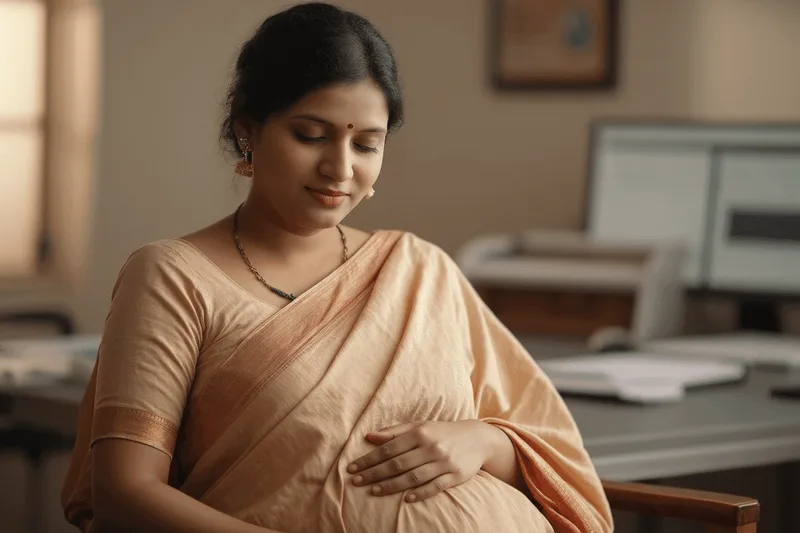
One morning, a school teacher named Priyanka came into my clinic. She was 38 years old. As soon as I saw her, I could tell she was a little nervous, but also very happy and hopeful. She came and sat in the chair in front of me, as if holding her stomach with both hands.
"Doctor Priya," she began slowly, "I recently found out that I'm pregnant. But I'm 38 now. So my family, neighbors, and relatives all say that having children at this age is a very risky thing to do. I'm really scared and worried, Doctor. Should I really be so scared about this?"
I smiled and calmed her down. "First of all, my congratulations to you, Priyanka! Don't be unnecessarily scared. Let's talk about getting pregnant after 35 scientifically and simply. Then you can enjoy this pregnancy journey without any fear."
What does it mean to become a mother at the age of 35?
In medical terms, pregnancy at the age of 35 or older is called Advanced Maternal Age . In the past, this was called "Geriatric Pregnancy," but that term is no longer used.
Nowadays, as women prioritize their education, career, and stability, planning to get married and have children after the age of 35 has become very common in Sri Lanka and the entire world.
Is it weird to get pregnant after age 35?
Not at all! In fact, women of this age are giving birth to healthier babies today than ever before. According to the US Centers for Disease Control and Prevention (CDC), the incidence of first-time births among women aged 35-39 is about six times higher than it was in the 1970s.
Even in Sri Lanka, due to the increasing number of working women, having their first or second child after the age of 35 is a common occurrence today.
🚨 Red Flags that require immediate medical attention
When getting pregnant after the age of 35, if any of the following symptoms appear, you should go to a doctor or hospital immediately without delay:
- Vaginal Bleeding: This could mean a miscarriage or a problem with the placenta in the early months of pregnancy.
- Severe headaches and vision changes: These are the main symptoms of preeclampsia, a condition that occurs during pregnancy.
- Sudden swelling of the hands, feet, or face.
- Significant decrease in fetal movements or movements.
- Severe pain in the lower abdomen or sudden discharge of a watery fluid from the vagina.
Possible health risks with age
To ensure the health of both mother and baby when getting pregnant after the age of 35, it is important to be aware of the following risks:
1. Increased risk of genetic problems: The number of eggs in our bodies decreases with age. This means that the risk of having a child with chromosomal genetic problems such as Down Syndrome increases gradually after the age of 35.
2. Conditions that occur during pregnancy: With age, the risk of developing conditions such as gestational diabetes and high blood pressure (preeclampsia) during pregnancy increases.
3. Uterine problems: Older women are more likely to have uterine conditions such as fibroids or endometriosis , which can interfere with or cause complications during pregnancy.
4. Placental Issues: Risks such as placenta previa or abruption may arise.
The benefits of becoming a mother after 35
Apart from the risks, there are also some very valuable benefits of becoming a mother at this age:
- Economic and social stability: By the age of 35, parents are at a certain level of stability in terms of employment or business, so they have a good economic background to provide the necessary facilities for the child's medical treatment and education.
- Mental Maturity: Because they have more life experience than younger mothers, mothers at this age can face the challenges of raising a child with more patience and intelligence.
- Good family planning: Most pregnancies at this age are well-planned, so the parents are fully prepared for the child.
Do's & Don'ts
| ✔️ Things to do (Do) | ❌ Don'ts |
|---|---|
| Add folic acid supplements to your diet as directed by your doctor before becoming pregnant. | Do not skip antenatal checkups and scans recommended by your doctor. |
| Perform genetic screening tests to identify whether the child has genetic problems, as advised by the doctor. | Completely stop smoking, drinking alcohol, or taking any other external medications without medical approval. |
| Eat a balanced diet rich in good nutrients every day and engage in light exercise (e.g. walking) with medical approval. | Don't unnecessarily worry or become anxious thinking, "I'm too old now." |
❓ Some other questions you may have (FAQ)
Is it possible to have a normal delivery after the age of 35? ▼
Absolutely. Most women over the age of 35 are able to give birth naturally. However, if any complications arise, the doctor may decide to perform a cesarean section (C-Section).
Is it mandatory to perform genetic screening tests during pregnancy? ▼
Although it is not mandatory, it is strongly recommended by doctors. This allows parents to identify early if their child has chromosomal abnormalities (e.g. Down syndrome) and make the necessary preparations.
What is the most common type of gestational diabetes after age 35? ▼
This is called gestational diabetes. It occurs when the body's hormone levels decrease due to insulin resistance, and can be controlled with proper diet and medical advice.
Why is it important to control body weight before pregnancy? ▼
Maintaining a healthy body weight (BMI) before pregnancy can reduce the risk of high blood pressure, diabetes, and complications during pregnancy.





💬 Comments (0)
No comments have been posted yet. Add your comment here for the first time.
Add your comment