
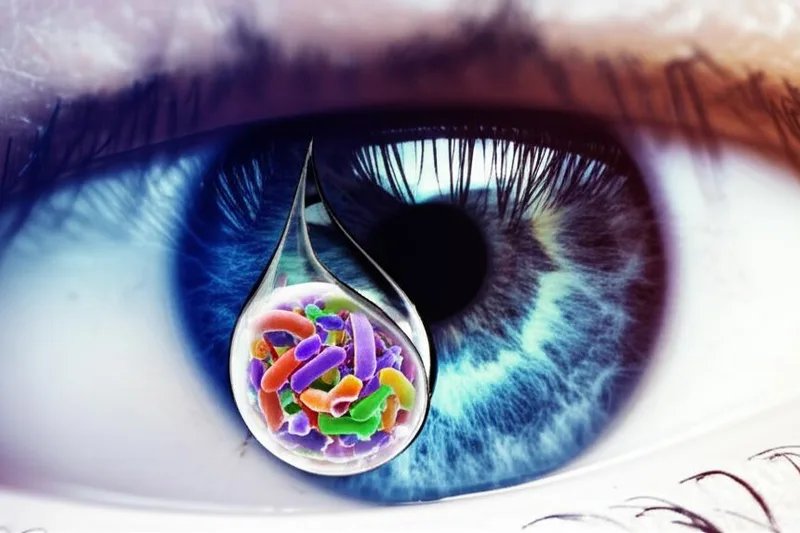
Did you know that there are millions of tiny organisms all around us, and inside our bodies, that we can't see? That's what bacteria are. Some are good, some are a little naughty, which means they can cause diseases. Let's talk about all these bacteria in detail today, okay?
Simply put, bacteria are microscopic, single -celled organisms. We call a single bacterium a 'bacterium'. There are millions, even billions, of different types of bacteria everywhere in the world, even in your body. They are on your skin, in your nose, in your mouth, as well as in your digestive system, reproductive system, and urinary tract. Just think, scientists say that there are ten times as many bacterial cells as human cells in our bodies! Isn't that amazing?
What good do bacteria do for us?
Not all bacteria are bad. Some types of bacteria are very helpful to us. These helpful bacteria are mostly found on our skin and in our intestines, which is our digestive system. We call them our resident bacteria, or our 'resident flora', or your 'microbiome'. This is the community of microorganisms that live in and on your body. These good bacteria in the gut help us absorb nutrients , digest food , and stop the growth of bad bacteria. They're like our best friends.
What are the risks of bacteria?
Although most bacteria are harmless, some types can make you sick. We call these types of bacteria 'pathogens '. Pathogens are microorganisms that can cause disease. They can multiply quickly in your body and produce toxins . That's when an infection occurs.
Here are some examples of harmful bacteria:
- Streptococcus : The bacteria that causes throat infections, that is, strep throat.
- Staphylococcus : The bacteria that causes staph infections of the skin.
- Escherichia coli : The bacteria that causes E. coli infections.
These bacteria are also largely responsible for blood poisoning, a condition called ``septicemia.' ' This happens when bacteria enter your bloodstream. The bacteria in your bloodstream can spread and lead to a serious condition called ``sepsis.' ' Sepsis is an overreaction of your body to an infection that has spread throughout your body.
Other examples of pathogenic bacteria are:
- Aerococcus urinae : A bacterium that causes urinary tract infections.
- Chlamydia trachomatis : The bacteria that causes a sexually transmitted infection (STI) called chlamydia.
- Bordetella pertussis : The bacterium that causes whooping cough.
Many bacterial infections can be treated with antibiotics . However, if you take antibiotics too often, your body is more likely to become resistant to them. Also, if you don't take the antibiotics for the full course or exactly as your doctor tells you, you are more likely to develop bacterial resistance.
How are bacteria classified?
Scientists use several methods to classify bacteria.
By scientific name
One way is by their scientific name. This name includes their ``genus`` – a name given to the bacteria based on their characteristics – and the ``species`` within that genus. For example, the scientific name for the bacteria that causes the disease ``botulism`` is ``Clostridium botulinum`` . Even within the same species, scientists can find different ``strains``.
According to the shape of the bacteria
Another way is by the shape of the bacteria. There are basically three shapes of bacteria:
- Spherical or ball-shaped (`cocci ba CTE ria` - cocci bacteria)
- Rod-shaped or stick-like (`bacilli`)
- Spiral or helical shape (`spirochetes`)
According to oxygen requirement
Scientists classify bacteria according to whether they need oxygen to live and grow.
- Bacteria that require oxygen are called 'aerobes '.
- Bacteria that cannot survive or grow in the presence of oxygen are called 'anaerobes '.
- Some bacteria can live and grow with or without oxygen. They are called ``facultative bacteria`` .
According to genetic makeup
Another way is to look at the genetic makeup of bacteria. Each bacterium has a unique set of genes. This is called their 'genotype' . Special tests can detect differences in these genetic makeups.
By Staining - Gram Staining
This is a bit of an important point. Scientists also classify bacteria by the color they give off after they are stained with special chemicals (`stains`). One well-known staining method is ``Gram staining`` . This classifies bacteria as ``gram- positive`` or ``gram -negative``. This Gram staining also helps determine treatment. Because gram-positive and gram-negative bacteria respond differently to certain antibiotics.
What are Gram-positive bacteria?
Bacteria are classified as gram-positive or gram-negative based on the color they produce on a Gram stain. They are different colors because their cell walls are different. 'Positive' and 'negative' do not mean 'good' or 'bad', they just mean good. Gram-positive bacteria appear blue-purple on a Gram stain.
Some examples:
- Corynebacterium (`Corynebacterium`)
- Clostridium (`Clostridium`)
- Listeria (`Listeria`)
What are Gram-negative bacteria?
Gram-negative bacteria appear pinkish-red on a Gram stain. They cause different infections than Gram-positive bacteria. They also need to be treated with different types of antibiotics.
Some examples:
- Pseudomonas (`Pseudomonas`)
- Proteus (`Proteus`)
- Klebsiella
What is the difference between bacteria and viruses?
Bacteria and viruses are two types of germs, or microorganisms. Both can cause infections, and sometimes the symptoms can be similar. However, the treatments for bacterial infections and viral infections are completely different.
Doctors use antibiotics to treat some bacterial infections. But antibiotics don't work on viruses. Doctors treat some viruses with antivirals , but those antivirals don't work on infections caused by bacteria. This is very important to understand!
What are antibiotic-resistant bacteria?
Your immune system can fight off some bacteria and win. But sometimes, you need to take an antibiotic to treat a bacterial infection. Antibiotics work by destroying the bacteria's cell wall or DNA .
However, overuse of antibiotics can cause problems over time. This is because some bacteria become resistant to antibiotics. This makes it very difficult to treat infections caused by new strains. Every time you take an antibiotic, the chance that the bacteria will learn to resist it increases.
Important: It is essential to take antibiotics prescribed by a doctor, in the exact dose and for the full duration. Stopping them halfway or taking them at a lower dose will not kill the bacteria completely, and the remaining ones will develop resistance to the antibiotic.
A good example of a bacteria that is resistant to antibiotics is MRSA (methicillin-resistant Staphylococcus aureus). This is a bit dangerous.
How are bacteria transmitted?
Most bacteria reproduce by a process called ``binary fission.' ' Simply put, a single bacterial cell duplicates its DNA and then divides into two. Each new cell gets a copy of the DNA. It's like one becomes two, two becomes four, and so on.
Are bacteria prokaryotic or eukaryotic?
Bacteria do not have a ``nucleus`` . Therefore, they are classified as ``prokaryotes`` . They are microorganisms with a very simple cell structure. Bacteria have ``cell walls``. Inside the cell wall, if you look at the structure of a single cell, there is ``cytoplasm`` , ``ribosomes`` and DNA . Outside the cell wall, there may be one or more ``flagella`` . These flagella are what help the bacteria move around.
Is there a species of bacteria that eats plastic?
Yes, don't be surprised! In 2016, a team of scientists in Osaka, Japan discovered a new species of bacteria. They named it ``Ideonella sakaiensis`` . This bacteria was found eating plastic bottles near a recycling facility!
Bacteria usually eat dead organic matter. But this bacterium ate a type of plastic called polyethylene terephthalate (PET). Things like our drinking water bottles are often made from this PET plastic. When scientists studied this bacterium further, they discovered that it produces two special digestive enzymes that help it digest plastic.
This enzyme only digests PET plastic. But scientists hope that one day, plastic-eating bacteria like this could help solve the world's massive plastic pollution problem. Imagine how great that would be!
So, what are the most important things we need to remember from this story?
Okay, we've talked a lot about bacteria now. Simply put, here's what you need to remember:
- Bacteria are tiny organisms that are everywhere and invisible to our eyes.
- Most types of bacteria are harmless to us. Some are very beneficial to our bodies, especially in our gut. We call these our `microbiome`.
- However, some types of bacteria (pathogens) can cause infections, which require treatment.
- Doctors prescribe antibiotics for most bacterial infections.
- The most important thing: When using antibiotics , follow your doctor's instructions exactly. Take them for the right amount of time and in the right dose. If you don't, bacteria will start to develop antibiotic resistance. That's a big problem.
So, bacteria are a part of our lives. Having a proper understanding of them can help us a lot in staying healthy.
` Bacteria, infections, antibiotics, microbes, health, Gram stain, antibiotic resistance


💬 Comments (0)
No comments yet. Be the first to share your thoughts here.
Add Your Comment