
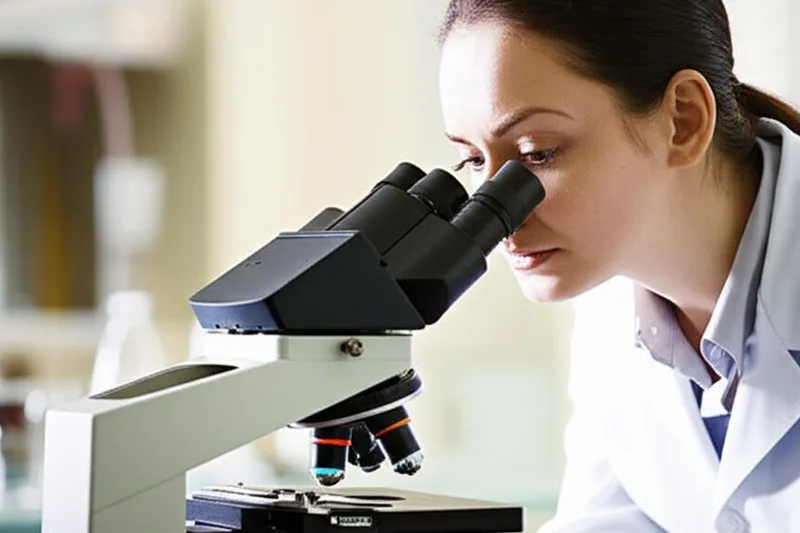
When you go to see a doctor, they will ask you to do some tests, such as blood tests and urine tests. They may even take a small sample of your body. So have you ever wondered who is actually doing these tests, reading the reports, and determining exactly what disease you have? Although we don't often meet these people directly, there are a group of specialist doctors who work like the unsung heroes of our healthcare system. They are what we call pathologists . Today, we will talk about these essential doctors.
Who is a Pathologist? Simply put...
Simply put, a pathologist is a doctor who has received special training. Their specialty is the study of diseases using human tissues (i.e., body parts), blood, urine, and other body fluids. They are the ones who provide the information and guidance needed to diagnose a disease, treat it, monitor its progression (monitoring), and predict its future course (prognosis). Their research helps us better understand all types of diseases.
Pathologists gather this information by looking at tissue samples, cells, and body fluids under a microscope. They also test these samples using machines, such as blood analyzers.
So what is pathology?
Pathology is the study of the causes of disease and the effects of those diseases on the tissues of your body at the cellular level . That is, it looks at how a disease works inside the body and what happens to the cells.
Are there different specialties among pathologists?
Yes, absolutely! Pathologists can also specialize in different areas. Think of it like having different doctors for different types of diseases. Here are some examples:
Blood banking/transfusion medicine pathologist
This specialist is in charge of maintaining a hospital's blood supply. They make sure that blood donations are safe and that blood transfusions (transfusions of blood into organs) are done properly. They also prepare various components of blood, such as ``plasma'' or ``red blood cells'', and give them to patients as needed.
Chemical pathologist
This specialist studies the biochemistry of the human body . That is, they look at how the body's chemical processes affect the causes and progression of diseases .
Cytopathologist
These are the specialists who study cells to diagnose diseases. A well-known example is the examination of cells in a Pap smear for cervical cancer. The field of cytopathology is often associated with the diagnosis of cancer.
Dermatologist
As the name suggests, this specialist is specially trained to diagnose and monitor skin diseases . If you have something unusual on your skin, this type of doctor may be the one who takes a small sample of it and examines it.
Forensic pathologist
You've probably seen these people in movies. These are the specialists who investigate and evaluate sudden, suspicious, and violent deaths, as well as other specific death circumstances as defined by law.
Hematopathologist
This specialist specializes in diseases that affect blood cells, blood clotting, bone marrow, and lymph nodes . They look for problems with the blood, such as leukemia.
Medical microbiologist
These are the people who identify the microorganisms (bacteria, viruses, etc.) that cause infectious diseases. When you have a fever, this kind of specialist helps you find out whether it is caused by bacteria or a virus.
Molecular genetic pathologist
This specialist provides information about the structure, function, and changes (mutations) in genes . They use laboratory techniques to help diagnose , treat, and predict the future course of certain genetic diseases.
Neuropathologist
This specialist is specially trained to diagnose diseases that affect your nervous system and skeletal muscles . They look at diseases of the brain, spinal cord, and muscles.
Pediatric pathologist
These people specialize in diagnosing diseases that occur during fetal development, infancy, and childhood through laboratory tests. They study in depth diseases that are specific to young children.
Surgical pathologist
This specialist studies the tissues that surgeons remove during surgery, helping to diagnose the disease and develop a treatment plan. For example, during a surgery to remove a cancerous tumor, the surgical pathologist can immediately look at the tissue under a microscope and tell the surgeon whether more tissue (for example, lymph nodes) needs to be removed. This is a great advantage for the patient.
What exactly does a pathologist do?
The main role of a pathologist is to use laboratory tests and techniques to determine whether or not there is a disease in tissue and fluid samples taken from your body. They can do this in a variety of ways. Their services are essential in all areas of medicine, such as the study of cancer (oncology), the study of the immune system (immunology), and genetics.
Pathologists are key members of healthcare teams. They work closely with other healthcare providers, such as radiologists, oncologists, hematologists, and surgeons. They help:
- Diagnose: Pathologists are often involved in diagnosing a disease. For example, a pathologist might examine a sample of body tissue or fluid to see if it contains a virus or bacteria. They are involved in the vast majority of cancer diagnoses.
- Recommend treatment options: A pathologist can recommend a specific antibiotic to treat a bacterial infection, or decide whether to undergo radiation, chemotherapy, or surgery for a cancerous tumor.
- Monitor ongoing diseases: For example, a pathologist may analyze blood samples to monitor the development of blood-borne pathogens such as hepatitis B.
- Talk about the future course of the disease: In some diseases, such as leukemia, specific gene mutations can greatly change the future course of the disease. Pathologists can detect these gene changes by performing genetic tests on tissue samples.
Compared to other doctors, pathologists typically have less direct contact with patients. Although they play a major role in diagnosing diseases, they are not the ones who tell you your diagnosis. The specialist who ordered the test, for example your gastroenterologist or gynecologist, will tell you the diagnosis based on the information in the pathologist's report.
However, some subspecialists, such as pathologists who work in blood banks and blood transfusion services, encounter patients on a daily basis.
Pathologists also play a vital role in medical research. They work to develop new treatments to fight or prevent viruses, infections, and diseases. This can include medical advances such as new vaccines and targeted therapies.
Is a pathologist a doctor?
Yes, a pathologist is definitely a doctor. They go to medical school and get a medical degree (`Doctor of Medicine (MD)` or `Doctor of Osteopathic Medicine (DO)`).
Where do pathologists work?
Pathologists can work in a variety of environments. For example:
- In community hospitals and clinics
- In university hospitals and clinics
- In government hospitals and clinics
- In independent laboratories
- In private offices
How do you become a pathologist? How long does it take?
To become a certified pathologist, you must complete the following:
- You must complete pre-medical education at a college or university and obtain a degree.
- You must complete your medical school education and obtain a medical degree (`MD` or `DO`).
- You must complete at least three years of advanced medical education in a residency training program.
- Must pass certification exams conducted by a recognized body such as the American Board of Pathology. (In Sri Lanka, registration with the relevant medical board and specialist training are required.)
Most pathologists are trained in both clinical pathology and anatomical pathology. Many also specialize in a specific area of pathology, such as hematopathology or chemical pathology.
It typically takes at least 11 years to become a pathologist. This includes pre-medical education, medical school education, and at least three years of residency training.
Take-Home Message
So now you can see how important and essential a part of our healthcare system pathologists are. You may not meet them directly, they mostly work behind the scenes. But they silently do a great service for your well-being by accurately diagnosing your illness and choosing the best treatment for it.
If you ever receive a pathology report, talk to your doctor about what it says. That report contains a lot of valuable information about your health. The pathologist and your other doctors work together to give you the best care.
` Pathologist, Pathology, Diagnosis, Tissue Testing, Blood Tests, Medical Specialist, Cytology


💬 Comments (0)
No comments yet. Be the first to share your thoughts here.
Add Your Comment