
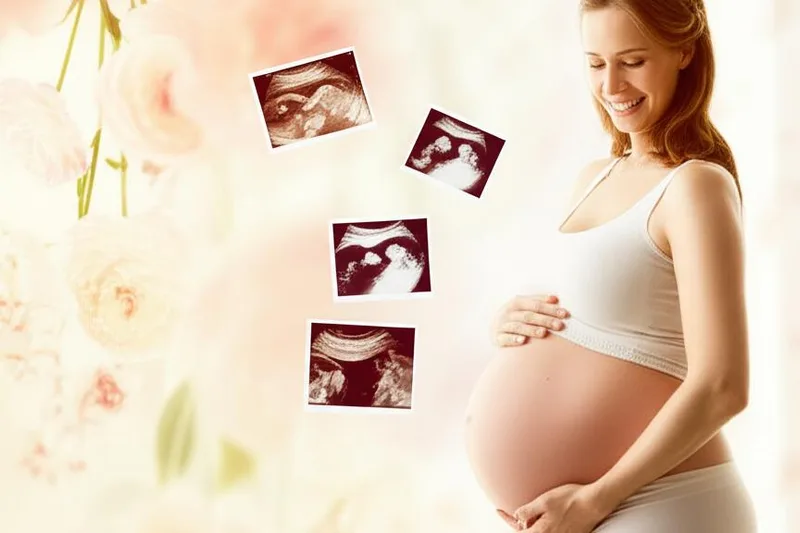
If you're expecting triplets , you're probably feeling a little excited, but also a little curious, and maybe a little scared, right? That's normal. Because having triplets is a special thing. So today, let's talk about it in a way that you can understand, like a friend. You'll find answers to many of the questions you have in your mind in this article.
What are triplets? Simply put...
Triplets are three babies conceived at the same time during the same pregnancy and growing together. Imagine, three babies instead of one! This is a bit rare, but it's not impossible.
How are these triplets born?
There are two ways this could happen. Let's see what they are.
1. Three eggs, three sperm: Your ovaries release eggs every month, which we call `` Ovulation`` . Sometimes, if three eggs are released at once, and all three eggs are fertilized by separate sperm, then triplets can be born.
2. One egg, dividing into three: The other method is that the fertilized egg, which is formed by the union of one egg with one sperm, is then divided into three embryos. This is a slightly more complicated process.
Are there different types of triplets?
Yes, triplets can come in several varieties. Let's learn about that too.
1. Fraternal Triplets
This is what happens in the first way mentioned above, that is, when three separate eggs are fertilized by three separate sperm . These three children may or may not be of the same sex. They may also differ in appearance. Just like siblings in the same family, their ``(DNA)`` is the same.
2. Identical Triplets
This happens when a single fertilized egg splits into three embryos. These three babies are often the same sex. And because their ``DNA'' is very similar, they can look very similar. However, identical triplets like this are a bit rare.
3. Mixed Triplets
This is when two children are identical (come from the same egg), while the other one is not a sibling (comes from a different egg).
Shall we also look at how the placenta and gestational sac are shared?
Depending on how and when a triplet pregnancy occurs, the way the babies share the placenta and the gestational sac they are in can vary.
- `(Monochorionic)`: In this, all three babies share the same placenta and the same amniotic sac.
- `(Dichorionic)`: Here, two babies share one placenta and amniotic sac. The third baby has its own separate placenta and amniotic sac. These two sacs are separated by a thin membrane.
- `(Trichor ION ic)`: This is the best part. All three babies have separate placentas and separate amniotic sacs.
Who is more likely to have triplets?
In general, people with the following factors are more likely to have a triplets pregnancy:
- If you are over 35 years old: This risk may increase, especially if you have already had several children.
- If there is a history of multiple pregnancies in your family or in your own history: That means if there are twins or triplets in your family.
- If you are undergoing fertility treatments: Especially when using treatments like `(IVF - in vitro fertilization)`.
How do I know if I'm carrying triplets?
There are a few early signs you may notice if you are carrying more than one baby. For example, breast tenderness, rapid weight gain, or severe morning sickness.
Your doctor may also notice some signs of this during your prenatal checkup. Here are some of them:
- The level of pregnancy hormones in your blood, especially the hormone ``Human Chorionic Gonadotropin (HCG),`` is very high.
- Increased levels of ``Alpha-fetoprotein'', a protein produced in the baby's liver.
- The one that hears more than one heartbeat.
- All of this can be confirmed with an ultrasound. This uses sound waves to see images of the babies inside your uterus in real time. If you have three babies, you can clearly see them.
Is prenatal care different in a triplet pregnancy?
Yes, absolutely. Prenatal care is regular checkups to monitor the development of the babies. The risk of complications is higher in a triplet pregnancy. So your doctor will also be constantly monitoring your health.
Because of this risk, you may need to see your doctor more often than a normal pregnant woman. Depending on your stage of pregnancy, these appointments may include:
>
- First trimester (up to 12 weeks of pregnancy): Every two to three weeks.
- Second trimester (weeks 13 to 26): Every two weeks.
- Third trimester (from 27 weeks to delivery): Once a week.
Do I need a special diet if I am expecting triplets?
There's no need for a "special" diet. But the most important thing is to get enough calories to support the growth of three babies . Your obstetrician-gynecologist (OB/GYN) will tell you how many calories you need and whether you need to change your diet.
It's also important to take a prenatal vitamin to make sure you're getting the essential nutrients you need. This should include:
- Calcium
- Folic acid `(Folic acid)`
- Iron
How will having triplets affect my pregnancy?
When you're carrying more than one baby, that pregnancy is considered high-risk . This means you're more likely to have complications than a normal pregnancy.
Some of these possible complications are:
- Anemia: Decreased red blood cell levels.
- Cholestasis of pregnancy: A buildup of bile in the liver, causing the acid to leak into the blood or other tissues.
- Gestational diabetes: Elevated blood sugar levels during pregnancy, even if you did not have diabetes before.
- Hyperemesis gravidarum: Severe morning sickness and nausea, persistent nausea, or frequent vomiting.
- Polyhydramnios: Excessive amount of amniotic fluid.
- Preterm labor: The onset of labor before 37 weeks.
- Preeclampsia: High blood pressure after 20 weeks of pregnancy.
- Premature birth: Birth of a child before reaching full term.
What are the risks to the baby in a triplet pregnancy?
Complications can affect one child or several children. They include:
- Congenital conditions: Children can be born with conditions that affect the appearance and function of various parts of their body. These can occur in places like the heart, brain, face, and limbs.
- Twin-to-twin transfusion syndrome: This is a more serious condition. When two or three babies share the same placenta and blood supply, the blood doesn't divide evenly, causing one baby to receive too much blood and the other to receive too little.
- Low birth weight: Babies who weigh less than 2.5 kilograms (5 pounds, 8 ounces) at birth are considered low birth weight. This puts them at higher risk of health problems, such as breathing difficulties.
- Placental abruption: The placenta separates from the uterus, cutting off the baby's blood and nutrient supply. This is a rare complication that requires emergency medical treatment.
What to do if complications arise?
If any complications arise, you will need to see a maternal-fetal medicine specialist .
This type of specialist provides specialized services for high-risk pregnancies, including:
- Advanced prenatal testing and fetal monitoring.
- Cognitive status recognition.
- Birth planning and specialized childbirth services.
- Coordination of emergency care after delivery (if necessary).
Will I have to take bed rest?
If the risk of complications during pregnancy is high, bed rest is a restriction of physical activity. Many women expecting triplets have to take bed rest during the latter part of their pregnancy.
There are two types of this:
- Modified bed rest: You need to stay in bed for most of the time, but you can sit, stand, or walk for a while.
- Full bed rest: You should stay in bed at all times except for going to the bathroom and washing your body.
What is labor and delivery like for triplets?
Triplet births are often delivered by cesarean section (C-section) . This type of surgery is required for:
- If the baby is in a breech or other position other than head down.
- Have specialists on standby in case you or your children need emergency treatment due to a complication.
Premature birth is also common among triplets, especially:
- If you have premature labor pains and the medication given to stop them is not working.
- If you have dangerously high blood pressure or other complications that will improve after delivery.
- If a child's growth stops.
It is important to remember that the gestation period for multiple pregnancies (more than one baby) is usually shorter than for singleton pregnancies (one baby). The average gestation period for a singleton is between 37 and 40 weeks. The gestation period decreases as the number of babies increases. The average gestation period for triplets is between 32 and 35 weeks.
Take-Home Message
If you're expecting triplets, it means you're carrying three babies in your womb. While this is a very exciting thing, you should also understand that there is a higher risk of complications during pregnancy and childbirth.
But don't worry. Regular prenatal visits, seeking advice from a maternal-fetal medicine specialist if necessary, and following your doctor's instructions will help you stay as healthy as possible. Your medical team will always try to provide the best for you and your baby. So, relax and enjoy this journey. Best wishes to you!
` Triplets, pregnancy, obstetric care, multiple births, premature births, cesarean section, fertility treatments


💬 Comments (0)
No comments yet. Be the first to share your thoughts here.
Add Your Comment