
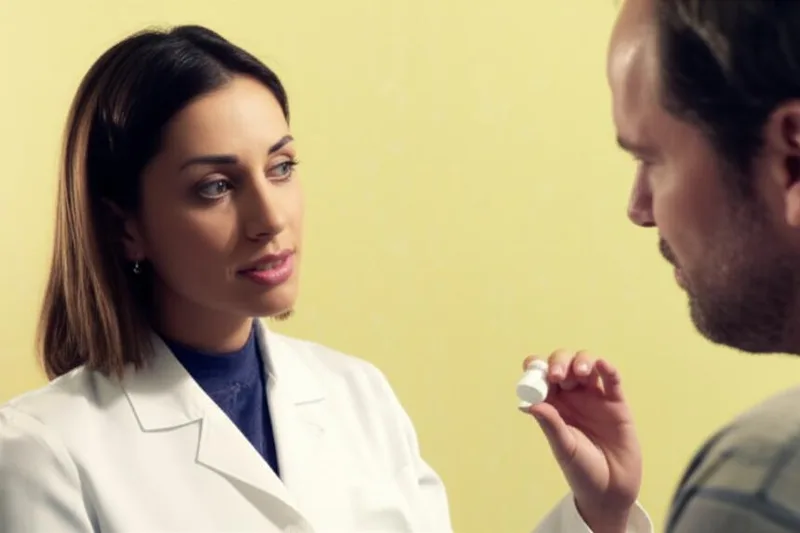
When you have a cold or flu, or when you go to the pharmacy to fill a prescription from a doctor, have you ever looked at the person there and thought, "Oh, this is just a guy who packs the medicine"? In fact, a pharmacist is someone who has a much greater responsibility and knowledge than most of us realize. Simply put, he is a very important and indispensable member of our healthcare team.
So, who is this pharmacist?
Simply put, a pharmacist is a specialist in medicines and a healthcare provider. Their main responsibility is to make sure that the medicine they give you is suitable for you, safe, and is exactly what you need. In addition, some pharmacists perform a number of other services. Just think, when you go to get your medicine, they might ask you to:
- Health and wellness screenings. Sometimes, things like your blood sugar and cholesterol levels may be checked.
- Vaccination . Some vaccines, such as the flu vaccine, can also be obtained from pharmacies.
- Helping you manage your medications properly. Sometimes we get confused when we take multiple medications at once.
- Giving advice on how to live a healthy lifestyle. They have good knowledge about food, drink, exercise, etc.
These people don't just work in one place. You can find them:
- In pharmacies that we all know.
- At the pharmacy counters in large supermarkets.
- Some grocery stores now also have pharmacies.
- In hospitals.
- In primary care offices.
- Specialty clinics.
- In other healthcare institutions.
Now you see, a pharmacist is more than just someone who dispenses over-the-counter medications. They work with your primary care physician and other healthcare providers to ensure you receive the best care.
What exactly does a pharmacist do? What are their duties?
A pharmacist's job list is actually longer than you might think. Let's take a look at some of their main duties:
- Verifying prescriptions: They make sure you get the right medicine and the right amount. Sometimes they're the ones who can understand the doctor's handwriting, even if they can't read it.
- Checking for interactions between new medications : If you are already taking medication for another condition, it is important to check whether the new medication will interact with it and whether there are any side effects. This is something that a pharmacist will definitely do.
- Explaining how and when to take the medicine: some medicines should be taken before meals, some after meals, some three times a day... All these details are explained clearly.
- Being aware of possible side effects of a medication: Every medication can have some minor side effects. When you are informed about them in advance, you can be aware of them.
- If necessary, compounding: Sometimes, they can mix several medications in specific amounts to create a special medicine that works best for you, such as for children.
- Giving vaccinations, such as the flu shot.
- Educating you about common health topics like exercise, diet, and stress management.
- Advising on what types of items (e.g., bandages, heat pads) are best suited to treat a particular health problem.
- Talking to your insurance company and helping them get the medication you need can be a big deal, sometimes even getting the medication approved by insurance.
- Guiding and training other staff working in the pharmacy (pharmacy technicians, trainee pharmacists).
- Keeping records and performing other administrative tasks.
For example, if you are taking medication for diabetes (`Diabetes Mellitus`), a pharmacist can help you control your blood sugar levels, teach you how to use insulin properly, and even give you advice on how to prevent ulcers on your legs.
Are there different types of pharmacists?
Yes, there are pharmacists who specialize in different areas. Let's look at a few of the main types:
Community pharmacists
These are the people we see most often, working at the pharmacy at the junction of our village, or at the big chain pharmacies. They are the ones who give you your medicine, and if you have any questions about your prescription, they are the ones who answer your questions. They can also ask you about over-the-counter (OTC) medications, and about any minor health problems you may have. They also provide services like giving flu shots. This is a health professional that we can reach very easily.
Clinical pharmacists
These people usually work in hospitals, large clinics, or other healthcare facilities. They spend most of their time working directly with patients, rather than filling prescriptions. When you're in the hospital, they help you decide what medications to give you, how much to give, and when to give them. Sometimes they talk to patients in outpatient departments one-on-one and give advice.
Consultant pharmacists
These people advise healthcare companies and insurance companies on the use of patients' medications. They also work to improve pharmacy services in healthcare institutions. For example, helping residents of nursing homes manage their medications properly.
Pharmaceutical industry pharmacists
As the name suggests, these people work for large pharmaceutical companies. They work in marketing, research, and development. Their main responsibilities include planning and conducting clinical drug trials to find new drugs, developing safety guidelines for new drugs, and conducting quality control.
Nuclear pharmacists
This is a somewhat specialized field. They make and distribute radioactive drugs (radiopharmaceuticals or radioactive drugs) that are used for testing and treatment in nuclear medicine. These drugs are very important in nuclear medicine imaging. Since they work with radioactive materials, they need to have special training in this area.
What do you need to do to become a pharmacist?
Becoming a pharmacist requires years of dedication and study. You can't just become a pharmacist.
- First, they must have a degree in pharmacy, a professional degree called ``Doctor of Pharmacy (PharmD)`` . This degree program includes many subjects such as ``Healthcare``, ``Biology``, ``Chemistry``, ``Physics``, ``Mathematics``, ``Pharmacology``, and ``Medical ethics``.
- Also, you need to gain experience by working under the supervision of various healthcare institutions.
- In Sri Lanka, you need to obtain registration with the Sri Lanka Medical Council (SLMC). In other countries, you need to have completed a pharmacy program approved by a recognized body such as the Accreditation Council for Pharmacy Education (ACPE).
- Most PharmD programs require at least two years of undergraduate study before applying. Some programs require a bachelor's degree. Some also require an entrance exam, such as the Pharmacy College Admissions Test (PCAT).
- A PharmD program typically takes about four years to complete, but there are also three-year programs, or six-year programs that can be entered directly after A-levels.
- After graduating, you will need to take at least two exams to obtain your professional license. For example, in North America, the North American Pharmacist Licensure Exam (NAPLEX) measures your pharmacy knowledge and skills. The Multistate Pharmacy Jurisprudence Exam (MPJE) or a state-specific exam tests your knowledge of pharmacy law.
- Pharmacists who aspire to a higher position in clinical pharmacy or research will need to complete a one to two year residency, which provides them with additional training in a specialized field.
- To administer vaccines, you must also obtain a special certification.
- Some pharmacists also want to become certified in a specific field, such as a Diabetes Educator. This requires work experience, passing an exam, and paying a fee.
- The most important thing is that a pharmacist must continue to learn (`continuing education courses`) throughout his or her professional life, because the field of pharmacology is a field that is constantly changing and new discoveries are being made.
Now you probably understand how much hard work and knowledge you need to acquire to become a pharmacist.
So, are pharmacists also doctors?
This is a question that many people ask. Yes, pharmacists are also doctors. You may not call your pharmacist "doctor." However, the degree they earn, a PharmD, is a doctoral degree. It's similar to a Doctor of Medicine (MD) or a Doctor of Dental Surgery (DDS). This doctorate degree gives your pharmacist a greater responsibility to provide reliable, high-quality healthcare.
A pharmacist is not just someone who hands you medicine. They play a key role in managing and improving your health.
Because of their in-depth knowledge of medicine, they are a very important member of your healthcare team. They can work closely with your doctor and other healthcare providers to ensure that you receive accurate information and guidance about your health condition. That way, they can ensure that you get the best health outcomes.
The most important thing we need to remember from this story!
Okay, so we've talked a lot about being a pharmacist today. The main things to remember are:
- A pharmacist is not just someone who gives medicine. He or she is an expert in medicine.
- It is his responsibility to check whether your medication is safe and suitable for you .
- You can get advice from them not only about medicine, but also about general health.
- They are an important member of your healthcare team.
- The next time you go to the pharmacy, if you have any questions about your medication or your health, don't be afraid to ask a pharmacist. They are there to help you.
So, a pharmacist is a silent but very valuable person in our healthcare system. We appreciate their service!
` Pharmacist, druggist, medicine, drugs, healthcare, medical advice, pharmacology


💬 Comments (0)
No comments yet. Be the first to share your thoughts here.
Add Your Comment