Do you also have questions about carcinogens? Let's talk about this simply!

Do you also have questions about carcinogens? Let's talk about this simply!

Today we are going to talk about a topic that is important to many people, and perhaps a little scary. That is, carcinogens , or as they are called in English, ``( Carcinogens )``. You have probably heard this word before, perhaps from a doctor, or in a newspaper or on TV. So, today we will talk clearly and without burden about what these carcinogens are, how they affect our bodies, and what we can actually do to protect ourselves from them.
What are carcinogens?

Simply put, a carcinogen is a substance, radiation, or even an organism that increases your risk of developing cancer. Think of it like you're more likely to fall if you hit a pothole on the road. These carcinogens are the same thing, they increase your risk of developing cancer.

Currently, experts have identified more than 100 such carcinogens . These can be of different types:

  • Physical carcinogens: For example, ultraviolet rays from the sun.
  • Chemical carcinogens: For example, things like asbestos .
  • Biological carcinogens: For example, some viral infections can also cause cancer.

But the important thing here is that being exposed to a carcinogen, that is, coming into contact with it, does not mean that you will develop cancer. In most cases, many factors contribute to the development of cancer. Also, while we cannot completely avoid some carcinogens, there are things we can do to reduce the risk of developing cancer from them. We will talk about that later.

How do carcinogens cause cancer?

To understand this, we need to know a little about the relationship between carcinogens and the genetic material in our bodies, that is, our DNA .

A little story about our bodies: DNA and genes

Imagine, our body is like a big factory. This factory has a set of instructions to do everything. That set of instructions is our DNA . This DNA is in our genes . These genes are the instructions to make proteins that control everything in our body, such as how the cells should grow, how they should divide, and what work they should do.

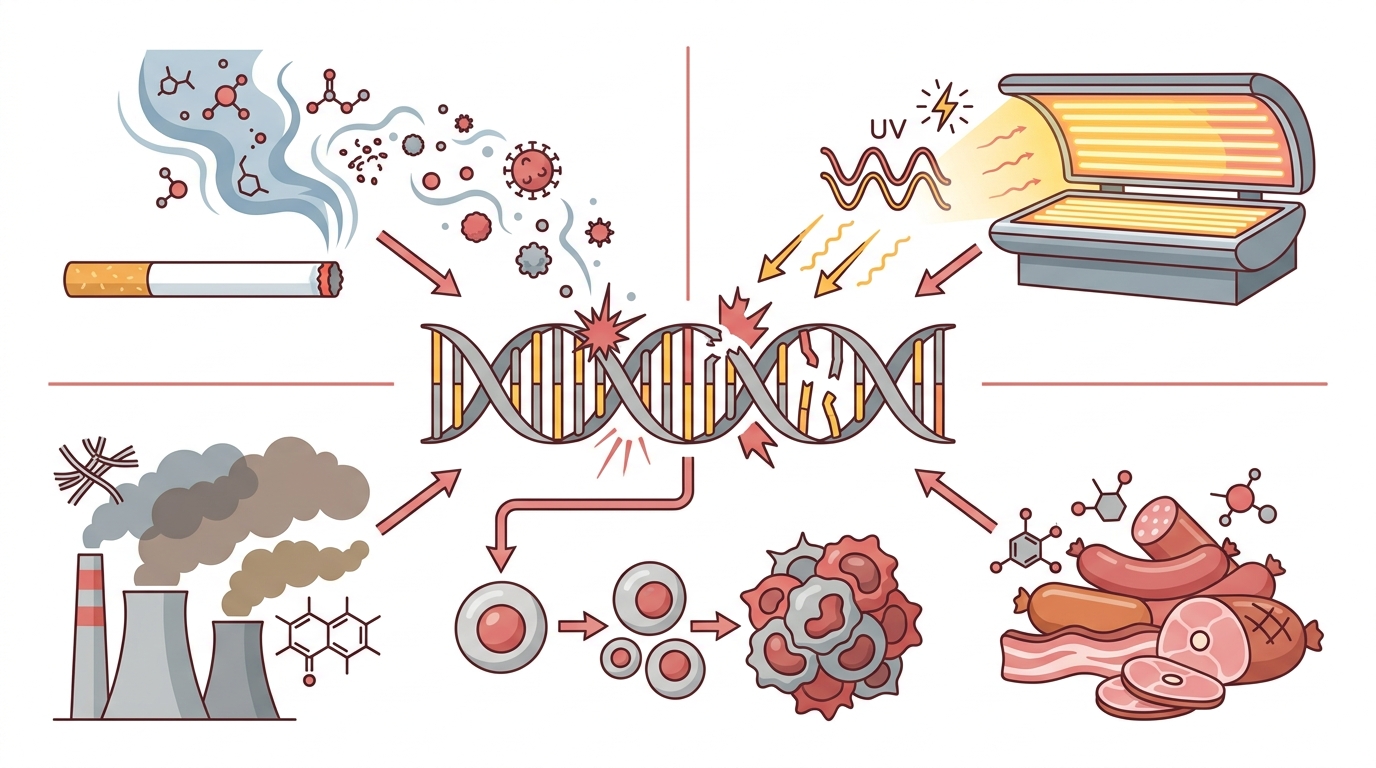
Now, when a carcinogen enters the body, it sometimes damages our DNA. It's like creating errors in the instructions. What happens then? The instructions go wrong, and a cell that was working normally starts to turn into a cancer cell. This doesn't happen all at once, it happens one after the other, like a chain reaction.

The process of cancer formation

Some carcinogens directly damage our DNA, causing it to stop working properly. Other times, our bodies have a system that repairs DNA damage. But carcinogens can't even get those repair cells to do their job properly.

This unrepaired, damaged DNA can cause mutations in some genes. That is, changes in the genes. According to these changes, those genes start sending wrong instructions to the cells. For example, instructions like "divide too much, divide uncontrollably." That's when cells divide uncontrollably and form cancerous tumors , or things like blood cancer.

But remember, this doesn't happen overnight. Carcinogens accumulate in our bodies over time, and it may take years before cancer begins to develop.

How can I get cancer?

There are times when we can be exposed to carcinogens without even realizing it. Here are a few examples:

  • Due to certain lifestyle habits: Tobacco use (such as smoking cigarettes , chewing tobacco) is a prime example of this.
  • In the workplace: Some factories use carcinogenic chemicals to make products, which can expose workers to them.
  • Due to certain viral infections: For example, the Human Papillomavirus (HPV) can cause certain types of cancer.

Important: Remember, being exposed to a carcinogen does not necessarily mean you will develop cancer.

Factors that increase the risk of cancer

Even if you are exposed to a carcinogen, there are several other factors that increase your risk of developing cancer:

  • Long-term exposure to a carcinogen: Imagine, if someone has smoked for many years, or if they are often around people who smoke (this is called `second-hand smoke`), they are more likely to develop cancer than someone who does not smoke and does not live in such an environment.
  • Overexposure to a carcinogen:For example, drinking too much alcohol increases the risk of cancer. According to the American Cancer Society, it is best to limit yourself to two drinks per day for men and one drink per day for women.
  • Genetic (inherited) mutations: Some types of cancer (between 5% and 12%) are hereditary. This means that people are born with genetic changes that cause cancer. If a person is also exposed to carcinogens, their risk of developing cancer increases even more.

Who decides whether something is carcinogenic?

This is not something that can be determined on a whim. There are several major institutions in the world that conduct research on this and determine whether something is or may be carcinogenic. The National Toxicology Program (NTP) in the United States and the International Agency for Research on Cancer (IARC) are two such major institutions.

These agencies usually make these decisions by analyzing data from lab tests and epidemiological research. For example, the IARC recently identified 122 substances that cause cancer, 93 that are likely to cause cancer, and 319 that are likely to cause cancer. These figures are updated periodically, as new research is conducted.

What are the types of carcinogens?

IARC divides carcinogens into three main categories:

1. Physical carcinogens:

  • Ultraviolet rays from sunlight.
  • Ionizing radiation: This can come from radon gas that can be found inside homes, or from medical tests like X-rays.

2. Chemical carcinogens:

  • Asbestos .
  • Tobacco smoke.
  • Alcoholic beverages.
  • Aflatoxin : This is a type of mold that grows in food.
  • Arsenic : This can be found naturally in air, water, and soil.

3. Biological carcinogens:

  • Infections caused by certain viruses, bacteria, or parasites .

What are the most common carcinogens among us?

Here are some carcinogens that we may encounter in our daily lives, or that we should be aware of:

  • Alcoholic beverages: Alcohol is a proven carcinogen. The more you drink, the higher your risk of developing various types of cancer, including head and neck cancer, liver cancer, and esophageal cancer.
  • Tobacco products:Not only cigarettes, bidis, and cigars, but also smokeless tobacco (such as chewing tobacco) and exposure to second-hand smoke greatly increase the risk of cancer.
  • UV rays: These rays come from sunlight and can cause skin cancer. They can also be emitted from some radiation therapies.
  • Radon gas: This is a colorless, odorless gas. This gas can be found inside buildings such as homes, schools, and offices. Radon is the second leading cause of lung cancer.
  • Asbestos: Asbestos was used extensively as insulation in buildings in the past. It is likely to be present in buildings built before 1989. Asbestos can cause mesothelioma , a type of cancer that causes lung cancer, laryngeal cancer, and ovarian cancer.
  • Formaldehyde: Research has found that people exposed to high levels of formaldehyde in certain workplaces (for example, laboratories, some factories) have an increased risk of developing acute myeloid leukemia and rare cancers of the nasal cavities and sinuses.
  • Processed meat: Regular consumption of meats that have been salted, smoked, or otherwise preserved (e.g., sausages, bacon, ham) has been linked to colorectal cancer.

How to reduce exposure to carcinogens?

Unfortunately, we can't avoid all carcinogens, but we can protect ourselves from the ones we know are preventable.

  • Avoid tobacco use completely. If you smoke, seek help to quit.
  • Limit or completely stop drinking alcoholic beverages.
  • Get vaccinated against viruses that are thought to cause cancer. For example, the HPV vaccine.
  • Protect your skin from sunlight and other sources of ultraviolet radiation (e.g., using an umbrella when in strong sunlight, applying sunscreen).
  • Follow a healthy diet. Limit processed meats and eat more vegetables and fruits.
  • If you work with chemicals at work, follow safety procedures exactly.

When should you seek medical advice?

If you use tobacco or drink alcohol regularly, it is very important to talk to your doctor. Your doctor can advise you on programs to help you quit smoking and ways to reduce your alcohol consumption.

You can also ask your doctor about your lifetime risk of developing cancer. If you are at high risk for a particular cancer, you can try to avoid carcinogens linked to that cancer.

Depending on your condition, your doctor may also recommend that you undergo specific cancer screening tests.

Remember, being aware of carcinogens and knowing how to protect yourself from them will help you maintain your overall health. It will also give you peace of mind so you can live without unnecessary fear.

Finally, things to remember

The carcinogens we've talked about are things that can cause cancer. There are over 100 of them. We can be exposed to them in our daily lives. For example, the water we drink may contain trace amounts of arsenic, ultraviolet light from the sun is a carcinogen, and some household chemicals may also contain carcinogens.

You might be thinking, "Oh, how do I know all this? I can't determine this risk." That's understandable. But research has shown that the things that put us at the greatest risk of cancer are things we can control, things related to our lifestyle. For example, tobacco is a major carcinogen linked to several cancers. You can greatly reduce that risk by quitting.

If you have any concerns about your exposure to carcinogens, the best thing to do is to see a doctor and talk about it. Your doctor will take a look at your overall situation and explain your personal risk. Knowledge is power. Knowing what your risk is and how to reduce it can help you make decisions about your health and give you peace of mind.

👩🏽‍⚕️ Additional questions (FAQs)

💬 What are Carcinogens?

A carcinogen is any chemical, radiation, or virus that, when it enters our bodies, can change the DNA in our cells and cause those cells to become cancerous.

💬 What are the carcinogens we encounter every day?

Chemicals in tobacco (smoking), asbestos dust from factories, ultraviolet rays from the sun, and chemicals used in some food preservatives are prime examples of these.

💬 Will these carcinogens cause cancer when they enter the body?

No! A single exposure does not cause cancer. It is only when the body is exposed to these substances in large quantities over a long period of time that cancer develops (for example, smoking cigarettes for years).


` Carcinogens, cancer, health, disease prevention, DNA, lifestyle habits, smoking

⚠️ Important: The medical articles and information on Nirogi Lanka are for general awareness only, and are by no means a substitute for professional medical advice, diagnosis, or treatment. For any medical problem you have, consult a qualified physician immediately.

💬 Comments (0)

No comments yet. Be the first to share your thoughts here.

Add Your Comment

Please calculate: 9 + 7 =
Do you also have questions about carcinogens? Let's talk about this simply!

Do you also have questions about carcinogens? Let's talk about this simply!

Today we are going to talk about a topic that is important to many people, and perhaps a little scary. That is, carcinogens , or as they are called in English, ``( Carcinogens )``. You have probably heard this word before, perhaps from a doctor, or in a newspaper or on TV. So, today we will talk clearly and without burden about what these carcinogens are, how they affect our bodies, and what we can actually do to protect ourselves from them.

What are carcinogens?

Simply put, a carcinogen is a substance, radiation, or even an organism that increases your risk of developing cancer. Think of it like you're more likely to fall if you hit a pothole on the road. These carcinogens are the same thing, they increase your risk of developing cancer.

Currently, experts have identified more than 100 such carcinogens . These can be of different types:

  • Physical carcinogens: For example, ultraviolet rays from the sun.
  • Chemical carcinogens: For example, things like asbestos .
  • Biological carcinogens: For example, some viral infections can also cause cancer.

But the important thing here is that being exposed to a carcinogen, that is, coming into contact with it, does not mean that you will develop cancer. In most cases, many factors contribute to the development of cancer. Also, while we cannot completely avoid some carcinogens, there are things we can do to reduce the risk of developing cancer from them. We will talk about that later.

How do carcinogens cause cancer?

To understand this, we need to know a little about the relationship between carcinogens and the genetic material in our bodies, that is, our DNA .

A little story about our bodies: DNA and genes

Imagine, our body is like a big factory. This factory has a set of instructions to do everything. That set of instructions is our DNA . This DNA is in our genes . These genes are the instructions to make proteins that control everything in our body, such as how the cells should grow, how they should divide, and what work they should do.

Now, when a carcinogen enters the body, it sometimes damages our DNA. It's like creating errors in the instructions. What happens then? The instructions go wrong, and a cell that was working normally starts to turn into a cancer cell. This doesn't happen all at once, it happens one after the other, like a chain reaction.

The process of cancer formation

Some carcinogens directly damage our DNA, causing it to stop working properly. Other times, our bodies have a system that repairs DNA damage. But carcinogens can't even get those repair cells to do their job properly.

This unrepaired, damaged DNA can cause mutations in some genes. That is, changes in the genes. According to these changes, those genes start sending wrong instructions to the cells. For example, instructions like "divide too much, divide uncontrollably." That's when cells divide uncontrollably and form cancerous tumors , or things like blood cancer.

But remember, this doesn't happen overnight. Carcinogens accumulate in our bodies over time, and it may take years before cancer begins to develop.

How can I get cancer?

There are times when we can be exposed to carcinogens without even realizing it. Here are a few examples:

  • Due to certain lifestyle habits: Tobacco use (such as smoking cigarettes , chewing tobacco) is a prime example of this.
  • In the workplace: Some factories use carcinogenic chemicals to make products, which can expose workers to them.
  • Due to certain viral infections: For example, the Human Papillomavirus (HPV) can cause certain types of cancer.

Important: Remember, being exposed to a carcinogen does not necessarily mean you will develop cancer.

Factors that increase the risk of cancer

Even if you are exposed to a carcinogen, there are several other factors that increase your risk of developing cancer:

  • Long-term exposure to a carcinogen: Imagine, if someone has smoked for many years, or if they are often around people who smoke (this is called `second-hand smoke`), they are more likely to develop cancer than someone who does not smoke and does not live in such an environment.
  • Overexposure to a carcinogen:For example, drinking too much alcohol increases the risk of cancer. According to the American Cancer Society, it is best to limit yourself to two drinks per day for men and one drink per day for women.
  • Genetic (inherited) mutations: Some types of cancer (between 5% and 12%) are hereditary. This means that people are born with genetic changes that cause cancer. If a person is also exposed to carcinogens, their risk of developing cancer increases even more.

Who decides whether something is carcinogenic?

This is not something that can be determined on a whim. There are several major institutions in the world that conduct research on this and determine whether something is or may be carcinogenic. The National Toxicology Program (NTP) in the United States and the International Agency for Research on Cancer (IARC) are two such major institutions.

These agencies usually make these decisions by analyzing data from lab tests and epidemiological research. For example, the IARC recently identified 122 substances that cause cancer, 93 that are likely to cause cancer, and 319 that are likely to cause cancer. These figures are updated periodically, as new research is conducted.

What are the types of carcinogens?

IARC divides carcinogens into three main categories:

1. Physical carcinogens:

  • Ultraviolet rays from sunlight.
  • Ionizing radiation: This can come from radon gas that can be found inside homes, or from medical tests like X-rays.

2. Chemical carcinogens:

  • Asbestos .
  • Tobacco smoke.
  • Alcoholic beverages.
  • Aflatoxin : This is a type of mold that grows in food.
  • Arsenic : This can be found naturally in air, water, and soil.

3. Biological carcinogens:

  • Infections caused by certain viruses, bacteria, or parasites .

What are the most common carcinogens among us?

Here are some carcinogens that we may encounter in our daily lives, or that we should be aware of:

  • Alcoholic beverages: Alcohol is a proven carcinogen. The more you drink, the higher your risk of developing various types of cancer, including head and neck cancer, liver cancer, and esophageal cancer.
  • Tobacco products:Not only cigarettes, bidis, and cigars, but also smokeless tobacco (such as chewing tobacco) and exposure to second-hand smoke greatly increase the risk of cancer.
  • UV rays: These rays come from sunlight and can cause skin cancer. They can also be emitted from some radiation therapies.
  • Radon gas: This is a colorless, odorless gas. This gas can be found inside buildings such as homes, schools, and offices. Radon is the second leading cause of lung cancer.
  • Asbestos: Asbestos was used extensively as insulation in buildings in the past. It is likely to be present in buildings built before 1989. Asbestos can cause mesothelioma , a type of cancer that causes lung cancer, laryngeal cancer, and ovarian cancer.
  • Formaldehyde: Research has found that people exposed to high levels of formaldehyde in certain workplaces (for example, laboratories, some factories) have an increased risk of developing acute myeloid leukemia and rare cancers of the nasal cavities and sinuses.
  • Processed meat: Regular consumption of meats that have been salted, smoked, or otherwise preserved (e.g., sausages, bacon, ham) has been linked to colorectal cancer.

How to reduce exposure to carcinogens?

Unfortunately, we can't avoid all carcinogens, but we can protect ourselves from the ones we know are preventable.

  • Avoid tobacco use completely. If you smoke, seek help to quit.
  • Limit or completely stop drinking alcoholic beverages.
  • Get vaccinated against viruses that are thought to cause cancer. For example, the HPV vaccine.
  • Protect your skin from sunlight and other sources of ultraviolet radiation (e.g., using an umbrella when in strong sunlight, applying sunscreen).
  • Follow a healthy diet. Limit processed meats and eat more vegetables and fruits.
  • If you work with chemicals at work, follow safety procedures exactly.

When should you seek medical advice?

If you use tobacco or drink alcohol regularly, it is very important to talk to your doctor. Your doctor can advise you on programs to help you quit smoking and ways to reduce your alcohol consumption.

You can also ask your doctor about your lifetime risk of developing cancer. If you are at high risk for a particular cancer, you can try to avoid carcinogens linked to that cancer.

Depending on your condition, your doctor may also recommend that you undergo specific cancer screening tests.

Remember, being aware of carcinogens and knowing how to protect yourself from them will help you maintain your overall health. It will also give you peace of mind so you can live without unnecessary fear.

Finally, things to remember

The carcinogens we've talked about are things that can cause cancer. There are over 100 of them. We can be exposed to them in our daily lives. For example, the water we drink may contain trace amounts of arsenic, ultraviolet light from the sun is a carcinogen, and some household chemicals may also contain carcinogens.

You might be thinking, "Oh, how do I know all this? I can't determine this risk." That's understandable. But research has shown that the things that put us at the greatest risk of cancer are things we can control, things related to our lifestyle. For example, tobacco is a major carcinogen linked to several cancers. You can greatly reduce that risk by quitting.

If you have any concerns about your exposure to carcinogens, the best thing to do is to see a doctor and talk about it. Your doctor will take a look at your overall situation and explain your personal risk. Knowledge is power. Knowing what your risk is and how to reduce it can help you make decisions about your health and give you peace of mind.

👩🏽‍⚕️ Additional questions (FAQs)

💬 What are Carcinogens?

A carcinogen is any chemical, radiation, or virus that, when it enters our bodies, can change the DNA in our cells and cause those cells to become cancerous.

💬 What are the carcinogens we encounter every day?

Chemicals in tobacco (smoking), asbestos dust from factories, ultraviolet rays from the sun, and chemicals used in some food preservatives are prime examples of these.

💬 Will these carcinogens cause cancer when they enter the body?

No! A single exposure does not cause cancer. It is only when the body is exposed to these substances in large quantities over a long period of time that cancer develops (for example, smoking cigarettes for years).


` Carcinogens, cancer, health, disease prevention, DNA, lifestyle habits, smoking

⚠️ Important: The medical articles and information on Nirogi Lanka are for general awareness only, and are by no means a substitute for professional medical advice, diagnosis, or treatment. For any medical problem you have, consult a qualified physician immediately.

💬 Comments (0)

No comments yet. Be the first to share your thoughts here.

Add Your Comment

Please calculate: 9 + 7 =