
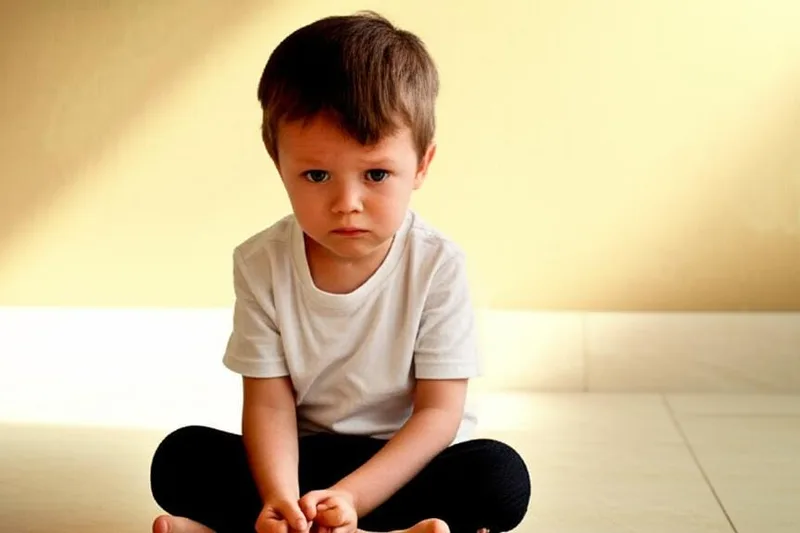
Does your child get angry more often than expected over small things? Or does he suddenly get very happy and struggle to control his happiness? Sometimes you may wonder, "Why is my child so naughty? Does he not know how to control his emotions?" This is not just mischievousness or stubbornness. This condition is something we often see among children with Attention-Deficit/Hyperactivity Disorder (ADHD) . They feel emotions like everyone else, such as sadness, happiness, anger, and fear. The difference is that they feel these emotions more intensely, more frequently, and they take longer to get over them. So, let's talk about how to understand this and help your child.
Why do they have difficulty controlling their emotions?
Simply put, this is due to a small change in the way their brains work. When they are young, many children act impulsively, or have difficulty calming down when they are very excited. But as they grow older, they learn to control their emotions. This ability is also called self-regulation .
Think of the thermostat in our AC at home. If the temperature in the room rises above the set temperature, the thermostat turns on and cools the room again. In the same way, when the "temperature" of our emotions increases, our brain also has a system like a thermostat to control it. But in children with ADHD, this ability called self-regulation, that is, that thermostat, is a little weak. So when their emotions suddenly become very "hot", it is very difficult for them to "cool" it back down, that is, to calm down.
The most important thing is to understand that the child is not doing these things on purpose . It is not their fault. They may need a little more time and help than other children to learn to control these behaviors .
How children with ADHD express their emotions
Not all children with ADHD behave in the same way when they are unable to control their emotions. Some children lose control completely when they get angry. Others, when asked to do something they don't want to do, have no interest or motivation.
However, there are some common symptoms that you should be aware of.
| Commonly seen feature | A simple explanation |
|---|---|
| Getting upset or angry over the slightest thing | Even though it might be normal for others, they feel like it's a big problem. They keep thinking about the incident and can't get rid of it, causing a lot of stress. |
| Taking longer to calm down | It takes them longer than others to recover and calm down after something hurtful has happened. They can hold onto anger for hours, even days. |
| Seeing even a small criticism as a big attack | Even if you say with good intentions, "Son, this isn't like this, do it this way," they feel like you're insulting them, like you've made a big mistake. |
| Impatience and immediate needs | If they feel like they need something, they want it right away. They have a hard time putting up with being told to "wait a minute." |
Also, be careful about excessive happiness. Children with ADHD can sometimes become completely overwhelmed by emotions like happiness and excitement, and act out of control.
How can you help your child control their emotions?
Helping a child with ADHD manage their emotions can be a little complicated, but it's not impossible. Here are some things that can help you.
Respect the child's feelings.
When your child talks about his or her feelings, don't minimize them by saying things like, "It's nothing," or "Don't think too much about it." Instead, create a safe environment for your child to express what's on their mind. Listen more than you ask questions. Try to think from your child's perspective. Remember that even if it doesn't seem like it makes sense to you, the feeling is something your child is really feeling .
Create healthy habits
- Good sleep : Make sure your child is getting enough sleep. We get cranky when we don't get enough sleep, and so do our children.
- Good food: Provide nutritious food. It is very difficult to control emotions when hungry.
- Exercise: Encourage your child to play and exercise for at least an hour a day. The extra energy released from the body will calm the mind.
If you talk to your doctor about this, he or she can refer you to appropriate treatment options for your child, if necessary. Sometimes methods like Cognitive Behavioral Therapy (CBT) or Dialectical Behavior Therapy (DBT) can be very helpful.
Make a list of ways to calm your mind (Coping Skills)
When you feel stressed or angry, make a list with your child of ways to calm down without harming yourself or others. Some of the methods can be done at home, while others can be done outside, at school.
Here are a few things you can try:
- Deep breathing (a simple method such as inhaling for a count of four, holding your breath for a count of seven, and slowly exhaling for a count of eight).
- Listening to a song.
- Drawing what's in your mind into a picture.
- Writing down what's on your mind in a diary.
- Running and playing.
- Talking about what's on your mind with someone you trust (mom, dad, friend).
Think about your mental health too.
This is very important. To help your child, you need to be well first. It's hard to deal with your child's emotions when you're stressed and angry. It's like saying in an emergency on an airplane, "Before you help others, put on your oxygen mask."
Make a list of ways to calm yourself down when you feel stressed. Ask for help from family and friends when you need it. If you can join support groups for parents of children with ADHD, that will also be a great strength for you. Also, don't forget to talk to your doctor about this and get his advice.
Take-Home Message
- Children with ADHD have difficulty regulating their emotions, not because they are bad behavior, but because they are part of the illness itself. They are not doing this on purpose.
- Respect your child's feelings. Listen to them without ignoring them and asking, "What's that?"
- Good sleep, nutritious food, and exercise are essential for a child's mental balance.
- Identify together some simple coping skills that can help your child calm down when they are angry or stressed.
- To help your child, you must first take care of your own mental health.
- If you have any concerns about this, do not suffer alone, but consult your family doctor for advice.




💬 Comments (0)
No comments yet. Be the first to share your thoughts here.
Add Your Comment