

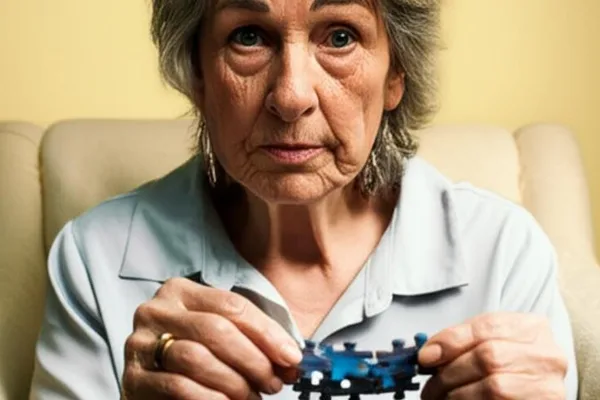
Have you ever noticed that an elderly person in your home, perhaps your mother, father, or grandmother, aunt... is constantly moving around, forgetting things, or suddenly interrupting when talking? We often think, "Oh... that's just how things get when you get older." But these things may not always be the fault of age. This could also be a symptom of Attention Deficit Hyperactivity Disorder , or ADHD as we all know it.
ADHD isn't just something that affects young children!
When we think of ADHD, we think of a mischievous, restless child. It's true, this condition is often diagnosed in childhood. But it doesn't go away completely as we grow older. This condition can also be seen in adults. Especially among older adults who are retired or close to retirement, ADHD can also be present. But unfortunately, there is not much research on how ADHD affects people in this age group.
There may be several reasons for this. One is that it is very difficult to diagnose ADHD in older adults. There is no specific test for it. If it is not diagnosed in childhood, it is unlikely to be diagnosed in adulthood. Another reason is that adults with undiagnosed ADHD may have developed coping strategies for decades to cope with these symptoms. This can result in symptoms that we all know as "hyperactivity" or "inattentiveness."
ADHD is not a disease that develops in childhood and gets better as you grow older. It is a lifelong condition.
Often, when doctors see someone over the age of 60 with attention deficit disorder or difficulty concentrating, they first think of other conditions, such as dementia or stroke, rather than ADHD.
ADHD is a condition that can run in families. If one of your close relatives has it, you are about nine times more likely to develop it. Some older adults first become aware of their ADHD symptoms after discovering that a child or grandchild has the condition.
How do ADHD symptoms change with age?
If you have ADHD, these symptoms don't just go away as you get older. In fact, some studies suggest that these symptoms may get worse for certain reasons. These may include:
- Changes in brain health occur with aging.
- Poor physical health.
- The loss of daily routine ( structure ) with retirement.
As you get older, your ADHD symptoms may change. These symptoms may include:
| Symptom | A simple explanation |
|---|---|
| Restlessness | The inability to stay calm in one place, a constant feeling of anxiety. |
| Excessive fidgeting | Even when you're just standing there, doing something with your hands and feet, shaking your head. |
| Talking too much | Talking non-stop, not letting others talk. |
| Trouble relaxing | Feeling restless despite trying to relax. |
| Impatience | The inability to wait in line until someone else finishes speaking. |
| Angry outbursts | Getting angry quickly over small things and not being able to control it. |
| Disorganization | Inability to organize work, frequent loss of belongings. |
| Forgetfulness | Forgetting appointments, forgetting where things are. |
| Difficulty planning and completing work | Even if you start a task, it is difficult to continue it until it is finished. |
| Impulsivity | Making rash decisions without thinking carefully, and regretting them later. |
Is there a special way ADHD affects adult women?
Yes. ADHD affects older women a little differently. It is especially common as women approach menopause, which is in their late 40s or early 50s. This period is called perimenopause . ADHD symptoms can be very severe during this time.
Simply put, during this time, your body's estrogen levels gradually decrease. As this estrogen level decreases, it also affects the chemical dopamine in the brain. People with ADHD already have low levels of dopamine. So when estrogen levels decrease, dopamine levels decrease even more, which can lead to mood swings , depression, anxiety, and difficulty concentrating .
If you are approaching menopause and you feel your ADHD symptoms are getting worse, be sure to tell your doctor about this.
What are the treatments for this?
When treating older adults with ADHD, the first step is medication.
Drug treatment
Doctors often prescribe stimulants for ADHD. These medications work by stimulating chemicals in the brain called neurotransmitters , increasing attention span. For some people, if stimulants don't work, doctors may switch to nonstimulant medications.
It may take some time to find the right medicine and dosage for you. As you age, your body's tolerance to medicines may change. Also, if you are taking medicine for other diseases, this new medicine may interact with them. Therefore , everything should be done under the supervision of a doctor. If you experience any side effects, inform your doctor immediately. In case of a medical emergency, go to a hospital's Emergency Department (ETU) immediately.
Non-drug treatments
Along with medication, your doctor may also suggest other methods, such as:
- Education about your condition: Understanding exactly what ADHD is and how it affects you.
- Skills training: For example, training in how to organize work and how to manage time.
- Psychological counseling: This can be very helpful. Counseling can give you the tools you need to successfully live with ADHD symptoms. It can help with things like:
- Feel good about yourself.
- Improve your relationships with family and friends.
- Control your anger.
- Control your hasty decision-making.
- Manage time.
- Organize your work.
These treatments cannot completely cure ADHD, but they can help you manage your symptoms and improve your quality of life.
Take-Home Message
- ADHD is not a condition limited to young children. It can also affect older adults.
- Things like forgetfulness and restlessness in an older person aren't always signs of "getting older." They can also be signs of ADHD.
- ADHD symptoms may become more severe in women during menopause.
- There are effective treatments, including medication and counseling, that can help control symptoms and lead a good life.
- It's never too late to ask for help. If you suspect that you or a loved one has ADHD, be sure to see a qualified doctor and talk about it.




💬 Comments (0)
No comments yet. Be the first to share your thoughts here.
Add Your Comment