

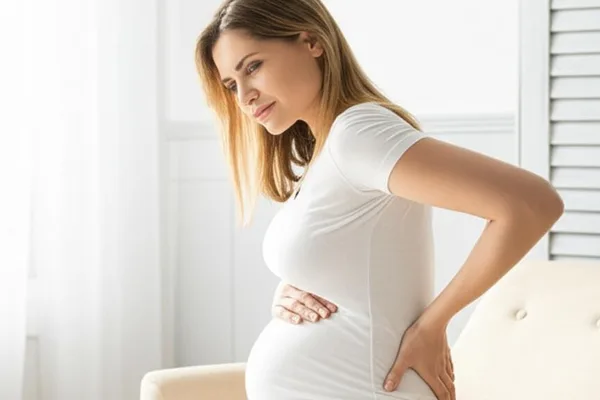
It's a wonderful feeling when you feel your baby growing inside you. But at the same time, sometimes you start to feel a little pain and ache in your back, right? This is actually a common experience for many mothers. This condition is especially common in the second half of pregnancy. So don't worry, this is normal. And there are many things you can do to reduce this back pain . Let's talk about it in detail.
Why does my back hurt like this?
There are several main causes of back pain during pregnancy. To be precise, this pain usually occurs at the point where your spine connects to your hip bone, called the sacroiliac joint. Let's take a look at the main factors that contribute to this.
| Reason | A simple explanation |
|---|---|
| Weight gain | During a healthy pregnancy, the average woman gains about 11-16 kg. This extra weight is carried by the spine. Also, as the baby grows, the uterus puts pressure on the nerves and blood vessels in the spine. |
| Posture changes | As your baby grows, your body's center of gravity changes. So, without you even realizing it, the way you stand and walk changes. This can put unnecessary pressure on your back and cause pain. |
| Hormonal changes | During this time, your body produces a hormone called 'Relaxin'. This hormone helps to loosen the ligaments in the pelvic area in preparation for childbirth. However, this same hormone also loosens the ligaments that support the spine, which can cause instability and pain in the spine. |
| Muscle atrophy | As your uterus grows, the two muscle plates that run from your chest down to your midsection (the rectus abdominis muscles) can move apart. This can also cause increased back pain. |
| Stress | Stress can cause your back muscles to tighten. This can also cause back pain or stiffness. You may find that your back pain increases during times of stress during pregnancy. |
What can be done for this back pain?
The good news is that if you didn't have back pain before you got pregnant, the pain will usually subside as you get closer to delivery. In the meantime, there are a few things you can do to help reduce and manage the pain.
Maintain correct posture.
Poor posture puts a lot of pressure on the back. So try to maintain proper posture while working, sitting, and sleeping.
- When sleeping: Sleep on your side with a pillow between your knees. This will reduce pressure on your back.
- When sitting: When sitting in a chair, use a small pillow or rolled up towel to support your back. Place your feet on a stack of books or a small stool. Sit up straight with your shoulders back.
- When standing: Instead of leaning back to balance because your stomach is coming forward, stand straight with your hips forward and shoulders back. You can also use a 'support belt' if necessary.
Exercise and Stretching
- Exercise: Regular exercise strengthens muscles and increases flexibility. This reduces stress on the back. Many activities, such as walking, swimming, and stationary cycling, are safe for pregnant women. But talk to your doctor before starting any exercise program. You can also consult a physical therapist about exercises that will strengthen your back and abdominal muscles.
- Stretching: There are simple stretches that can strengthen the muscles in your back and pelvic area. Ask your doctor about these.
Hot and cold compresses
Applying hot and cold compresses to the area of back pain can provide relief, but do this only under medical advice .
1. For the first two to three days, apply something cold (like an ice pack or a packet of frozen vegetables wrapped in a towel) to the painful area for about 20 minutes. Do this several times a day.
2. Then apply something warm (hot water bottle or heating pad).
Very important: Never place hot objects on your stomach area during pregnancy .
A few more tips
- When picking up something on the floor, bend your knees instead of bending your back.
- Avoid high-heeled shoes. Wear flat shoes with good support.
- Don't sleep on your back . It's best to sleep on your side.
- If the pain is severe, be sure to talk to your doctor before taking painkillers. While medications like acetaminophen (Tylenol) are usually safe, medications like aspirin and ibuprofen (Advil, Motrin) are not appropriate at this time. So don't take any medication without first asking your doctor.
When should you see a doctor immediately?
Although back pain is common, sometimes it can be a sign of something serious. If you have any of the following symptoms, call your doctor right away.
| Warning signs to look out for | |
|---|---|
| 🚨 | Very severe pain . |
| 🚨 | The pain may gradually worsen or start suddenly . |
| 🚨 | Rhythmic cramping pains - This could be a sign of premature labor. |
| 🚨 | Difficulty urinating or a feeling of numbness in the limbs. |
In rare cases, severe back pain can be caused by a condition called osteoporosis that develops during pregnancy. Rhythmic pain can also be a sign that you are about to give birth. So, if you have any of these symptoms, see a doctor without delay . If necessary, you can also go to the Emergency Department (ETU) of the nearest hospital.
Take-Home Message
- Back pain during pregnancy is a very common condition, so don't worry about it unnecessarily.
- You can get great relief from things like maintaining proper posture, doing safe exercises, and simple stretches.
- Be sure to talk to your doctor before using any painkillers or trying any other treatment methods (such as acupuncture or chiropractic).
- Be aware of warning signs such as severe pain, throbbing pain, or numbness in the extremities. If you experience any of these, seek medical advice immediately.




💬 Comments (0)
No comments yet. Be the first to share your thoughts here.
Add Your Comment