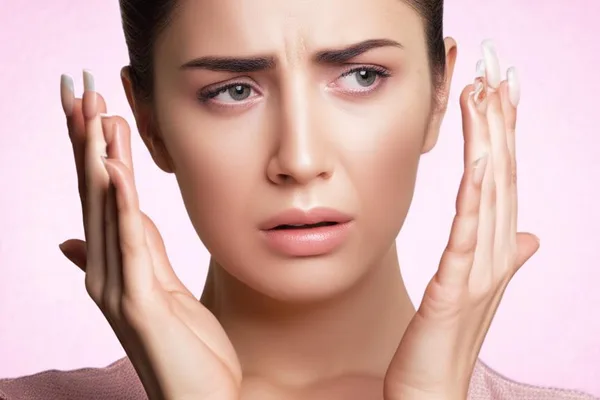
Are you going to get your nails sick while trying to look beautiful? Let's learn about artificial nails!

Are you going to get your nails sick while trying to look beautiful? Let's learn about artificial nails!

Nowadays, many people, especially young women, like to look beautiful and dress in fashion. Meanwhile, long, beautiful, and stylish nails are something that many people love. But when they cannot grow their natural nails beautifully, many people turn to artificial nails. Although these look beautiful when glued, it is very important that we are aware of the possible effects and health risks before using them. Because it is useless to go to be beautiful and get sick.

What are these types of artificial nails?

Simply put, there are two main types of artificial nails. They are Acrylic and Gel. In addition, there is also a type called 'Silks', which is often used to repair a damaged nail or to strengthen a nail tip.

Acrylic nails

This is the most popular type in the world as well as in Sri Lanka. It is made of a plastic-like material. A special powder and liquid are mixed together and applied to your nail with a brush to create this hard shell-like layer. To apply this properly, you need to file and roughen the top layer of your natural nail. Only then will the artificial nail adhere properly.

But the problem here is that your real nails are constantly growing. Then, after a while, a small gap forms between the part of your nail that is closest to the skin and the acrylic nail. So, you have to go to the salon every 2-3 weeks to fill that gap. The chemicals used for this and the constant rubbing of your nails can make your real nails very weak.

Most importantly, if you already have a fungal infection in your nails, putting on artificial nails can make it worse.

Gel nails

These are a little more expensive than acrylics, but they last longer. The gel is applied to the nail just like regular nail polish. Then, it is cured under a special UV light to dry and harden.

It's good to know a little about this UV light. Constant exposure to UV rays can damage the skin, cause wrinkles, and make the skin look older than it is. Excessive exposure can also increase the risk of skin cancer . But don't worry, there have been no reports of skin cancer caused by these UV lamps in nail salons anywhere in the world. Nor have there been any cases of people working with that light all day. But, it's good to be aware of the risks.

What problems can these cause?

Artificial nails are a bit harsh on your real nails. So, be careful with this. Let's see what the main problems are.

Problem Description
Allergic reaction The chemicals used to apply and remove your nails can be irritating to your skin. You may notice symptoms such as redness, pus, or swelling around the nail.
Bacterial or fungal infections Imagine that your artificial nail is badly damaged somewhere. Then your real nail can come off the nail bed a little. In that small space, germs, yeast, or fungus can easily enter and start growing. If there is a bacterial infection, the nail can turn green . A fungal infection (nail fungus) starts with a white or yellow spot on the nail. Over time, the nail can become thick and, in severe cases, it can even crumble. If you see something like this, see your doctor immediately.
Weakened nails To remove acrylic or gel nails, you have to soak your fingers in a chemical called acetone for 10 minutes or more. This will dry out your natural nails and may cause problems with the cuticles. Some artificial nails require filing off. This can make your natural nails very thin, brittle, and weak .

So how do we protect ourselves?

If you like the look of artificial nails, you don't have to give them up completely. But if you're careful about these things, you can use them with minimal risk.

  • Consider old illnesses: If you have had a fungal nail infection in the past, it's best to stay away from artificial nails. Also, don't use them to cover up existing nail problems.
  • Consider the removal method: Instead of filing off types, choose a type that you can soak off in a solution.
  • Don't disturb the cuticles: Ask your manicurist not to cut too much or push back the cuticles, the part of your nails where they meet the skin. This is because they act as a natural shield that protects us from infection .
  • Choose LED lights: If you're going to get gel nails , try to choose a salon that uses LED lights instead of UV lights. LED lights have very little UV radiation.
  • Don't forget the sunscreen: Before touching the UV light, apply a generous amount of broad-spectrum (UVA/UVB) sunscreen to both hands.
  • Moisturize: After removing your nails, especially after using acetone, apply a good cream moisturizer to your nails.
  • Give it a break: Take a break from artificial nails at least once every two to three months. This gives your real nails a chance to heal from the chemicals and grow back strong.

Take-Home Message

  • Although artificial nails are beautiful, the chemicals used to remove and apply them can cause allergies and infections.
  • If the nail is damaged, the area between the natural nail and the artificial nail can become infected with bacteria or fungus. If you notice a green discoloration or a white/yellow spot on the nail , see your doctor immediately.
  • Acetone used to remove nails and nail filing can make your natural nails weak, thin, and brittle.
  • To be safe, choose a salon that uses LED lights, wear sunscreen on your hands, and always moisturize your nails. It's also important to take a break every few months.
  • If you suspect an infection, do not try to cover it with artificial nails, but seek advice from your doctor.

Artificial Nails, Acrylic Nails, Gel Nails, Nail Fungus, Nail Infections, Nail Health

⚠️ Important: The medical articles and information on Nirogi Lanka are for general awareness only, and are by no means a substitute for professional medical advice, diagnosis, or treatment. For any medical problem you have, consult a qualified physician immediately.

💬 Comments (0)

No comments yet. Be the first to share your thoughts here.

Add Your Comment

Please calculate: 1 + 8 =
Are you going to get your nails sick while trying to look beautiful? Let's learn about artificial nails!
Preventive HealthJuly 6, 2026

Are you going to get your nails sick while trying to look beautiful? Let's learn about artificial nails!

Nowadays, many people, especially young women, like to look beautiful and dress in fashion. Meanwhile, long, beautiful, and stylish nails are something that many people love. But when they cannot grow their natural nails beautifully, many people turn to artificial nails. Although these look beautiful when glued, it is very important that we are aware of the possible effects and health risks before using them. Because it is useless to go to be beautiful and get sick.

What are these types of artificial nails?

Simply put, there are two main types of artificial nails. They are Acrylic and Gel. In addition, there is also a type called 'Silks', which is often used to repair a damaged nail or to strengthen a nail tip.

Acrylic nails

This is the most popular type in the world as well as in Sri Lanka. It is made of a plastic-like material. A special powder and liquid are mixed together and applied to your nail with a brush to create this hard shell-like layer. To apply this properly, you need to file and roughen the top layer of your natural nail. Only then will the artificial nail adhere properly.

But the problem here is that your real nails are constantly growing. Then, after a while, a small gap forms between the part of your nail that is closest to the skin and the acrylic nail. So, you have to go to the salon every 2-3 weeks to fill that gap. The chemicals used for this and the constant rubbing of your nails can make your real nails very weak.

Most importantly, if you already have a fungal infection in your nails, putting on artificial nails can make it worse.

Gel nails

These are a little more expensive than acrylics, but they last longer. The gel is applied to the nail just like regular nail polish. Then, it is cured under a special UV light to dry and harden.

It's good to know a little about this UV light. Constant exposure to UV rays can damage the skin, cause wrinkles, and make the skin look older than it is. Excessive exposure can also increase the risk of skin cancer . But don't worry, there have been no reports of skin cancer caused by these UV lamps in nail salons anywhere in the world. Nor have there been any cases of people working with that light all day. But, it's good to be aware of the risks.

What problems can these cause?

Artificial nails are a bit harsh on your real nails. So, be careful with this. Let's see what the main problems are.

Problem Description
Allergic reaction The chemicals used to apply and remove your nails can be irritating to your skin. You may notice symptoms such as redness, pus, or swelling around the nail.
Bacterial or fungal infections Imagine that your artificial nail is badly damaged somewhere. Then your real nail can come off the nail bed a little. In that small space, germs, yeast, or fungus can easily enter and start growing. If there is a bacterial infection, the nail can turn green . A fungal infection (nail fungus) starts with a white or yellow spot on the nail. Over time, the nail can become thick and, in severe cases, it can even crumble. If you see something like this, see your doctor immediately.
Weakened nails To remove acrylic or gel nails, you have to soak your fingers in a chemical called acetone for 10 minutes or more. This will dry out your natural nails and may cause problems with the cuticles. Some artificial nails require filing off. This can make your natural nails very thin, brittle, and weak .

So how do we protect ourselves?

If you like the look of artificial nails, you don't have to give them up completely. But if you're careful about these things, you can use them with minimal risk.

  • Consider old illnesses: If you have had a fungal nail infection in the past, it's best to stay away from artificial nails. Also, don't use them to cover up existing nail problems.
  • Consider the removal method: Instead of filing off types, choose a type that you can soak off in a solution.
  • Don't disturb the cuticles: Ask your manicurist not to cut too much or push back the cuticles, the part of your nails where they meet the skin. This is because they act as a natural shield that protects us from infection .
  • Choose LED lights: If you're going to get gel nails , try to choose a salon that uses LED lights instead of UV lights. LED lights have very little UV radiation.
  • Don't forget the sunscreen: Before touching the UV light, apply a generous amount of broad-spectrum (UVA/UVB) sunscreen to both hands.
  • Moisturize: After removing your nails, especially after using acetone, apply a good cream moisturizer to your nails.
  • Give it a break: Take a break from artificial nails at least once every two to three months. This gives your real nails a chance to heal from the chemicals and grow back strong.

Take-Home Message

  • Although artificial nails are beautiful, the chemicals used to remove and apply them can cause allergies and infections.
  • If the nail is damaged, the area between the natural nail and the artificial nail can become infected with bacteria or fungus. If you notice a green discoloration or a white/yellow spot on the nail , see your doctor immediately.
  • Acetone used to remove nails and nail filing can make your natural nails weak, thin, and brittle.
  • To be safe, choose a salon that uses LED lights, wear sunscreen on your hands, and always moisturize your nails. It's also important to take a break every few months.
  • If you suspect an infection, do not try to cover it with artificial nails, but seek advice from your doctor.

Artificial Nails, Acrylic Nails, Gel Nails, Nail Fungus, Nail Infections, Nail Health

⚠️ Important: The medical articles and information on Nirogi Lanka are for general awareness only, and are by no means a substitute for professional medical advice, diagnosis, or treatment. For any medical problem you have, consult a qualified physician immediately.

💬 Comments (0)

No comments yet. Be the first to share your thoughts here.

Add Your Comment

Please calculate: 1 + 8 =