
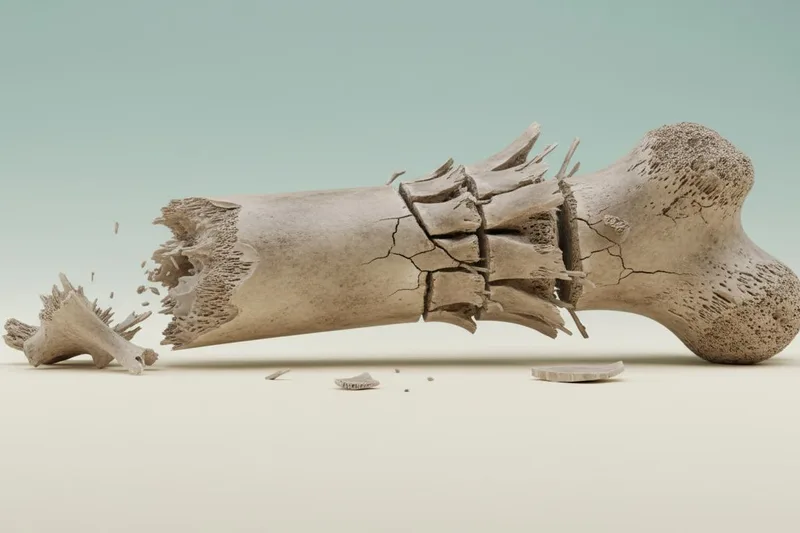
Oh, we've all heard of a broken arm or leg in a big accident. But there are some fractures that aren't just simple fractures. Imagine a plate falling to the ground and shattering, the bone shatters into a bunch of small pieces. That's what we call a 'comminuted fracture ' in medicine. This is a really serious condition, so it's important to be aware of it.
What exactly is a comminuted fracture?
Simply put, a comminuted fracture is when one of your bones breaks in at least two or more places and breaks into several pieces. It's like a piece of glass that shatters into pieces when it falls. This is a little more complicated than a regular fracture.
These types of fractures can occur in any large or long bone in the body. The most common places they occur are:
- Femur (thigh bone)
- The front part of the shin bone (Tibia)
- The back, thin part of the shin bone (`Fibula`)
- Upper arm bone (Humerus)
- The bones of the forearm and hand towards the fingers (`Radius` and `Ulna`)
- Clavicle
- Skull
This condition called a comminuted fracture is often caused by an unimaginable accident. Think of it like a serious car accident or a fall from a high place like an upper story. These are very serious if they happen to large bones, and surgery is often required to set the bone. However, sometimes these types of fractures in small bones can heal without surgery. How long it takes to heal depends on which bone you broke and how it broke. For many people, especially if you had to have surgery, it can take up to a year to fully recover.
What is the difference between comminuted and segmental fractures?
Comminuted Fracture and Segmental Fracture are both types of severe bone fractures . These names tell your doctor specific details about how your bones broke, where they broke, and what they look like inside your body.
If you have a comminuted fracture, it means your bone has broken in two or more places and is broken into many pieces. In other words, it's like it's been crushed.
On the other hand, a segmental fracture is when the bone breaks in two places, with a piece of bone in between being separated from the other parts. Some segmental fractures may or may not be comminuted.
However, no matter what it's called, the most important thing is to have your injury examined by a doctor as soon as possible. Either type of fracture can be a serious injury, and only after a medical examination can the necessary treatment be determined.
Who is more likely to suffer from these types of fractures?
In fact, a comminuted fracture – like any other bone fracture – can happen to anyone. Because these are caused by severe accidents, no one can predict when, how, or to whom an accident will happen. Therefore, everyone is at risk.
How common is this condition?
But the good news is that these so-called comminuted fractures are not very common. The reason for this is that, fortunately, most people do not have to experience the severe accidents that cause them.
What are the symptoms of a comminuted fracture?
If you have a comminuted fracture, you may also have other serious symptoms caused by the accident that caused it. Your symptoms will depend on the other injuries you have. But in general, symptoms of a comminuted fracture may include:
- Extremely severe pain: This is not normal pain, it is pain that is difficult to bear.
- Inability to move a body part that is normally movable: A condition in which an arm or leg cannot be moved or bent.
- A body part that looks noticeably different or moves out of place: An arm or leg may appear to be stretched out or positioned in an odd way.
- Your bone is sticking out through your skin: This is a very serious sign.
- Swelling: The injured area swells up a lot.
- Bruises and blood stains : Blood seeps under the skin and turns blue/purple.
Open and Closed Comminuted Fractures
Your doctor will classify your fracture as an ``Open Fracture`` or ``Closed Fracture``.
- If you have an ``Open Fracture`` (sometimes called ``Compound Fracture``), your broken bone has broken through the skin. These take longer to heal and can be more likely to become infected .There is also a higher risk of developing ) and other complications.
- A closed fracture is one in which the bone has broken and the skin has not been damaged, meaning the bone has not come out of the skin. This is also serious, but has fewer complications than an open fracture.
Displaced Comminuted Fractures
'Displaced' or 'Non-displaced' are the terms your doctor will use to describe a fracture .
- A displaced fracture is when the bone breaks and the pieces are pushed apart, leaving a large gap between them. These types of fractures often require surgery to set them properly.
- A non-displaced fracture is when the bone is broken, but the pieces have not moved too far, and they are still relatively intact.
In a comminuted fracture, the bone breaks into many pieces, making them more likely to become displaced than other types of fractures.
What are the causes of a comminuted fracture?
This comminuted fracture is caused by a very severe, high-impact accident ( Trauma ). The most common causes are:
- Severe vehicle accidents (such as car and motorcycle accidents).
- Falling from a very high place (for example, from a ladder, a roof, or even a tall tree).
Any impact that hits your bones hard can cause a comminuted fracture. However, while common things like slips and falls can break bones, they are less likely to cause enough damage to cause a comminuted fracture.
How to recognize a comminuted fracture?
Your doctor will diagnose a comminuted fracture with a physical exam and various imaging tests. Sometimes, if you are admitted to the emergency room after a serious accident, these tests can be done there.
If you are brought to the emergency room, a medical team will stabilize you and treat you in order of severity. Especially if you have life-threatening injuries, they will be given priority. After you are stabilized, imaging tests will be needed to confirm the fracture.
What kind of tests are done?
To get a clear picture of your fracture, you may need to have one or more of these imaging tests:
- X-ray `(X-ray)`:An X-ray can confirm any comminuted or other fractures and see how much damage has been done to your bones.
- Magnetic Resonance Imaging (MRI): Your doctor may use an MRI to get a complete picture of the damage to the bones and the surrounding area. It can also look for damage to the soft tissues (muscles, connective tissue, organs) around the bones. This is important to determine how these have been affected by the accident.
- CT Scan (Computed Tomography scan): A CT scan allows your doctor or surgeon to get a more detailed picture of your bones and surrounding tissues than an X-ray.
How is a comminuted fracture treated?
If you have broken a long or large bone and it has become a comminuted fracture, you will need surgery to fix it. There are several surgical techniques used to correct comminuted fractures. The technique your surgeon uses will depend on your injuries, the broken bone, and any complications that have occurred since the accident.
The surgeon will move your broken bones back into their correct positions (we call them 'sets') and fix them in place. This is when they heal properly and fit together. Most often, this is called internal fixation . This means that the surgeon will insert metal pieces (like rods or plates) into your bone to hold it in place until the bone heals. There are several types of internal fixation:
- Rods: A rod is inserted through the middle of the bone, from top to bottom.
- Plates and Screws: Metal plates are placed into the bone and secured with screws, holding the bone fragments together.
- Pins and Wires: If there are pieces of bone that are much smaller than other fixations, pins and wires are used to hold them together. These are usually used in conjunction with rods or plates. You may need pins and wires to hold the pieces together after your comminuted fracture.
Some people live with these metal fragments in their bodies. Some people even have to have them surgically removed later.
External Fixation
You may also need an external fixation. This is often a temporary solution. It helps to keep the fracture stable until your other injuries heal. The surgeon inserts screws inside your body, on either side of the fracture, and connects them to a support (brace or bracket) outside your body.
Sometimes surgeons recommend external fixation as a first step before major surgery to treat your comminuted fracture. If you have multiple other injuries, it may take some time for your body to recover enough to undergo internal fixation surgery.
Bone Grafting
If your comminuted fracture is very badly displaced, or if your bone is not healing as well as expected, you may need to have a bone graft . The surgeon will take extra bone tissue and insert it to put your broken bone back together. Then, the pieces are held together, usually with an internal fixation, until the bone grows back. There are several ways to get tissue for a bone graft:
- From somewhere else on your own body – most often the top of your hip bone.
- From an external contributor.
- With an artificially created replacement piece.
Comminuted Fracture surgery is an outpatient procedure, meaning you can usually go home the same day. However, you may have other injuries from the accident that caused the comminuted fracture, so you may need to stay in the hospital until you recover.
After surgery, the part of your body where the broken bone is will be immobilized. Depending on where it is, you may need to wear a brace, splint, or cast. Only then can you gradually put weight on it or start using it as you did before the accident.
What medications are used for comminuted fractures?
Non-steroidal anti-inflammatory drugs (NSAIDs) such as aspirin or ibuprofen can cause bleeding and other complications if used after surgery. Therefore, your surgeon will advise you on medications you can take to reduce pain after surgery.
Complications of Comminuted Fracture Treatment
Comminuted Fracture ``(Comminuted Fracture)`` Complications that may occur after surgery include:
- Acute Compartment Syndrome (ACS): Pressure inside the muscle increases, blood flow to the tissues is cut off, and permanent muscle and nerve damage can occur.
- Malunion: When your broken bone doesn't fit together properly as it heals.
- Nonunion: When your bones don't fit together completely or partially.
- Bone infection (Osteomyelitis): If you have had an open fracture (one where the bone has come through the skin), you are at higher risk of developing a bacterial infection.
- Other internal damage:Fractures can damage the muscles, nerves, blood vessels, tendons, and ligaments around the injury.
Also, if drugs like ``NSAIDs'' are used incorrectly, they can cause side effects such as:
- Bleeding
- Ulcers (stomach ulcers)
- Stomach pain
- Digestive tract complications
How soon will I feel better after treatment?
It may take several weeks for your symptoms to subside. Depending on the type of surgery you had to repair your comminuted fracture and the broken bone, you may be able to resume movement within a few weeks.
However, if you continue to have unbearable pain, be sure to see your doctor.
How can I reduce the risk of a comminuted fracture?
Follow these steps to reduce the risk of accidents in your daily life:
- Always wear a seatbelt when riding in a vehicle.
- Wear the correct safety equipment during all activities and sports.
- Keep your home and workplace clean and free of items that could trip you or others.
- Always use appropriate tools to reach things from above. Never climb on chairs or tables.
- Follow a diet and exercise plan that helps maintain good bone health.
- If you are over 50 years old, or if someone in your family has osteoporosis (bone thinning disease), talk to your doctor about a bone density test.
Can a comminuted fracture be prevented?
Comminuted fractures are often completely preventable because they happen suddenly. Since you can't predict when an accident will happen, there's nothing you can do to prevent a comminuted fracture other than following basic safety precautions. If you use a walker or cane, never walk without them, and be very careful on uneven ground.
What can I expect if I have a comminuted fracture?
If you have a comminuted fracture, your recovery will take longer than other types of fractures. It can take up to a year to heal, especially if you have other injuries from the original accident.
You will need physical therapy to help you regain strength and range of motion in the injured body part. This therapy will be part of a larger plan to heal from your other injuries.
How long does it take for a comminuted fracture to heal?
Comminuted fractures take longer to heal than other types of fractures and are more likely to develop complications.
Most comminuted fractures take a year or more to heal. The exact time it takes for your bone (or bones) to heal depends on the severity of your fracture and whether you have any complications.
Will I be unable to go to work or school?
If you have a serious accident, you may not be able to go to work or school until you recover. The specific injuries and broken bones you have will affect how long you will be away from work, school, and other activities.
Talk to your surgeon or doctor before resuming any physical activity during your recovery.
What is the outlook for a comminuted fracture?
Comminuted fractures are very serious injuries. If you had other injuries in the original accident, your life could be permanently affected. Because comminuted fractures are often life-threatening injuries, it can be difficult to tell one from the other. Talk to your doctor about a specific recovery plan for you and what to expect as you recover from your accident.
When should I go to the Emergency Room?
If you think you have a comminuted fracture – or any other bone fracture – you should see a doctor as soon as possible. Go to the emergency room if you have any of these symptoms:
- Very severe pain.
- Not being able to move a body part that you can normally move.
- A part of the body looks noticeably different or moves from where it was.
- You can see your bone sticking out of your skin.
- Swelling.
- Along with these other symptoms, new bruises and blood spots appear.
Go to the emergency room immediately after any serious accident.
What questions should I ask my doctor?
Don't forget to ask these questions when you see your doctor:
- Which bone is broken?
- What kind of surgery do I need?
- Will I need additional surgeries (Follow-up Operations)?
- How long will it take to heal?
A comminuted fracture is a very serious injury. You may not know you have one until you are receiving treatment for an injury that has occurred. While it is normal to feel scared when you find out you have a broken bone – especially a serious one – the success rate for treating comminuted fractures is very high.Your doctor and surgeon will guide you along the path to recovery.
Final Take-Home Message
By now you probably understand that a comminuted fracture is a serious condition where a bone breaks into many pieces. These often occur as a result of major accidents. Surgery is often required, and it takes time to fully heal.
However, the most important thing to remember is that with proper medical treatment and physical therapy, you can almost completely recover from this condition. Therefore, it is very important to follow your doctor's instructions exactly, take your medications as prescribed, and do rehabilitation exercises properly. It is also important to take all possible precautions to protect yourself from accidents. If you have any further questions about this, don't hesitate to talk to your doctor.
👩🏽⚕️ Additional questions (FAQs)
💬 What is a comminuted fracture?
This is a very severe fracture. In this case, the bone does not break in two pieces, but rather, due to a very strong blow, the bone is crushed into 3 or more small pieces.
💬 How can a bone be broken so badly?
A high-impact crash, a fall from a great height, or a heavy piece of metal falling on the body at work can all cause bones to break in this way.
💬 Is this cured with a plaster?
No! The entire bone, which has been broken into pieces, is opened in a surgical room (Open reduction), cleaned, and the pieces are put back together with plates and screws. It can take more than a year for the bone to heal completely.
` Comminuted Fracture, bone fracture, comminuted fracture, bone surgery, accidents, bone healing, bone health


💬 Comments (0)
No comments yet. Be the first to share your thoughts here.
Add Your Comment