How to use a face mask (COVID Mask) to protect yourself from COVID? Let's find out exactly!

How to use a face mask (COVID Mask) to protect yourself from COVID? Let's find out exactly!

Do you remember the early days of the Covid pandemic? One of the newest additions to our lives was the face covering, or mask. Now that the pandemic has been somewhat contained, it is still important to wear a mask in some cases, as fast-spreading Covid variants like Omicron are still around. So, today we will talk about what types of masks are available, which ones provide the most protection, and when we should wear one.

What is the function of this face mask?

Simply put, a face mask does two main things. One is to protect others from the droplets that you cough, sneeze, and breathe in. The other is to protect you from someone who has a disease like COVID.

Respiratory illnesses like COVID, the common cold , and the flu spread differently. They can be spread by direct contact with someone, by touching objects like doorknobs that have germs on them, or by breathing in tiny droplets that are released into the air when someone coughs or sneezes.

A mask is like an extra shield that protects you and those around you from respiratory illnesses like these.

What are the best types of masks to protect against Covid?

While face masks cannot stop the COVID virus 100%, some types of masks, such as the N95, offer a very high level of protection. Let's take a look at the different types of masks available on the market and their qualities.

Mask type Level of security What to know
Surgical Mask Basic security These are also called disposable masks. They are usually blue in color. Although they protect against large droplets, they do not fit snugly against the face, so they are less protective against small particles. For best results, choose one with several layers of non-woven material and a nose wire.
N95 Mask Very high security These fit snugly on the face. They filter out 95% or more of the smallest particles in the air. But to get this protection, it has to fit your face perfectly . When buying, choose a good quality one that says “NIOSH-Approved.”
Cloth Mask General safety It can be washed and reused. While not the best option, it is much better than not having a mask at all. Choose one that is made of multiple layers of fabric and fits snugly over your nose and mouth.
KN95 Mask Variable security Although these are made according to international standards, there is no accepted method to ensure their quality, so the quality often varies. They may not provide as much protection as N95. So be careful when buying.

A little tip for more safety!

If you are using a surgical mask, you can put a loose- fitting cloth mask over it. This is called “double masking.” Alternatively, you can tie the ear loops of the surgical mask together to reduce the gaps on the sides.

When is it necessary to wear a mask?

If you have COVID symptoms (sneezing, coughing , fever), have been in contact with someone with COVID, or have COVID yourself, be sure to wear a mask in indoor public places . This is important even if you have received all your vaccinations.

A mask is generally not necessary because the risk of spreading the virus outdoors is low. However, if there are many COVID cases in your area, it is wise to wear a mask in crowded outdoor spaces.

Who should not wear a mask?

Most people can wear masks without any problems. However, for some people, wearing a mask is not recommended.

  • Young children under 2 years of age.
  • People with breathing difficulties.
  • Someone who is unconscious.
  • Someone who can't take off their mask without help.

Let's learn about our children and the use of masks.

As a parent, you have a lot of questions about wearing masks for your children. Let's answer them.

Is there any benefit to children wearing masks at school?

Yes, absolutely. Even if they don't have symptoms, children can still spread the COVID virus to others (parents, grandparents, teachers). Research has shown that if everyone wears a mask properly, the rate of infection can be reduced to less than 1%.

Will the mask make it difficult for children to breathe?

No. Despite what some parents may fear, wearing a mask does not reduce oxygen levels. The mask is designed to allow air to circulate well. It does not affect a child's attention or learning.

Are there health risks to children from wearing masks?

No. There is no health risk to children wearing masks all day long. The idea that breathing in too much carbon dioxide (CO2) can cause poisoning (`hypercapnia`) is a complete myth. CO2 molecules are so small that they easily escape through the mask.

Will this hinder children's lung development?

Absolutely not. Wearing a mask does not affect a child's lung development in any way. In fact, it protects the child's lungs from pathogens like the Covid virus.

Will the mask interfere with the child's speech?

There is nothing to be afraid of about this either. Children learn to speak not only by looking at their mouths. When wearing a mask, children learn to pay more attention to other people's gestures, changes in voice, and emotions in their eyes. Therefore, the development of language skills is not hindered.

How to properly put on and take off a mask?

Follow these steps exactly.

  • What to do:
  • Before touching the mask, wash your hands thoroughly with soap for at least 20 seconds.
  • Check if there are any holes or other things on the mask.
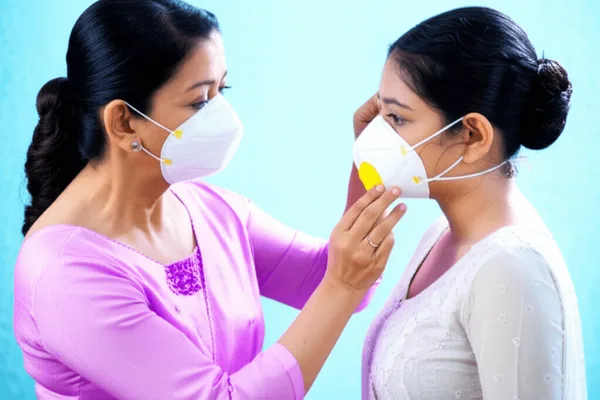
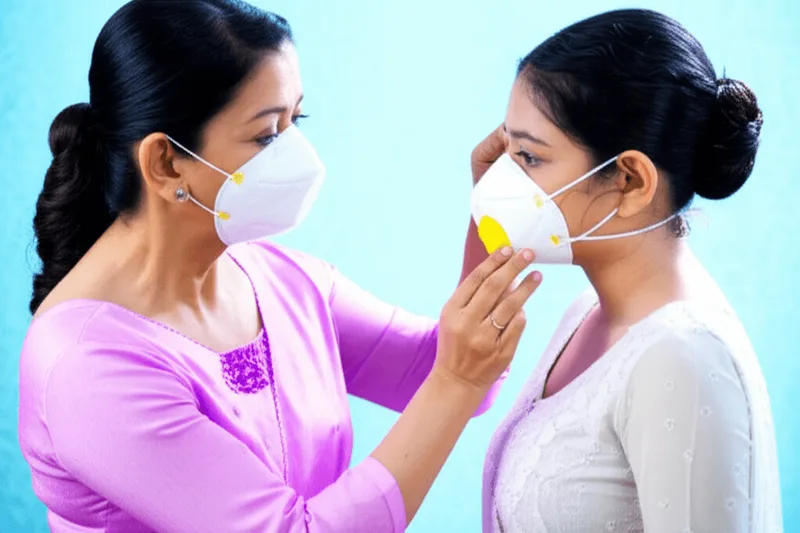
  • Wear a mask that fits snugly over your face, covering your nose, mouth, and chin. There should be no gaps on either side.
  • Tighten the wire on the nose to the shape of the nose.
  • Wear a comfortable mask that is easy to breathe in.
  • What not to do:
  • Don't touch the front of the mask while wearing it. That's where the most germs are.
  • Do not reuse a wet or dirty mask.
  • When removing the mask, hold it by the ear loops or the straps at the back. Throw it directly into the trash can without touching the front.

Mask reuse and cleaning

  • N95 Mask: After use, store in an airtight paper bag for about 5 days. During this time, any virus will die. Do not use the same N95 mask more than 5 times. Throw it away if it is dirty or deformed.
  • Surgical masks: These are for single use only . Throw them away when finished.
  • Cloth masks: Wash thoroughly with hot water and soap/detergent after each use. Dry thoroughly before reuse.

Take-Home Message

  • Choose a mask that fits your face well and has no gaps on the sides.
  • N95 masks provide the highest level of protection. Wearing a cloth mask over a surgical mask (double masking) can further increase protection.
  • Wash cloth masks daily. Use surgical masks once and throw them away.
  • Wearing a mask is safe for children over the age of 2. It is an important step that protects them and their families.
  • If you or your child have any concerns or health issues about wearing a mask, talk to your doctor .

Covid, Mask, COVID-19, Face Mask, N95, Surgical Mask, Child Health, Preventive Health, Protection from Infections

Frequently Asked Questions (FAQ)

Who should not wear a mask?

Most people can wear masks without any problems. However, for some people, wearing a mask is not recommended.

⚠️ Important: The medical articles and information on Nirogi Lanka are for general awareness only, and are by no means a substitute for professional medical advice, diagnosis, or treatment. For any medical problem you have, consult a qualified physician immediately.

💬 Comments (0)

No comments yet. Be the first to share your thoughts here.

Add Your Comment

Please calculate: 8 + 3 =
How to use a face mask (COVID Mask) to protect yourself from COVID? Let's find out exactly!
Preventive HealthAugust 8, 2025

How to use a face mask (COVID Mask) to protect yourself from COVID? Let's find out exactly!

Do you remember the early days of the Covid pandemic? One of the newest additions to our lives was the face covering, or mask. Now that the pandemic has been somewhat contained, it is still important to wear a mask in some cases, as fast-spreading Covid variants like Omicron are still around. So, today we will talk about what types of masks are available, which ones provide the most protection, and when we should wear one.

What is the function of this face mask?

Simply put, a face mask does two main things. One is to protect others from the droplets that you cough, sneeze, and breathe in. The other is to protect you from someone who has a disease like COVID.

Respiratory illnesses like COVID, the common cold , and the flu spread differently. They can be spread by direct contact with someone, by touching objects like doorknobs that have germs on them, or by breathing in tiny droplets that are released into the air when someone coughs or sneezes.

A mask is like an extra shield that protects you and those around you from respiratory illnesses like these.

What are the best types of masks to protect against Covid?

While face masks cannot stop the COVID virus 100%, some types of masks, such as the N95, offer a very high level of protection. Let's take a look at the different types of masks available on the market and their qualities.

Mask type Level of security What to know
Surgical Mask Basic security These are also called disposable masks. They are usually blue in color. Although they protect against large droplets, they do not fit snugly against the face, so they are less protective against small particles. For best results, choose one with several layers of non-woven material and a nose wire.
N95 Mask Very high security These fit snugly on the face. They filter out 95% or more of the smallest particles in the air. But to get this protection, it has to fit your face perfectly . When buying, choose a good quality one that says “NIOSH-Approved.”
Cloth Mask General safety It can be washed and reused. While not the best option, it is much better than not having a mask at all. Choose one that is made of multiple layers of fabric and fits snugly over your nose and mouth.
KN95 Mask Variable security Although these are made according to international standards, there is no accepted method to ensure their quality, so the quality often varies. They may not provide as much protection as N95. So be careful when buying.

A little tip for more safety!

If you are using a surgical mask, you can put a loose- fitting cloth mask over it. This is called “double masking.” Alternatively, you can tie the ear loops of the surgical mask together to reduce the gaps on the sides.

When is it necessary to wear a mask?

If you have COVID symptoms (sneezing, coughing , fever), have been in contact with someone with COVID, or have COVID yourself, be sure to wear a mask in indoor public places . This is important even if you have received all your vaccinations.

A mask is generally not necessary because the risk of spreading the virus outdoors is low. However, if there are many COVID cases in your area, it is wise to wear a mask in crowded outdoor spaces.

Who should not wear a mask?

Most people can wear masks without any problems. However, for some people, wearing a mask is not recommended.

  • Young children under 2 years of age.
  • People with breathing difficulties.
  • Someone who is unconscious.
  • Someone who can't take off their mask without help.

Let's learn about our children and the use of masks.

As a parent, you have a lot of questions about wearing masks for your children. Let's answer them.

Is there any benefit to children wearing masks at school?

Yes, absolutely. Even if they don't have symptoms, children can still spread the COVID virus to others (parents, grandparents, teachers). Research has shown that if everyone wears a mask properly, the rate of infection can be reduced to less than 1%.

Will the mask make it difficult for children to breathe?

No. Despite what some parents may fear, wearing a mask does not reduce oxygen levels. The mask is designed to allow air to circulate well. It does not affect a child's attention or learning.

Are there health risks to children from wearing masks?

No. There is no health risk to children wearing masks all day long. The idea that breathing in too much carbon dioxide (CO2) can cause poisoning (`hypercapnia`) is a complete myth. CO2 molecules are so small that they easily escape through the mask.

Will this hinder children's lung development?

Absolutely not. Wearing a mask does not affect a child's lung development in any way. In fact, it protects the child's lungs from pathogens like the Covid virus.

Will the mask interfere with the child's speech?

There is nothing to be afraid of about this either. Children learn to speak not only by looking at their mouths. When wearing a mask, children learn to pay more attention to other people's gestures, changes in voice, and emotions in their eyes. Therefore, the development of language skills is not hindered.

How to properly put on and take off a mask?

Follow these steps exactly.

  • What to do:
  • Before touching the mask, wash your hands thoroughly with soap for at least 20 seconds.
  • Check if there are any holes or other things on the mask.
  • Wear a mask that fits snugly over your face, covering your nose, mouth, and chin. There should be no gaps on either side.
  • Tighten the wire on the nose to the shape of the nose.
  • Wear a comfortable mask that is easy to breathe in.
  • What not to do:
  • Don't touch the front of the mask while wearing it. That's where the most germs are.
  • Do not reuse a wet or dirty mask.
  • When removing the mask, hold it by the ear loops or the straps at the back. Throw it directly into the trash can without touching the front.

Mask reuse and cleaning

  • N95 Mask: After use, store in an airtight paper bag for about 5 days. During this time, any virus will die. Do not use the same N95 mask more than 5 times. Throw it away if it is dirty or deformed.
  • Surgical masks: These are for single use only . Throw them away when finished.
  • Cloth masks: Wash thoroughly with hot water and soap/detergent after each use. Dry thoroughly before reuse.

Take-Home Message

  • Choose a mask that fits your face well and has no gaps on the sides.
  • N95 masks provide the highest level of protection. Wearing a cloth mask over a surgical mask (double masking) can further increase protection.
  • Wash cloth masks daily. Use surgical masks once and throw them away.
  • Wearing a mask is safe for children over the age of 2. It is an important step that protects them and their families.
  • If you or your child have any concerns or health issues about wearing a mask, talk to your doctor .

Covid, Mask, COVID-19, Face Mask, N95, Surgical Mask, Child Health, Preventive Health, Protection from Infections

Frequently Asked Questions (FAQ)

Who should not wear a mask?

Most people can wear masks without any problems. However, for some people, wearing a mask is not recommended.

⚠️ Important: The medical articles and information on Nirogi Lanka are for general awareness only, and are by no means a substitute for professional medical advice, diagnosis, or treatment. For any medical problem you have, consult a qualified physician immediately.

💬 Comments (0)

No comments yet. Be the first to share your thoughts here.

Add Your Comment

Please calculate: 8 + 3 =