
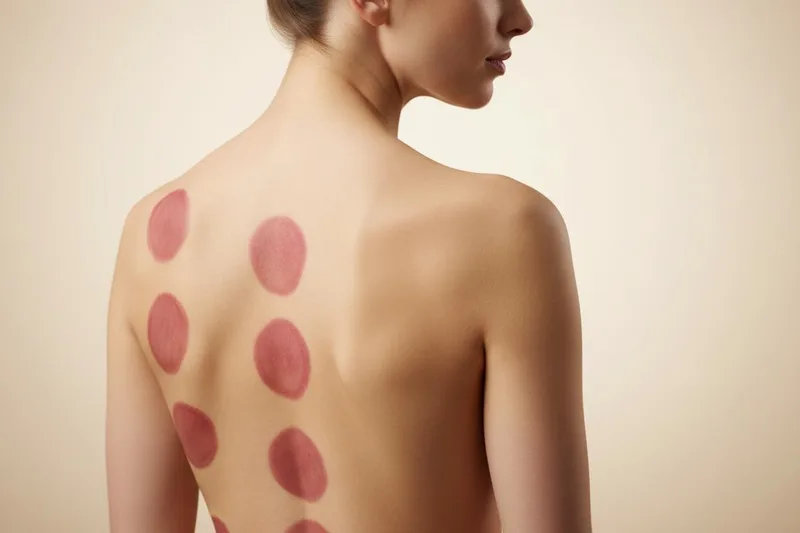
You may have seen those dark purple, circular spots on the backs and shoulders of Olympic-level athletes. Or, even among us, you may have heard of “cupping” for back pain, joint pain, and stiffness. This is what we medically call ‘cupping therapy ’. This is a very old treatment method. So many people are curious about this. Let’s talk about everything in simple terms today.
What exactly is Cupping Therapy?
Simply put, cupping therapy is a very ancient treatment method used to relieve pain and other discomforts. It has been used for thousands of years in countries like China and West Asia.
In this, a trained person places cups made of glass, plastic , or other materials on your back, stomach, arms, or legs where you are experiencing pain. Then, a vacuum is created inside the cup. Then, your skin is pulled up by the force of the suction . This method is mainly used to relieve pain-related conditions . Some also say that it provides relief for long-term (chronic) health problems.
Cupping therapy is typically used for the following conditions:
- Arthritis , which means inflammation of the joints , especially conditions like `(Rheumatoid Arthritis)`.
- Back pain , neck pain , knee and shoulder pain .
- Breathing difficulties like asthma.
- `Carpal Tunnel Syndrome` (pain caused by nerve compression in the wrist).
- Digestive system diseases, for example `(Irritable Bowel Disease – IBD)`.
- Headaches and migraines.
- High blood pressure (Hypertension).
What does this do to the body? How does this work?
Experts are still researching how this 'cup' therapy actually reduces pain. There is still a lack of major scientific research on it.
But this is the accepted theory. Because of the force of the urine generated inside the cup, fluid is drawn into that area. This force causes the very fine blood vessels under the skin, called capillaries, to expand and burst a little. It feels like a small bruise. How does the body respond to this? The body thinks, “Oh, there’s a little damage here, and it needs to heal.” Then the body’s natural healing process begins. It provides a fresh, healthy blood supply to that area. It is believed that this stimulates healing at the cellular level. Because of this effect, some people believe that cupping therapy also helps to remove toxins from the body.
The most important thing is that 'cup' therapy is a complementary medicine used in addition to traditional Western medical treatments, not a replacement for them.
What are the main types of 'cup' therapy?
There are several ways to do cupping therapy. Your therapist will choose the method that is best for you based on your condition. Typically, 3 to 5 cups are used at a time. Sometimes up to 7 cups can be used.
| Treatment method | The way to do it is simple. |
|---|---|
| Dry Cupping | This is the most common method. The cup is heated inside (perhaps by lighting a cotton ball soaked in alcohol) and quickly placed on the skin. As the air inside cools, a vacuum is created, pulling the skin upwards. In modern methods, a suction device is used to remove the air from the cup. |
| Running Cupping | This is similar to dry cupping. However, before placing the cups, an oil or lotion is applied to the skin. The cup is then placed on the skin and gently moved back and forth over the painful area. This creates a massage-like effect. |
| Wet/Bleeding Cupping | Before placing the cups, a few small scratches are made on the skin surface with a very fine needle. Then, when the cup is placed, a few drops of blood are added to the cup due to the force of urination . It is believed that this method removes toxins from the body along with the blood. |
What kind of cups do you use?
Most often, glass or plastic cups are used, but sometimes cups made of bamboo, ceramic, metal, or silicone can also be used.
What does this treatment feel like? Does it hurt?
Cupping therapy shouldn't be painful, but you may feel a slight tightening of the skin as the cup is placed and pulled up.
After treatment, you may notice round, red, or purple marks where the cups were placed. These may look like bruises, but they are not actually bruises caused by muscle damage. These marks will fade completely in a week or two . After treatment, the areas may feel a little sore, like a bruise, but they should not be painful.
What are the benefits and risks of 'cup' therapy?
Like any treatment method, cupping therapy has benefits and some risks.
Benefits
Here's what many people who have received this treatment say:
- Pain and inflammation are reduced.
- Muscle stiffness decreases.
- Blood circulation improves.
- The range of motion of joints and muscles increases.
Risks
Cupping therapy is a relatively low-risk treatment. However, sometimes the following can happen:
- Bruising of the skin.
- Hot cups can cause burns.
- Feeling tired.
- headache
- Muscle pain or stiffness.
- Nausea.
- Skin infections, itching, or scarring (especially if not cleaned properly after Wet Cupping).
Very rarely, some people may experience a condition called ``Vasovagal Syncope'', which is a sudden drop in blood pressure and heart rate, leading to fainting. This is especially likely to happen when wet cupping is performed on people who are afraid of needles and who are prone to fainting.
Who should not have this treatment?
This is very important. 'Cup' therapy is not suitable for everyone. If you have the following conditions, you should avoid receiving this treatment.
Warning: If you have any medical condition, be sure to consult your doctor before undergoing 'cupping' therapy.
| When should cupping therapy not be used? |
|---|
| During pregnancy. |
| People with low hemoglobin in the blood (Anemia). |
| For those who have a pacemaker implanted in their heart. |
| People with bleeding disorders, for example, hemophilia. |
| People with blood clotting problems, for example, Deep Vein Thrombosis (DVT) or a history of stroke. |
| For those with cardiovascular disease. |
| For those with severe skin diseases such as eczema or psoriasis (where the disease is present). |
| For those with seizure disorders such as epilepsy. |
When to see your doctor
If you experience any of these symptoms after receiving cupping therapy, be sure to seek medical advice.
- If burns occur at the treated area.
- If you experience unbearable, excessive pain or stiffness.
- If you develop a fever or signs of a skin infection (redness, swelling, pain, yellow pus-like discharge).
If you have the slightest doubt about anything like this, it's best to see your doctor immediately rather than informing the person who performed the treatment.
Take-Home Message
- Cupping Therapy is an ancient, alternative treatment method used primarily to relieve pain.
- Scientific evidence on its effectiveness is mixed, but some people report finding relief from it.
- Although this is a relatively low-risk treatment, it is not without risks such as skin scarring, burns, and infections.
- Cupping therapy is not suitable for everyone. It is especially not suitable for pregnant women, people with bleeding disorders, and heart patients.
- Most importantly: Before trying cupping therapy or any other alternative treatment, always talk to your doctor and get his or her approval and advice.
cupping therapy, cupping therapy, pain, back pain, joint pain, alternative treatments, cupping marks, traditional medicine, traditional medicine




💬 Comments (0)
No comments yet. Be the first to share your thoughts here.
Add Your Comment