
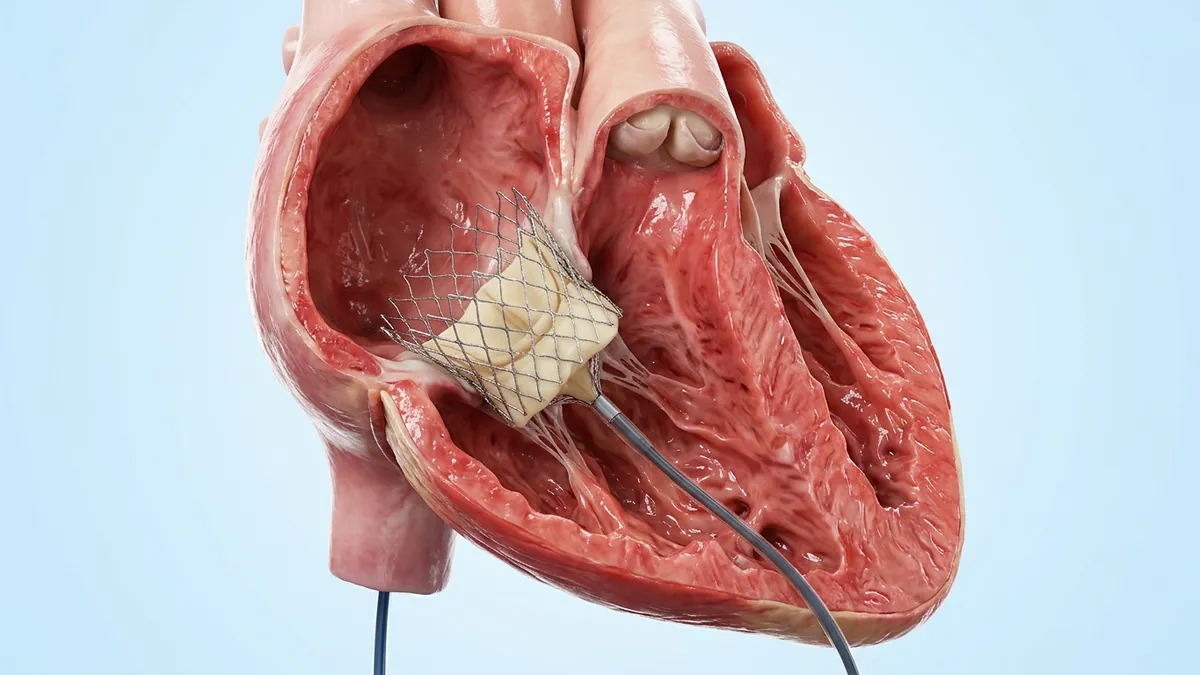
Evoque Transcatheter Tricuspid Valve Replacement (TTVR) via Femoral Vein: Relief for Severe Tricuspid Regurgitation represents one of the biggest breakthroughs in modern heart care. For decades, cardiologists called the tricuspid valve the "forgotten valve." If you had a severely leaky right-sided heart valve (severe tricuspid regurgitation), standalone open-heart surgery often carried too high a risk, leaving you reliant on higher and higher doses of water pills (diuretics) just to get through the day. Pretty frustrating when swelling and exhaustion still hold you back, right?
Have you ever wondered why a leaky valve on the right side of your heart makes your ankles puff up and your stomach feel uncomfortably full after just a few bites of dinner? Instead of pumping blood cleanly forward to your lungs, a worn-out tricuspid valve lets blood slosh backward into your veins, congesting your liver, kidneys, and legs. Today, we doctors finally have a minimally invasive catheter-based valve replacement (transcatheter tricuspid valve replacement, or TTVR) that installs a brand-new valve through a vein in your groin while your heart keeps beating.
Whether you live in the United States, the United Kingdom, Canada, or Australia, understanding how this procedure works helps you ask the right questions at your Primary Care Physician (PCP) or family GP clinic before meeting a specialist hospital Heart Team.
📌 Key Takeaways at a Glance
- No Open-Heart Incision: The Edwards Evoque valve is delivered through a thin tube placed in your groin's leg vein (femoral vein), avoiding breastbone surgery and a heart-lung machine.
- Near-Complete Leak Elimination: In the landmark TRISCEND II trial, over 98% of patients saw their valve leak drop to mild, trace, or zero within 30 days, holding steady at one year.
- Meaningful Symptom Relief: Most patients breathe easier, walk farther, and experience far less leg and belly fluid buildup compared with taking medications alone.
- Important Risks to Weigh: Around 15% to 17% of patients need a new permanent pacemaker afterward, and blood thinners (oral anticoagulants) are required for at least 6 months.
- Growing Coverage: Approved by the US FDA and covered by CMS Medicare under National Coverage Determination rules when performed by a hospital Heart Team, with expanding access in specialist UK, Canadian, and Australian cardiac centers.
What Is Evoque Transcatheter Tricuspid Valve Replacement (TTVR) via the Femoral Vein, and How Does It Relieve Severe Tricuspid Regurgitation?
Evoque Transcatheter Tricuspid Valve Replacement (TTVR) is a minimally invasive heart procedure that replaces a severely leaky tricuspid valve through a thin catheter in your groin's femoral vein, completely stopping backward blood flow and relieving fluid buildup without requiring open-heart surgery or stopping your heart.
Think about your tricuspid valve for a second like a one-way swinging door between your heart's upper right chamber (right atrium) and lower right pumping chamber (right ventricle). Normally, its three delicate flaps open to let oxygen-poor blood in and snap shut when the heart squeezes blood toward the lungs. When that door frame stretches wide open, blood surges backward into your body's main veins with every single heartbeat.
How does the Evoque valve fix that? Unlike clip repairs (transcatheter edge-to-edge repair, or T-TEER such as TriClip) that pinch existing valve flaps together, the Evoque system replaces the entire valve mechanism. It uses a self-expanding nickel-titanium (nitinol) frame, durable cow-heart tissue flaps (bovine pericardial leaflets), an inner sealing skirt to stop side leaks, and nine gentle anchors that hug your natural valve flaps securely in place. Even when the gap between flaps is far too wide for a clip, full replacement seals the doorway cleanly. Now that makes sense, right?
Why Does Severe Tricuspid Regurgitation Happen, and How Do Doctors Grade Valve Leaks?
We rarely stop to think about the right side of the heart until persistent swelling shows up, do we? In around 85% to 90% of adults, severe tricuspid regurgitation is "secondary" (functional)—meaning the valve flaps themselves aren't torn, but the surrounding muscular ring (tricuspid annulus) has stretched out. Common culprits include long-standing irregular heartbeats (atrial fibrillation), previous left-sided heart valve trouble, high lung blood pressure (pulmonary hypertension), or a pacemaker wire resting across the valve.
When you visit your PCP or family GP clinic complaining of heavy, swollen ankles by evening, shoes or rings feeling tight, unusual tiredness, or fullness in your upper right abdomen, we doctors examine your neck veins, listen for a soft whooshing heart murmur, and check blood tests for kidney strain and liver congestion (cardiohepatic syndrome). Because left-sided heart failure, chronic kidney disease, and primary liver cirrhosis can mimic this fluid retention, we order a standard chest heart ultrasound (transthoracic echocardiogram, or TTE) first.
Modern cardiology guidelines use a five-grade scale rather than stopping at "severe". Cardiologists measure the narrowest leak stream width (vena contracta) and leak hole size (effective regurgitant orifice area, or EROA): Severe (Grade 3+) starts at a stream width of at least 7 mm or an EROA of 40 mm², progressing to Massive (Grade 4+) at 60 mm² and Torrential (Grade 5+) at 80 mm² or greater.
Who Qualifies for the Evoque Valve, and What Pre-Procedure Scans and Cutoffs Matter?
Not everyone with a leaky tricuspid valve needs—or safely qualifies for—a transcatheter replacement right away. Look at what happens first: your GP refers you to a hospital Multidisciplinary Heart Team made up of an interventional cardiologist, an advanced cardiac imaging specialist, a heart failure specialist, and a cardiothoracic surgeon. Before recommending Evoque TTVR, the team confirms that your symptoms persist despite optimal medical therapy, primarily steady doses of oral water pills (loop diuretics like furosemide, bumetanide, or torsemide).
Based on FDA labeling and TRISCEND II clinical criteria, key clinical benchmarks and exclusions include:
- Severity & Symptoms: Symptomatic Severe (Grade 3+), Massive, or Torrential tricuspid regurgitation in adults aged 18 and older.
- Left Heart Pumping Strength: Left Ventricular Ejection Fraction (LVEF) must be 25% or higher; an LVEF below 25% contraindicates the procedure.
- Right Ventricle & Lung Pressure: Your right ventricle must still squeeze well enough to pump forward once the backdoor leak is sealed, without severe, irreversible pulmonary hypertension.
- Blood Pressure & Access Safety: Resting systolic blood pressure should sit between 90 and 160 mmHg, and your groin's femoral vein and main lower vein (inferior vena cava) must be clear of blocking clots or incompatible filters so the 28-French (9.3 mm) delivery catheter can pass safely.
To pick the exact fit among the four available Evoque valve sizes—44 mm, 48 mm, 52 mm, or 56 mm—specialists perform an ultrasound camera scan down the food pipe (transesophageal echocardiography, or TEE) and a 4D cardiac CT scan.
What Happens Step-by-Step During Femoral Vein TTVR, Hospital Recovery, and Blood Thinner Care?
Walking into a cardiac catheterization suite feels far less intimidating when you know each step ahead of time, doesn't it? Before admission, your Heart Team gives clear instructions on fasting overnight and adjusting blood thinners or diabetes tablets. Because the guiding TEE ultrasound probe sits in your food pipe throughout implantation, the procedure is performed under general anesthesia so you sleep comfortably from start to finish.
Once you are asleep, the interventional cardiologist makes a tiny puncture in the right femoral vein at the top of your thigh—no chest cuts, no broken ribs. Guided by live 3D ultrasound and X-ray video (fluoroscopy), the doctor steers the flexible 28-French delivery tube up into the right side of your beating heart, positions the folded Evoque valve inside your stretched ring, and releases its nine anchors to lock onto your native flaps. Immediately, the new tissue leaflets begin opening and closing, and the catheter is withdrawn before sealing the groin puncture with simple stitches.
Most patients wake up smoothly and spend 3 to 6 days in the hospital for heart rhythm monitoring and diuretic adjustments. Because the heart's natural electrical bundle sits millimetres from the tricuspid ring, about 15% to 17% of patients without an existing pacemaker develop a slow heart rhythm requiring a permanent pacemaker before discharge. Afterward, taking a prescribed blood thinner (oral anticoagulant such as warfarin or apixaban) for at least 6 months is essential to keep tiny clots from forming on the new valve tissue while your body heals over the frame.
How Do Medicare, Private Insurance, the NHS, and Public Health Systems Cover Evoque TTVR?
Whenever a cutting-edge heart device arrives, one of the very first questions families ask us doctors is, "Will insurance or public healthcare actually pay for this?" What do you think—does coverage match the clinical science yet? Fortunately, access has expanded rapidly following the US FDA's approval of the Edwards Evoque system in February 2024.
In the United States, the Centers for Medicare & Medicaid Services (CMS) finalized a landmark National Coverage Determination (NCD 20.37) in March 2025. Medicare covers FDA-approved TTVR nationwide under Coverage with Evidence Development (CED) when you have symptomatic severe tricuspid regurgitation despite optimal medical therapy, are evaluated by a multidisciplinary Heart Team, and receive care within a CMS-approved clinical study or registry. Commercial private insurers review requests through prior authorization using similar TRISCEND II clinical criteria.
In the United Kingdom, Canada, and Australia, Evoque TTVR is delivered at accredited tertiary cardiac hospitals—such as specialist NHS structural heart centres, provincial university heart institutes in Canada, and accredited public or private tertiary hospitals in Australia—following review by a formal Heart Team. Starting at your local GP or PCP clinic ensures all baseline echocardiograms and blood panels are ready for a smooth specialist referral.
How Does Evoque TTVR Compare With Other Treatments, and How Do You Care for Yourself at Home?
Remember how we talked earlier about comparing clip repairs, water pills, and full replacement? Reviewing this mobile-friendly comparison table with your cardiologist can clarify why your Heart Team leans toward one pathway over another.
| Treatment Option or Clinical Scenario | Clinical Meaning & Action Step |
|---|---|
| Water Pills Alone (Optimal Medical Therapy) | Loop diuretics drain excess fluid from your legs and abdomen, easing breathlessness, but they cannot mechanically stop backward blood flow through a stretched valve. What you should do: Take diuretics exactly as prescribed, weigh yourself each morning, and ask your GP for a structural heart referral if swelling or fatigue continues. |
| Transcatheter Clip Repair (TriClip / T-TEER) | Clips pinch leaky valve flaps together via the femoral vein with very low pacemaker risk (around 3%), but they work best when the gap between flaps is small (typically under 7 to 8 mm). What you should do: Complete a 3D TEE scan so your Heart Team can measure whether your valve flaps sit close enough for a clip or need full replacement. |
| Evoque Valve Replacement (TTVR via Femoral Vein) | Replaces the entire valve via the groin vein, eliminating severe-to-torrential leaks in over 98% of patients even with wide gaps, though carrying higher pacemaker and 6-month blood thinner needs. What you should do: Complete cardiac CT and TEE sizing, discuss pacemaker and bleeding risks openly, and commit to post-procedure anticoagulation. |
| Open-Heart Tricuspid Valve Surgery | Requires opening the breastbone and using a heart-lung bypass machine; usually reserved for younger, lower-risk patients or those already having left-sided heart surgery. What you should do: Ask the cardiothoracic surgeon on your Heart Team to calculate your surgical risk score before choosing between catheter and surgical care. |
| Existing Pacemaker Wire Across the Valve | Around 38% of TRISCEND II patients already had a pacemaker lead; Evoque gently pins the wire against the ring, though device settings and lead function must be checked carefully. What you should do: Bring your pacemaker or defibrillator wallet ID card to your consultation so an electrophysiologist can check whether you are pacemaker-dependent. |
Back at home after Evoque TTVR, everyday habits protect your recovery. Keep groceries low in hidden salt—swap canned soups, bacon, deli ham, salted crisps or chips, and bottled soy sauce for porridge oats, fresh berries, leafy greens, unsalted nuts, and grilled fish seasoned with lemon and herbs. Keep your groin puncture clean and dry for the first week, avoid lifting heavy shopping bags over 10 pounds (4.5 kg) for 5 to 7 days, and tell every dentist about your prosthetic heart valve so preventive antibiotics can be prescribed before invasive dental cleanings.
✔️ What You Should Do & ❌ What to Avoid
- ✔️ Do weigh yourself every morning: Step on the bathroom scale after using the toilet and before breakfast; report a jump of 2 to 3 lb (1 to 1.5 kg) in 24 hours or 5 lb (2.3 kg) in a week to your GP or heart nurse.
- ✔️ Do take blood thinners on schedule: Never skip doses of your prescribed anticoagulant during the crucial 6-month healing window after valve implantation.
- ✔️ Do attend follow-up echocardiograms: Scheduled scans at 30 days, 6 months, and yearly confirm smooth leaflet motion and right-heart recovery.
- ❌ Don't lift heavy loads early on: Avoid straining, vigorous cycling, or lifting over 10 lb (4.5 kg) during the first week while your femoral vein puncture seals completely.
- ❌ Don't take over-the-counter NSAID painkillers: Avoid ibuprofen, naproxen, or high-dose aspirin unless approved by your doctor, as they worsen fluid retention and sharply raise bleeding risk on anticoagulants.
- ❌ Don't skip dental precautions: Never undergo deep gum work or tooth extractions without asking your cardiologist or dentist about antibiotic cover to prevent valve infection (infective endocarditis).
🚨 When to Seek Immediate Emergency Care (Red-Flag Symptoms)
If you or someone near you develops any of these red-flag symptoms, do not wait — call 911 (US & Canada), 999 or 111 (UK), or 000 (Australia) immediately or go straight to the nearest hospital Emergency Room (ER / A&E):
- Groin Puncture Bleeding or Rapid Lump: Bright blood soaking through a dressing or a rapidly expanding, painful, or throbbing lump at the femoral vein site in your groin.
- Fainting, Severe Dizziness, or Very Slow Pulse: Feeling about to black out or noticing a sudden drop in heart rate, which can signal a post-procedure electrical heart block needing urgent pacing.
- Sudden Severe Shortness of Breath or Chest Pain: Gasping for air while sitting upright, coughing frothy sputum, or new chest tightness.
- Serious Internal Bleeding Signs on Blood Thinners: Black tarry stools, vomiting blood or material resembling coffee grounds, blood in urine, or a sudden severe headache after a fall.
- Unexplained Fever or Chills After Valve Placement: Persistent fever above 100.4°F (38°C) with night sweats, which requires urgent blood cultures to rule out prosthetic valve infection.
💡 Key Take-Home Message
- Severe tricuspid regurgitation is no longer an untreatable "forgotten valve" condition—femoral vein Evoque TTVR eliminates severe backward leakage in over 98% of treated patients without open-heart surgery.
- Careful 3D TEE and 4D CT imaging by a Multidisciplinary Heart Team ensures your heart's pumping strength, vein anatomy, and valve size (44 to 56 mm) match safe safety cutoffs.
- Pairing the procedure with at least 6 months of blood thinners, rhythm checks, and smart low-salt habits gives you the best shot at lasting energy and fewer hospital stays.





No comments yet. Be the first to share your question or experience below.