
Have you ever woken up gasping or exhausted even though your throat wasn't blocked at all? Learning about the remedē System Phrenic Nerve Stimulator for Adult Central Sleep Apnea: Restoring Nighttime Diaphragm Breathing Signals opens up an important, mask-free medical option when brain-signalling sleep pauses (central sleep apnea, or CSA) rob you of deep rest. Unlike ordinary snoring, central sleep apnea happens when your brainstem briefly fails to send steady electrical signals down to your main breathing muscle—the diaphragm. Pretty surprising, right?
Be honest—if you have already tried sleeping tangled up in a pressurized bedside hose, you know how frustrating mask leaks and dry airways can get, don't you? Even more importantly, we doctors frequently see adults living with heart failure or atrial fibrillation who fall into a frustrating gap between cardiology and sleep medicine, where certain positive-pressure masks either fail to stabilize central pauses or carry serious heart safety warnings. By working silently from the inside like a specialized breathing pacemaker, vein-threaded nerve pacing (transvenous phrenic nerve stimulation) bridges that exact gap.
📌 Key Takeaways at a Glance
- Mask-free internal therapy: The remedē System implants under your upper chest skin to stimulate the phrenic nerve, prompting natural diaphragm contractions while you sleep.
- Built specifically for adult CSA: It is FDA-approved for moderate-to-severe central sleep apnea in adults—not throat-blockage sleep pauses (obstructive sleep apnea, or OSA).
- Heart-safe design: Clinical trials show durable 5-year reductions in central apneas and improved sleep quality, including in patients with heart failure who cannot safely use adaptive servo-ventilation (ASV) masks.
- Automatic nightly operation: After a 4-to-6-week healing window, the device turns on automatically during your programmed sleep hours only when you are lying down and still.
- Specialist team care: Your Primary Care Physician (PCP) or family GP clinic coordinates referrals to a sleep specialist and a heart rhythm specialist (cardiac electrophysiologist) for testing and placement.
Sleep cycle calculator. Find optimal wake-up times based on 90-minute sleep cycles to wake up refreshed and avoid sleep inertia.
What Is the remedē System Phrenic Nerve Stimulator for Adult Central Sleep Apnea, and How Does It Restore Nighttime Diaphragm Breathing Signals?
The remedē System is an FDA-approved implantable transvenous phrenic nerve stimulator for adults with moderate-to-severe central sleep apnea (CSA). Placed under the upper chest skin like a pacemaker, it sends gentle nightly electrical pulses to your phrenic nerve, prompting your diaphragm to contract and restore natural breathing without a mask.
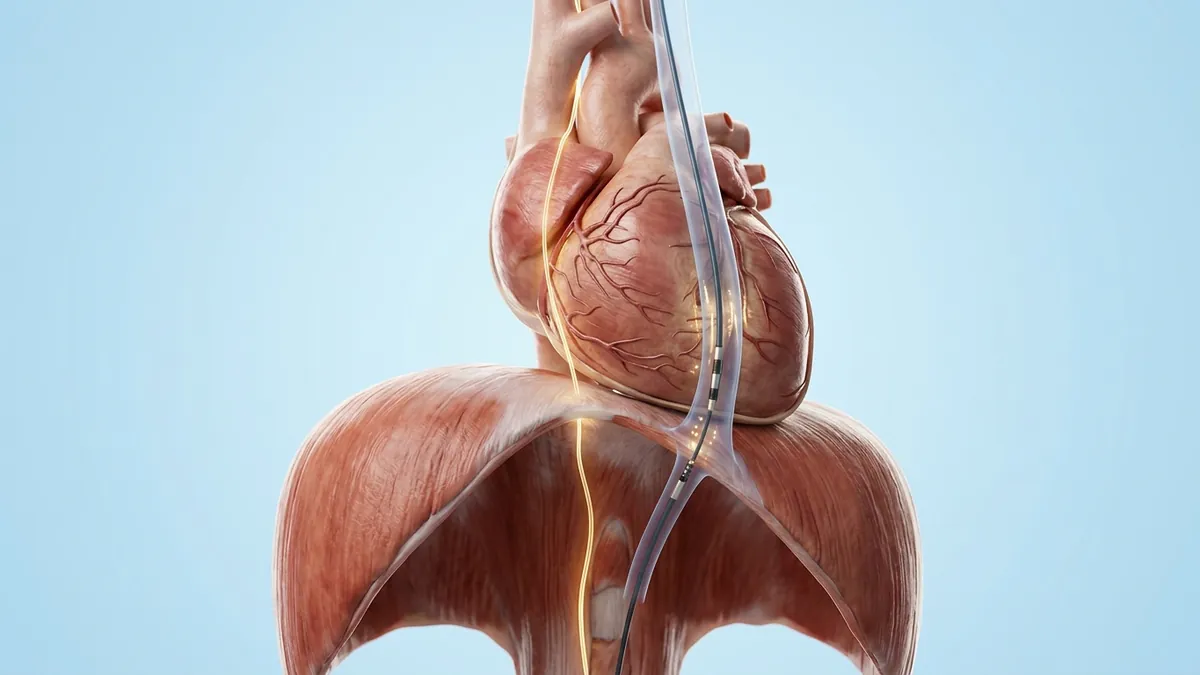
Think about it for a second: every normal breath you take starts as a quiet nerve impulse travelling down two phrenic nerves—one on the left and one on the right—connecting your brainstem to the dome-shaped diaphragm muscle beneath your lungs. When that muscle pulls downward, gentle negative pressure draws fresh air smoothly into your chest.
First approved by the US Food and Drug Administration in October 2017 (PMA P160039) and awarded European CE Mark approval, the ZOLL Respicardia remedē System steps in whenever those natural brain signals drop off at night. In landmark 5-year clinical follow-up data, therapy cut median central apnea events by more than 90%, increased restorative deep and REM sleep, and eased daytime drowsiness without requiring a bedside blower, chin strap, or facial mask. Now that makes a lot of sense, doesn't it?
How Does Central Sleep Apnea Differ From Obstructive Sleep Apnea—and Why Do Heart Patients Face a Care Gap?
Have you ever wondered why two people can both carry a "sleep apnea" label yet need completely opposite treatments? In throat-blockage sleep pauses (obstructive sleep apnea, or OSA), your brain pushes hard to breathe, your chest heaves, and your soft palate or tongue physically collapses across your upper airway. In central sleep apnea, your throat stays wide open, yet your chest and belly remain completely still for 10 seconds or longer because the brain's respiratory control center temporarily pauses its outgoing signal.
We doctors see this constantly in adults with chronic heart failure, atrial fibrillation, prior stroke, or long-term opioid medication use. Delayed circulation between the heart and brainstem makes your body overreact to tiny shifts in blood carbon dioxide—triggering waxing-and-waning heart-related breathing cycles (Cheyne-Stokes respiration) followed by abrupt breathing pauses, oxygen drops, and nighttime adrenaline surges.
Look closely at what happens when doctors try to treat this with standard masks: Continuous Positive Airway Pressure (CPAP) leaves central pauses unresolved in roughly half of patients, while Adaptive Servo-Ventilation (ASV) carries a strict black-box safety warning in patients who have symptomatic heart failure with weakened heart pumping strength (reduced left ventricular ejection fraction, or LVEF of 45% or lower) due to increased cardiovascular mortality. Meanwhile, the well-known Inspire implant stimulates the hypoglossal nerve in the tongue solely for obstructive sleep apnea—making it ineffective for central apnea. See? That is the exact cardiology-sleep gap that phrenic nerve pacing was built to solve.
How Does Transvenous Phrenic Nerve Stimulation Work Inside Your Chest Veins?
Remember how we talked a moment ago about natural negative-pressure breathing? Instead of forcing pressurized air down your windpipe from the outside, the remedē System restores normal diaphragm motion from within your chest veins. Unlike open chest surgery, nothing has to be stitched directly onto a fragile nerve.
During placement, a specialist guides a thin, insulated wire—called a stimulation lead—through an upper chest vein into either the left pericardiophrenic vein or the right brachiocephalic vein. Why those specific vessels? Because in human anatomy, those veins run right alongside the phrenic nerve like two parallel lanes on a highway. Gentle, low-energy electrical pulses pass effortlessly across the thin vein wall to stimulate one phrenic nerve (unilateral stimulation), which is more than enough to pull the diaphragm smoothly downward and stabilize carbon dioxide levels all night.
Even better, the matchbox-sized pulse generator tucked beneath your collarbone contains smart position and motion sensors, plus respiratory impedance tracking that monitors every breath. If you sit up for a sip of water or walk to the bathroom at 2:00 a.m., the device immediately senses your movement, pauses stimulation so you never feel an unexpected breath while awake, and waits roughly 15 minutes after you lie quietly back down before ramping back up. We rarely stop to think how clever modern bioengineering has become, do we?
Who Qualifies for the remedē System? Exact AHI Cutoffs, Sleep Study Rules, and Contraindications
Before anyone schedules a procedure, we doctors start with a careful clinical evaluation and a formal overnight in-lab sleep study (polysomnography, or PSG) rather than a simple finger-clip home test. Why an in-lab study? Because sleep technicians must measure chest and abdominal effort bands simultaneously with nasal airflow to prove whether each breathing pause is truly central or obstructive.
- Age and severity cutoffs: Candidates must be adults (18 years or older) diagnosed with moderate-to-severe CSA, typically defined in clinical trials and payer guidelines by an hourly breathing-pause score (apnea-hypopnea index, or AHI) of 20 or more events per hour.
- Predominantly central pattern: At least 50% of all recorded apneas must be central apneas, with a significant central apnea index (CAI), while obstructive apneas generally make up 20% or less of total events so your upper airway does not collapse when your diaphragm pulls air inward.
- Coexisting heart pacemakers or defibrillators: Over 60% of pivotal trial participants already had a cardiac pacemaker, implantable cardioverter-defibrillator (ICD), or cardiac resynchronization therapy (CRT) device. With careful cross-testing during implantation so the two devices do not misread each other's electrical signals, dual devices work safely side by side.
- Strict contraindications: You cannot receive the implant if you have an active systemic infection, nerve weakness or paralysis of the diaphragm (phrenic nerve palsy), severe anatomical chest-vein blockages, or if you are under 18.
- MRI scan rules: Newer remedē models carry FDA MRI-Conditional approval (granted in 2023), meaning specific 1.5-Tesla MRI scans can be performed safely ONLY when radiology teams follow strict manufacturer programming protocols.
What Happens Step by Step During Evaluation, Implantation, and 6-Week Programming?
What do you think surprises patients most about getting the remedē System? Usually, it is finding out that the device is intentionally left switched off when you go home from the hospital! Let's walk through the exact timeline we doctors guide you through so nothing catches you off guard.
1. Family Clinic Screening and Dual Specialist Referral
Everything begins at your Primary Care Physician (PCP) or family GP clinic, where your doctor checks your blood pressure, heart rhythm, fluid status, thyroid and kidney blood panels, and medications, then refers you to a sleep specialist for overnight polysomnography and a cardiac electrophysiologist for venous assessment.
2. Minimally Invasive Catheter-Lab Implantation
Performed in a hospital cardiac catheterization suite—typically under conscious twilight sedation and local numbing anaesthetic rather than deep general anaesthesia—the procedure takes roughly 2 to 3 hours. Your electrophysiologist makes a small incision below your left or right collarbone, guides the transvenous lead into position using live X-ray dye imaging, tests gentle diaphragm capture by feeling your ribcage margin, tucks the battery generator into a small skin pocket, and closes the skin. Most people go home the same day or after a single overnight observation stay.
3. Six-Week Healing Pause and Custom Therapy Titration
For the first 4 to 6 weeks, therapy stays off while delicate scar tissue anchors the vein lead securely in place. At your activation clinic visit, your sleep doctor uses a wireless external wand—right over your shirt—to set your typical bedtime window and comfort levels, followed a few weeks later by a fine-tuning overnight sleep study so contractions feel smooth and imperceptible once you fall asleep.
How Does the remedē System Compare With CPAP, ASV, and Inspire—and What Does Real-World Care Look Like?
Do you recall how confusing all these sleep devices sounded at the start? Looking at them side by side makes choosing the right conversation with your care team much simpler. Below is how we doctors compare the main options and real-world care steps across the United States, United Kingdom, Canada, and Australia.
| Therapy Option or Care Factor | Clinical Meaning & Practical Next Step |
|---|---|
| remedē System (Phrenic Nerve Stimulator) | Implantable transvenous device specifically targeting moderate-to-severe adult central sleep apnea (CSA), safe even in reduced-ejection-fraction heart failure. What you should do: Ask your PCP or sleep physician for a referral to an accredited remedē cardiology-sleep center if your in-lab sleep study confirms predominantly central apneas. |
| CPAP or Nocturnal Supplemental Oxygen | First-line non-invasive mask therapies that keep airways open or blunt low-oxygen dips, though roughly half of CSA patients still have residual central pauses or mask intolerance. What you should do: Document any prior mask trials carefully with your sleep clinic, as insurers often review past CPAP or oxygen records during approval. |
| Adaptive Servo-Ventilation (ASV) Mask | Advanced variable-pressure mask effective for some non-heart-failure CSA, but strictly contraindicated in symptomatic heart failure with LVEF of 45% or lower due to mortality risk. What you should do: Ensure you have an up-to-date heart ultrasound (echocardiogram) measuring your LVEF before starting or continuing any ASV machine. |
| Inspire Implant (Hypoglossal Nerve Stimulator) | Surgical upper-airway implant that moves the tongue forward during sleep—approved strictly for obstructive sleep apnea (OSA), NOT central sleep apnea. What you should do: Check your polysomnography breakdown; if more than half your pauses are central rather than obstructive, ask about phrenic nerve stimulation instead. |
| Battery Life, Travel & Regional Access | Depending on nightly energy settings and model (such as extended-longevity remedē EL-X), batteries typically last roughly 4 to 7+ years before a minor outpatient generator swap. What you should do: In the US, ask your center to submit Medicare, VA, or commercial prior authorization; in the UK, Canada, and Australia, ask your GP about tertiary academic sleep-cardiology specialist availability. |
In everyday life, supporting your heart and sleep hygiene multiplies your results. Cutting out afternoon caffeinated coffee, strong tea, or energy drinks, skipping evening wine or beer (which destabilizes brainstem breathing drive), and watching hidden salt in canned soups, deli sandwiches, and takeaway meals helps reduce nighttime fluid shifts toward your lungs when you lie flat.
✔️ What You Should Do & ❌ What to Avoid
- ✔️ DO protect your healing arm for 4 to 6 weeks: Avoid lifting objects heavier than 5 to 10 pounds (2 to 4.5 kg) or swinging your implanted-side arm above shoulder height—skip golf swings, swimming laps, or hanging heavy laundry until your electrophysiologist confirms lead stability.
- ✔️ DO carry your implanted device ID card everywhere: Show it at airport security gates (walk-through metal detectors are fine when you walk through normally, though handheld security wands shouldn't linger directly over your chest) and before any hospital scan or dental electrocautery procedure.
- ✔️ DO keep your heart failure and blood pressure medications steady: Guideline-directed heart tablets work hand in hand with phrenic nerve therapy to protect your heart muscle.
- ❌ DON'T scrub, soak, or put lotions on a fresh chest incision: Skip hot tubs, baths, and ocean or pool soaking until your surgical wound is completely sealed and dry.
- ❌ DON'T undergo an unverified MRI scan: Never enter an MRI suite unless the radiology department has verified your exact remedē model number and switched it into MRI-safe mode beforehand.
- ❌ DON'T ignore sudden daytime hiccups or rib twitching: If stimulation begins feeling sharp, jerky, or triggers daytime thumping, call your sleep clinic promptly—simple non-invasive reprogramming or a chest X-ray check for lead shift usually resolves it quickly.
🚨 When to Seek Immediate Emergency Care (Red-Flag Symptoms)
If you or someone near you develops any of these red-flag symptoms—especially in the days or weeks following device placement or generator replacement—do not wait: call 911 (US & Canada), 999 or 111 (UK), or 000 (Australia) immediately or go straight to the nearest hospital Emergency Room (ER / A&E):
- Signs of pocket or bloodstream infection: Spreading redness, throbbing heat, worsening swelling, pus drainage at your chest incision, or a fever and shaking chills.
- Sudden chest pain or acute shortness of breath: Sharp chest pain when breathing in, sudden breathlessness while resting or lying flat, or coughing up frothy pink sputum.
- Rapidly expanding chest bruising or arm swelling: A tight, fast-growing lump over the implant pocket (hematoma) or sudden purple swelling and heaviness down your arm or neck on the implanted side (possible vein clot).
- Fainting, severe dizziness, or erratic heart racing: Blacking out, near-fainting spells, or if you also have an implanted cardiac defibrillator (ICD) that delivers an unexpected shock.
💡 Key Take-Home Message
- Central sleep apnea is a brain-to-diaphragm signalling problem—not a simple snoring issue—and leaving it untreated strains your heart, memory, and daytime energy.
- The remedē System restores natural negative-pressure nighttime breathing automatically without masks or hoses, backed by 5-year clinical safety and effectiveness data.
- Ask your Primary Care Physician or family GP clinic to review your full in-lab sleep study and heart ultrasound with a sleep specialist and cardiac electrophysiologist to see if you qualify.





No comments yet. Be the first to share your question or experience below.