
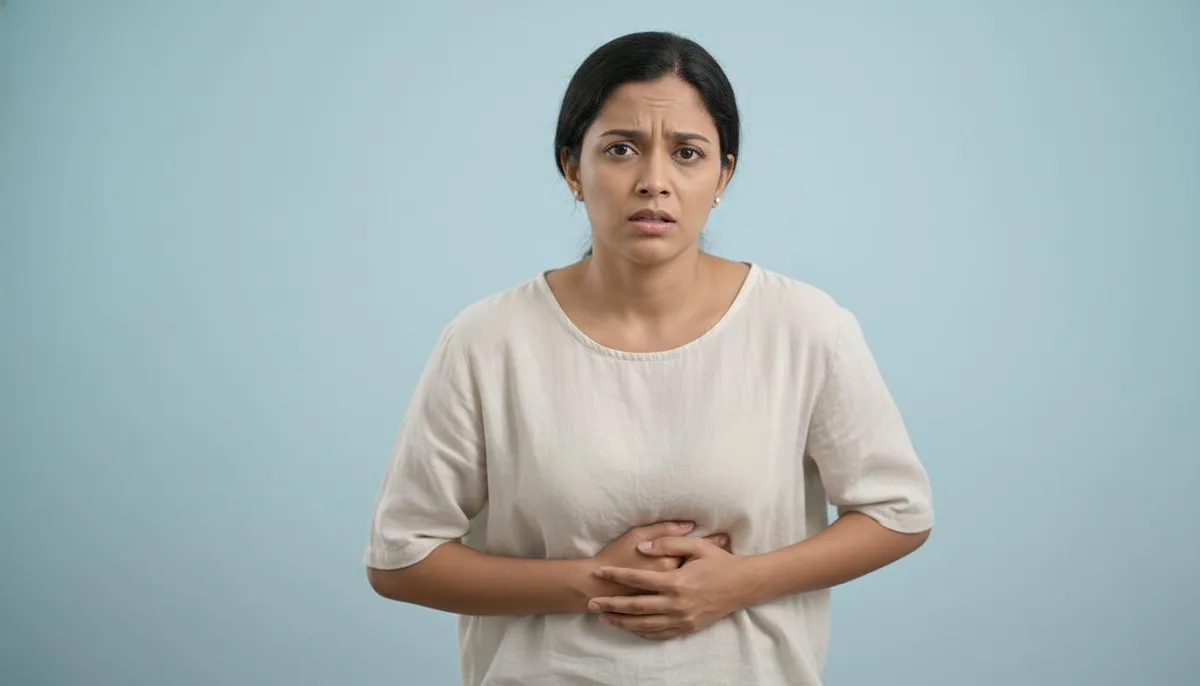
Have you suddenly been hit by a sharp, gripping pain in the upper right side of your stomach, tucked right underneath your rib cage? Maybe that ache started creeping around toward your back or up into your right shoulder blade, and no matter how much you shifted positions, drank water, or went to the bathroom, it simply refused to settle down. When I talk with patients who have just experienced a sudden gallbladder flare-up, almost everyone describes that exact same alarming moment—wondering whether it is trapped gas, severe indigestion, or something far more urgent.
Because severe right-side abdominal pain can quickly disrupt your day or wake you from a sound sleep, knowing how to recognize true gallbladder pain is essential. Let's walk through what is happening inside your body, why it hurts so much, and what you should do next.
📌 Key Takeaways at a Glance
- Classic Location: Gallbladder pain typically causes a steady, intense ache in the upper right abdomen just under the ribs, often spreading to the back or right shoulder.
- Main Trigger: Hardened digestive deposits called gallstones (cholelithiasis) are responsible for the vast majority of gallbladder attacks, especially after fatty or heavy meals.
- Bloating Connection: Impaired bile flow frequently causes upper abdominal fullness, nausea, and a bloated stomach alongside sharp pain.
- Know Your Side: While gallbladder pain sits on the upper right, left-side abdominal pain usually points toward colon, stomach, or kidney issues.
- Urgent Warning Signs: Pain lasting longer than a few hours, fever, chills, yellowing skin, or persistent vomiting requires immediate medical care.
What Is Gallbladder Pain and Where Is the Gallbladder Located?
Gallbladder pain is a sudden, steady, sharp or cramping ache in the upper right side of your abdomen just beneath your ribs, most often caused by gallstones blocking normal bile flow. It frequently starts after a rich or fatty meal, radiates toward your back or right shoulder blade, and requires prompt medical evaluation.
To understand why this tiny organ can cause so much discomfort, let's look at its everyday job. Your gallbladder is a small, pear-shaped pouch tucked neatly underneath your liver on the upper right side of your abdomen. We rarely stop to think about our gallbladder when everything is running smoothly, do we?
Throughout the day, your liver produces a greenish-yellow digestive fluid called bile and sends it into the gallbladder for storage and concentration. Think about it for a second: whenever you eat a meal containing fats—whether that is fish and chips, a creamy pasta, buttered toast, or a burger—your digestive tract needs extra help breaking those fats down. Your gallbladder receives a hormonal signal to squeeze, pushing stored bile through narrow tubes called bile ducts into your small intestine. When something blocks that squeeze, pressure builds rapidly inside the pouch, triggering unmistakable gallbladder pain.
What Does Gallbladder Pain Feel Like—And Can It Cause a Bloated Stomach?
Gallbladder pain does not feel like an ordinary, mild tummy ache or passing gas cramps. Have you ever wondered why patients often say a gallbladder attack feels completely different from anything they have felt before? Look at the classic pattern we doctors look for during an exam:
- Sudden, Escalating Intensity: Pain usually builds quickly in the upper right abdomen (or occasionally the upper center of your belly just below the breastbone) and reaches a steady, intense plateau rather than coming and going in brief waves.
- Constant Pain That Will Not Budge: Unlike gas pains, changing posture, curling up, burping, or having a bowel movement will not relieve a true gallbladder attack (biliary colic).
- Pain When Breathing Deeply: Taking a deep breath pushes your diaphragm downward against the inflamed gallbladder, making the soreness noticeably sharper.
- Radiating Back and Shoulder Pain: Irritated nerves around the diaphragm often send referred pain signals straight through to your mid-back or beneath your right shoulder blade.
- Bloated Stomach and Digestive Upset: Because bile cannot flow smoothly to emulsify fats, many people experience an uncomfortably bloated stomach, excessive belching, nausea, and vomiting right alongside the pain.
In fact, this pain can become so intense that some people worry they are having a heart attack. If your discomfort lasts more than a few hours or feels overwhelming, having a doctor evaluate you promptly is always the safest call.
Why Does Right-Side Abdominal Pain Occur? Main Causes of Gallbladder Pain
Whenever someone comes into the clinic with right-side abdominal pain, we doctors immediately evaluate the gallbladder and biliary tree. While several conditions can trigger pain in this area, one culprit accounts for most cases.
Gallstones (Cholelithiasis): The Most Common Culprit
Gallstones (cholelithiasis) are hardened deposits that form inside your gallbladder when bile contains too much cholesterol or bilirubin, or when the gallbladder does not empty completely. They can be as tiny as a grain of salt or as large as a golf ball. Pretty surprising, right? Many people carry silent gallstones for years without knowing it, until a stone rolls into the narrow neck of the gallbladder and blocks bile from exiting.
Bile Duct Stones (Choledocholithiasis)
Sometimes a small gallstone escapes the gallbladder and gets stuck further down inside the main drainage tube, a condition known as bile duct stones (choledocholithiasis). This is a more serious situation because trapped bile backs up toward both the liver and the pancreas. Left untreated, a blocked common bile duct can trigger severe pancreas inflammation (acute pancreatitis) or jaundice.
Gallbladder Inflammation (Cholecystitis)
Remember how we talked about pressure building up when a gallstone blocks the gallbladder's exit? If that blockage persists for several hours, trapped bile irritates the gallbladder wall and bacteria begin to multiply. The organ becomes swollen, tender, and infected—a medical condition called gallbladder inflammation (acute cholecystitis) that typically causes fever, chills, and worsening tenderness.
Other Gallbladder Conditions and Biliary Dyskinesia
You do not always need physical stones to experience gallbladder pain. In a condition called functional gallbladder disorder (biliary dyskinesia), the gallbladder muscle fails to squeeze effectively, creating cramping after meals even on a clear ultrasound. Less commonly, a severe bacterial infection of the bile ducts (acute cholangitis) or tiny cholesterol polyps can provoke similar symptoms.
Gallbladder Cancer: Rare but Important to Rule Out
Gallbladder cancer is quite rare compared to routine gallstones, and early stages often cause no noticeable symptoms at all. However, persistent upper-right abdominal pain, unexplained weight loss, or jaundice—especially in older adults with long-standing gallstones—always prompts us doctors to run imaging tests to rule out abnormal tissue growth.
Are There Other Conditions That Feel Like Right-Side or Left-Side Abdominal Pain?
Your abdomen is a busy neighborhood, so it is completely natural to wonder whether your pain is actually coming from your gallbladder or another nearby organ. Location gives us huge clues. For instance, while gallbladder pain strongly favors the upper right side, pain on the left side of the abdomen points toward very different structures—such as trapped gas in the descending colon, diverticulitis, stomach lining irritation (gastritis), or a left-sided kidney stone.
Even on the right side, acid reflux, peptic ulcers, liver inflammation, kidney stones, or lower-right appendicitis can mimic gallbladder symptoms. To help you see how we doctors tell them apart, look at how these common causes compare:
| Condition & Pain Location | What Is Happening & What You Should Do |
|---|---|
| Gallbladder Attack (Biliary Colic) Upper right abdomen, often radiating to the back or right shoulder | A gallstone temporarily blocks bile flow after a fatty meal, causing steady pain, bloating, and nausea for 30 minutes to a few hours. What you should do: Rest, pause eating heavy foods, sip clear water, and book an appointment with your Primary Care Physician (PCP) or family GP clinic for an abdominal ultrasound. |
| Acid Reflux (GERD) or Gastritis Upper center of the stomach behind the breastbone | Stomach acid irritates the esophagus or stomach lining, causing burning discomfort, sour taste, and bloating that may improve briefly with antacids. What you should do: Avoid spicy, acidic, or late-night meals, and speak with your primary care doctor if burning happens more than twice a week. |
| Left-Side Abdominal Pain (Diverticulitis or Trapped Gas) Lower or mid-left side of the abdomen | Pain on the left side is rarely from the gallbladder; it usually reflects colon spasms, constipation, or inflammation of small colon pouches (diverticulitis). What you should do: Monitor bowel habits and hydration; see your family doctor promptly if left-side pain is persistent or paired with fever. |
| Kidney Stone (Renal Colic) Sharp flank or back pain radiating down toward the groin | A mineral stone moving down the ureter causes excruciating, restless waves of pain alongside painful urination or pink-tinged urine. What you should do: Visit an Urgent Care center or hospital Emergency Room (ER / A&E) promptly for pain control and imaging. |
| Appendicitis Starts near the belly button, then shifts to the lower right abdomen | Inflammation of the appendix causes steadily worsening lower-right tenderness, loss of appetite, low-grade fever, and pain when walking or coughing. What you should do: Do not take laxatives or wait it out—go straight to your nearest hospital Emergency Room (ER / A&E) right away. |
What Home Remedies and Medical Treatments Help Relieve Gallbladder Pain?
Be honest, when an unexpected stomach pain hits at home, you've probably tried placing a warm compress on your belly or sipping warm herbal tea to calm things down, haven't you? During a mild, brief gallbladder flare-up, resting quietly, resting a warm heating pad or hot water bottle gently over your upper right ribs, and sticking strictly to clear fluids like water or peppermint tea can offer modest temporary comfort.
However, home measures only ease surface muscle tension—they cannot dissolve or push out a trapped gallstone. Never try unverified internet "gallbladder flushes" involving large amounts of olive oil and lemon juice, which often trigger severe vomiting or push stones into dangerous spots. Instead, proper medical evaluation at your Primary Care Physician (PCP) / family GP clinic or Urgent Care center starts with targeted blood tests and a painless abdominal ultrasound.
Depending on what those tests reveal, medical treatments include:
- Targeted Pain Relief and Anti-Nausea Medications: Doctors prescribe specific anti-inflammatory or antispasmodic pain relievers to calm gallbladder contractions safely.
- Antibiotics and IV Fluids: If gallbladder inflammation (cholecystitis) or infection is present, hospital care with intravenous fluids and antibiotics clears the infection before surgery.
- Endoscopic Bile Duct Removal (ERCP): If a stone is lodged in the main bile duct, a specialist performs an endoscopic retrograde cholangiopancreatography (ERCP)—guiding a thin, flexible camera tube gently through your mouth to extract the trapped stone without external incisions.
- Keyhole Gallbladder Removal (Laparoscopic Cholecystectomy): When gallstones cause repeated attacks, surgically removing the gallbladder is the gold-standard, permanent cure. Using tiny keyhole incisions and a miniature camera, surgeons remove the gallbladder cleanly, and most patients go home the same day or next morning.
- Open Gallbladder Surgery (Open Cholecystectomy): If the gallbladder is severely scarred, acutely infected, or complex anatomy is found, a surgeon may use a traditional abdominal incision for maximum safety.
Now that makes sense, right? Your liver still produces bile continuously, so after gallbladder removal, bile simply drips gently into your intestine directly—allowing you to live a completely normal, healthy life.
✔️ What You Should Do & ❌ What to Avoid
- ✔️ Do rest and pause solid food during an acute flare: Giving your digestive tract a break stops your gallbladder from squeezing against a blockage.
- ✔️ Do keep a symptom and food diary: Jotting down when pain strikes, how long it lasts, and what you ate beforehand helps your doctor make a fast, accurate diagnosis.
- ✔️ Do schedule an abdominal ultrasound promptly: Even if a severe attack fades after two hours, getting evaluated prevents future emergency complications.
- ❌ Do not eat greasy, fried, or heavy meals to "test" your stomach: Rich foods trigger forceful gallbladder contractions that can turn mild soreness into an emergency.
- ❌ Do not attempt DIY "gallstone flush" cleanses: Drinking large quantities of oil or harsh salts will not dissolve gallstones and can provoke severe nausea or pancreatitis.
- ❌ Do not mask worsening pain with repeated high-dose painkillers: Covering up escalating pain when you also have fever or chills can delay urgent care.
🚨 When to Seek Immediate Emergency Care (Red-Flag Symptoms)
If you or someone near you develops any of these red-flag symptoms, do not wait — call 911 (or 999 in the UK / 000 in Australia) immediately or go straight to the nearest hospital Emergency Room (ER / A&E):
- Relentless Pain Lasting Over 4 to 6 Hours: Severe upper-right or central abdominal pain that refuses to ease up or keeps getting sharper.
- High Fever or Shaking Chills: Classic warning signs that trapped bile has led to an infected gallbladder or bile duct infection.
- Jaundice (Yellowing Skin or Eyes): A yellow tint to the whites of your eyes or skin, paired with dark tea-colored urine or pale, clay-colored stools.
- Persistent Vomiting: Inability to keep even small sips of water down, leading to dizziness or dehydration.
- Chest Pain, Shortness of Breath, or Sweating: Because upper abdominal pain can occasionally overlap with cardiac symptoms, never hesitate to seek immediate emergency evaluation.
Can You Prevent Gallbladder Pain and Gallstones?
While you cannot change risk factors like age, genetics, or pregnancy hormones, everyday nutrition and lifestyle habits dramatically lower your odds of forming gallstones or triggering painful attacks. Do you recall what we mentioned at the very beginning about how rich, fatty meals make the gallbladder contract? Keeping bile fluid and balanced comes down to steady, heart-healthy choices:
- Cut Back on Saturated and Fried Fats: Limit deep-fried takeout, heavy cream sauces, fatty cuts of red meat, processed sausages, and excess butter, which overload bile with cholesterol.
- Choose Lean Proteins and Healthy Fats: Build meals around grilled salmon, skinless chicken or turkey, beans, lentils, and moderate amounts of olive oil or avocado, which help the gallbladder empty smoothly without overloading it.
- Fill Up on Fiber and Whole Grains: Oats, whole-grain bread, brown rice, leafy greens, apples, and berries bind excess bile acids in your gut and support healthy digestion.
- Trim Added Sugars and Refined Carbs: Swapping sugary sodas, pastries, and white bread for sparkling water, fruit, and whole foods reduces gallstone formation risk.
- Lose Weight Gradually, Never via Crash Diets: Rapid weight loss or skipping meals for long stretches causes your liver to dump extra cholesterol into bile while stalling gallbladder emptying. Steady, gradual weight management paired with regular brisk walking or exercise keeps your biliary system healthy.
💡 Key Take-Home Message
- Recognize the Signature Pattern: Sudden, steady pain under your right ribs—often radiating to your right shoulder or back and accompanied by bloating or nausea—is the hallmark of gallbladder pain.
- Gallstones Are Usually Behind It: Blocked bile flow from gallstones drives most flare-ups, though ultrasound imaging is needed to confirm the exact cause.
- Do Not Ignore Prolonged Attacks: Any pain lasting more than a few hours or accompanied by fever, chills, or yellowing eyes requires prompt hospital evaluation.
- Lasting Relief Is Routine: Whether managed through balanced nutrition or a minimally invasive keyhole gallbladder removal, long-term recovery is straightforward and allows a completely normal diet and lifestyle.




No comments yet. Be the first to share your question or experience below.