
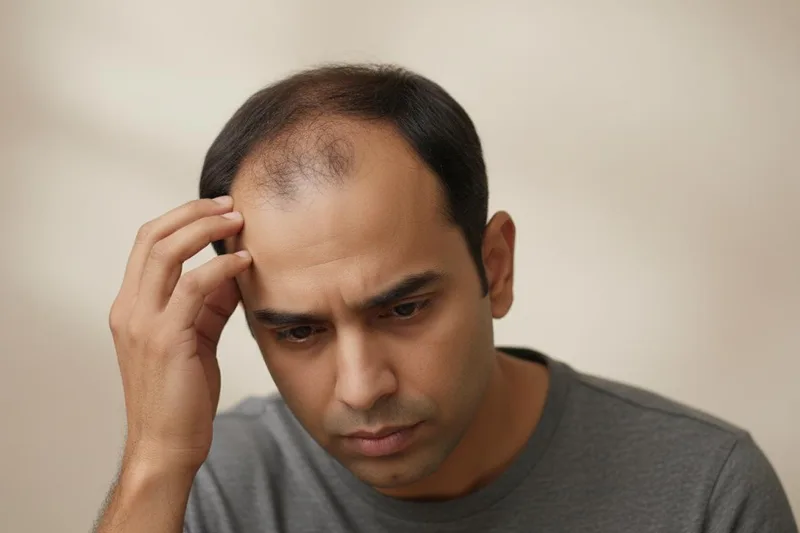
What is this hair transplant?
Simply put, it is a surgical procedure. It involves taking small pieces of hairy skin from your own body, from an area with good hair growth (usually the back of your head), and replanting them in areas where there is no hair or thinning. This is also called hair transplantation. It is usually done for people who have not had successful results with other treatments. This surgery is performed by a dermatologist or plastic surgeon . They take small pieces of skin (grafts) from areas where you have healthy hair, along with your hair, and replant them in the empty areas. After the transplanted skin heals, hair starts to grow back normally in those areas.What conditions does this surgery treat?
There can be many reasons for hair loss. Sometimes it is temporary, but sometimes it can be permanent. Hair transplantation can be a good solution for people with permanent hair loss. For example:- Alopecia areata: This is actually a condition that occurs when our immune system attacks our own hair follicles.
- Androgenic alopecia : This is the most common type of baldness, especially in men. It is hereditary.
- Thyroid disease or hormonal problems: Excessive hair loss can be caused by imbalances in the thyroid gland or other hormones.
- Accidents or burns : When the scalp is damaged due to an accident or burn, hair does not grow back in those areas.
Who is suitable for a hair transplant?
Several factors will determine whether you are a good candidate for this surgery. You may be a good candidate for this,- If you are in good health.
- If you have realistic expectations about the results of this surgery (that is, if you understand the gradual, natural look that you will get, rather than expecting an actor's hair overnight).
- Somewhere on your scalp, thick enough to be graftedIf there is still hair left.
What are the main hair transplant methods?
There are several hair transplant surgical procedures. Your doctor will recommend the most suitable method for you based on your needs and condition.| Surgical method | Simply explained |
|---|---|
| Grafting (skin grafting) | The most popular and widely used method. Small skin grafts containing about 10-15 hair follicles are cut from a thick area of hair and delicately implanted into the empty areas. This procedure takes a few hours and can be performed while you are awake, with only a numbing medication applied to the scalp. |
| Scalp Reduction | A bald patch of skin is cut out from the scalp, and the hairy skin on either side is pulled together and sewn together. This is usually suitable for bald areas on the top and back of the head. |
| Flap Surgery | This method is used for people with large bald areas near the forehead. In this method, a section of hairy skin, with its blood supply, is cut from one side, and the other three sides are sewn together, covered and covered over the bald area. This requires general anesthesia . |
| Tissue Expansion | This procedure is used for people who have had scalp damage due to causes such as burns. A balloon-like device (tissue expander) is inserted under the hairy skin and is gradually inflated over several weeks to stretch the skin. Then, another surgery is performed to use the stretched skin to cover the bald area. |
What are the risks of this surgery?
Like any surgery, hair transplantation carries some risks. Therefore, it is very important to choose a skilled, experienced doctor and a hospital with good facilities.
- Allergy to anesthesia medications.
- Excessive bleeding during or after surgery.
- Skin grafts or flaps that have been transplanted do not attach properly or die.
- Infection entering the injured areas.
- Numbness or tingling sensation in the scalp.
- Scarring at surgical sites.
What are the possible side effects after surgery?
These are usually temporary and will go away in a few days or weeks.- Crusts forming on wounds.
- Itchy scalp .
- A slight pain or tingling sensation.
- Scalp swelling.
How long does it take to recover after surgery?
After most hair transplant surgeries, you can go home the same day . How you recover depends on the type of surgery you had. In general, here's how your life will return to normal:- Day 1: The bandage can be removed.
- Day 2: You can wash your hair as directed by your doctor.
- Days 3 to 5: You can return to work and resume light activities.
- After about 10 days: Removal of stitches (this will be done by your doctor).
- After about 3 weeks: You can resume activities such as exercise or sports.
How long do the results last and when can they be seen?
This is a question that many people ask. It can take months to a year to see the full results of the surgery. As the transplanted skin heals, the transplanted hair will initially fall out. This is normal, so don't worry. Since the roots of those hairs are still in the skin, new hair will start to grow back. Sometimes, you may need to have one or more "touch-up" surgeries to achieve a completely natural look. If you have these symptoms, call your doctor immediately.
| - Having a fever that does not subside. |
| - Excessive bleeding from the scalp. |
| - Severe redness or unbearable pain on the scalp. |
| - Yellow or green pus-like fluid draining from the wounds (signs of infection). |
Take-Home Message
- Hair transplantation can be a successful, permanent solution to hair loss when other treatments have failed.
- There are various surgical methods for this. It is essential to consult with a skilled, experienced doctor to choose the method that is most suitable for you.
- It is important to be patient, as it can take several months or even a year to see full results.
- Make a decision carefully considering the risks, cost, and recovery time of the surgery. Discuss any questions you may have openly with your doctor.
👩🏽⚕️ Frequently Asked Questions (FAQ) from the Doctor
💬 What is a hair transplant?
Simply put, this is a surgical procedure that involves taking hair from a part of your own head, such as the back, where hair grows well, and replanting it in areas where hair is thinning or missing. The transplanted hair will start to grow normally after a while.
💬 Who is suitable for a hair transplant?
This is usually a good solution for those who are experiencing permanent hair loss and have not responded to other treatments. For example, it is used for hereditary baldness (androgenic alopecia), hair loss due to accidents or burns, and certain medical conditions such as alopecia areata.
💬 Who performs hair transplant surgery?
This surgery is performed by a dermatologist or plastic surgeon.


💬 Comments (0)
No comments yet. Be the first to share your thoughts here.
Add Your Comment