

Do you sometimes have a hard time putting what's on your mind into words? When you feel a lot of sadness, pain, or stress, you may be lost without a way to express it. Imagine how much relief it would feel if you could express everything that's on your mind through a painting, a clay sculpture, or some kind of creation? That's what we call ' art therapy ' or art therapy . It's not about talent, it's about expressing what's on your mind.
Let's look at some real-life examples to understand this.
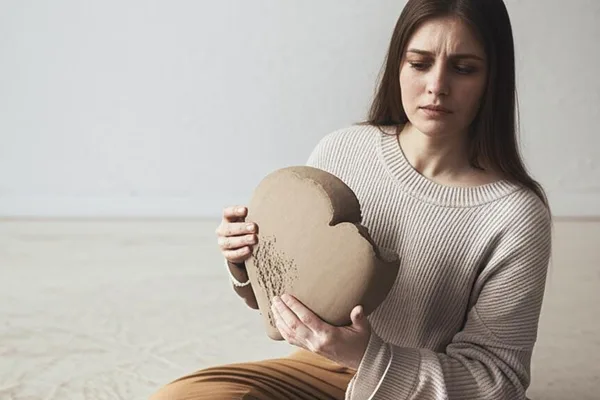
"Anne" is a talented pianist. But she had diabetes mellitus. Over time, the most severe aspects of the disease affected her. First she lost her eyesight, and then she had to have one of her legs amputated. With all this, Anne's heart completely collapsed. She suffered from severe depression. At this time, an art therapist at her hospital taught her to create with clay. As she gradually kneaded the clay and made things like delicate flowers, leaves, and thorns, Anne was able to release the emotions that had been trapped in her heart. She felt a great relief, and her depression gradually subsided.
"Zack" is a 15-year-old young boy. He has a hard time controlling his impulses . He's always in trouble at school. He acts like a little kid. But when he learned to draw, Zack's activities calmed down a bit. Drawing became like meditation. He gradually learned to focus his mind and control his impulses.
The 'language of art' that speaks what is on your mind
Simply put, we call Art Therapy the process of communicating through visual arts like painting and sculpture, and achieving mental well-being through it. You don't have to be a talented artist like Neville Pieris to do this. The most important thing is to express what's on your mind without any inhibitions.
"Art is a language of its own that helps people express things that words cannot. Art therapy allows people to express things that they never had words for, but that are currently affecting their lives."
An art therapist is a combination of an artist and a psychotherapist. The first thing they do is gain the patient's trust . Because many people are afraid and shy to draw or create. They think things like, "What I draw will be ugly," "Other people will laugh." So the therapist creates an atmosphere of acceptance that says, "Whatever you do is good, there is no problem."
The process of creating this art is a great stress reliever . It is especially helpful for cancer patients and those with migraines. When the head and hands work together, working with colors and shapes, the mind is freed.
A place to forget the pain
Consider 8-year-old Leroy. He had a very painful blood disease (sickle-cell anemia). The pain kept him in bed all day, he spoke very little, and he didn't trust anyone. One day, his art therapist made two little animals out of clay. Suddenly, Leroy took the two animals and let out his anger, saying, "The lion is eating the snake's head."
Similarly, this method is also very helpful for people with neurological disorders such as stroke, Parkinson's disease, or Alzheimer 's disease .
"Albert" was in the final stages of Alzheimer's disease. He couldn't even speak and was always restless. But as he drew simple circles with watercolors, his face showed a look of happiness and harmony. Over the course of a few weeks, those circles gradually transformed into clear shapes like boats and water. It was only later that I learned that, although he hadn't drawn for 30 years, his hobby had been painting seascapes.
This creative process stimulated his brain's cognitive function . Although he couldn't speak, his attention span improved, his anxiety decreased, and he was able to calm himself down.
| Illness or problem | How Art Therapy Can Help |
|---|---|
| Depression, anxiety, stress | It allows you to express emotions that cannot be expressed in words, and makes you feel in control. |
| Severe pain (cancer, migraine) | Distracts from pain and calms the mind. |
| Neurological diseases like Alzheimer's and stroke | It stimulates memory, provides a means of communication for those who cannot speak, and reduces anxiety. |
| Children's behavioral problems and impulses | Teaches impulse control and helps focus the mind. |
| Children in hospital | Helps you understand your condition and reduce fear. Reduces loneliness. |
A bridge to our childhood
Another power of art therapy is that it creates a path to our childhood experiences .
Imagine, if a school teacher scolded you when you were a child, saying, "You can't draw," that shame, that memory, might still be somewhere in your mind. When you draw again, those feelings might come up. The therapist says that can be a good thing. Because it is when those feelings of shame and fear are dealt with that the barriers between the therapist and the patient break down. Trust and communication are essential to this healing process.
This is how we can bring out memories and feelings that have been lost in the deepest places of our minds, perhaps from childhood. When we were young, we didn't have words. We stored information in the form of images, smells, touches, and body movements. Art therapy can bring those memories back to life.
Comfort for little children
This method is especially comforting for young children. It can help them adjust to the strange environment of a hospital and their illness . Some children may think that they are being punished for their illness, or that the accident was caused by something they did wrong. Art therapy can help them clear these misconceptions.
For example, you can draw a rough sketch of a child's body and start talking about it. "Then one child will say that his heart is in trouble and needs a transplant. Another will say that the cancer is in my blood. Sharing information in this way will help them feel less alone."
A child who was bitten by a vicious dog had a significant drop in blood pressure after drawing. It's like a hypnotic, meditative experience. It takes the child out of the pain, out of thinking about the pain. That's the goal. To learn about the child, to support them, and to help them build the mental strength they need to get through a painful event.
Take-Home Message
- Art Therapy is not about artistic skill, but about finding healing through expressing your feelings.
- This can be beneficial for a variety of conditions, including depression, stress, severe pain, neurological diseases like Alzheimer's, and childhood behavioral problems.
- This is a great way to safely explore your feelings, especially those that cannot be put into words.
- The process of creating art itself can help calm the mind and distract from pain or anxiety.
- If you or someone you know is interested in this, it is important to seek the help of a qualified art therapist. Also, talk to your doctor about any mental or physical health concerns.




💬 Comments (0)
No comments yet. Be the first to share your thoughts here.
Add Your Comment