
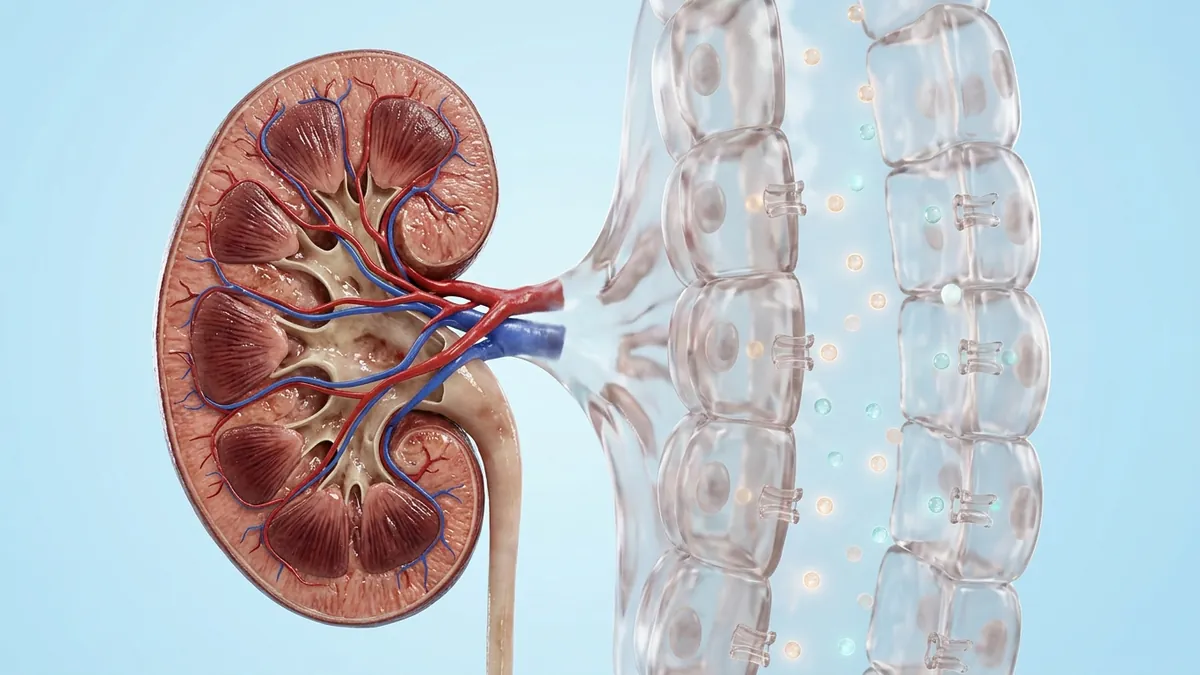
High potassium and high chloride together on a blood test: non-anion gap acidosis, Type 4 RTA & medication causes is one of the most specific electrolyte patterns we doctors spot on a routine chemistry panel. Opening your online patient portal at home and seeing two bold "High" flags sitting right next to each other can easily make your stomach drop. Have you ever wondered why two seemingly separate salts in your bloodstream would suddenly climb at the exact same time?
Think about it for a second. Most people have heard of potassium from eating bananas, and chloride sounds a lot like swimming pool chlorine, even though in your body it is simply a natural electrolyte partner to sodium. When both numbers creep above normal simultaneously, it is rarely a random coincidence. Instead, your kidneys are leaving us a helpful breadcrumb trail about how they are handling everyday acids, hormones, and prescriptions.
Whether your test was ordered during an annual checkup at your Primary Care Physician (PCP) or family GP clinic, or checked during a visit to a local Urgent Care center, understanding this pairing takes the mystery—and the panic—right out of your lab sheet. Let us walk through what these two numbers mean together, which everyday medications trigger them, and what steps we doctors take next.
📌 Key Takeaways at a Glance
- It is a classic linked pattern: High blood potassium (hyperkalemia) paired with high blood chloride (hyperchloremia) usually points to a mild blood acid shift called normal-gap blood acid buildup (non-anion gap metabolic acidosis).
- Check your bicarbonate line too: On most lab sheets, you will also notice a slightly low bicarbonate or "Total CO2" level, because chloride rises automatically whenever bicarbonate drops.
- Medications are top culprits: Common blood pressure pills (like lisinopril, ramipril, losartan, or spironolactone), everyday anti-inflammatory painkillers, and certain antibiotics frequently cause this exact combination.
- Type 4 RTA is very manageable: Kidney acid-filtering slowdown (Type 4 renal tubular acidosis, or Type 4 RTA)—often linked to diabetes or mild kidney wear-and-tear—commonly produces this lab signature and responds well to simple treatment.
- Never stop prescriptions on your own: Always speak with your doctor first, and seek urgent care immediately if you have chest pain, severe weakness, or a potassium level of 6.0 mmol/L (mEq/L) or higher.
What Does High Potassium and High Chloride Together on a Blood Test Mean?
High potassium and high chloride together on a blood test usually signal non-anion gap metabolic acidosis, most commonly driven by Type 4 renal tubular acidosis (Type 4 RTA) or everyday blood pressure medications. As your kidneys hold onto potassium and acid, bicarbonate drops and chloride rises to maintain electrical balance.
Let us unpack that in plain, everyday English. Every single day, when your body digests protein from foods like chicken, beef, eggs, or beans, it naturally produces small amounts of acid. Healthy kidneys act like smart chemical filters: they flush out that daily acid along with excess potassium into your urine, while holding onto an alkaline buffer called bicarbonate to keep your blood pH steady.
Look closely at what happens when the final sorting section of your kidney's tiny filtering tubes slows down slightly. Acid and potassium start lingering in your bloodstream instead of exiting into your urine. That extra acid uses up your blood's bicarbonate buffer, and your body pulls in extra chloride to fill the electrical gap. Pretty neat how one single bottleneck explains all those lab flags at once, right?
How Do Non-Anion Gap Acidosis and Your Kidneys Link Potassium and Chloride?
To see why chloride gets dragged into a potassium problem, picture your bloodstream like a balanced seesaw of positively charged electrolytes (mostly sodium and potassium) on one side, and negatively charged electrolytes (mostly chloride and bicarbonate) on the other. Your body strictly requires both sides of this electrical seesaw to match at all times.
What do you think happens to your chloride level when your bicarbonate drops? To keep the negative side of the seesaw completely level, your kidneys hold onto one extra molecule of chloride for every molecule of bicarbonate lost. Because no hidden or unmeasured acids—such as diabetic ketones or lactic acid—were added to the blood, the calculated gap between positive and negative ions stays completely normal. We doctors call this normal-gap blood acid buildup (non-anion gap metabolic acidosis, or hyperchloremic metabolic acidosis). Makes sense when you picture it like a seesaw, doesn't it?
Now, why does high blood potassium (hyperkalemia) join the party? In most non-anion gap acidosis cases caused by heavy diarrhea, potassium actually drops low. When potassium goes high alongside high chloride, it points straight to a hormone messenger called your salt-and-potassium hormone (aldosterone). Aldosterone tells the tail end of your kidney tubules to dump both potassium and hydrogen (acid) into the urine. When aldosterone is either running low or your kidneys stop listening to its signal, potassium builds up—and high potassium itself further slows down your kidneys' production of ammonia, the exact sponge your kidneys need to carry acid out in the urine.
What Is Type 4 Renal Tubular Acidosis (Type 4 RTA) and Who Gets It?
Just like we discussed with aldosterone a moment ago, whenever your kidneys experience either low aldosterone levels or mild resistance to aldosterone's message, a condition called Type 4 renal tubular acidosis (Type 4 RTA) develops. Despite the intimidating medical name, Type 4 RTA is actually the most common form of tubular acidosis we doctors see in adult Primary Care Physician (PCP) and family GP clinics, and it is typically mild.
Who tends to develop Type 4 RTA? We see it most frequently in adults who have:
- Long-standing diabetes: Over years, higher blood sugars can gently quiet down the kidney cells that release renin, the hormone that switches aldosterone on—a pattern doctors call hyporeninemic hypoaldosteronism.
- Mild-to-moderate chronic kidney wear-and-tear: Even when overall kidney filtration is only mildly reduced, the specialized acid-and-potassium pumps in the tubules can become sluggish first.
- Urinary tract back-pressure: Conditions like an enlarged prostate in older men or a kidney stone blocking smooth urine flow can bruise those delicate distal kidney tubules and make them temporarily ignore aldosterone.
- Adrenal gland underactivity: Less commonly, conditions like primary adrenal insufficiency (Addison's disease) lower aldosterone directly, though sodium usually drops low in those cases too.
We doctors also keep a rare look-alike in mind when kidney function is 100% normal and blood pressure runs high in younger adults or families: a genetic salt-transporter trait called familial hyperkalemic hypertension (Gordon syndrome). See? Looking at your blood pressure and kidney history alongside your lab numbers tells us far more than the lab printout alone.
Which Common Medications Cause High Potassium and High Chloride Together?
Before diagnosing a lifelong kidney disorder, we doctors always pull up your full medication list—including over-the-counter pills and kitchen supplements. Why? Because everyday medications deliberately or accidentally block the exact same aldosterone pathway we talked about earlier!
Blood pressure and heart-protective prescriptions sit right at the top of the list. ACE inhibitors (such as lisinopril, ramipril, or perindopril) and angiotensin receptor blockers, or ARBs (such as losartan, candesartan, or valsartan), protect your heart and kidneys beautifully, yet they naturally dial down aldosterone slightly. Potassium-sparing water pills (such as spironolactone, eplerenone, or amiloride) block aldosterone receptors directly.
We rarely stop to think about over-the-counter painkillers or short-course antibiotics affecting our electrolytes, do we? Yet anti-inflammatory pain relievers—NSAIDs like ibuprofen, naproxen, or diclofenac—reduce kidney hormone signaling and can tip both potassium and chloride upward, especially if you also take a blood pressure pill. Certain common urinary or skin antibiotics (specifically trimethoprim, often found inside co-trimoxazole / Bactrim / Septra), blood-thinning heparin injections, and anti-rejection drugs like tacrolimus can trigger the exact same Type 4 RTA-style blood pattern. Even pouring intravenous normal saline (0.9% sodium chloride) during a recent hospital stay can push blood chloride up temporarily.
What Blood Test Numbers and Follow-Up Checks Do We Doctors Look At?
Remember how we mentioned right at the beginning that a blood test shouldn't be read one line at a time? When you sit down with your doctor to review a basic or comprehensive metabolic panel (BMP / CMP, or U&Es in the UK and Australia), here are the standard adult reference ranges we check together (note thatmmol/L and mEq/L are identical numbers for these electrolytes):
- Potassium (K+): Normal is typically 3.5 to 5.0 mmol/L (mEq/L). Mild elevation sits around 5.1–5.4 mmol/L, moderate is 5.5–5.9 mmol/L, and 6.0 mmol/L or above requires urgent same-day medical evaluation.
- Chloride (Cl-): Normal is typically 96 to 106 mmol/L (mEq/L). Readings of 107–112 mmol/L often reflect that bicarbonate-chloride swap or mild dehydration.
- Bicarbonate (HCO3- or Total CO2): Normal is typically 22 to 29 mmol/L. In Type 4 RTA or medication-related non-anion gap acidosis, this often dips mildly to 17–21 mmol/L.
- Anion Gap: Calculated from sodium minus (chloride plus bicarbonate), normal is roughly 8 to 12 mmol/L. Staying inside this normal window confirms non-anion gap acidosis.
- Kidney filtration (Creatinine & eGFR): Helps us tell whether generalized kidney disease (usually eGFR below 30 mL/min) or a focused tubular issue like Type 4 RTA (often seen when eGFR is still 30–60+ mL/min) is responsible.
Be honest—did you clench and pump your fist tightly while the phlebotomist drew your blood, or was it a tricky draw? Fist pumping or fragile blood cells bursting inside the test tube (hemolysis) can cause a false potassium spike (pseudohyperkalemia). However, a false lab spike in potassium alone does not usually raise your chloride and lower your bicarbonate at the same time. Still, repeating a gentle, unclenched blood draw—and occasionally checking a heart tracing (electrocardiogram, or ECG / EKG), urine pH, urine electrolytes, or blood renin and aldosterone—helps your doctor confirm the diagnosis with complete confidence, referring you to a kidney specialist (nephrologist) if the pattern persists.
How Do Different Causes Compare and How Can You Manage Them Safely?
To help you see how we doctors sort through the possibilities during your clinic appointment, take a look at this straightforward side-by-side guide comparing the main causes of high potassium and high chloride together.
| Underlying Cause or Pattern | Clinical Explanation & Practical Next Step |
|---|---|
| Blood Pressure or Heart Medications (ACE inhibitors, ARBs, spironolactone) | These protective medications gently lower or block aldosterone, causing mild potassium retention (often 5.1–5.5 mmol/L) alongside slightly high chloride and slightly low bicarbonate. What you should do: Keep taking your prescribed tablets unless told otherwise, and book a prompt review with your PCP or GP to see whether diet tweaks, dose adjustments, or a potassium-lowering binder are needed. |
| Type 4 Renal Tubular Acidosis (Type 4 RTA) | Common in adults with diabetes, mild-to-moderate kidney wear, or urinary back-pressure; the kidney tubules become sluggish at clearing daily acid and potassium. What you should do: Work with your doctor on blood sugar control, urinary flow checks if needed, and targeted therapies such as oral sodium bicarbonate tablets or gentle loop/thiazide diuretics if prescribed. |
| OTC Painkillers (NSAIDs) or Trimethoprim Antibiotics | Ibuprofen, naproxen, and trimethoprim-based antibiotics temporarily block potassium and acid excretion in the kidneys, often catching patients completely off guard. What you should do: Pause over-the-counter NSAIDs right away (switch to acetaminophen / paracetamol if safe for you) and message your prescribing clinic if you are currently taking an antibiotic. |
| Dehydration Plus Potassium-Rich Supplements or Salt Substitutes | Not drinking enough fluids concentrates blood chloride, while "low-sodium" salt substitutes made from potassium chloride directly load both potassium and chloride into your bloodstream. What you should do: Check every seasoning label in your kitchen pantry, stop potassium chloride salt substitutes immediately, and sip plain water steadily unless you are on a medical fluid restriction. |
| False Potassium Spike (Pseudohyperkalemia) + Mild Dehydration | A tight tourniquet, fist pumping during the blood draw, or delayed sample processing leaks potassium from cells, while mild dehydration bumps chloride up slightly while bicarbonate stays normal. What you should do: Arrange a repeat blood test well hydrated, keeping your hand relaxed and open during the draw to verify whether the numbers normalize on their own. |
In everyday life across the US, UK, Canada, and Australia, hidden dietary potassium catches many well-meaning patients by surprise. When people try to eat healthier for blood pressure, they often swap regular table salt for "heart-healthy" reduced-sodium salts from the supermarket—without realizing brands like LoSalt, Nu-Salt, or NoSalt swap sodium chloride for potassium chloride, delivering a double hit of both potassium and chloride! Moderation with high-potassium staples like large baked potatoes, avocados, bananas, spinach, tomato paste, dried apricots, and tall glasses of orange juice—plus rinsing canned beans well—can smoothly shave 0.3 to 0.5 mmol/L off a borderline potassium result while your doctor finalizes your plan.
✔️ What You Should Do & ❌ What to Avoid
- ✔️ Do bring a complete list of everything you take: Include prescription blood pressure tablets, herbal powders, workout electrolyte packets, and over-the-counter pain relievers when speaking with your PCP or family GP.
- ✔️ Do inspect food and salt-substitute labels: Look specifically for "potassium chloride" on low-sodium seasonings, canned soups, and sports drinks, and set them aside until your labs are rechecked.
- ✔️ Do stay comfortably hydrated with plain water: Unless your heart or kidney specialist has placed you on a strict daily fluid cap, steady water intake helps your kidneys flush excess potassium and chloride efficiently.
- ❌ Don't abruptly stop heart or blood pressure prescriptions: Quitting ACE inhibitors, ARBs, or spironolactone overnight can cause rebound high blood pressure or strain your heart—always call your clinic for safe guidance first.
- ❌ Don't pop NSAID painkillers for aches before a retest: Avoid ibuprofen, naproxen, and aspirin-strength anti-inflammatories, as even a few days' use can push potassium higher.
- ❌ Don't pump your fist during your repeat blood draw: Ask the phlebotomist to loosen the tourniquet once blood flows and keep your palm relaxed so your retest reflects your true bloodstream level.
🚨 When to Seek Immediate Emergency Care (Red-Flag Symptoms)
Because significantly elevated potassium can disrupt your heart's electrical rhythm, never ignore warning signs. If you or someone near you develops any of these red-flag symptoms, do not wait — call 911 (US & Canada), 999 or 111 (UK), or 000 (Australia) immediately or go straight to the nearest hospital Emergency Room (ER / A&E):
- A lab result showing potassium at 6.0 mmol/L (mEq/L) or higher, even if you feel completely fine right now, unless a doctor has already evaluated you that same day.
- Chest pain, chest tightness, or fluttering, pounding, or unusually slow heartbeats (palpitations or skipped beats).
- Sudden, heavy muscle weakness or heaviness in your legs or arms, or difficulty standing up from a chair or climbing stairs.
- New numbness or tingling sensations around your lips, hands, or feet.
- Sudden shortness of breath, deep rapid breathing, severe nausea, or feeling faint and dizzy.
💡 Key Take-Home Message
- High potassium and high chloride appearing together—especially alongside slightly low bicarbonate—almost always point to a mild, explainable kidney acid-and-potassium bottleneck such as medication effects or Type 4 RTA.
- Reviewing blood pressure pills, pausing over-the-counter NSAIDs, ditching potassium-based salt substitutes, and occasionally taking simple oral bicarbonate or water pills resolves the vast majority of cases safely.
- A prompt conversation with your family doctor, backed by a relaxed repeat blood test and an ECG when potassium exceeds 5.5 mmol/L, keeps both your kidneys and your heart well protected.






No comments yet. Be the first to share your question or experience below.