
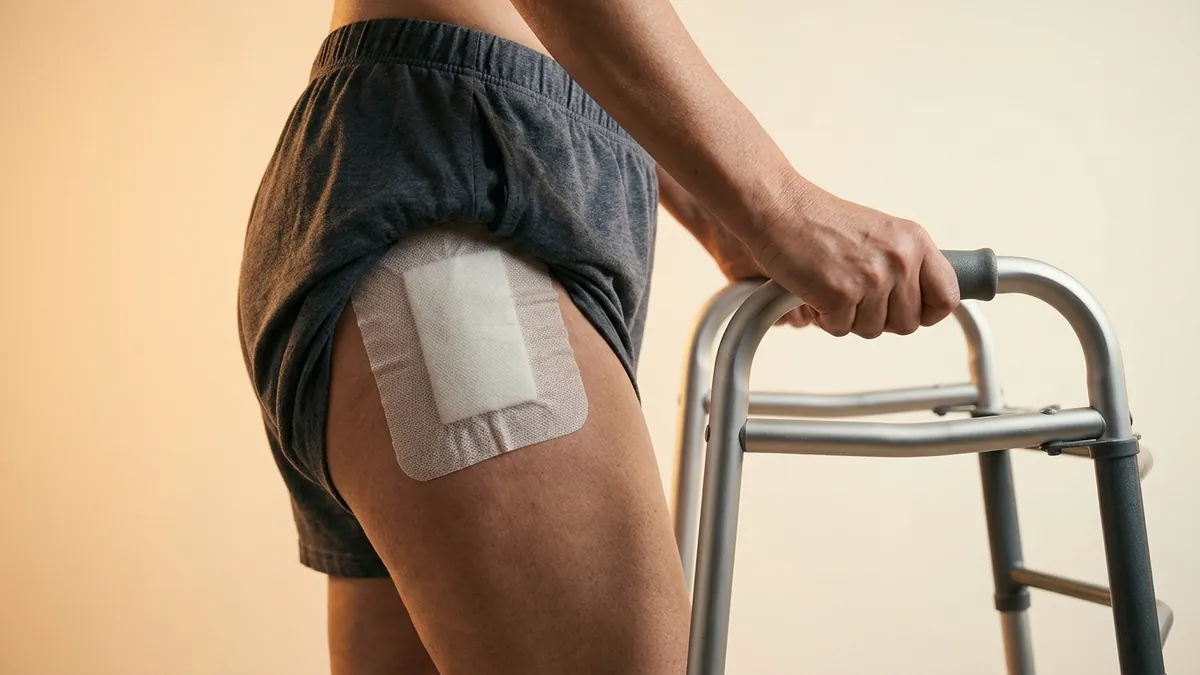
Understanding Hip Surgery Recovery Time: Clinical Meaning, Causes, Normal Ranges & Next Steps is one of the smartest ways you can prepare yourself—and your household—for a smooth, confident return to pain-free movement. Whether you are scheduled for a planned total hip replacement (total hip arthroplasty), keyhole hip surgery (hip arthroscopy), or helping a loved one recover from an urgent hip fracture repair, knowing what happens week by week takes away so much unnecessary worry. Pretty reassuring when you have a clear roadmap ahead of time, right?
In everyday family practice, we doctors talk with patients before and after hip operations every single week. Most people are pleasantly amazed to learn they will stand and take their very first steps within hours of waking up from anesthesia, yet they also want honest answers about climbing stairs, getting behind the wheel, and returning to work. Let us walk through how your hip heals on the inside, what normal recovery timelines look like, what slows healing down, and the exact steps that protect your new or repaired joint.
📌 Key Takeaways at a Glance
- First steps happen fast: Most patients stand and walk short distances with a walker or crutches on the very day of surgery or the next morning.
- Everyday independence returns in 2 to 6 weeks: Light household tasks, transitioning from a walker to a cane, and driving usually resume within this window.
- Full biological healing takes 3 to 12 months: Deep bone remodeling and hip muscle strength continue improving long after your skin incision looks healed.
- Surgical type shapes your pace: Keyhole cartilage repairs, anterior vs. posterior replacements, and emergency fracture repairs each carry distinct weight-bearing rules.
- Blood clot and infection vigilance saves lives: Taking prescribed blood thinners and watching for sudden calf swelling, fever, or chest pain is essential during the first month.
What Is the Normal Hip Surgery Recovery Time, and What Does It Mean Clinically?
Hip surgery recovery time typically takes 2 to 4 weeks to walk comfortably indoors, 6 to 12 weeks to resume everyday activities and driving, and 6 to 12 months for complete bone and muscle strength. Exact healing depends on your surgical procedure, age, bone health, and consistent physical therapy.
Have you ever wondered why your orthopedic surgeon says you are "recovered" at six weeks, yet your physical therapist says your hip is still healing at six months? Think about it for a second—clinically, we doctors measure recovery in two separate layers. The first layer is functional recovery, which means getting in and out of bed safely, walking to the kitchen without a frame, showering independently, and sleeping without heavy pain tablets.
The second layer is biological tissue and bone recovery. Long after your outer skin stitches dissolve around day 14, deep tendons, joint capsules, and living bone tissue are still remodeling around surgical implants or anchors. Understanding both layers keeps you from doing too much too soon once that nagging pre-surgery arthritis ache disappears. Makes sense, right?
How Does Your Body Heal After Hip Surgery, and Why Do Different Procedures Vary?
Look at what happens inside your hip joint the moment an operation finishes. Your body launches three overlapping biological repair stages: an acute inflammatory phase (days 1 to 7) that seals tiny blood vessels, a soft-tissue proliferative phase (weeks 2 to 6) where collagen fibers knit muscles and the joint capsule back together, and a long bone-bonding phase called bone ingrowth (osseointegration, lasting months 3 to 12) where living bone locks tightly onto metal or ceramic implants.
Naturally, the exact recovery time for hip surgery shifts depending on which procedure you undergo:
- Total hip replacement (total hip arthroplasty): Worn cartilage and bone from wear-and-tear arthritis (osteoarthritis) are replaced with a prosthetic ball and socket. Muscle-sparing front-of-hip (direct anterior) approaches often speed up Weeks 1 to 3 walking compared with back-of-hip (posterior) approaches, though 6-month outcomes are nearly identical.
- Keyhole hip surgery (hip arthroscopy): Used for joint rim cartilage tears (labral tears) or bone pinching (femoroacetabular impingement). Skin cuts are tiny, yet repaired cartilage often requires crutches for 2 to 4 weeks and 4 to 6 months before high-impact sports.
- Hip fracture pinning or partial replacement (internal fixation or hemiarthroplasty): Performed urgently after a fall, often alongside bone-thinning disease (osteoporosis), usually requiring 3 to 6 months of structured rehabilitation.
We rarely stop to compare surgeries across the body, do we? Unlike superficial procedures—where the recovery time for LASIK surgery is just a couple of days for surface corneal cells, or the recovery time for a hernia surgery is 2 to 4 weeks for abdominal wall mesh—your hip carries several times your body weight with every single stride.
What Are the Week-by-Week Stages and Normal Ranges for Recovery Time After Hip Surgery?
Before planned surgery, your Primary Care Physician (PCP) or family GP clinic typically runs baseline checks to set you up for smooth healing. We check your red blood cell count (hemoglobin, ideally above 12 to 13 g/dL to prevent post-op dizziness), three-month blood sugar average (HbA1c, ideally below 7.5% to 8.0% to lower infection risk), blood pressure, and vitamin D status. Once surgery is complete, normal recovery unfolds across clear clinical stages:
- Days 1 to 3 (Hospital or Outpatient Stay): Many healthy adults go home the same day or after 1 night. Before discharge, you must walk safely with a walker or crutches, pass urine normally, keep food down, and climb a few practice steps.
- Weeks 1 to 2 (Wound Healing & Clot Protection): Swelling and thigh bruising peak around days 4 to 7. You will take prescribed blood thinners (anticoagulants such as aspirin, apixaban, or rivaroxaban) for 10 to 35 days as directed by your surgeon, alongside short-walk intervals every 1 to 2 waking hours.
- Weeks 3 to 6 (Walker to Cane & Driving): Most people switch from a two-handed walker to a single cane or walking stick by weeks 2 to 4. Desk or remote work often resumes around weeks 2 to 4, and driving typically restarts between weeks 2 and 6 once you are completely off opioid pain tablets and can brake sharply.
- Weeks 6 to 12 (Everyday Freedom): Routine errands, brisk level walking, stationary cycling, and swimming (once the wound is 100% sealed) feel natural again. Physically demanding jobs usually resume around weeks 8 to 12.
- Months 3 to 12 (Peak Strength & Balance): Subtle limp patterns fade as your outer hip muscles (gluteus medius) rebuild full endurance for hiking, golf, doubles tennis, or gardening.
What Causes a Slower Hip Surgery Recovery Time, and How Do Doctors Evaluate Delays?
Be honest—have you ever compared notes with a friend or neighbor who bounced back faster after their operation and wondered what made the difference? Every body brings its own medical backstory into the operating theater. Common everyday causes of a slower recovery time hip surgery patients experience include pre-existing muscle weakness from years of limping, smoking or vaping (nicotine constricts tiny blood vessels feeding bone), poorly controlled diabetes, severe obesity, anemia, or skipping daily rehabilitation exercises out of fear of hurting the joint.
Remember how we talked about distinguishing normal healing soreness from real trouble? When a patient visits their family GP clinic feeling "stuck" or experiencing worsening pain weeks after surgery, we doctors evaluate specific medical differentials carefully rather than guessing:
- Joint or wound infection (periprosthetic joint infection): Can show up early with redness and drainage or weeks later as persistent deep aching. We check inflammatory blood tests—C-reactive protein (CRP) and erythrocyte sedimentation rate (ESR)—and contact your orthopedic surgical team urgently before starting random antibiotics that could mask lab cultures.
- Leg blood clot (deep vein thrombosis, or DVT): Reduced early walking slows vein flow in the calf and thigh, requiring an urgent Doppler ultrasound scan if one leg swells or throbs.
- Hip flexor tendon irritation (iliopsoas tendinitis) or nerve stretch: Often causes groin twinges when lifting your leg into a car or bed.
- Implant loosening, leg-length adjustment, or joint slip (dislocation): Evaluated with plain hip X-rays arranged through your surgeon or hospital radiology department.
How Can You Track Recovery Stages and Symptoms? (2-Column Clinical Guide)
When you are recovering at home at 8 p.m. on a Tuesday, it helps to know right away whether what you are feeling is completely normal or needs a phone call. Use this mobile-friendly clinical guide to match your stage or symptom with clear next steps.
| Recovery Stage or Post-Op Symptom | Clinical Meaning & Recommended Action |
|---|---|
| Days 1–14: Bruising & Thigh Swelling | Gravity pulls harmless surgical fluid and minor bleeding downward from your hip into your thigh, knee, and ankle, often peaking around days 5 to 7. What you should do: Elevate your legs slightly when resting, apply a wrapped ice pack to the outer hip for 15–20 minutes several times daily, and take short indoor walks every hour or two. |
| Weeks 2–6: Mild Outer Hip Stiffness & Limp | Deep hip stabilizing muscles that were stretched during surgery or weakened by years of arthritis are still rebuilding coordination and strength. What you should do: Keep using your cane in the hand opposite your operated hip rather than limping unaided, and complete your prescribed physical therapy exercises twice daily. |
| Painless Soft Clicking Sensation | A gentle, painless click or tap inside a new artificial hip is common early on while soft tissues tighten around the smooth prosthetic ball and socket. What you should do: Mention it at your routine 6-week surgical review; no urgent visit is needed unless accompanied by sharp pain, catching, or giving way. |
| Increasing Redness, Oozing, or Fever | Cloudy drainage, spreading warmth around the wound after day 5, or a temperature above 100.4°F (38.0°C) points toward a surgical site infection. What you should do: Call your orthopedic surgeon's clinic or visit your family GP / Urgent Care the same day—do not apply leftover antibiotic creams or wait for your next scheduled checkup. |
| One-Sided Calf Pain or Sudden Leg Shortening | Throbbing, tight swelling in one calf signals a possible leg blood clot (DVT), while sudden severe groin pain with an inward-turned foot indicates hip dislocation. What you should do: Stop trying to walk on the leg and seek immediate emergency hospital evaluation at your nearest ER / A&E. |
How Should You Care for Your Hip at Home to Speed Up Healing Safely?
See? Knowing what is happening beneath the skin makes home care much more straightforward. Setting up your living space before admission day pays huge dividends. Clear loose throw rugs and phone cords out of hallways, place everyday mugs, plates, and kettle items at waist height on the kitchen counter, install a sturdy grab bar and non-slip mat in your walk-in shower, and add a raised toilet seat if your surgical team recommends hip-bending precautions.
Your body also burns extra energy building new collagen and bone tissue, even while you rest in an armchair. Aim for high-quality protein at every meal—think scrambled eggs on whole-grain toast, Greek yogurt with berries, grilled salmon, roast chicken, cottage cheese, or hearty lentil soup. Pair that with plenty of water and high-fiber foods like oatmeal (porridge), pears, prunes, and leafy greens. Why the extra focus on fiber and hydration? Strong pain tablets slow down your bowel movements within 48 hours, and straining on the toilet is the last thing you want with a fresh hip incision! If snowy, icy, or wet sidewalks are outside your front door, stick to flat indoor laps until your balance is rock-solid.
✔️ What You Should Do & ❌ What to Avoid
- ✔️ Do practice short, frequent walks: Five to ten minutes of gentle walking several times a day beats one exhausting hour-long trek that leaves your joint throbbing.
- ✔️ Do take every dose of your blood thinner: Complete the full prescribed course exactly on schedule, even when you start walking comfortably around the house.
- ✔️ Do stay ahead of pain before physical therapy: Taking prescribed acetaminophen (paracetamol) or approved pain relief 30 to 45 minutes before exercises helps you move smoothly.
- ❌ Don't soak your incision underwater early on: Avoid bathtubs, hot tubs, swimming pools, and ocean water until your surgeon confirms the skin wound is completely sealed (usually 3 to 4 weeks).
- ❌ Don't break movement precautions: If you had a posterior hip replacement, avoid bending your hip past 90 degrees, crossing your legs, or twisting your operated foot inward until cleared.
- ❌ Don't smoke or vape during recovery: Nicotine starves healing bone and skin edges of oxygen, dramatically raising wound breakdown and implant loosening risks.
🚨 When to Seek Immediate Emergency Care (Red-Flag Symptoms)
If you or someone near you develops any of these red-flag symptoms, do not wait — call 911 (US & Canada), 999 or 111 (UK), or 000 (Australia) immediately or go straight to the nearest hospital Emergency Room (ER / A&E):
- Sudden shortness of breath, sharp chest pain, or coughing up blood: Classic warning signs of a life-threatening lung blood clot (pulmonary embolism, or PE).
- New, painful swelling, redness, or tightness in one calf or thigh: A key sign of a deep vein blood clot (DVT) needing urgent ultrasound scanning.
- A sudden "pop," severe hip pain, inability to bear weight, or one leg looking noticeably shorter or rotated: Signs of an acute hip dislocation or fracture around the implant.
- High fever above 101°F (38.3°C), shaking chills, or pus/foul fluid draining from the surgical wound: Urgent indicators of a deep surgical infection or sepsis.
- New numbness, tingling, or inability to lift your foot upward (foot drop): Needs prompt medical assessment for nerve compression.
💡 Key Take-Home Message
- Expect meaningful independence within 2 to 6 weeks after hip surgery, while giving your bone and deep hip muscles a full 6 to 12 months to reach peak strength.
- Consistent daily gentle exercises, protein-rich meals, home fall prevention, and completing your blood-thinner course are the biggest factors within your control.
- Keep close contact with your orthopedic team and your Primary Care Physician (PCP) or family GP whenever wound changes, unexpected swelling, or stalled progress appear.




No comments yet. Be the first to share your question or experience below.