

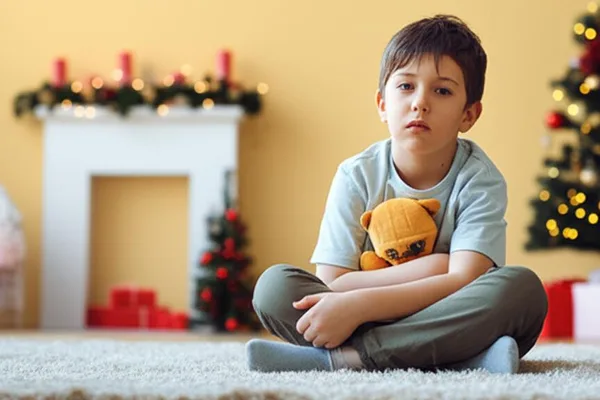
We all love festive times like New Year and Christmas, don't we? It's a wonderful time when homes are beautifully decorated, relatives and friends gather, and everyone is happy . But for a mother or father with a child with autism, this time can be a bit challenging. These children can be hard to handle the sudden noises, bright lights, and crowded places. So today, let's talk about how to keep our child calm and safe during this festive season.
Why are the holidays difficult for these children?
Simply put, the brains of children with autism process information differently than ours. They may have special sensory sensitivities . That is, things that we normally perceive - a sound, a light, a smell, a touch - may be very strong, unbearable for them. Imagine, during the holiday season, when the music playing in the shops, the bright lights, the sound of people talking, all of these things go into their brains at once, they feel a great pressure, a weight. We call this sensory overload . At such times, the child may become agitated, cry, scream, or become completely silent.
Remember, your child is not intentionally being disruptive. This is part of their condition. They are trying to relieve pressure that they cannot handle.
What should we do? Some practical advice
Okay, so how do we face this challenge? Don't worry, by planning small things, we can make this time easier for the child and for ourselves.
1. Understand the child's limitations well
Not all children are the same. How much noise can your child tolerate? How long can they stay in a crowded place? You need to have a good understanding of these things. For example, taking your child to a large shopping mall in a city like Colombo or Kandy at noon during the summer months may not be comfortable for them. Instead, plan to go early on a weekday morning, when there are fewer people.
2. Prepare a quiet place in noisy places
If you are going to a party at a relative's house, talk to the family in advance and see if you can reserve a quiet room or a corner of the yard for your child to be quiet. As soon as you notice that your child is feeling stressed, give him the opportunity to go there and play with a favorite toy, read a book, or just be there. This will greatly reduce the stress on his mind.
3. When decorating your home, do it little by little.
Rather than suddenly putting up lights and decorations all over the house and making it look like a "winter wonderland," do these things little by little. Bring in the Christmas tree one day and decorate it the next day. Involve your child in these activities. Give him a chance to touch the decorations and get used to them. This will help him to feel less afraid of new things.
4. Take safety measures to prevent your child from getting lost.
Children with autism are sometimes more likely to run away and wander in unfamiliar environments. This can be very dangerous.
- Inform neighbors: It is very important to inform your closest neighbors about your child's condition and this type of behavior.
- Wear an ID: Put an ID bracelet on your child's hand. Clearly write the child's name and your phone number on it.
- Always be vigilant: Always keep an eye on your child in crowded places.
5. Keep your child's daily routine as consistent as possible.
Routine is like an anchor for these children. It provides them with a sense of security. Don't change their usual routine too much just because it's a holiday.
- Food and sleep: Try to keep things as consistent as possible, such as feeding your child at the same time each day and putting them to bed at the same time each night.
- Don't make sudden changes: Don't just say, "We're going to a party, get ready." Instead, use a visual schedule . That is, show him pictures of the things he has to do that day (e.g., a picture of eating, a picture of a relative's house) on the wall. That way, he can get an idea of what the day will be like.
| The festive season challenge | What you can do |
|---|---|
| Crowds and excessive noise | Choose a less crowded time. Identify a quiet place in advance. The child can use noise-cancelling headphones. |
| Change in daily routine | Do not change meal and bedtime times. Show your child a visual schedule of the day in advance. |
| New foods | Take some familiar foods with you to the place you are going. Don't force your child to eat new foods. |
| Receiving and opening gifts | Introduce a specific time and method for opening gifts (e.g., when everyone is together, taking turns). |
6. Bring things that will bring comfort to the child.
If you're going somewhere, pack a few familiar and favorite things in your child's bag. It could be a favorite toy, a book, a phone with songs they like to listen to, or snacks they like to eat. Having these things in hand when they're feeling stressed can be a great comfort.
7. Be careful when choosing and giving gifts.
When choosing a gift for your child, consider whether it will not only be fun for them, but also help them develop their skills. For example, toys that encourage turn-taking and language development are very valuable.
Set some rules for opening gifts too. Tell your child in advance that gifts will only be opened when everyone is together. Your child may not be able to handle the excitement of everyone opening gifts at once. So, use something like a small ball that can be passed from person to person, and let the person holding it open their gift.
Finally, it's okay if everything doesn't go as planned. Don't worry about it. The most important thing is to cherish every moment you spend with your child during this festive season. If you're having trouble controlling your child's behavior or need further advice, talk to your pediatrician or psychiatrist .
Take-Home Message
- For children with autism, the festive season can be stressful due to heightened sensory sensitivities.
- Maintain your child's routine as much as possible. It will provide security for the child.
- Avoid crowded and noisy places. Or go when there are fewer people. Set aside a quiet space where you can go.
- Take safety measures such as wearing an ID card and paying constant attention to prevent your child from getting lost.
- Take familiar toys, books, or foods that bring comfort to your child wherever you go.
- Even if everything isn't perfect, cherish and enjoy every moment you have with your baby. If you have any concerns, consult your doctor.




💬 Comments (0)
No comments yet. Be the first to share your thoughts here.
Add Your Comment