

Starting Itovebi (inavolisib) for PIK3CA-mutated HR-positive breast cancer brings real hope alongside two very practical daily priorities: fasting blood sugar and stomatitis prevention. When hormone therapy alone stops holding breast cancer back, learning that your tumor carries a specific genetic change can actually open the door to much sharper, more personalized treatment. At the same time, hearing that a breast cancer tablet requires a home glucose meter and a steroid mouth rinse catches almost everyone off guard. Pretty surprising, right?
We doctors walk patients and families through this exact transition every week, coordinating closely between your specialist oncology clinic and your Primary Care Physician (PCP) or family GP clinic. Once you understand why these side effects happen and set up a simple Day 1 routine at home, staying safely on treatment becomes far more manageable than it sounds on paper.
📌 Key Takeaways at a Glance
- Triple-Targeted Combination: Itovebi (9 mg once daily) is taken alongside palbociclib and fulvestrant for adults with endocrine-resistant, PIK3CA-mutated, HR-positive, HER2-negative advanced breast cancer, more than doubling progression-free survival in the landmark INAVO120 trial.
- Dual-Action Precision: Unlike older drugs in its class, inavolisib both blocks the overactive PI3K-alpha enzyme and selectively breaks down the mutated p110-alpha protein.
- Early Blood Sugar Checks Matter: High blood sugar (hyperglycemia) most often appears around Day 7; checking fasting glucose every 3 days in Week 1 catches rises early.
- Prevent Mouth Sores Before They Start: Swishing and spitting alcohol-free dexamethasone mouthwash from Day 1 dramatically lowers the risk of painful mouth sores (stomatitis).
- Team-Based Safety Net: Temporary dose holds or medications like metformin routinely settle side effects without sacrificing your long-term cancer control.
HbA1c to blood glucose converter. Convert between HbA1c (%), mmol/mol, and average blood glucose in mg/dL and mmol/L instantly.
What Is Itovebi (Inavolisib) for PIK3CA-Mutated HR-Positive Breast Cancer, and How Does It Work?
Itovebi (inavolisib) is an oral targeted kinase inhibitor and mutant-protein degrader approved with palbociclib and fulvestrant for adults with endocrine-resistant, PIK3CA-mutated, hormone receptor-positive (HR-positive), HER2-negative locally advanced or metastatic breast cancer. Taken as a 9 mg tablet once daily, it blocks tumor growth signals and doubles progression-free survival compared with standard two-drug therapy alone.
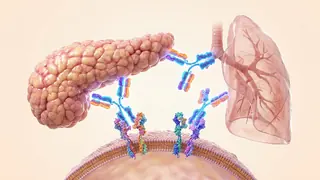
Look closely at what happens inside the cancer cell here. Roughly 35% to 40% of HR-positive, HER2-negative breast cancers carry a mutation in the PIK3CA gene. Normally, the PI3K-alpha pathway acts like a tightly regulated switch telling cells when to use glucose and divide. When PIK3CA mutates, that switch gets jammed in the "on" position, allowing cancer cells to outgrow standard estrogen-blocking therapies during or shortly after adjuvant treatment.
Have you ever wondered how Itovebi differs from earlier targeted pills such as alpelisib (Piqray) or AKT inhibitors like capivasertib (Truqap)? Inavolisib is uniquely engineered to bind selectively to the p110-alpha subunit of PI3K and trigger actual breakdown of the mutated p110-alpha protein while sparing more normal signaling pathways. Before prescribing it, your oncologist confirms the PIK3CA mutation using a blood-based tumor DNA test (liquid biopsy for circulating tumor DNA) or a tumor tissue biopsy. In the Phase 3 INAVO120 study, adding Itovebi extended median progression-free survival from 7.3 months to 15.0 months and significantly improved overall survival.
How Do You Take the Itovebi, Palbociclib, and Fulvestrant 28-Day Regimen Correctly?
Keeping three medications straight on a 28-day calendar takes a little organization at first, so we doctors always suggest setting a daily phone alarm and using a dedicated pill tracker. Each medicine works on a distinct schedule to lock down three separate cancer survival pathways at once:
- Itovebi (inavolisib): Take 9 mg by mouth once daily continuously (every single day of the 28-day cycle), with or without food, at roughly the same time each day. Swallow the pink oval 9 mg tablet whole—never chew, crush, or split it.
- Palbociclib: Take 125 mg by mouth once daily for 21 consecutive days, followed by 7 days off to let your bone marrow recover.
- Fulvestrant: Given by your oncology nurse as a 500 mg intramuscular injection on Days 1 and 15 of Cycle 1, and then on Day 1 of every 28-day cycle thereafter. Pre- or perimenopausal women (and often male patients) also receive a hormone-suppressing injection called a luteinizing hormone-releasing hormone (LHRH) agonist.
What if life gets busy and you miss your daily Itovebi tablet? If it has been within 9 hours of your usual time, go ahead and take it right away. If more than 9 hours have passed—or if you vomit after swallowing a dose—skip that day's tablet completely and resume at your normal time tomorrow. If you have moderate kidney impairment (an estimated glomerular filtration rate, or eGFR, of 30 to 59 mL/min), your doctor will start you at a gentler 6 mg daily dose (two red 3 mg tablets) instead of 9 mg.
Why Does Itovebi Raise Fasting Blood Sugar, and What Are the Exact Monitoring Cutoffs?
Have you ever wondered why a targeted breast cancer tablet can nudge your morning blood sugar upward even if you have never had diabetes in your life? Remember how we talked about that PI3K-alpha enzyme at the beginning? Healthy muscle, fat, and liver cells use that exact same PI3K-alpha pathway to hear insulin knocking at the door after a meal. When Itovebi blocks PI3K-alpha inside tumor cells, it also temporarily causes insulin resistance in your body, leaving extra sugar circulating in your bloodstream. Now that connection makes complete sense, doesn't it?
In clinical trials, high blood sugar (hyperglycemia) occurred in about 85% of patients, with a median start time of just 7 days after beginning treatment. Before you swallow your very first tablet, we check your baseline fasting blood glucose and your three-month average blood sugar test (hemoglobin A1c or HbA1c), aiming for well-optimized numbers—ideally fasting glucose under 126 mg/dL (7.0 mmol/L) and HbA1c below 6.0% (42 mmol/mol). Note that Itovebi has not been established as safe in Type 1 diabetes or uncontrolled insulin-dependent diabetes.
See? That fast 7-day onset is why your morning finger-stick or continuous glucose monitor schedule is strictest right at the start:
- Week 1 (Days 1 to 7): Check fasting blood glucose every 3 days before breakfast.
- Weeks 2 to 4 (Days 8 to 28): Check fasting blood glucose once weekly.
- Weeks 5 to 12: Check once every 2 weeks, then monthly thereafter as guided by your team, alongside a lab HbA1c every 3 months.
Nearly half of patients on Itovebi eventually take an oral blood-sugar medication—most commonly extended-release metformin (started gently with evening meals to protect your stomach) or a second agent prescribed with your PCP or family GP clinic. Needing metformin does not mean treatment is failing; in fact, mild insulin resistance simply reflects that the drug is hitting its biological target.
How Can You Prevent Stomatitis (Mouth Sores) Using Dexamethasone Mouthwash from Day 1?
Be honest—when you hear "daily mouthwash," it sounds almost too simple to stop cancer-drug mouth sores, doesn't it? Yet painful mouth sores and lining inflammation (stomatitis or oral mucositis) affect roughly half of patients on PI3K-targeted combinations if left unprotected, usually flaring within the first few weeks. Once an open ulcer forms inside your cheek or tongue, eating and drinking become miserable, often forcing avoidable dose pauses.
Prevention on Day 1 changes the entire experience. Oncology teams across the US, UK, Canada, and Australia routinely prescribe an alcohol-free dexamethasone oral solution (typically 0.5 mg per 5 mL) as a preventative swish-and-spit rinse starting the exact day you take your first Itovebi tablet:
- Measure 10 mL (two teaspoons) of alcohol-free dexamethasone liquid 3 to 4 times daily after brushing or meals.
- Swish thoroughly around your cheeks, gums, and tongue for a full 1 to 2 minutes, then spit it completely out—never swallow it, so you avoid absorbing extra steroid into your bloodstream (which could raise blood sugar!).
- Wait at least 30 to 60 minutes before eating, drinking water, or rinsing your mouth so the soothing anti-inflammatory film stays directly on your oral tissues.
Between steroid rinses, you can swish gently with a homemade bland rinse—half a teaspoon of baking soda and a quarter teaspoon of salt dissolved in a cup of warm water. Switch immediately to an ultra-soft toothbrush, mild SLS-free toothpaste, and strictly zero-alcohol mouth products.
How Do Your Blood Sugar Readings, Mouth Symptoms, and Other Side Effects Guide Your Care?
Knowing the exact numbers and symptom grades your oncology team uses takes the guesswork out of calling the clinic. Keep this quick-reference guide handy alongside your home glucose log:
| Finding or Side Effect | Clinical Meaning & Action Step |
|---|---|
| Fasting Glucose Above Normal up to 160 mg/dL (up to 8.9 mmol/L) | Mild Grade 1 elevation showing early insulin resistance; you can safely continue your regular daily 9 mg Itovebi tablet. What you should do: Drink plenty of water, cut back on refined sugars and white flour, log your morning readings, and ask your doctor if starting low-dose metformin makes sense based on your risk factors. |
| Fasting Glucose 161 to 250 mg/dL (9.0 to 13.9 mmol/L) | Moderate Grade 2 hyperglycemia that requires a brief, planned pause in Itovebi while glucose-lowering treatment kicks in. What you should do: Call your oncology clinic the same day; your doctor will temporarily hold Itovebi, start or step up oral medication like metformin, and restart your regular dose once fasting sugar drops to 160 mg/dL (8.9 mmol/L) or lower. |
| Fasting Glucose 251 to 500 mg/dL (14.0 to 27.8 mmol/L) | Severe Grade 3 hyperglycemia carrying dehydration risk; most patients improve within about 8 days once Itovebi is paused and treated. What you should do: Hold Itovebi immediately and contact your oncology team or local Urgent Care center today for blood work, hydration, and rapid glucose medication; resuming within 7 days uses the same dose, whereas 8+ days steps down one dose tier (9 mg to 6 mg, or 6 mg to 3 mg). |
| Stomatitis (Tender Red Mouth vs. Painful Ulcers) | Mild soreness (Grade 1) stays on full dose, while painful ulcers limiting solid food (Grade 2) or liquids (Grade 3) require holding Itovebi until healed. What you should do: Keep using your swish-and-spit dexamethasone rinse 4 times daily for mild tenderness; if ulcers make chewing hurt, call your oncology nurse right away to pause Itovebi and add prescription numbing rinses. |
| Diarrhea or Low White Blood Cells (Neutropenia) | Itovebi can trigger watery stools risking kidney dehydration, while palbociclib commonly lowers infection-fighting neutrophils (low white blood cell count, or neutropenia). What you should do: Start loperamide (Imodium) at the first loose stool, sip sugar-free electrolytes, call your clinic if you have 4 or more stools above normal, and keep up every scheduled complete blood count (CBC) lab draw. |
What Everyday Diet and Home Habits Protect Both Your Blood Sugar and Your Mouth?
Think about it for a second: what do you think happens when your mouth feels tender and well-meaning friends tell you to eat ice cream, fruit smoothies, honey tea, or mashed white potatoes? Every single one of those classic "soft sick-day foods" packs a massive carbohydrate load—and recall that 160 mg/dL (8.9 mmol/L) fasting glucose threshold we walked through earlier! Eating sugary soft foods while taking a PI3K inhibitor can spike your blood sugar overnight. We rarely stop to think about how those two side effects collide in the kitchen, do we?
Instead, stock your fridge with foods that are cool, velvety-smooth, non-acidic, and low-glycemic all at once. Plain full-fat Greek yogurt, soft scrambled eggs with butter or avocado, smooth cottage cheese, lukewarm chicken or bone broth, silken tofu, flaked poached salmon, and unsweetened vanilla protein shakes blended with nut butter soothe delicate mouth tissue while keeping blood glucose steady. Skip crusty sourdough toast, salt-and-vinegar crisps or potato chips, orange or tomato juice, spicy chili, and hot coffee.
Finally, keep two extra home safeguards in mind. First, if diarrhea strikes, rehydrate with sugar-free oral electrolyte solutions rather than sugary sports drinks. Second, because Itovebi can harm an unborn baby, patients who could become pregnant—and male patients with partners who could become pregnant—must use effective non-hormonal contraception during treatment and for 1 week after the final dose.
✔️ What You Should Do & ❌ What to Avoid
- ✔️ DO start your alcohol-free dexamethasone swish-and-spit rinse on Day 1: Consistency prevents mouth ulcers far better than chasing them after they appear.
- ✔️ DO check fasting blood glucose first thing in the morning: Test after an 8-hour overnight water-only fast and bring your logbook to every oncology and GP appointment.
- ✔️ DO share your full medication list with every clinician: Coordinate between your cancer center and Primary Care Physician (PCP) or family GP clinic before starting antibiotics, steroids, or herbal supplements.
- ❌ DO NOT swallow steroid mouthwash or rinse immediately with water: Swallowing adds systemic steroid that pushes blood sugar higher, while rinsing washes away mouth protection.
- ❌ DO NOT crush, split, or double up on missed Itovebi tablets: Never take two doses on the same day if more than 9 hours have passed.
- ❌ DO NOT drink sugary sodas or sports drinks when thirsty: Excessive thirst can actually be a sign of rising blood sugar, and sweet drinks pour fuel on the fire.
🚨 When to Seek Immediate Emergency Care (Red-Flag Symptoms)
If you or someone near you develops any of these red-flag symptoms, do not wait — call 911 (or 999 in the UK / 000 in Australia) immediately or go straight to the nearest hospital Emergency Room (ER / A&E):
- Signs of Diabetic Ketoacidosis (Dangerous Acid Buildup in the Blood): Blood glucose reading above 500 mg/dL (27.8 mmol/L), sweet or fruity-smelling breath, fast deep breathing, persistent nausea or vomiting, stomach pain, extreme drowsiness, or confusion.
- Fever During Treatment (Possible Neutropenic Sepsis): A temperature of 100.4°F (38.0°C) or higher, shaking chills, or sudden shortness of breath while taking palbociclib and Itovebi.
- Severe Dehydration or Kidney Strain: Uncontrolled watery diarrhea, dizziness or fainting when standing up, dark or absent urine for over 8 hours, or inability to keep fluids down.
- Severe Throat or Mouth Swelling: Mouth ulcers so painful you cannot swallow liquids for 24 hours, or blistering skin rash with peeling.
💡 Key Take-Home Message
- Itovebi (inavolisib) combined with palbociclib and fulvestrant gives adults with PIK3CA-mutated, HR-positive, HER2-negative advanced breast cancer powerful, durable tumor control.
- Checking morning fasting blood sugar on schedule and swishing alcohol-free dexamethasone mouthwash from Day 1 turn its two biggest side effects into predictable, manageable routines.
- Never hesitate to pause your tablet when directed—brief, guided holds and step-down doses protect your safety while preserving treatment benefit.





No comments yet. Be the first to share your question or experience below.