
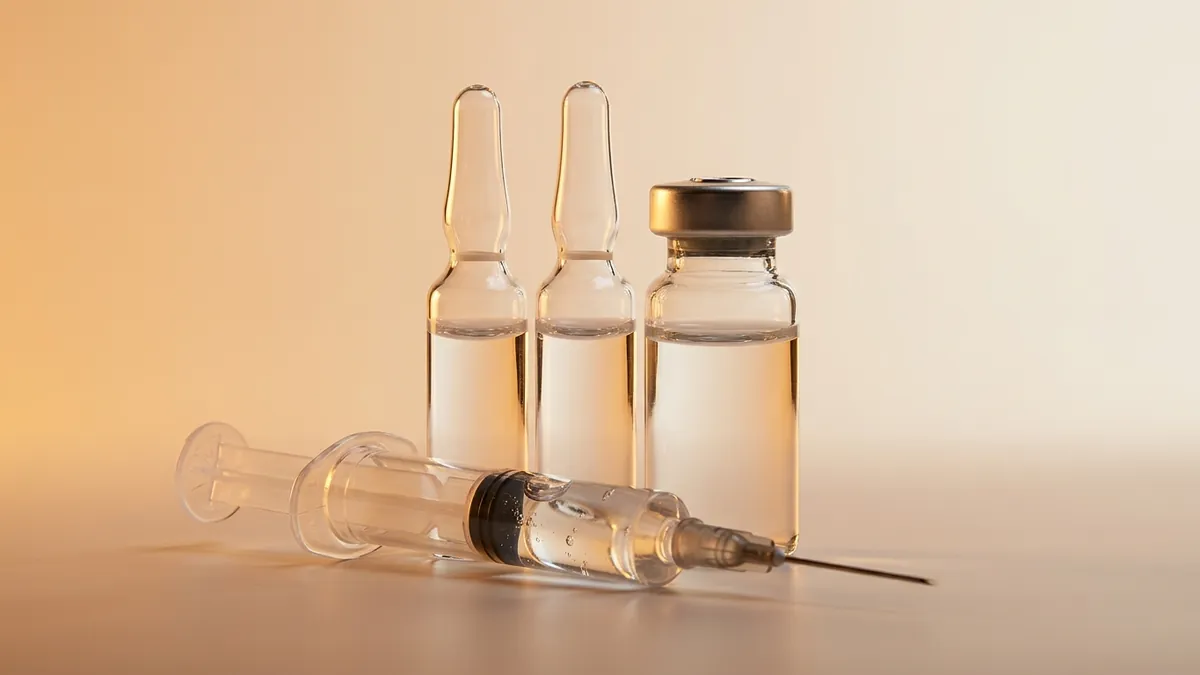
Subcutaneous injection of heparin: clinical meaning, causes, normal ranges, and next steps are the exact essentials we doctors walk you through whenever an injectable blood thinner (anticoagulant) becomes part of your care plan. Have you ever looked at a tiny prefilled syringe and wondered how medicine placed just beneath your belly skin can protect your leg veins and lungs from life-threatening blood clots? Pretty remarkable when you stop and think about it, right?
Unlike hospital drips that run straight into a vein, an under-the-skin shot (subcutaneous injection) delivers unfractionated heparin into the soft fatty cushion between your skin and muscle. From there, your body absorbs the medicine slowly and evenly over several hours. Whether you are recovering from hip replacement surgery, resting in a hospital bed, or protecting a pregnancy when tablets are unsafe, this steady shield keeps dangerous clots at bay.
Whether you receive care through your Primary Care Physician (PCP) or family GP clinic, an outpatient anticoagulation clinic, or a hospital discharge team, mastering a few simple habits makes home injections safe and nearly painless. Let us break down how heparin works, what your blood test numbers actually mean, and how to handle every dose with confidence.
📌 Key Takeaways at a Glance
- Slow, Protective Absorption: Subcutaneous heparin goes into the fatty tissue of your lower abdomen or outer thigh, preventing new blood clots from forming and stopping existing clots from growing.
- Standard Preventive Dosing: Most adults preventing clots receive 5,000 units under the skin every 8 to 12 hours, while full clot-treatment doses are tailored by body weight and lab results.
- Key Blood Monitoring Ranges: Normal baseline clotting time (aPTT) is 25 to 35 seconds (therapeutic target is usually 60 to 85 seconds), and healthy platelet counts sit between 150,000 and 450,000 per microliter.
- Golden Technique Rule: Always inject at least 2 inches (5 cm) away from your belly button into gently pinched skin, never pull back on the plunger, and never rub the spot afterward.
- Watch for Platelet Drops & Bleeding: Routine blood counts between Day 4 and Day 14 screen for heparin-triggered low platelets (heparin-induced thrombocytopenia, or HIT), a rare reaction that requires switching blood thinners immediately.
What Is a Subcutaneous Injection of Heparin, and How Does It Work in Your Body?
A subcutaneous injection of heparin is an under-the-skin blood-thinner shot given into the fatty layer of your abdomen or thigh to stop dangerous blood clots from forming or growing. It activates your body's natural antithrombin protein, steadily blocking clotting factors without needing an intravenous hospital drip.
Here is something patients ask us all the time: does heparin actually melt away an existing blood clot? Not directly—and we rarely stop to think about that distinction, do we? Instead of dissolving a clot like an emergency clot-buster drug (thrombolytic), unfractionated heparin binds to a natural brake protein in your bloodstream called antithrombin III. Think about it for a second: once heparin latches on, it speeds up that natural brake by nearly a thousand times, shutting down two major clotting enzymes called thrombin (Factor IIa) and Factor Xa.
With your clotting cascade turned down, fibrin strands cannot weave a bigger clot, giving your body's own cleanup enzymes time to break down trapped clots safely. You might also hear doctors compare standard unfractionated heparin with low-molecular-weight heparin (LMWH), such as enoxaparin or dalteparin. While LMWH lasts longer and often needs just one shot a day, standard subcutaneous heparin is cleared mainly through cells lining your blood vessels rather than your kidneys. Now that makes sense why we doctors strongly prefer standard subcutaneous heparin if your kidneys are working below 30% capacity, right? Even better, its effect wears off within hours and can be reversed rapidly in hospitals using an antidote called protamine sulfate.
Why Do Doctors Prescribe Subcutaneous Heparin? (Common Causes & Clinical Conditions)
Have you ever wondered why your doctor chose a twice-daily or three-times-daily skin injection instead of a simple daily pill? Whenever blood flow slows down, blood vessel walls get irritated during surgery, or your blood becomes extra sticky, clots can quietly form inside deep leg or pelvic veins—a condition called a deep vein blood clot (deep vein thrombosis, or DVT). If part of that clot breaks loose and travels to your lungs, it causes a life-threatening lung blood clot (pulmonary embolism, or PE).
We doctors prescribe subcutaneous heparin across several everyday medical situations where pills either cannot be swallowed, take too long to kick in, or pose safety risks:
- Major Surgery & Hospital Bedrest: Orthopedic surgeries like knee or hip replacements, abdominal cancer operations, or days spent recovering in bed dramatically slow leg circulation. Low-dose subcutaneous heparin cuts post-op clot risk by more than half.
- Pregnancy Clot Protection: Unlike warfarin or modern oral blood thinners that cross the placenta and harm a developing baby, heparin molecules are large and never cross the placenta. That makes under-the-skin heparin a trusted choice for pregnant patients with clotting disorders like antiphospholipid syndrome.
- Chronic Kidney Disease: When kidney filtration drops significantly, newer oral thinners and LMWH can build up to unsafe levels, whereas standard subcutaneous heparin stays predictable.
- Medication Bridging: When you must pause long-term oral warfarin before a colonoscopy or operation, short-acting heparin protects you right up until the hours before your procedure.
What Are the Normal Lab Ranges and Standard Dosing Schedules for Subcutaneous Heparin?
Look at what happens when we tailor heparin to your exact clinical need: preventive doses and full treatment doses look very different, and so do your lab targets. For preventing clots (prophylaxis) in hospitalized or post-surgical adults, the classic evidence-based dose is 5,000 units injected subcutaneously every 8 to 12 hours. Because this low dose gently nudges your clotting system without fully thinning your blood, your routine clotting time usually stays right near normal.
When we doctors use higher subcutaneous doses to actively treat an existing clot—often starting around 333 units per kilogram of body weight followed by 250 units per kilogram every 12 hours—we rely on specific blood tests arranged through your hospital lab or Primary Care Physician (PCP) / family GP clinic:
- Activated Partial Thromboplastin Time (aPTT): A normal baseline range off blood thinners is 25 to 35 seconds. On full therapeutic heparin, doctors typically aim for 1.5 to 2.5 times baseline—roughly 60 to 85 seconds—drawn about 6 hours after a subcutaneous dose.
- Anti-Factor Xa Activity Level: Many labs now prefer this sharper test. Therapeutic range sits at 0.3 to 0.7 IU/mL, while preventive low-dose levels sit around 0.1 to 0.3 IU/mL.
- Platelet Count: A healthy normal range is 150,000 to 450,000 platelets per microliter. Checking baseline platelets and retesting every 2 to 3 days from Day 4 through Day 14 catches immune-related platelet drops early.
- Serum Potassium: Normal blood potassium is 3.5 to 5.0 mmol/L. Heparin can mildly lower adrenal aldosterone hormone after a week of use, nudging potassium upward—especially if you have diabetes or kidney trouble.
Before starting, your doctor will also screen for strict safety blocks (contraindications), including active internal bleeding, severely uncontrolled blood pressure, baseline platelets under 50,000 per microliter, recent brain, eye, or spinal surgery, or an epidural pain catheter in your back.
How Do You Give a Subcutaneous Heparin Shot Safely at Home? (Step-by-Step Preparation & Site Rotation)
Be honest—have you ever felt your stomach flip at the thought of giving yourself a needle at home? Almost everyone feels nervous before their very first injection! The reassuring news is that subcutaneous needles are ultra-thin and barely half an inch long, designed to slip only into surface fat rather than sensitive muscle.
Follow this steady six-step routine every time you prepare a dose:
- Wash Up & Double-Check the Label: Wash your hands thoroughly with soap and warm water. If drawing from a vial rather than using a prefilled syringe, read the concentration twice—vials come in 1,000, 5,000, and 10,000 units per milliliter, and mixing them up changes the dose dramatically.
- Choose & Rotate Your Spot: Your lower abdomen ("love handle" zone) absorbs heparin best. Stay at least 2 inches (5 cm) away from your belly button, below your ribs, and above your hip bones. Avoid scars, moles, waistbands, or prior bruises, and switch from left to right with every shot like moving around a clock face.
- Swab & Let Dry Completely: Wipe the skin with an alcohol pad and let it air-dry for a full 30 seconds. Injecting through wet alcohol stings—waiting those extra seconds makes a huge difference!
- Pinch a Cushion of Skin: Gently pinch a 1-to-2-inch fold of fatty skin between your thumb and index finger. Hold the syringe like a dart and insert the needle smoothly at a 90-degree angle (or a 45-degree angle if you have very little body fat).
- Inject Slowly Without Pulling Back: Keep pinching the skin fold the whole time. Push the plunger down slowly over 5 to 10 seconds. Never pull back (aspirate) on the plunger first—doing so ruptures tiny blood vessels and causes purple bruises.
- Withdraw Gently & Never Rub: Wait 5 seconds, slide the needle straight out at the same angle, and let go of the skin fold. Press lightly with sterile gauze for a few seconds, drop the syringe immediately into a puncture-proof sharps bin, and resist rubbing the skin.
How Do Subcutaneous Heparin Options, Lab Findings, and Side Effects Compare?
Remember how we talked earlier about tracking how your body responds once you are home? Having a quick guide helps you tell harmless injection marks apart from warning signs that need a phone call to your doctor. Below is a two-column reference comparing common situations, lab shifts, and daily scenarios you might run into while taking subcutaneous heparin.
| Factor, Finding, or Scenario | Clinical Meaning & Next Step |
|---|---|
| Small quarter-sized bruise or tiny drop of blood at injection site | Very common and harmless; tiny surface capillaries in belly fat occasionally ooze slightly when nicked by a needle. What you should do: Press gently with clean gauze for 60 seconds without rubbing, apply a cool pack wrapped in a cloth if tender, and pick a fresh spot 2 inches away for your next shot. |
| Hard, painful lump (hematoma) or dark purple/black skin patch at shot site | Deep localized bleeding under the skin or, if skin turns black and blistered, rare heparin-induced skin necrosis linked to an immune reaction. What you should do: Do not inject near that area again and contact your Primary Care Physician (PCP), family GP clinic, or local Urgent Care center the same day for an examination and platelet blood check. |
| Platelet count drops by more than 50% (or below 100,000/mcL) on Days 4–14 | Strong warning sign of heparin-induced thrombocytopenia (HIT), an immune reaction that paradoxically triggers dangerous new arterial and venous blood clots. What you should do: Stop heparin only under urgent medical direction—your care team will admit or refer you immediately to switch to a non-heparin blood thinner. |
| Missed scheduled dose at home | Gaps in 8-hour or 12-hour schedules temporarily lower your protective antithrombin shield. What you should do: Take the missed injection as soon as you remember unless your next scheduled shot is less than 4 hours away; never inject a double dose to catch up. |
| Everyday headache, backache, or joint soreness | Common over-the-counter anti-inflammatory painkillers (NSAIDs like ibuprofen, naproxen, or aspirin) irritate your stomach lining and impair platelets, multiplying internal bleeding risk. What you should do: Check with your doctor or pharmacist before taking any OTC painkiller—plain acetaminophen (paracetamol) in standard doses is usually the safer choice unless you have liver disease. |
| Long-term subcutaneous heparin use (months, such as during pregnancy) | Extended daily use of unfractionated heparin for more than 3 to 6 months can gradually reduce bone mineral density (osteopenia) and slightly thin hair. What you should do: Ask your doctor whether calcium-rich foods like yogurt, fortified milk, or leafy greens and vitamin D support make sense for you, or if switching to LMWH fits your kidneys and pregnancy plan. |
In everyday life, small adjustments go a long way toward protecting you from accidental bleeds. Swap a sharp blade razor for an electric shaver, brush with a soft-bristle toothbrush, wear sturdy shoes around the house and yard, and stay well hydrated with water or herbal tea while taking gentle walks approved by your care team. Unlike warfarin, heparin does not clash with vitamin K in foods, so you can enjoy healthy salads, spinach, broccoli, oatmeal, and berries freely without throwing off your dose! See? That is one big perk patients always appreciate.
✔️ What You Should Do & ❌ What to Avoid
- ✔️ DO rotate injection sites every single time: Alternate between the left and right sides of your lower abdomen, keeping at least 1 inch between new needle marks and 2 inches clear of your navel.
- ✔️ DO tell every dentist, pharmacist, and nurse you take heparin: Carry a medication card in your wallet or phone Medical ID so healthcare teams know you are on an injectable blood thinner before any procedure.
- ✔️ DO store vials and syringes at room temperature: Keep them between 68°F and 77°F (20°C to 25°C) away from direct sunlight, bathroom steam, or freezing temperatures, and keep sharps locked away from children and pets.
- ❌ DO NOT rub, massage, or put heating pads over fresh injection sites: Rubbing spreads heparin into nearby capillaries and creates large bruises, while heat speeds up absorption unpredictably.
- ❌ DO NOT take ibuprofen, naproxen, high-dose aspirin, or herbal blood thinners: Supplements like high-dose fish oil, ginkgo biloba, or garlic capsules can stack bleeding risk unless specifically cleared by your doctor.
- ❌ DO NOT stop injections early just because you feel mobile: Post-surgical clot risk often lingers for 2 to 4 weeks after you come home—finish the exact course prescribed.
🚨 When to Seek Immediate Emergency Care (Red-Flag Symptoms)
If you or someone near you develops any of these red-flag symptoms, do not wait — call 911 (or 999 in the UK / 000 in Australia) immediately or go straight to the nearest hospital Emergency Room (ER / A&E):
- Signs of Internal Bleeding: Vomiting blood or dark "coffee-ground" material, coughing up blood, black tarry or maroon stools, bright red blood in your urine, or nosebleeds and gum bleeding that will not stop after 10 to 15 minutes of firm pressure.
- Head Injury or Brain Bleed Warning Signs: Any fall where you bump your head (even without losing consciousness), or a sudden severe headache, confusion, slurred speech, vision changes, dizziness, or one-sided weakness.
- Spinal Hematoma Red Flags (if you recently had a spinal tap or epidural): New numbness, tingling, back pain, leg weakness, or sudden loss of bladder or bowel control.
- Signs of a New Blood Clot or HIT Reaction: Sudden shortness of breath, sharp chest pain when taking a deep breath, rapid heartbeat, new painful swelling and warmth in one calf or thigh, or necrotic black skin sores at injection sites (in the UK, call 999 for emergencies or 111 for urgent same-day NHS clinical advice; in the US and Canada call 911; in Australia call 000).
💡 Key Take-Home Message
- Subcutaneous heparin is a time-tested, fast-acting blood thinner that protects you from dangerous deep vein and lung clots while clearing safely even when kidney function is reduced or during pregnancy.
- Gentle technique—injecting 2 inches from your belly button into pinched skin without aspirating or rubbing—prevents almost all painful bruising at home.
- Keeping up with scheduled platelet and clotting labs and watching closely for unusual bleeding or new leg swelling keeps your treatment safe from start to finish.
No comments yet. Be the first to share your question or experience below.