
When your oncologist recommends Imdelltra (Tarlatamab-dlle) DLL3 Bispecific T-Cell Engager for Small Cell Lung Cancer: Step-Up Hospital Monitoring, your mind probably races with practical questions right away. Hearing that extensive-stage small cell lung cancer (ES-SCLC) has started growing again after platinum-based chemotherapy feels overwhelming enough on its own. Then, when you hear that your first two intravenous (IV) infusions require structured hospital or specialty clinic observation plus a dedicated caregiver at home for 48 hours, it can sound a bit intimidating at first, right?
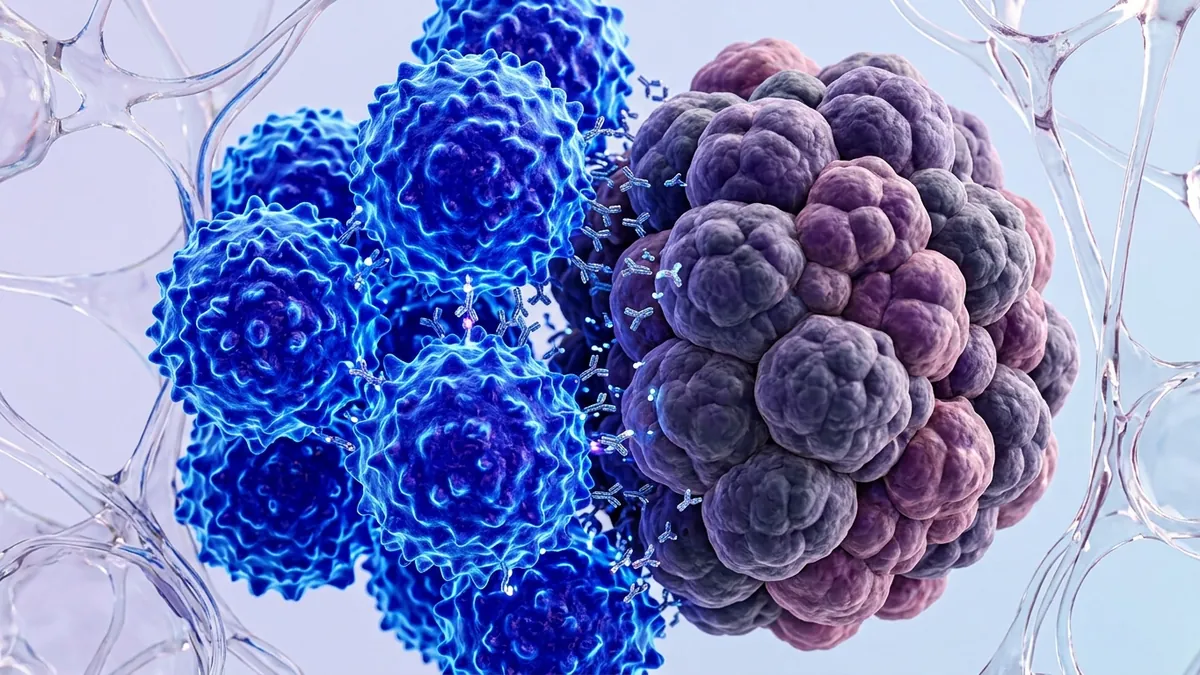
Be honest—when we hear the words "hospital monitoring," most of us immediately worry that a medication must be unbearably harsh. Yet we doctors want to reassure you right from the start: this step-up monitoring routine exists because Imdelltra wakes up your own immune system in a remarkably targeted, powerful way. Unlike traditional chemotherapy that indiscriminately attacks fast-dividing cells across your body, tarlatamab-dlle acts like a molecular bridge that guides your killer T-cells straight to a specific protein sitting on small cell lung cancer cells.
Whether you are preparing for your first Cycle 1 infusion at a cancer center in the United States, an NHS specialist oncology unit in the UK, a provincial cancer center in Canada, or a hospital day-ward in Australia, knowing exactly what happens hour by hour takes away so much anxiety. Let us walk through how this breakthrough therapy works, why your dose starts tiny at 1 mg before stepping up to 10 mg, and how you, your family GP or Primary Care Physician (PCP), and your oncology team work together to keep you safe.
📌 Key Takeaways at a Glance
- First-in-Class Targeted Immunotherapy: Imdelltra (tarlatamab-dlle) is a bispecific T-cell engager (BiTE) approved for adults with extensive-stage small cell lung cancer whose disease progressed on or after platinum-based chemotherapy.
- Proven Survival Advantage: In the landmark Phase 3 DeLLphi-304 clinical trial, tarlatamab reduced the risk of death by 40% and extended median overall survival to 13.6 months compared with 8.3 months on standard second-line chemotherapy.
- Gradual Step-Up Dosing: You receive a small 1 mg "primer" IV infusion on Cycle 1 Day 1, followed by full 10 mg doses on Day 8, Day 15, and every two weeks thereafter to gently train your immune system.
- Structured Cycle 1 Observation: Depending on your cancer center's current regulatory protocol and your personal health profile, you will be monitored in a healthcare facility for either 6 to 8 hours (under the updated FDA outpatient protocol with next-day vital-sign checks) or 22 to 24 hours overnight during your first two doses.
- The 48-Hour Home Safety Rule: After both your Day 1 and Day 8 infusions in Cycle 1, you must stay within 1 hour of an appropriate hospital and have a reliable adult caregiver with you for a full 48 hours to watch for early fever or confusion.
What Is Imdelltra (Tarlatamab-dlle) DLL3 Bispecific T-Cell Engager for Small Cell Lung Cancer and Why Does It Need Step-Up Hospital Monitoring?
Imdelltra (tarlatamab-dlle) is a targeted bispecific T-cell engager immunotherapy approved for adults with extensive-stage small cell lung cancer that has progressed on or after platinum-based chemotherapy. It uses a gradual 1 mg to 10 mg step-up infusion schedule with close hospital monitoring to prevent severe immune-related fever and nerve reactions.
Have you ever wondered why small cell lung cancer can shrink dramatically during initial carboplatin or cisplatin chemotherapy, only to bounce back months later? Small cell lung cancer is a fast-growing neuroendocrine tumor, and once it becomes resistant to platinum drugs, older second-line chemotherapies often struggled to deliver lasting control. That changed when clinical trials—first DeLLphi-301 and then the confirmatory Phase 3 DeLLphi-304 trial—showed that engaging T-cells directly against tumor targets delivered substantially longer survival and better symptom control for cough and breathlessness.
So why the hospital monitoring? Think about what happens when millions of immune cells suddenly spot cancer cells they previously ignored. As T-cells activate, they release chemical messengers called cytokines into your bloodstream, triggering a temporary inflammatory wave known as an immune-signaling fever reaction (cytokine release syndrome, or CRS) or, less commonly, temporary immune-related brain and nerve inflammation (immune effector cell-associated neurotoxicity syndrome, or ICANS). Monitoring you closely during those very first doses lets nurses catch a mild fever or blood pressure dip within minutes and calm it down fast. Makes sense, doesn't it?
How Does the DLL3 Bispecific T-Cell Engager (BiTE) Mechanism Actually Attack Small Cell Lung Cancer Cells?
To picture how tarlatamab-dlle works inside your body, imagine a Y-shaped molecular handcuff with two completely different ends. Most standard lung cancer immunotherapies you may have already received—such as PD-L1 checkpoint inhibitors like durvalumab or atezolizumab—work by taking the "brakes" off your immune system and hoping your T-cells can find the tumor on their own. Small cell lung cancer is notoriously sneaky, though; it often hides its surface markers so roving T-cells drift right past it. Pretty frustrating, right?
Look closely at how a bispecific T-cell engager solves that problem. Over 85% of small cell lung cancer cells display an unusual neuroendocrine protein on their outer membrane called a cell-surface target protein (delta-like ligand 3, or DLL3). In healthy adult tissues, DLL3 stays tucked away deep inside cells rather than sitting exposed on the cell surface. That makes surface DLL3 act like a bright neon bullseye unique to the cancer cells.
When tarlatamab-dlle enters your vein, one arm latches onto DLL3 on the lung cancer cell, while the other arm grabs onto a receptor called CD3 on your own T-cells. Physically pulling the T-cell right up against the tumor cell forces an immediate immune attack: the T-cell releases pore-forming proteins (perforin and granzymes) that punch tiny holes in the cancer cell membrane, causing the tumor cell to break apart. Even better, nearby T-cells multiply at the tumor site to keep clearing malignant cells without needing traditional chemotherapy poisons.
How Does the Imdelltra Step-Up Dosing Schedule and Hospital Monitoring Protocol Work from Cycle 1 Onward?
Every Imdelltra dose is given as a steady 1-hour intravenous (IV) infusion through an infusion pump. Instead of giving you the full treatment strength on day one, we doctors follow a carefully paced 28-day Cycle 1 "step-up" schedule:
- Cycle 1, Day 1 (Step-Up Primer Dose — 1 mg): You receive pre-medications—specifically IV dexamethasone (a steroid) beforehand and 1 liter of IV normal saline hydration afterward—to cushion your immune response. Under the updated September 2026 FDA protocol used in many US oncology clinics, your care team monitors you on-site for 6 to 8 hours from the start of the infusion and brings you back on Day 2 for a vital-sign and neurological check. However, depending on your health status or local hospital rules in the UK, Canada, Australia, or inpatient US centers, your team may still observe you overnight for 22 to 24 hours.
- Cycle 1, Day 8 (First Full Dose — 10 mg): You receive pre-dose dexamethasone and IV hydration again, followed by the same 6-to-8-hour clinic observation (with a Day 9 vital-sign check) or 22-to-24-hour inpatient stay. Remember that 48-hour safety rule we mentioned earlier? After both Day 1 and Day 8, you must stay within 1 hour of an appropriate hospital for 48 hours from infusion start, accompanied by a caregiver.
- Cycle 1, Day 15 & Cycle 2 (Days 1 and 15 — 10 mg): Routine steroid pre-medications stop unless you had an earlier reaction, and post-infusion clinic observation typically runs 6 to 8 hours.
- Cycles 3–4 and Cycle 5 Onward (Days 1 and 15 — 10 mg every 2 weeks): Once your body adjusts, clinic observation drops to 3 to 4 hours in Cycles 3 and 4, and down to just 2 hours from Cycle 5 onward!
What Happens If a Dose Is Delayed?
Life happens—a viral respiratory infection or low blood count can occasionally delay an appointment. If more than 14 days pass after your 1 mg Day 1 dose, more than 21 days pass after Day 8, or more than 28 days pass between later 10 mg biweekly doses, your oncology team will safely repeat the 1 mg step-up primer dose and Cycle 1 monitoring before jumping back to 10 mg.
What Lab Tests, Pre-Infusion Checks, and Safety Rules Do Doctors Review Before Each Dose?
Before every single infusion, your oncology team draws blood to verify your organs and bone marrow are ready. Specifically, we check a complete blood count (CBC) prior to every dose through Cycle 5 Day 15—and then on Day 1 of each cycle starting at Cycle 6—to watch for low blood cell counts (cytopenias), including low infection-fighting white cells (neutropenia), low red blood cells (anemia), or low clotting platelets (thrombocytopenia). We also check liver enzymes (ALT, AST) and bilirubin before each dose so temporary liver inflammation never goes unnoticed.
What do you think happens if you wake up with a chesty cough, burning urination, or a mild fever the morning before treatment? Infusing a T-cell engager on top of an active infection can amplify inflammation dramatically. Always phone your oncology clinic—or ask your Primary Care Physician (PCP) / family GP clinic to coordinate urgent labs—so any infection is cleared before your infusion proceeds.
For premenopausal women, pregnancy testing is mandatory prior to starting Imdelltra because T-cell activation can harm an unborn baby. Reliable contraception must be used during treatment and for 2 months after the final dose, and breastfeeding should also be paused throughout therapy and for 2 months afterward. Also keep in mind that live or live-attenuated vaccines are generally avoided during treatment and until at least 6 weeks after finishing therapy.
What Side Effects Should You Watch For: Cytokine Release Syndrome (CRS), ICANS, and Everyday Symptoms?
Now let us talk plainly about side effects. In clinical studies, roughly half to three-quarters of patients experienced CRS, yet over 95% of those episodes were mild Grade 1 (fever alone) or moderate Grade 2 (fever with mild low blood pressure or oxygen need) and resolved swiftly with fluids, acetaminophen (paracetamol), steroids, or an anti-inflammatory blocker called tocilizumab. Almost all CRS events happen during Cycle 1 Day 1 or Day 8—rarely in later cycles!
See? Knowing the exact timeline helps you breathe easier. Below is a clear two-column guide comparing the reactions we doctors monitor most closely and what you should do right away:
| Side Effect or Clinical Finding | What It Means & Practical Action Step |
|---|---|
| Cytokine Release Syndrome (CRS) (Fever ≥100.4°F / 38.0°C, chills, fast heartbeat, lightheadedness, low blood pressure, or shortness of breath) | Your newly activated T-cells are releasing inflammatory cytokines into the bloodstream, most commonly within the first 48 hours of Cycle 1 Day 1 or Day 8. What you should do: Check your temperature immediately, do not take fever-masking painkillers without calling your oncology team first, and go straight for urgent medical evaluation so IV fluids, dexamethasone, or tocilizumab can be given promptly. |
| Neurologic Toxicity & ICANS (New confusion, trouble finding words, shaky handwriting, extreme drowsiness, dizziness, tremor, or muscle weakness) | Immune signaling can temporarily irritate nerve pathways or brain function—either alongside CRS or days later. What you should do: Stop driving or operating machinery immediately, have your caregiver alert your oncology unit right away, and head to the nearest hospital Emergency Room (ER / A&E) if confusion, speech changes, or weakness appear. |
| Taste Changes (Dysgeusia) & Low Appetite (Metallic, bland, or altered food taste affecting ~34–38% of patients) | MildDLL3 expression on taste-bud neuroendocrine cells can temporarily dull or distort savory and sweet flavors without causing dangerous harm. What you should do: Switch from metal cutlery to bamboo or plastic utensils, rinse with baking-soda-and-salt water before meals, and try tart citrus marinades, chilled smoothies, scrambled eggs, or warm oatmeal to keep your weight steady. |
| Low Blood Counts (Cytopenias) (Unexplained bruising, nosebleeds, pale skin, worsening fatigue, or mouth sores) | Temporary dips in white cells, red cells, or platelets increase infection and bleeding susceptibility between infusions. What you should do: Report any sore throat, cough, or bleeding gums to your oncology clinic or family GP clinic the same day so a quick blood count check can guide supportive treatment. |
| Fatigue, Constipation & Muscle Aches (Everyday tiredness or bowel slowing seen in 25–48% of patients) | Immune energy expenditure plus anti-nausea or steroid pre-medications commonly slow digestion and sap daytime stamina. What you should do: Sip water, herbal tea, or clear broth consistently throughout the day, take short gentle walks indoors, and ask your doctor about a gentle osmotic stool softener before constipation builds up. |
How Can You and Your Caregiver Prepare for Home Recovery Between Infusions?
Just like we said a moment ago, your at-home caregiver is your clinical co-pilot during Cycle 1. Before your Day 1 infusion, set up a simple "Cycle 1 Ready Kit" on your kitchen counter: a reliable digital oral thermometer, a fingertip pulse oximeter, an automatic upper-arm blood pressure cuff, and your oncology team's 24/7 triage phone number taped right beside them.
If you live more than an hour's drive from your specialist cancer center—which is very common across rural parts of the US, the Scottish Highlands or regional UK, Canadian provinces, and regional Australia—plan ahead with your oncology social worker to stay at a nearby hotel or hospital hospitality house for 48 hours after Day 1 and Day 8. Having your caregiver check your temperature every 4 to 6 hours while awake (and ask you a simple orientation check, like naming the current date and place) catches subtle CRS or ICANS changes long before they turn serious.
We rarely stop to think about how much metallic taste changes affect daily morale, do we? Keep small, protein-rich snacks easy to grab—Greek yogurt with berries, cheddar cheese on crackers, chicken noodle or vegetable soup, mashed sweet potatoes, and ginger or peppermint tea. Carry your Imdelltra Wallet Patient Safety Card everywhere so if you ever visit a local Urgent Care center, family GP clinic, or hospital ER / A&E, emergency doctors immediately recognize you are on a DLL3 bispecific T-cell engager.
✔️ What You Should Do & ❌ What to Avoid
- ✔️ DO keep a dedicated caregiver with you for 48 hours from the start of both your Cycle 1 Day 1 and Cycle 1 Day 8 infusions, while staying within 1 hour of an equipped hospital.
- ✔️ DO check your temperature right away if you feel warm, shivery, unusually tired, or dizzy—a reading of 100.4°F (38.0°C) or higher requires an immediate call to your oncology triage line.
- ✔️ DO carry your wallet treatment alert card and share your infusion schedule with your Primary Care Physician (PCP) / family GP clinic so every doctor treating you knows about CRS and ICANS protocols.
- ❌ DON'T drive, cycle, or use heavy tools during Cycle 1 monitoring windows or anytime you feel even slightly foggy, dizzy, tremulous, or sleepy.
- ❌ DON'T swallow over-the-counter acetaminophen (paracetamol) or ibuprofen at home to "push through" a post-infusion fever without calling your cancer team first, as hiding a fever can delay vital CRS care.
- ❌ DON'T skip your Day 2 or Day 9 follow-up vital-sign check or pre-infusion blood tests, even if you feel completely energetic at home.
🚨 When to Seek Immediate Emergency Care (Red-Flag Symptoms)
If you or someone near you develops any of these red-flag symptoms, do not wait — call 911 (or 999 in the UK / 000 in Australia) immediately or go straight to the nearest hospital Emergency Room (ER / A&E):
- High or persistent post-infusion fever of 100.4°F (38.0°C) or higher accompanied by shaking chills, racing heartbeat, or feeling faint when standing up.
- Trouble breathing, wheezing, chest tightness, or a pulse oximeter oxygen reading dropping below 92% (or below your personal baseline set by your doctor).
- Sudden confusion, slurred or garbled speech, difficulty staying awake, hallucinations, or inability to recognize familiar people or surroundings (urgent signs of ICANS).
- Seizures, severe worsening headache, sudden loss of balance, or new numbness and weakness in your arms or legs.
- Signs of a severe infusion or allergic reaction, including facial or throat swelling, widespread hives, or sudden severe back and chest pain.
💡 Key Take-Home Message
- Imdelltra (tarlatamab-dlle) harnesses your own T-cells against the DLL3 target on small cell lung cancer cells, offering meaningful survival gains after platinum chemotherapy.
- Starting at 1 mg on Day 1 before stepping up to 10 mg on Day 8—paired with 6–8 hour or 22–24 hour facility monitoring and 48-hour caregiver support—keeps CRS and nerve side effects highly manageable.
- Once you move past Cycle 1, clinic observation times shrink progressively down to just 2 hours by Cycle 5, making ongoing biweekly treatment much easier to fit into everyday life.




No comments yet. Be the first to share your question or experience below.