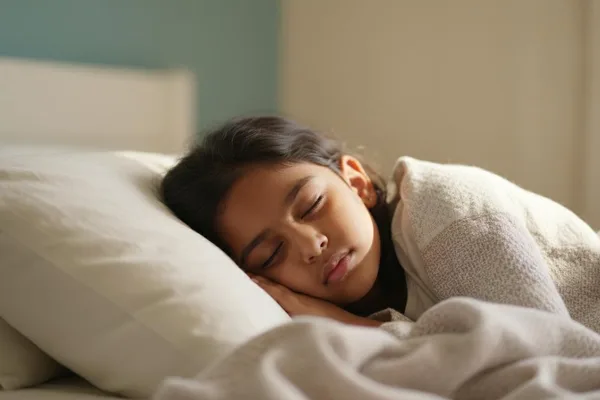
Is your child getting enough sleep? (Child Sleep) Let's talk about this!

Is your child getting enough sleep? (Child Sleep) Let's talk about this!

Today we are going to talk about something that is very important for everyone in our house, from the little ones to the older ones. That is sleep. You may be thinking, 'Ah, sleep, what's the big deal about it?' But, you know, good sleep is essential for our children to grow up healthy, learn, and be happy . In fact, sleep is like an essential nutrient for our children's health.

Why is sleep so important for our little ones?

Think about it, this sleep is not just about closing your eyes. There are some big things going on inside.

1. For body growth and strength

Our children's bodies produce the most ' growth hormone' when they are sleeping. This hormone is very important for children to grow taller, develop muscle mass, produce new cells, and heal wounds. So, this work is done properly when they get a good night's sleep.

2. For brain development and learning

The first few years of a child's life are a time of rapid brain development. The new things we learn, see, and hear throughout the day are all stored in the brain, just like things are `saved` on a computer's 'hard drive' , while we sleep. Not only that, a good night's sleep helps us focus, solve problems, and think creatively. This also has a big impact on doing well in schoolwork .

3. Control your emotions and stay happy

See for yourself how happy, attentive, and smiling your child is when they get a good night's sleep. If they don't get enough sleep , they'll become irritable, cry frequently, and become restless . A good night's sleep is also a great boost to a child's mental health.

4. Protect yourself from diseases

Our bodies have something called the immune system . This is what protects us by fighting germs that cause disease. This system gets stronger when we sleep. So, children who sleep well are less likely to get sick, and if they do, they recover faster.

How much sleep do children need according to age?

Now let's look at how much sleep children of different ages need per day. This is just a rough idea, some children may need a little more or less sleep than this. But the general recommendations are as follows:

  • Newborns (0-3 months): About 14-17 hours a day (this is not continuous, but intermittent sleep).
  • Babies 4-12 months: About 12-16 hours a day (this includes about 2-3 naps during the day).
  • Toddlers 1-2 years old: About 11-14 hours a day (with one nap during the day).
  • Preschool children aged 3-5 years:About 10-13 hours a day (many people reduce or stop napping during the day at this age).
  • School-going children 6-12 years old: About 9-12 hours per day.
  • Teenagers (13-18 years old): About 8-10 hours a day (at this age, schoolwork, sports, and social activities tend to reduce sleep, but that's not good).

"The most important thing is to see if your child wakes up healthy and refreshed in the morning, and if they can work without fatigue during the day."

How do I know if my child is not getting enough sleep?

Sometimes we may think, 'My child is sleeping well.' But there are some signs that indicate that he is not getting enough sleep. Check to see if your child has these too:

  • It's very difficult to wake up in the morning, and even when I wake up, I still feel sleepy and lazy .
  • I always feel tired and lifeless during the day.
  • It's hard to focus on schoolwork and play, and teachers say, "The child is sleeping in class."
  • I get angry more quickly than before, I feel anxious, I cry for no reason , and I get angry over the smallest things.
  • Some children become more hyperactive when they don't get enough sleep, can't stay in one place, and fidget a lot.
  • During the day, for example, when riding in the car or watching TV, I fall asleep automatically .
  • I often complain of headaches , especially in the afternoon.
  • Schoolwork is declining , grades are dropping.
  • There are too many forgetfulnesses .
  • I get minor illnesses frequently .

If one or more of these signs persist, it may mean that your child is not getting enough sleep.

What happens if you don't get enough sleep?

Not getting enough sleep can not only affect a child's day, but also their long-term health. Simply put:

Immediate effects:

  • Learning difficulties , memory impairment.
  • Making bad decisions, quick temper.
  • Behavior problems, excessive mischief, disobedience.
  • Increased risk of accidents (e.g. falls, scratches while playing).
  • Diseases like the common cold spread quickly.

Long-term effects:

  • The risk of obesity increases because when we don't get enough sleep, the hormones that control our appetite (`Ghrelin`, `Leptin`) also change, increasing our desire to eat sweet and starchy foods.
  • There is a possibility of facing diseases like Type 2 Diabetes Mellitus in the future.
  • Heart disease andThe risk of conditions such as high blood pressure may increase.
  • Increased susceptibility to mental health problems, such as depression and anxiety .
  • Stunted growth, especially if you get little sleep for a long time.

Things parents can do to help their baby sleep better

Okay, so how do we help our children get this precious sleep? Don't worry, there are some small things we can do every day. We call this 'sleep hygiene' .

  • Establish a consistent bedtime and wake-up time:
  • Try to put your child to bed at the same time every day and wake them up at the same time in the morning. Don't change this time too much (a maximum of an hour difference) for school days and holidays . This will help your child's biological clock function properly.
  • Create a relaxing routine before bed. This can take about 20-30 minutes. For example, washing your body (preferably with warm water), brushing your teeth, getting dressed in the bedroom, reading a book (with your child), listening to a soft song, or talking about the good things that happened during the day.
  • Comfortable Sleep Environment:
  • The bedroom should be dark, quiet, and fairly cool (but not cold). If necessary, you can use thick curtains.
  • The bed, mattress, and pillow should be comfortable. Don't make your child's bed a place to play or punish. Make your child understand that the bed is only for sleeping .
  • Limit Screen Time:
  • Stop using TV, computers, tablets, and phones at least an hour before bed. The blue light from these devices suppresses the production of melatonin, a hormone that helps us sleep. It's best to keep these electronic devices out of the bedroom.
  • Be careful about food and drink:
  • Avoid giving your dog heavy meals, sweets, chocolate, cola drinks, coffee, and tea that contain caffeine close to bedtime. Caffeine is a stimulant and can delay sleep.
  • Don't let your child go to bed hungry, but it's also not a good idea to let them go to bed full. If necessary, you can give them something light, like a glass of milk, about an hour before bed.
  • Allow them to play and exercise well during the day:
  • Playing hard during the day and engaging in outdoor activities will help you sleep better at night. But avoid strenuous or strenuous activities 2-3 hours before bedtime. Calm activities are best at that time.
  • Naps:
  • Little children need a nap during the day. But that'sStaying up late in the evening can affect your sleep at night. If you have a preschooler, try to take a nap early in the day (e.g. before 1 p.m.). School-age children usually don't need a nap.

Shall we play a little game?

Remember, we talked earlier that a child between the ages of 6-12 needs an average of 9-12 hours of sleep. Imagine, a big cat sleeps about 12-16 hours a day. Then a dog sleeps on average 10-14 hours. Some animals, for example , a bat , can sleep up to 20 hours a day! So, now you understand that for the development of our little ones' brains and body strength, they also need to sleep well like these animals, right? It is our responsibility to help them become 'sleep stars' , that is, people who get the most out of their sleep.

Do you sometimes need to see a doctor?

In most cases, the above-mentioned things can help your child sleep better. However, there are some cases where you should seek medical advice. For example:

  • If you've done all of this and your child still has a hard time falling asleep, or if they wake up frequently at night (several days a week, for about a month).
  • If your child snores loudly, seems to pause in breathing while sleeping , or makes strange noises while breathing, this could be a sign of a condition called sleep apnea .
  • If sleepwalking, frequent nightmares, or night terrors occur frequently and are a problem for the child or family.
  • Speaking of Restless Legs Syndrome, a strange discomfort in a child's legs when they fall asleep .
  • If lack of sleep is having a major impact on the child's daily activities and schoolwork .

"If you have any concerns about your child, it's best to see your nearest pediatrician and talk to them. There's nothing to worry about, and in most cases there are simple solutions or treatments if needed."

Let's remember this...

So, it would be great if you could remember a few important things from what we talked about today:

  • Good sleep is essential for children's healthy growth, learning, emotional regulation, and happiness. It is as essential as food and drink.
  • Children of different ages need different amounts of sleep. Make sure your child is getting the right amount of sleep for their age.
  • A calm bedtime routine, a comfortable bedroom, and staying away from screens before bed are all great ways to help you sleep better. It may take some time to get used to these, but don't give up.
  • If you have any doubts or questions about your child's sleep, never be afraid to talk to a doctor .
  • "A good night's sleep is the best gift we can give our little ones. It gives them the strength to live a happy and healthy life throughout their lives. So, let's all make our children 'sleep champions'!"

👩🏽‍⚕️ Additional questions (FAQs)

💬 How many hours of sleep does a toddler really need per day?

This varies depending on age. A newborn baby sleeps for about 14-17 hours. However, a preschooler (3-5 years old) needs between 10 and 13 hours of sleep. A school-going child definitely needs between 9 and 11 hours of good sleep.

💬 What happens if the child doesn't sleep well at night?

Children's brains develop during sleep. When children don't get enough sleep, they tend to have tantrums all day long, have poor memory, and fail to learn new things.

💬 What do you do if your child stays up late looking at their phone instead of going to bed early?

Blue light from phones and TVs can make it difficult for the brain to feel sleepy. So, be sure to turn off all screens an hour before bed and read a book to help your child get used to sleeping.


Children's sleep, importance of sleep, tips for good sleep, sleep problems, child health, sleep hygiene, pediatric sleep

⚠️ Important: The medical articles and information on Nirogi Lanka are for general awareness only, and are by no means a substitute for professional medical advice, diagnosis, or treatment. For any medical problem you have, consult a qualified physician immediately.

💬 Comments (0)

No comments yet. Be the first to share your thoughts here.

Add Your Comment

Please calculate: 8 + 4 =
Is your child getting enough sleep? (Child Sleep) Let's talk about this!
Body CareMarch 31, 2026

Is your child getting enough sleep? (Child Sleep) Let's talk about this!

Today we are going to talk about something that is very important for everyone in our house, from the little ones to the older ones. That is sleep. You may be thinking, 'Ah, sleep, what's the big deal about it?' But, you know, good sleep is essential for our children to grow up healthy, learn, and be happy . In fact, sleep is like an essential nutrient for our children's health.

Why is sleep so important for our little ones?

Think about it, this sleep is not just about closing your eyes. There are some big things going on inside.

1. For body growth and strength

Our children's bodies produce the most ' growth hormone' when they are sleeping. This hormone is very important for children to grow taller, develop muscle mass, produce new cells, and heal wounds. So, this work is done properly when they get a good night's sleep.

2. For brain development and learning

The first few years of a child's life are a time of rapid brain development. The new things we learn, see, and hear throughout the day are all stored in the brain, just like things are `saved` on a computer's 'hard drive' , while we sleep. Not only that, a good night's sleep helps us focus, solve problems, and think creatively. This also has a big impact on doing well in schoolwork .

3. Control your emotions and stay happy

See for yourself how happy, attentive, and smiling your child is when they get a good night's sleep. If they don't get enough sleep , they'll become irritable, cry frequently, and become restless . A good night's sleep is also a great boost to a child's mental health.

4. Protect yourself from diseases

Our bodies have something called the immune system . This is what protects us by fighting germs that cause disease. This system gets stronger when we sleep. So, children who sleep well are less likely to get sick, and if they do, they recover faster.

How much sleep do children need according to age?

Now let's look at how much sleep children of different ages need per day. This is just a rough idea, some children may need a little more or less sleep than this. But the general recommendations are as follows:

  • Newborns (0-3 months): About 14-17 hours a day (this is not continuous, but intermittent sleep).
  • Babies 4-12 months: About 12-16 hours a day (this includes about 2-3 naps during the day).
  • Toddlers 1-2 years old: About 11-14 hours a day (with one nap during the day).
  • Preschool children aged 3-5 years:About 10-13 hours a day (many people reduce or stop napping during the day at this age).
  • School-going children 6-12 years old: About 9-12 hours per day.
  • Teenagers (13-18 years old): About 8-10 hours a day (at this age, schoolwork, sports, and social activities tend to reduce sleep, but that's not good).

"The most important thing is to see if your child wakes up healthy and refreshed in the morning, and if they can work without fatigue during the day."

How do I know if my child is not getting enough sleep?

Sometimes we may think, 'My child is sleeping well.' But there are some signs that indicate that he is not getting enough sleep. Check to see if your child has these too:

  • It's very difficult to wake up in the morning, and even when I wake up, I still feel sleepy and lazy .
  • I always feel tired and lifeless during the day.
  • It's hard to focus on schoolwork and play, and teachers say, "The child is sleeping in class."
  • I get angry more quickly than before, I feel anxious, I cry for no reason , and I get angry over the smallest things.
  • Some children become more hyperactive when they don't get enough sleep, can't stay in one place, and fidget a lot.
  • During the day, for example, when riding in the car or watching TV, I fall asleep automatically .
  • I often complain of headaches , especially in the afternoon.
  • Schoolwork is declining , grades are dropping.
  • There are too many forgetfulnesses .
  • I get minor illnesses frequently .

If one or more of these signs persist, it may mean that your child is not getting enough sleep.

What happens if you don't get enough sleep?

Not getting enough sleep can not only affect a child's day, but also their long-term health. Simply put:

Immediate effects:

  • Learning difficulties , memory impairment.
  • Making bad decisions, quick temper.
  • Behavior problems, excessive mischief, disobedience.
  • Increased risk of accidents (e.g. falls, scratches while playing).
  • Diseases like the common cold spread quickly.

Long-term effects:

  • The risk of obesity increases because when we don't get enough sleep, the hormones that control our appetite (`Ghrelin`, `Leptin`) also change, increasing our desire to eat sweet and starchy foods.
  • There is a possibility of facing diseases like Type 2 Diabetes Mellitus in the future.
  • Heart disease andThe risk of conditions such as high blood pressure may increase.
  • Increased susceptibility to mental health problems, such as depression and anxiety .
  • Stunted growth, especially if you get little sleep for a long time.

Things parents can do to help their baby sleep better

Okay, so how do we help our children get this precious sleep? Don't worry, there are some small things we can do every day. We call this 'sleep hygiene' .

  • Establish a consistent bedtime and wake-up time:
  • Try to put your child to bed at the same time every day and wake them up at the same time in the morning. Don't change this time too much (a maximum of an hour difference) for school days and holidays . This will help your child's biological clock function properly.
  • Create a relaxing routine before bed. This can take about 20-30 minutes. For example, washing your body (preferably with warm water), brushing your teeth, getting dressed in the bedroom, reading a book (with your child), listening to a soft song, or talking about the good things that happened during the day.
  • Comfortable Sleep Environment:
  • The bedroom should be dark, quiet, and fairly cool (but not cold). If necessary, you can use thick curtains.
  • The bed, mattress, and pillow should be comfortable. Don't make your child's bed a place to play or punish. Make your child understand that the bed is only for sleeping .
  • Limit Screen Time:
  • Stop using TV, computers, tablets, and phones at least an hour before bed. The blue light from these devices suppresses the production of melatonin, a hormone that helps us sleep. It's best to keep these electronic devices out of the bedroom.
  • Be careful about food and drink:
  • Avoid giving your dog heavy meals, sweets, chocolate, cola drinks, coffee, and tea that contain caffeine close to bedtime. Caffeine is a stimulant and can delay sleep.
  • Don't let your child go to bed hungry, but it's also not a good idea to let them go to bed full. If necessary, you can give them something light, like a glass of milk, about an hour before bed.
  • Allow them to play and exercise well during the day:
  • Playing hard during the day and engaging in outdoor activities will help you sleep better at night. But avoid strenuous or strenuous activities 2-3 hours before bedtime. Calm activities are best at that time.
  • Naps:
  • Little children need a nap during the day. But that'sStaying up late in the evening can affect your sleep at night. If you have a preschooler, try to take a nap early in the day (e.g. before 1 p.m.). School-age children usually don't need a nap.

Shall we play a little game?

Remember, we talked earlier that a child between the ages of 6-12 needs an average of 9-12 hours of sleep. Imagine, a big cat sleeps about 12-16 hours a day. Then a dog sleeps on average 10-14 hours. Some animals, for example , a bat , can sleep up to 20 hours a day! So, now you understand that for the development of our little ones' brains and body strength, they also need to sleep well like these animals, right? It is our responsibility to help them become 'sleep stars' , that is, people who get the most out of their sleep.

Do you sometimes need to see a doctor?

In most cases, the above-mentioned things can help your child sleep better. However, there are some cases where you should seek medical advice. For example:

  • If you've done all of this and your child still has a hard time falling asleep, or if they wake up frequently at night (several days a week, for about a month).
  • If your child snores loudly, seems to pause in breathing while sleeping , or makes strange noises while breathing, this could be a sign of a condition called sleep apnea .
  • If sleepwalking, frequent nightmares, or night terrors occur frequently and are a problem for the child or family.
  • Speaking of Restless Legs Syndrome, a strange discomfort in a child's legs when they fall asleep .
  • If lack of sleep is having a major impact on the child's daily activities and schoolwork .

"If you have any concerns about your child, it's best to see your nearest pediatrician and talk to them. There's nothing to worry about, and in most cases there are simple solutions or treatments if needed."

Let's remember this...

So, it would be great if you could remember a few important things from what we talked about today:

  • Good sleep is essential for children's healthy growth, learning, emotional regulation, and happiness. It is as essential as food and drink.
  • Children of different ages need different amounts of sleep. Make sure your child is getting the right amount of sleep for their age.
  • A calm bedtime routine, a comfortable bedroom, and staying away from screens before bed are all great ways to help you sleep better. It may take some time to get used to these, but don't give up.
  • If you have any doubts or questions about your child's sleep, never be afraid to talk to a doctor .
  • "A good night's sleep is the best gift we can give our little ones. It gives them the strength to live a happy and healthy life throughout their lives. So, let's all make our children 'sleep champions'!"

👩🏽‍⚕️ Additional questions (FAQs)

💬 How many hours of sleep does a toddler really need per day?

This varies depending on age. A newborn baby sleeps for about 14-17 hours. However, a preschooler (3-5 years old) needs between 10 and 13 hours of sleep. A school-going child definitely needs between 9 and 11 hours of good sleep.

💬 What happens if the child doesn't sleep well at night?

Children's brains develop during sleep. When children don't get enough sleep, they tend to have tantrums all day long, have poor memory, and fail to learn new things.

💬 What do you do if your child stays up late looking at their phone instead of going to bed early?

Blue light from phones and TVs can make it difficult for the brain to feel sleepy. So, be sure to turn off all screens an hour before bed and read a book to help your child get used to sleeping.


Children's sleep, importance of sleep, tips for good sleep, sleep problems, child health, sleep hygiene, pediatric sleep

⚠️ Important: The medical articles and information on Nirogi Lanka are for general awareness only, and are by no means a substitute for professional medical advice, diagnosis, or treatment. For any medical problem you have, consult a qualified physician immediately.

💬 Comments (0)

No comments yet. Be the first to share your thoughts here.

Add Your Comment

Please calculate: 8 + 4 =