

Sometimes it happens, doesn't it? You're walking on a wooden floor, or playing, and suddenly you feel a slight pain in your leg or arm, as if something is stuck in it. When you look, it's a small piece of wood or something else stuck in your skin! It can even feel like small thorns are poking you every time you step on it. So what do you do when this happens? Make up your mind and read this, you'll understand a lot for yourself.
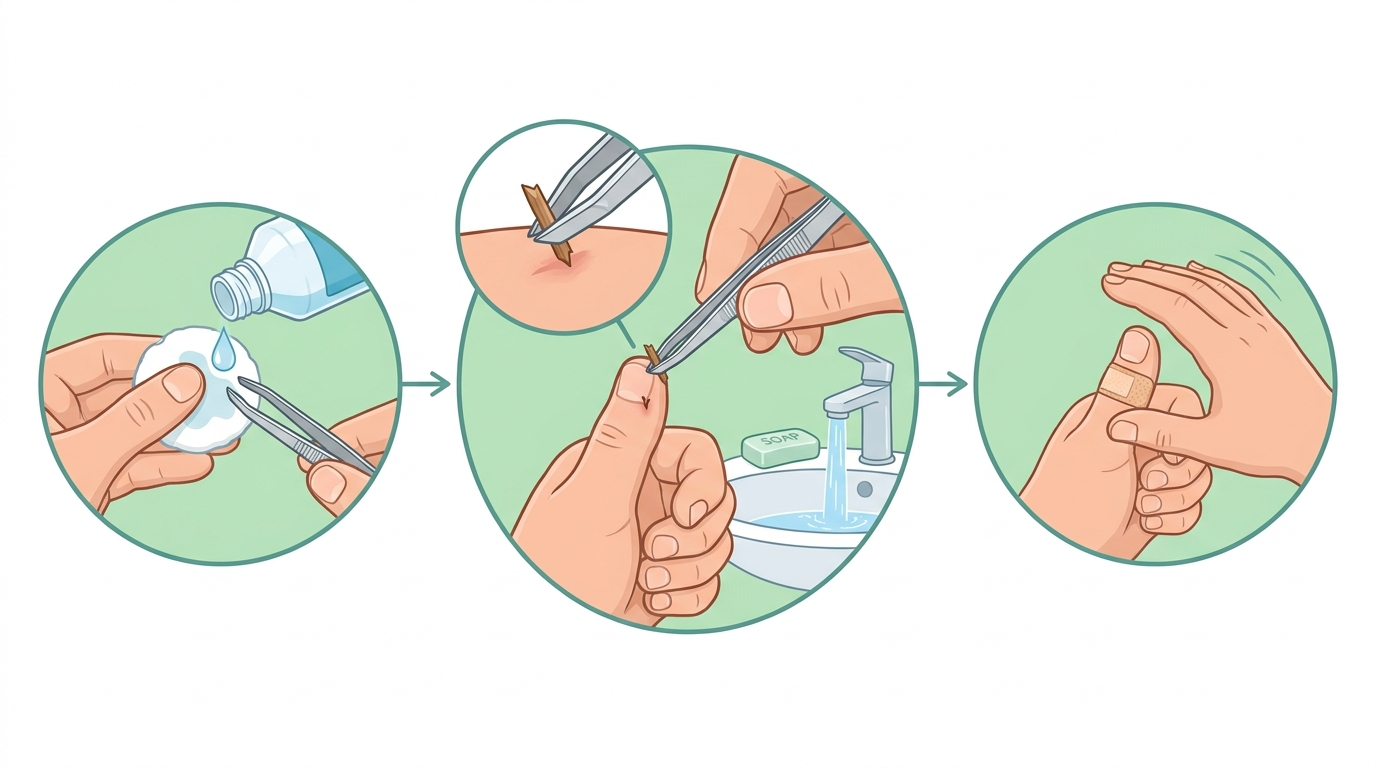
What do you do when you get bitten by a tick?
The first thing to do is not to panic . Just think that it's a small thing. Next, if you are a small child, tell an adult at home about this immediately. Don't try to pull, squeeze, or break the tick yourself. Doing so may cause the tick to break in half, and the remaining piece will get stuck in the skin , making it even harder to get it out.
Think about it, there are some very small boils, that is, those that are just under the skin, and they don't hurt much. They may come out of the skin on their own in a few days and fall off. But, in most cases, the best thing to do is to remove the boil as soon as possible . You know what? If you don't remove it, it can get inside and cause an infection , or it can hurt even more.
Another thing is, it's best to try to remove the wart as soon as you realize it's stuck. If it goes on for too long, sometimes our skin will grow new skin around the wart and start to cover it. Then it can be a little more difficult to remove.
Strictly speaking, a wart is something that doesn't belong on our skin. So when it's inside, our body starts reacting against it. That's why sometimes the area becomes red, swollen, and painful. So it's wise to remove it as soon as possible.
Is it important to know what kind of nail was stuck?
Yes, that can be important sometimes. Think about it, if you know exactly what kind of thing you're stuck with, it's a big help to the person who's removing it (whether it's the adult helping you or a doctor).
The clans can come in one of two forms:
- Most of the time, we get small pieces of wood . It could be from an old wooden bench, a wooden fence, or a piece of wood.
- Others may be glass splinters . These can be stuck where glass has broken. These should be removed very carefully.
- Or it could be pieces of metal . Maybe something like a piece of rusted iron .
- Sometimes, even small thorns , rose thorns, and cactus thorns on trees and bushes can pierce your skin, right?
So when you get a splinter, try to remember where it came from and what it was. For example, if you got it while sitting on a wooden bench, it's more likely to be a wooden splinter. If you got it where glass broke, it's likely to be a piece of glass. Knowing these details can help you decide how to remove it. Some splinters, especially glass ones, may have broken into smaller pieces inside, so you need to be very careful when removing them.
How to remove the scum? Don't be afraid!
Some people, especially young children, may feel a little scared when they hear the word "needle" being removed. That's normal. Sometimes, it can be even more scary when you see an adult using a clean needle to remove it. You may think, "Oh, a needle? Will it hurt?"
But don't be afraid. The clean needle is often used to lift the skin a little bit where the tick is, making it easier to grab the tick. To be precise, it makes the skin a little scratchy, helping to pull the head of the tick out. Otherwise, the skin is not cut too much. Then, the tick is gently pulled out with clean tweezers .
The most important thing is to stay calm . If you get nervous or fidget, it will be harder for the person removing the splinter, and you may end up hurting yourself more. So take a breath and calm down. You won't believe how good you'll feel after the splinter is removed!
After removing the lid, do the following:
1. Wash the area thoroughly with soap and water .
2. Then apply some antiseptic liquid . This will prevent the wound from becoming infected.
3. If necessary, it's okay to apply a small piece of clean plaster to protect the wound.
Can all warts be removed at home? Or are there times when you need to see a doctor?
Most of the time, small, easily visible warts can be carefully removed at home. However, there are some cases where you may need to seek help from a doctor. Let's take a look at what those cases are:
- If the wart is too deep: Some wart infections go deeper into the skin. They may be deeper than you can see. If you try to remove them at home, you may end up making the wound bigger or causing the wart to rupture. In such cases, it is best to see a doctor.
- If the bleeding doesn't stop: If the puncture site is bleeding heavily, it could be more than just a minor injury. That's another sign that you should see a doctor.
- If you can't remove it at home: If you or an adult at home can't remove the tick, it's safest to have it removed by a doctor rather than trying to pull it out by force.
- If the wound appears to be infected:Whether you remove the tick or not, if after a day or two the area becomes very red, swollen, and hot to the touch, or if yellow pus oozes from it , it may be an infection . If that happens, you should definitely see a doctor. Your doctor may give you antibiotics to control the infection.
- If you have an ingrown toenail: If you have an ingrown toenail, whether on your hand or toe, it can be very difficult and painful to remove at home. In such cases, it is wise to seek the help of a doctor.
- People who need special care: If you have a chronic condition like diabetes mellitus , or if your doctor has told you that your immune system is weak (for example, because you are taking certain medications), it is very important to see a doctor before even a small boil becomes a big problem. Because these people are at higher risk of developing infections.
How to avoid getting bitten by a mosquito? Prevention is the best way!
Isn't it better to try to prevent a thorn from growing in the first place than to have to deal with the pain of having to remove it once it's ingrown? True, you may not be able to avoid every thorn, but if you consider these simple things, you can go a long way toward being careful:
- Wear shoes! Yes, this is the first and most important thing. Wearing shoes or slippers protects your delicate feet to a great extent. When you go outside, especially when walking on wooden porches, decks, or boardwalks, be sure to wear shoes or slippers. Also, if there is broken glass inside the house or if there is any other debris on the floor, wear shoes or slippers. Teach this to young children.
- Be careful with wooden fences and toys. Don't touch old, worn-out wooden fences or some wooden playground equipment. Their surfaces may be rough and have splinters. Hands are another prime place for gnawing.
- Look around before going into the bush or forest. Some plants and trees have thorns and sharp objects. So, before jumping into a bush or sitting under a tree, look around a little. No one wants to get pricked unnecessarily! It's a good idea to look around before you sit down.
Remember, "Precaution is better than regret." Even a small carelessness can cause unnecessary trouble and pain, so it's worth taking care of small things like this.
So, let's remember what we talked about? (Take-Home Message)
Okay, so now I hope you have a good idea of what to do and how to avoid getting bitten by a wasp. In short:
1. Don't panic: As soon as you get bitten, stay calm.
2. Ask for help: If you are a small child, tell an adult. Don't try to pull alone.
3. Remove it quickly: Try to remove it as quickly and carefully as possible.
4. Do it cleanly: Use clean tools (e.g., clean tongs) when removing.
5. Wash the wound: After removing the splinter, wash the wound thoroughly with soap and water, and apply an antiseptic.
6. See a doctor: If the cut is deep, bleeding heavily, cannot be removed, is under a fingernail, or if the wound is red, swollen, or oozing pus ( signs of infection ), you should definitely see a doctor. People with medical conditions like diabetes should be especially careful.
7. Avoid: Try to avoid being bitten by a thorn whenever possible. Wear shoes, be careful with wooden furniture, and be careful around sharp objects.
Your safety is in your hands! If you follow these simple steps, you can reduce a lot of the hassle caused by mold.
` Splinter, minor injuries, first aid, infections, skin protection, child safety , splinter treatment Sinhala
Doctor's Note
Splinter is a frequent accident among children. When removing this at home, first wash your hands thoroughly with soap. Sterilize a needle or tweezers with alcohol. Then gently pull the pin out from the same angle it entered. Then wash the area with soap and warm water, apply an antiseptic cream and apply a plaster to prevent infection. Avoid pulling forcefully if the pin has penetrated deeply.
❓ Some more questions you may encounter (FAQ)
How to remove a splinter stuck under the skin at home?▼
Using sterilized tweezers, gently pull out the needle in the same direction as it entered, then wash with soap and water.
What if the thorn is not visible on the surface of the skin?▼
If the wound is too deep to touch the surface of the skin, seek immediate medical attention to prevent infection.
Should I get a tetanus shot after a sting?▼
Yes, the child should be vaccinated immediately if the child has not received the tetanus vaccine properly, especially after being stung by a rusty iron, soil or dirty wooden stick.




💬 Comments (0)
No comments yet. Be the first to share your thoughts here.
Add Your Comment