
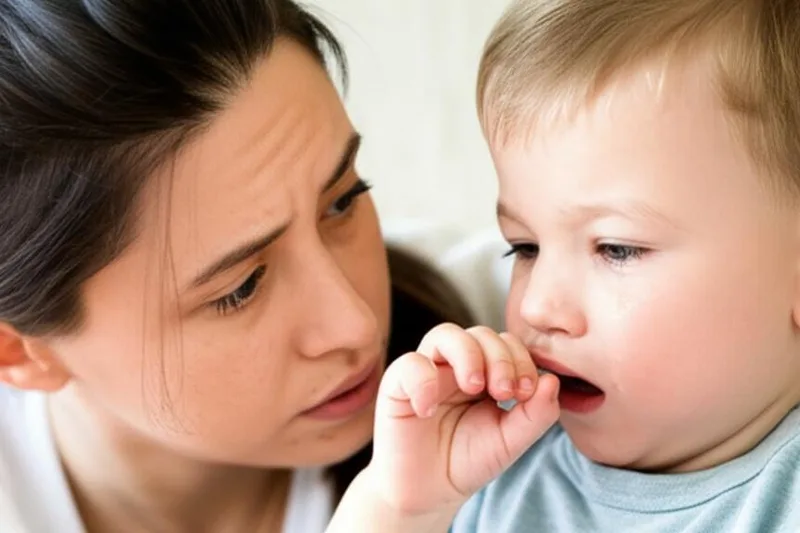
Mom, does your child often have a cold these days? Do you also feel like they are constantly sneezing, their eyes are itchy, their nose is runny, and sometimes they have a little difficulty breathing? This is not always a cold, there is a high chance that it is an allergy. Since many parents are worried about this, let's talk about it simply today, in a way that you can understand.
Let's first find out what causes an allergy.
A child can develop allergies for a variety of reasons. Sometimes, one child may have allergies to something while another may not. Also, the triggers for these allergies can change over time. Imagine, a child who was perfectly fine as a child suddenly starts to develop allergies to dust as they get older. Similarly, changes in the weather, such as sudden rain or strong winds, can also increase these symptoms.
So, the most important thing is to identify exactly what your child is allergic to . The best way to do that is to keep a diary of when your child's symptoms are worse and the environment they are in at that time. Let's look at the main things that usually cause allergies in children.
| Trigger | Where are these most common? |
|---|---|
| Dust Mites | In bedding, pillows, mattresses, carpets, sofas, toys. |
| Pollen | It is added to the air by trees, flowers, and grass. |
| Mold and Mildew | In damp places, bathrooms, under the kitchen sink, in old walls. |
| Types of smoke | Cigarette smoke, smoke from wood stoves, incense smoke. |
| Pet Dander | In small pieces of skin, saliva, and urine of pets (dogs, cats). |
| Chemicals | Scents, air fresheners, aerosols, and paint smells. |
| Cockroaches | Cockroach feces and body parts accumulate in dust. |
How to control dust mites?
Dust mites are a major cause of year-round allergies. These tiny creatures, invisible to our eyes, live in dust. So try these things to control them.
- Keep your child's room as simple as possible: Remove carpets and heavy curtains. Instead, use tiles, cement floors, or wooden floors. Use easy-to-clean blinds instead of window coverings.
- Toys and books: Reduce the number of toys, especially stuffed animals and books, in your child's room. Put them in a closet in another room.
- Bedding: Wash your child's bedding and pillowcases in hot water at least once a week . When drying, dry them thoroughly in the sun or in a dryer if you have one. It's a good idea to remove items like woolen blankets.
- Dusting : Dust with a damp cloth at least once a week.
- Vacuuming: If you vacuum, use a vacuum cleaner with a bag that doesn't let the dust out or one with a ``HEPA (high efficiency particulate air) filter.`` This filter captures even the finest dust particles in the air.
- Home temperature and humidity: Keeping the indoor temperature below 21 degrees Celsius and the humidity below 50% will reduce the growth of dust mites, cockroaches, and mold. This can be controlled by using an air-conditioner (AC) if possible.
Be careful during high pollen seasons.
Some children experience increased allergies when certain flowers bloom or when the grass is mowed. You can do these things to protect your child from the discomfort caused by these pollens.
- Identify the pollen season: Ask your doctor what types of trees and flowers your child is allergic to, and what time of year their pollen is highest.
- Keep the windows closed: On days with high pollen counts, keep the windows closed as much as possible, especially in the morning.
- Be careful with pets : If you have a dog or cat at home, they can bring pollen into the house when they come in from outside. So limit the time you bring them indoors during these times.
How to get rid of mold in the house?
Mold is also a major cause of allergies in children. Mold can grow both indoors and outdoors.
Mold is especially common in damp, shaded areas. Always be aware of water leaks in bathrooms, kitchen walls, and roofs.
To prevent mold , do these things:
- Always keep damp areas like bathrooms and kitchens dry.
- To clean moldy areas, use a little bleach diluted with water and a little dish soap.
- If there are any leaking pipes or cracks in the walls, repair them immediately.
- If you grow plants indoors, be careful about mold growing in their soil.
- Avoid using things like plug-in air fresheners. Their scent can also be off-putting to some children.
Let's make our home a smoke-free zone.
Smoke is very harmful to a child's respiratory system. For a child with allergies, smoke is a very dangerous enemy.
Smoking should be completely banned indoors. If someone smokes in the child's home, it can make the child's allergies worse.
Additionally, smoke from wood stoves, incense sticks, mosquito coil smoke, and even candle smoke can be harmful to your baby. Therefore, minimize the use of these in your baby's environment as much as possible.
What if doing these things isn't enough?
If you've done all of this and your child's sneezing, stuffy nose, and itchy eyes haven't subsided, there are a few things you need to do next.
Medical tests (Testing)
Sometimes allergies can occur for reasons we can't even imagine. A doctor may recommend something like an ``Allergy Test'' to find out exactly if your child is allergic to things like dust mites, mold, and cockroaches.
Medicine
This is the most important thing: Never give your child medicine at the pharmacy just because you feel like it. Always talk to your doctor and only give the type and dosage of medicine he or she prescribes.
The doctor may recommend the following treatments based on the child's condition:
- Antihistamines or syrups that reduce drowsiness.
- Steroid Nasal Sprays.
- Saline Nasal Rinses to clean the nose.
- Other medications prescribed by the doctor.
Although managing your child's allergies can feel like a challenge, when you follow the right steps, you can help your child live a comfortable, healthy life.
Take-Home Message
- Identify the exact cause (trigger) of your child's allergy. To do this, pay attention to your child's symptoms.
- Keep the home, especially the child's room, clean and free of dust, mold, and moisture.
- Keep your child completely away from all types of smoke, such as cigarette smoke and incense smoke.
- If pets cause allergies, take the necessary steps.
- If symptoms are difficult to control or if you need to give your child medication, always see a doctor first.


💬 Comments (0)
No comments yet. Be the first to share your thoughts here.
Add Your Comment