
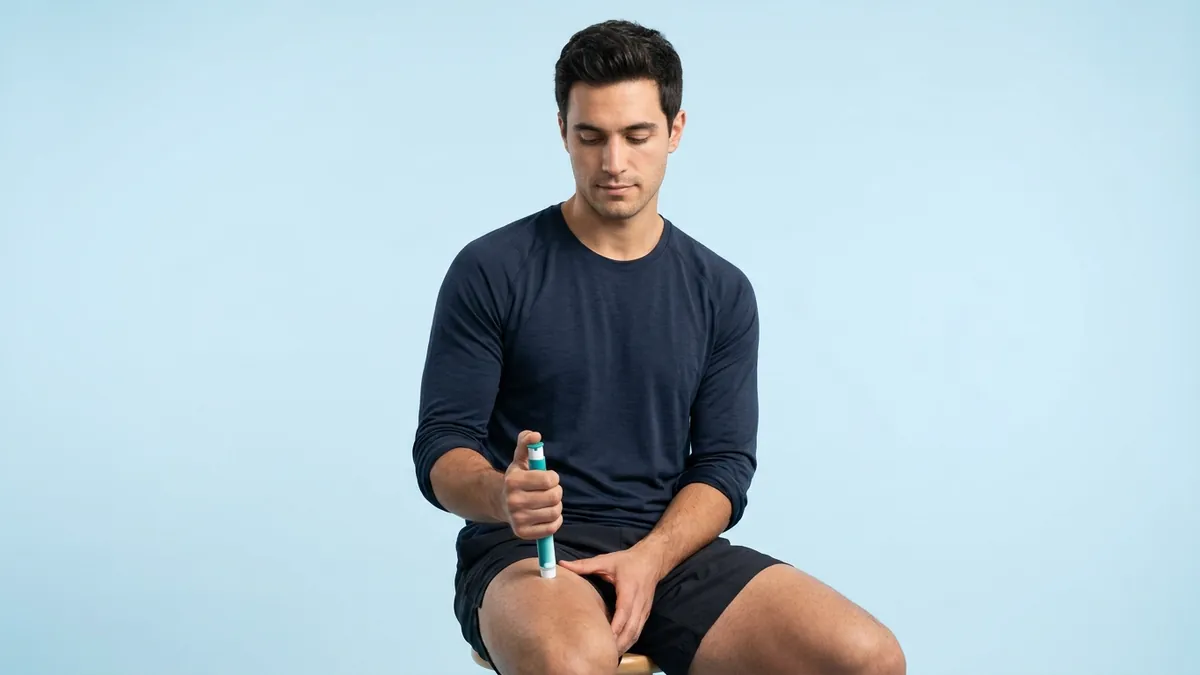
If you or your teenager lives with an inherited bleeding disorder (congenital hemophilia), researching Hympavzi (Marstacimab) Once-Weekly Prefilled Pen for Hemophilia A and B: Factor-Free TFPI Prophylaxis can feel like opening a completely new chapter in daily care. Think about it for a second: for decades, routine bleed prevention meant finding a vein two or three times every week, reconstituting glass vials, and scheduling school, work, or travel around intravenous infusions. Sounds exhausting over the years, doesn't it?
We doctors know how heavily that infusion burden weighs on families across the United States, the United Kingdom, Canada, and Australia — especially for people with Hemophilia B who previously lacked a factor-free under-the-skin option. Hympavzi changes that routine by delivering a fixed weekly dose just beneath the skin (subcutaneous prophylaxis) in seconds, without relying on replacement clotting factors. Let us walk through exactly how it works, who qualifies, how to use the pen safely, and what precautions protect you best.
📌 Key Takeaways at a Glance
- Dual-type coverage without inhibitors: Approved for routine bleed prevention in adults and teens aged 12 years and older who have Hemophilia A or Hemophilia B without clotting factor inhibitors.
- First flat-dose prefilled pen: Uses the same fixed maintenance dose (150 mg once weekly under the skin) after a one-time 300 mg Day 1 loading dose — no weight calculations or vial mixing needed.
- Releases the body's clotting brake: Blocks a natural anticlotting protein called tissue factor pathway inhibitor (TFPI), helping your body generate enough thrombin to form stable clots on its own.
- Preventative shield, not a rescue shot: Never use Hympavzi to treat an active breakthrough bleed; always keep your prescribed on-demand Factor VIII or Factor IX concentrate at home.
- Important safety checks: Requires baseline inhibitor blood testing before your first dose, pregnancy screening where relevant, and awareness of rare blood clot (thromboembolism) warning signs.
What Is Hympavzi (Marstacimab) Once-Weekly Prefilled Pen for Hemophilia A and B: Factor-Free TFPI Prophylaxis?
Hympavzi (marstacimab) is a once-weekly, prefilled subcutaneous pen approved to prevent or reduce bleeding episodes in adults and teens aged 12 and older with Hemophilia A or Hemophilia B without inhibitors. Instead of infusing missing clotting factors into a vein, it blocks tissue factor pathway inhibitor (TFPI) so your body clots naturally.
Developed as a lab-engineered immune protein (human monoclonal IgG1 antibody, known clinically in the US as marstacimab-hncq), Hympavzi addresses a major gap in bleeding disorder care. Have you ever noticed how people with Hemophilia A had an under-the-skin option years before people with Hemophilia B? Because Hympavzi acts on a shared clotting pathway rather than mimicking a single missing factor, it works equally well whether your body lacks Factor VIII (Hemophilia A) or Factor IX (Hemophilia B).
Before prescribing it, your Primary Care Physician (PCP) / family GP clinic will coordinate closely with a specialist Hemophilia Treatment Center (HTC). Your hematology team will first run a neutralizing antibody blood test (Bethesda inhibitor assay) to confirm you do not carry active inhibitors against Factor VIII or Factor IX. If inhibitors are present, Hympavzi is not the right medication, and your specialist will guide you toward an inhibitor-approved therapy instead. Now that distinction makes sense, right?
How Does Factor-Free TFPI Prophylaxis Work Inside Your Body Compared to Clotting Factor Infusions?
Have you ever wondered how a tiny weekly skin injection can stop spontaneous joint bleeds without putting a single drop of Factor VIII or Factor IX into your bloodstream? Look closely at what happens inside a healthy blood vessel when a microscopic tear occurs. Normally, your body uses two teamwork pathways to seal a leak: a quick "spark" pathway (the extrinsic tissue factor pathway) that starts a clot, and an "amplifier" loop (the intrinsic pathway using Factors VIII and IX) that builds a sturdy fibrin mesh.
In Hemophilia A or B, that amplifier loop is broken. Worse still, your body naturally produces a brake pedal protein called tissue factor pathway inhibitor (TFPI), which quickly shuts down the initial spark before enough clotting enzyme (thrombin) can form. We rarely stop to think about our blood having built-in brakes, do we? Hympavzi binds directly to a specific section — the Kunitz-2 (K2) domain — of TFPI, gently lifting your body's foot off that brake pedal so activated Factor X (Factor Xa) stays active long enough to generate strong clots.
That mechanism sets Hympavzi clearly apart from other modern hemophilia medications:
- Standard IV Factor VIII or IX concentrates: Temporarily replace the exact missing protein through a vein, causing peaks and troughs between infusions.
- Emicizumab (Hemlibra): Bridges Factor IXa and Factor X to mimic Factor VIII, meaning it treats Hemophilia A (with or without inhibitors) but cannot treat Hemophilia B.
- Concizumab (Alhemo): Another anti-TFPI antibody, but injected daily and specifically tailored around different clinical inhibitor profiles rather than a flat once-weekly non-inhibitor pen.
What Is the Exact Hympavzi Weekly Dosing Schedule, Storage, and Missed-Dose Rule?
One of the biggest everyday reliefs we doctors hear about is flat dosing — whether a 14-year-old teen weighs 48 kg (106 lbs) or an adult weighs 105 kg (231 lbs), the starting and maintenance doses stay identical. In the pivotal Phase 3 BASIS clinical trial, switching from routine intravenous factor prophylaxis to weekly Hympavzi cut the average annualized bleeding rate (ABR) for treated bleeds by 35% (dropping from 7.85 bleeds per year down to 5.08). Pretty reassuring numbers, right?
Before Day 1, your hematologist will instruct you to stop routine prophylactic Factor VIII or Factor IX infusions. Your dosing and storage routine then follows strict, evidence-based steps:
- Day 1 Loading Dose (300 mg): Given once as two separate 150 mg subcutaneous injections right after each other in two different body spots to build protective levels quickly.
- Weekly Maintenance Dose (150 mg): Starting exactly 7 days later (Day 8), inject one 150 mg prefilled pen once weekly on the same day each week, at any time of day. If you weigh 50 kg (110 lbs) or more and still experience breakthrough bleeds, your hematologist may increase maintenance dosing to 300 mg weekly.
- Best Injection Sites: Use the prefilled pen in your abdomen (at least 2 inches / 5 cm away from your belly button) or the front of your thigh, rotating sites every week.
- Fridge & Travel Storage: Keep cartons refrigerated at 36°F to 46°F (2°C to 8°C). Take the pen out 15 to 30 minutes before injecting so it reaches room temperature naturally. Traveling? You may keep it in its original carton at room temperature up to 86°F (30°C) for one period of up to 7 days — discard it if unused after 7 days.
- Missed-Dose Rule: On the 150 mg schedule, inject a missed dose as soon as you remember before your next scheduled day. However, if more than 13 days have passed since your last injection, contact your specialist clinic — you will need a repeat 300 mg two-pen loading dose before resuming weekly injections.
How Does Hympavzi Compare With Standard Therapy Across Real-World Scenarios?
What do you think causes the most confusion during the first few months on a factor-free pen? In our experience, it is knowing when your weekly pen handles things on its own versus when you must reach for backup clotting factor or call your clinic. The mobile-friendly guide below maps out five real-world situations side by side.
| Clinical Scenario or Treatment Factor | Clinical Meaning & Practical Action Plan |
|---|---|
| Routine Weekly Bleed Prevention | Hympavzi maintains steady, round-the-clock thrombin generation via once-weekly subcutaneous dosing, avoiding the mid-week clotting dips and vein scarring common with 2–3× weekly IV factor infusions. What you should do: Pick one consistent day of the week, set a smartphone reminder, and rotate between your left thigh, right thigh, and left or right lower abdomen. |
| Acute Breakthrough Joint or Muscle Bleed | Remember how we mentioned at the very beginning that Hympavzi is a preventative shield? It cannot stop an active bleed caused by a sports twist, fall, or trauma. What you should do: Never inject an extra Hympavzi pen for a bleed; administer your prescribed on-demand Factor VIII or Factor IX concentrate at the lowest effective dose set by your hematologist, and call your HTC if pain or swelling persists. |
| Positive Factor VIII or IX Inhibitor Test | Neutralizing inhibitor antibodies change how rescue clotting treatments interact with your coagulation system, and Hympavzi is strictly approved only for patients without inhibitors. What you should do: Complete baseline Bethesda inhibitor blood testing before starting therapy, and repeat testing through your specialist clinic if breakthrough bleeds suddenly become unresponsive to standard factor. |
| Planned Surgery or Major Dental Extraction | Major procedures demand higher, tightly controlled peak clotting levels than routine TFPI prophylaxis alone provides, while excessive combined clotting therapy must be balanced carefully. What you should do: Notify your surgeon, dentist, PCP / family GP clinic, and hematologist at least 2 weeks ahead; your specialist may temporarily pause Hympavzi and prescribe perioperative clotting factor support. |
| Gap Longer Than 13 Days Since Last Dose | Waiting two weeks or more allows blood levels of marstacimab to drop below the threshold needed to suppress TFPI reliably, leaving joints vulnerable to spontaneous bleeds. What you should do: Contact your Hemophilia Treatment Center promptly to confirm administering a full 300 mg loading dose (two 150 mg pens at separate sites) before restarting weekly 150 mg injections 7 days later. |
What Side Effects, Blood Clot Risks, and Pregnancy Precautions Should You Watch For?
Most teens and adults tolerate Hympavzi very well, with mild skin reactions at the injection spot being the most common annoyance. Around 3% to 10% of users notice temporary redness, light itching, minor bruising, a small firm bump (induration), or a mild tension headache during the first day or two after injecting. Pressing a clean cool cloth gently over the skin for 10 minutes — without rubbing — usually settles local irritation quickly.
See? Because Hympavzi boosts your blood's ability to generate thrombin, we doctors also watch thoughtfully for the flip side of clotting: abnormal blood clots inside veins or arteries (thromboembolism). While uncommon when taken properly, clotting risk rises if someone experiences a severe systemic infection (sepsis), major crush injury, prolonged bed rest, or takes unapproved high doses of clotting factor concentrates alongside Hympavzi. Notice how bypassed agents like activated prothrombin complex concentrate (aPCC) or recombinant Factor VIIa are avoided here because non-inhibitor patients use standard Factor VIII or IX instead.
Finally, if you are a teen or adult capable of becoming pregnant, animal reproductive data show marstacimab may cross the placenta and harm a developing fetus. Your doctor will verify a negative pregnancy test before starting treatment and advise reliable contraception throughout therapy and for at least 2 months after your final dose while the antibody clears from your system.
✔️ What You Should Do & ❌ What to Avoid
- ✔️ Keep an updated emergency bleed kit at home and when traveling: Always carry your hematologist's written breakthrough-bleed dosing card, prescribed on-demand Factor VIII or IX vials, and a medical alert bracelet or wallet card listing marstacimab.
- ✔️ Protect your pens from extreme seasonal temperatures: Store cartons on a middle refrigerator shelf — away from icy back walls in winter — and pack an insulated travel wallet during hot Australian, US, UK, or Canadian summer trips so pens never exceed 86°F (30°C).
- ✔️ Support joint recovery with smart movement and nutrition: Favor joint-friendly exercise like lap swimming, brisk neighborhood walking, or stationary cycling, stay well hydrated with water or unsweetened herbal tea, and eat iron-rich foods like lean beef, salmon, lentils, oats, and spinach if recovering from past bleeds.
- ❌ Never warm a cold pen in a microwave or hot water: Heat damages delicate antibody proteins permanently; let the sealed carton rest naturally on a clean counter out of direct sunlight for 15 to 30 minutes instead.
- ❌ Do not take over-the-counter pain relievers that thin platelets without asking: Avoid aspirin, ibuprofen, or naproxen for everyday joint aches unless cleared by your PCP / family GP clinic, as they impair platelet function and raise stomach bleed risk.
- ❌ Never inject into bruised, scarred, tender, or sunburned skin: Always pick clear, healthy skin at least 2 inches (5 cm) from your navel or surgical scars so the full 150 mg dose absorbs evenly.
🚨 When to Seek Immediate Emergency Care (Red-Flag Symptoms)
If you or someone near you develops any of these red-flag symptoms, do not wait — call 911 (or 999 in the UK / 000 in Australia) immediately or go straight to the nearest hospital Emergency Room (ER / A&E):
- Signs of a dangerous blood clot (thromboembolism): Sudden painful swelling, warmth, or redness in one calf or thigh, unexplained sharp chest pain, sudden shortness of breath, coughing up blood, or sudden numbness and weakness on one side of your face or body.
- Possible bleeding inside the head (intracranial hemorrhage): Any significant blow to the head, or a sudden severe headache, drowsiness, confusion, slurred speech, double vision, stiff neck, or vomiting — even without an obvious bump.
- Severe allergic reaction (anaphylaxis) after injecting: Rapid swelling of your lips, tongue, face, or throat, wheezing, chest tightness, widespread hives, or feeling dizzy and faint.
- Internal or airway-threatening bleeding: Throat or neck swelling that makes swallowing or breathing difficult, vomiting blood or dark coffee-ground material, passing black tarry stools, or bright red blood in your urine.
- Urgent severe joint or deep muscle bleed not responding to rescue factor: Rapidly expanding tightness, tingling, or pale cold fingers or toes (compartment syndrome); for urgent non-life-threatening out-of-hours guidance in the UK, you can also dial 111 while heading to specialist care.
💡 Key Take-Home Message
- Hympavzi offers eligible patients aged 12 and up with Hemophilia A or B (without inhibitors) a genuine once-weekly, flat-dose prefilled pen that eliminates routine intravenous factor infusions.
- Always start with the two-pen 300 mg Day 1 loading dose, continue with one 150 mg pen every 7 days, and call your specialist team if more than 13 days slip by between doses.
- Treat Hympavzi strictly as your weekly preventative foundation — keep prescribed on-demand clotting factor close by for acute injuries or surgeries, and watch alertly for both bleed and clot red flags.




No comments yet. Be the first to share your question or experience below.