
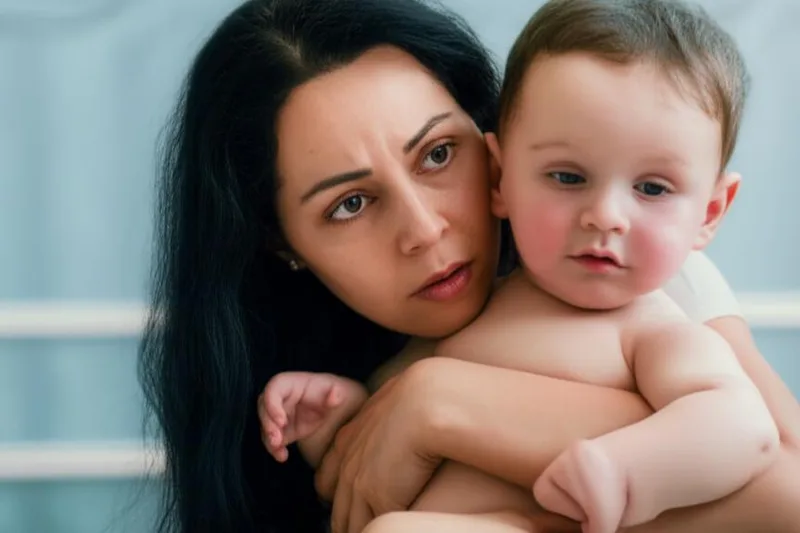
Have you ever noticed that your baby is a little floppy, or that he or she is a little slow to hold their head up or roll over like other babies? Sometimes, it's normal for us as parents to get a little worried when we see a little child running around, falling over, or having trouble climbing stairs. While these symptoms aren't always a sign of something serious, sometimes there's a rare condition behind them that we should be aware of. That's spinal muscular atrophy, or what we medically call ` Spinal Muscular Atrophy (SMA)`.
Simply put, what is this SMA?
Spinal Muscular Atrophy (SMA) is a rare genetic condition that causes the voluntary muscles, which are the muscles that we control to move, to gradually weaken. It mainly affects the nerve cells in the lower part of our spinal cord.
Think of it this way. Our brain and spinal cord send the electrical signal, or message, to our muscles to "move." This message is carried by special nerve cells called motor neurons. To keep these nerve cells healthy, a protein called "Survival Motor Neuron" (SMN) produced by a gene called SMN1 is essential.
In a person with SMA, due to a defect in the `SMN1` gene, the `SMN` protein is not produced in the required amount. When this protein is lost, the nerve cells (motor neurons) that carry those messages gradually die. Then the muscles do not receive the necessary signals. The muscles that are not used gradually shrink and become weak. This is what we call muscle atrophy .
The important thing is that SMA does not affect a child's intelligence, cognition, or empathy . They understand and sense the world around them perfectly. It's just the muscles that are weakened.
What are the symptoms and types of SMA?
The symptoms of SMA vary from person to person. They depend on how much of the `SMN` protein is produced in the body. In addition to the main gene called `SMN1`, we also have a `helper` gene called `SMN2`. This `SMN2` gene also produces some amount of the `SMN` protein. The more copies of the `SMN2` gene a person has, the milder the symptoms become.
SMA is divided into 5 main types based on the age at which symptoms appear.
| SMA type | Age of onset of symptoms | Common symptoms |
|---|---|---|
| Type 0 | Before birth (in the fetal stage) | Decreased fetal movement, severe muscle weakness at birth, hypotonia, breathing difficulties, and congenital heart disease. This is the rarest and most serious type. |
| Type 1 (Wernig-Hoffman disease) | From birth to 6 months | Inability to hold the head upright, inability to sit up without help, limp limbs, difficulty sucking and swallowing, weak crying, difficulty breathing (bell-shaped chest). |
| Type 2 (Dubowitz disease) | From 3 months to 15 months | Being able to sit up with or without help (but may be delayed), being unable to stand up or walk without help, having a curved back (scoliosis), some difficulty breathing. |
| Type 3 (Kugelberg-Welander disease) | From 18 months to young adulthood | Being able to walk, but having difficulty running, climbing stairs, falling frequently, needing help getting out of a chair. A wheelchair may be needed as you get older. |
| Type 4 | In adulthood (after 30 years of age) | All growth milestones are normal, mild muscle weakness (especially in the legs), and a feeling of muscle twitching. A wheelchair is often not required. |
What causes SMA?
SMA is a genetic condition that is passed down from generation to generation. To be precise, it is inherited as an 'autosomal recessive' trait. What does that mean?
Simply put, for a child to develop SMA, both parents must inherit a copy of the defective SMN1 gene. If only one parent inherits the defective gene, the child will not develop SMA. However, the child will become a "carrier" of the disease. This means that the child will not have symptoms, but will still be able to pass on the defective gene to their children in the future.
How to accurately diagnose the disease?
Like many countries today, newborns are sometimes screened for genetic diseases like these in Sri Lanka. However, sometimes, especially those with mild symptoms, they are only detected later.
If you have any concerns about your child, the doctor may ask questions like these when you see him:
- Was your baby late in passing developmental milestones like holding their head up and rolling over?
- Is it difficult for the child to sit or stand up on his own?
- Have you noticed any difficulty breathing?
- When did you first notice these symptoms?
- Has anyone in your family had these symptoms before?
In addition to these questions, the following tests can be done to confirm the disease:
- Genetic testing: A blood sample is taken and the `SMN1` gene is directly tested to see if it is defective or missing. This is the main test to confirm the disease.
- Creatine Kinase (CK) blood test: When muscles become weak, an enzyme called CK builds up in the blood. If this is high, it can be suspected that there is muscle damage.
- Nerve Tests : Tests such as an Electromyogram (EMG) check how the nerves send signals to the muscles.
- MRI or CT scan: Get detailed pictures of the inside of the body, especially the spine and muscles.
- Muscle Biopsy: Sometimes, a small piece of muscle is taken and examined under a microscope to confirm the nature of the damage.
What are the treatments for SMA?
Ten to fifteen years ago, SMA only had supportive treatments that controlled the symptoms. However, today, with the advancement of medical science, there are several highly effective treatments in the world that target the genetic problem that causes SMA.
1. Supportive Care
Although these do not cure the disease, they are essential to improve the child's quality of life.
- Respiratory support: Especially in Types 1 and 2, as the breathing muscles become weak, a special mask or, in severe cases, a machine (ventilator) to help with breathing may be needed.
- Nutrition and swallowing: Because the swallowing muscles are weak, the help of a nutritionist is needed to ensure the baby gets good nutrition. Some babies need to be fed through a feeding tube.
- Movement and Physiotherapy: Physical therapy exercises can help protect joints and keep muscles strong. If necessary, you may be able to use leg braces, a walker, or an electric wheelchair.
- Back problems: For children with scoliosis, the doctor may recommend wearing a special corset (back brace) to keep the back straight.
2. Gene-Targeted Therapies
These are the drugs that have revolutionized the treatment of SMA.
- Nusinersen (Spinraza): This drug is given as an injection into the spinal fluid. It works by stimulating the "helper" gene, SMN2, that we talked about earlier, and causing it to make more of the SMN protein. It needs to be taken every few months.
- Onasemnogene abeparvovec-xioi (Zolgensma): This is a gene therapy that is given intravenously once. It replaces the defective SMN1 gene with a healthy copy of the SMN1 gene. It is usually given to children under 2 years of age.
- Risdiplam (Evrysdi): This is a daily oral liquid medication that also works by increasing the production of the `SMN` protein from the `SMN2` gene.
Although these treatments are very expensive, they have been shown to significantly improve children's developmental milestones (head-holding, sitting) and control disease progression. You should discuss with your doctor which treatment is best for your child.
Take-Home Message
- SMA is a genetic disease that weakens the muscles. However, it does not affect a child's intelligence .
- The severity of symptoms varies from type to type. Some children develop symptoms at birth, while others do not develop symptoms until adulthood.
- For a child to develop SMA, they must inherit the defective gene from both their mother and father .
- Today, there are modern treatments that target the genetic problem that causes the disease. These can control the disease and improve the quality of life.
- Caring for a child with SMA is a team effort. The support of a team of specialists, such as a neurologist, pulmonologist, physiotherapist, and nutritionist, is essential. You are not alone, and don't be afraid to ask for help.
- If you have any concerns about your child's growth or movements, talk to your doctor immediately . The sooner the disease is diagnosed, the more successful the treatment can be.


💬 Comments (0)
No comments yet. Be the first to share your thoughts here.
Add Your Comment