
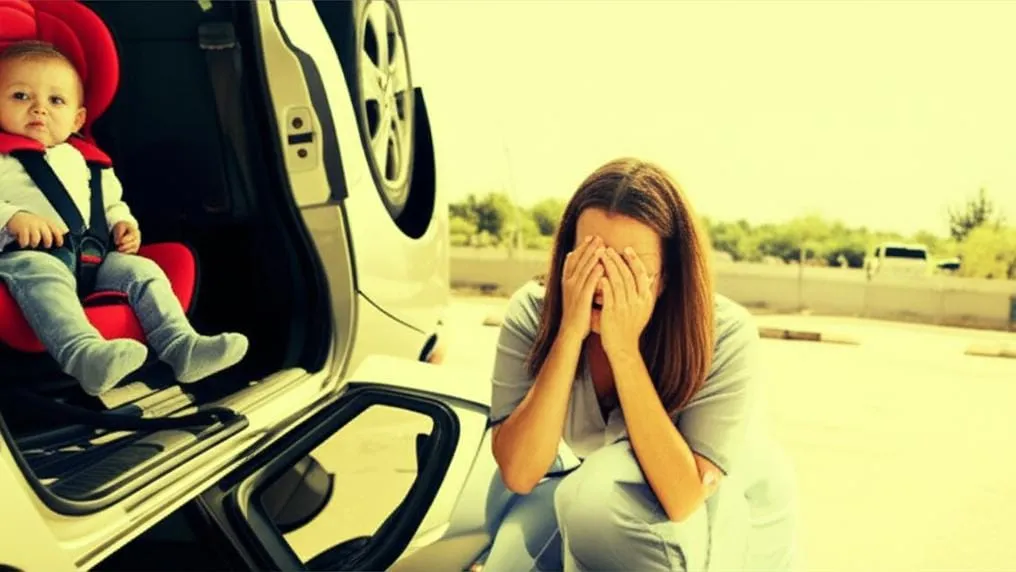
Life today moves at a very fast pace. You have endless daily tasks, work deadlines, and family errands to juggle. Sometimes, you just need to run into a quick shop or stop at an ATM for a minute. You might look at your sleeping toddler in the car seat and think it is safe to leave them alone for just a second.
You tell yourself it will only take a single minute and nothing bad can happen. But do you know that tiny, innocent minute can trigger a massive tragedy that turns your entire world upside down? Today, we must talk openly about this painful topic that every parent needs to understand deeply.
Consider the true story of a two-year-old boy named Harrison. Harrison loved watching boats drift peacefully down the river with his mother. One quiet afternoon. This they stood near the water, a parked van suddenly rolled backward down a slope and struck them both with terrible force.
Two other small children playing inside the unattended van had accidentally knocked the gear shift into neutral. Despite his mother's desperate efforts to save him, Harrison lost his precious life right before her eyes. Following that devastating loss, his brave mother dedicated her life to educating parents so no other family ever suffers such a preventable heartbreak.
Key Takeaways for Parents
- Never leave your young child unattended in a vehicle, even for a single minute.
- Keep car keys completely out of reach so children cannot start engines or shift gears.
- Always lock your car doors and trunk, even when parked safely in your home driveway.
- Treat your car like a heavy, dangerous machine rather than a safe playroom or toy.
- Check your vehicle's blind spots and walk all the way around before reversing out of your driveway.
Cars and Young Children: A Dangerous Combination
When you think about car dangers, traffic crashes on busy highways usually come to mind first. However, vehicles pose many silent, hidden threats to young children right outside your front door or in quiet parking lots. A parked car can quickly turn into a dangerous trap.
If a child gets locked inside a car, the risk of abduction is a real concern in public spaces. More commonly, because of our warm climate, vehicle interior temperatures rise to dangerous levels within minutes. Even on mild days, greenhouse effects trap heat inside a closed car cabin with alarming speed.
This rapid heat buildup causes severe dehydration and heat exhaustion very quickly. A child's small body heats up three to five times faster than an adult body. When core body temperature reaches critical levels, organ failure and fatal heatstroke can occur in a very short time.
In colder regions, children can suffer from dangerous hypothermia if trapped in freezing unheated vehicles. Beyond temperature hazards, cars contain loose objects like coins, small toys, or buttons. Curious toddlers often put these small items in their mouths, creating severe choking hazards.
"People never leave their expensive handbags or mobile phones behind in a hot car. Yet, precious children are sometimes accidentally left behind. If you lose a bag or phone, you can easily replace it. But you can never replace your child if they are gone."
Harrison's grieving mother asks this piercing question to shake us out of our daily autopilot habits. Modern surveys show that about ten percent of parents mistakenly believe leaving a young child alone in a car for a short errand is acceptable. Also, only half of all parents can say with absolute hundred percent certainty that they always lock their home cars.
These relaxed safety habits invite terrible accidents into our lives when we least expect them. Awareness and strict personal rules are your best shields against these heartbreaking outcomes. Let us examine how children interact with vehicles and why unsupervised access leads to disaster.
A Car Is Not a Playroom
Small children possess immense natural curiosity and love to explore their surroundings. They watch your every move and love to imitate what mommy and dad do every day. Therefore, an unlocked family car looks like an exciting indoor playground full of fascinating buttons and steering wheels.
Children love to climb into the front driver seat, grab the steering wheel, and pretend to drive. If you leave car keys sitting in the ignition or within a child's reach, disaster can strike instantly. A curious toddler can easily turn the ignition key and start the engine.
This dangerous scenario happens right outside your home just as often as it happens on public roads. Many tragic accidents occur right in residential driveways while parents are busy unloading groceries or locking front doors. Imagine walking inside to grab a bag while your toddler slips outside unnoticed to hide behind your car.
When you return, start the engine, and put the car in reverse, you might not see your child in any mirror. Studies show that a large majority of non-traffic child motor vehicle injuries happen in home driveways. Children under five years old lack spatial awareness and cannot judge vehicle blind spots.
You must teach yourself to view your family car through a realistic lens. A car is not a toy or a quiet resting space. It is a heavy machine weighing tons. Respecting that raw mechanical power helps you stay alert to every potential safety hazard around your home.
Practical Steps to Protect Your Child
Protecting your child requires daily vigilance, smart home habits, and consistent safety routines. You do not need complicated technology to keep your kids safe. Simple, everyday actions make the biggest difference in preventing tragic accidents.
Here are the essential practical steps every parent should follow without exception:
- Never leave children alone for a minute: Always take your child with you, even if you are only running into a shop for thirty seconds. Never assume a quick errand is safe to do alone.
- Store car keys safely out of reach: Treat car keys like sharp tools or toxic medicine. Hang them on high hooks or store them in locked cabinets away from curious toddler hands.
- Lock all doors and trunks religiously: Keep your vehicle locked at all times, whether parked in a public lot or inside your home garage. This stops children from climbing inside to play unobserved.
- Inspect your car from a child's eye level: Crawl inside your vehicle to see what small hands can touch. Ensure power window switches do not pose strangulation risks if pressed accidentally.
- Talk to your children about vehicle dangers: Teach them in simple words that cars are transportation tools, not play areas. Explain that cars can move unexpectedly and cause injury.
- Secure your trunk space: Trunks can look like cozy hiding spots during games of hide-and-seek. Teach older children how emergency trunk release levers work if your car has them.
When to Seek Emergency Medical Care
If your child is ever involved in a vehicle rollover, driveway bump, or shows signs of heat exposure, never wait to see if symptoms improve. Look out for these emergency red flags:
- Extreme drowsiness, lethargy, or difficulty waking up from sleep.
- Hot, flushed skin with no sweating, or uncontrollable shivering.
- Persistent vomiting, severe stomach pain, or dizziness.
- Confusion, strange behavior, or slurred speech.
- Difficulty breathing, chest pain, or pale, cool skin.
Call 911 (US/Canada) or 999 (UK) right away, or rush your child to the nearest hospital Emergency Department (ER / A&E) right away.
Comparison of Safe Versus Unsafe Car Habits
Reviewing simple daily habits helps reinforce your commitment to family safety. Use this comparison table to guide your daily routine:
| Unsafe Habit (Avoid This) | Safe Practice (Do This Instead) |
|---|---|
| Leaving a sleeping child in the car while paying for fuel or grabbing a quick snack. | Unbuckle your child and take them inside with you, no matter how brief the stop. |
| Leaving spare car keys on the kitchen counter or living room coffee table. | Store all vehicle keys in a secure key holder high on the wall out of reach. |
| Leaving car doors unlocked in the garage so children can grab forgotten toys easily. | Keep all vehicle doors locked securely at all times when parked at home. |
| Backing out of your driveway quickly without walking around the vehicle first. | Walk completely around your vehicle to verify the play area is clear before moving. |
💡 Take-Home Message
- Never leave your young child unattended inside a motor vehicle for even a single minute under any circumstances.
- Always lock your car doors and trunk at home, and keep vehicle keys stored safely away from children.
- Treat your car as a powerful mechanical machine and teach your children that vehicles are not toys.
- Always check your driveway blind spots carefully before starting your engine and reversing from your home.
- Seek professional medical evaluation right away if your child experiences any unexpected trauma or heat exposure.






No comments yet. Be the first to share your question or experience below.