

It is very common for us to boil some coriander and drink it when we have a cold, and use a piece of ginger for a stomach ache. In fact, these are what we simply call " botanicals ". But today we see various products under this name in the market. So today, let's talk about what these botanicals are, what are their types, and what we need to be careful about when using them.
What are these botanicals?
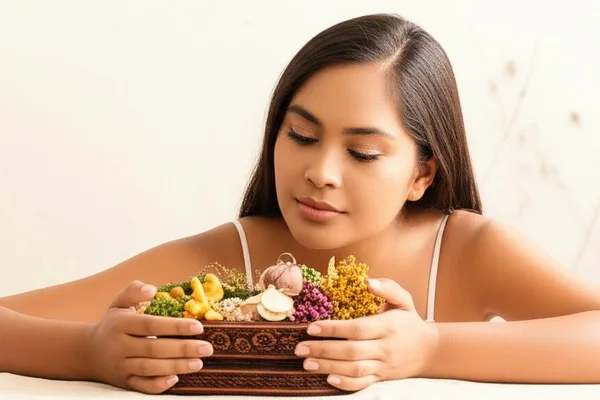
Simply put, herbs are parts of plants. That is, any part of a plant, such as leaves, flowers, seeds, bark, roots, or branches, is believed to have some medicinal value or health benefits.
Since ancient times, our ancestors have used these plant parts to cure various diseases and maintain health. We have known about some plants and their properties for centuries. We are still learning about some herbs.
These herbs, if used with proper knowledge and care, have the potential to bring healing to our body and mind, and improve overall well-being. They can be harvested from forests, as well as grown in gardens and farms. However, after harvesting, they need to be prepared properly for use.
We mainly find herbs in three forms:
- Botanical preparations
- Botanical drugs
- Essential oils
Difference between Botanical Preparations and Botanical Drugs
This is the most important thing we all need to understand. Although both are made from plants, there is a big difference between the two. Imagine you go to a store and buy a packet of "Venivelgata Pills". And, a doctor prescribes you an approved medicine made from a plant for some ailment. These two are not the same.
Botanical preparations are products made from plants with medicinal value and sold as dietary supplements. For example, decoctions, extracts, tablets, powders, teas, etc. These generally do not require strict approval from an agency like the National Medicines Regulatory Authority (NMRA) in our country. Because they do not directly claim to "cure any specific disease".
Botanical drugs are something completely different. They are scientifically proven to cure a specific disease and have been approved after going through a rigorous testing process similar to regular Western drugs. These are the types of medicines that a doctor prescribes to treat a medical condition.
Let us understand this difference more clearly from the table below.
| Comparison | Botanical Preparations | Botanical Drugs |
|---|---|---|
| Definition | Considered as dietary supplements. | Drugs approved to treat specific diseases. |
| Regulation and approval | Not subject to strict regulation. Proof of efficacy is not mandatory. | Subject to a rigorous testing and approval process, just like Western medicines. |
| Usage | It is used to improve general well-being. | A doctor prescribes a medicine for a specific medical condition. |
| Examples | The store has gotu kola tablets, bitter gourd powder, and fenugreek extract. | Approved herbal medicines prescribed by a doctor. |
So, if you're buying an herbal product as a dietary supplement, how can you be sure of its quality? Reputable manufacturers have their products tested for purity and quality by independent laboratories. So look for such a quality assurance on the label.
The different forms of herbs we get
We can get herbs in their raw form as well as in processed products. For example, you can buy raw ginger at the supermarket, or you can take dried ginger or ginger powder as a supplement. Both of these can help ease your digestion and reduce things like nausea.
Prepared herbal products come in a variety of forms:
- Teas and infusions : These are similar. However, an infusion is a bit more spicy. Both are made by steeping dried plant parts in hot water. These can be drunk hot or cold. Our coriander is a good example of this.
- Tinctures: These are made by steeping plant parts in a mixture of alcohol and water. This method preserves the herb. They come in liquid form in varying concentrations.
- Decoctions: This method is used when it is difficult to extract the active compounds from the plant. First, the plant part is boiled in water, and then it is allowed to sit for a while. This method is widely used in our traditional medicine.
- Extracts: Plant parts are soaked in a liquid such as water or alcohol to extract the desired ingredients. The resulting extract can be used as a liquid, or it can be evaporated and powdered to make tablets or capsules.
Let's use herbs wisely and safely.
Even though these are natural things, the word "natural" does not guarantee "safe." Therefore, we need to be very careful when using herbal remedies.
The most important thing is to inform your doctor about any herbal supplements you are taking.
Because herbs also contain active chemical ingredients. These can interact with other medications you are already taking (especially blood thinners, diabetes medications, and high blood pressure medications). This can cause serious side effects.
- Side effects: The risk of side effects is higher if you take high doses or take different herbal supplements at the same time.
- Pregnant and breastfeeding mothers: Extreme caution should be exercised when using herbal products during these times. Do not take anything without medical advice.
- Young children: Always talk to a doctor before giving herbal remedies to children.
- Read the label: The label of a dietary supplement should list the active ingredients it contains, their amounts, and any other ingredients (binders, fillers).
In the unlikely event of accidental poisoning from a herbal product, immediately go to the nearest hospital Emergency Department (ETU) . If necessary, you can also call the National Poisons Information Centre at the Colombo National Hospital for advice.
A word about essential oils
Essential oils are also a type of plant. However, we use them for their fragrance and other properties rather than as dietary supplements. They are extracted from plants through physical compression or distillation.
These are used for aromatherapy.
- The scent of oils like lavender and basil is believed to calm the mind and reduce anxiety.
- Peppermint oil can help reduce stress.
But remember, not all essential oils are safe to apply directly to the skin. Some can cause skin allergies. So it's best to seek advice from someone who knows about them before using them.
Herbalism is nothing new. For centuries, humans have relied on plants for nutrition and medicine. With their increasing popularity today, we are re-examining nature's healing gifts. The important thing is to enjoy them wisely and safely.
Take-Home Message
- Just because something is "natural" doesn't mean it's "safe." Any herb can have side effects.
- Be sure to tell your doctor about any herbal supplements you are taking. It is very important for your safety.
- An herbal preparation and an herbal drug are two different things. A drug is something that has been scientifically approved.
- Be extremely careful when giving herbal remedies to pregnant women, nursing mothers, and young children. Do not do anything without medical advice.
- Try to buy products from a trusted manufacturer, with a quality certificate.




💬 Comments (0)
No comments yet. Be the first to share your thoughts here.
Add Your Comment