
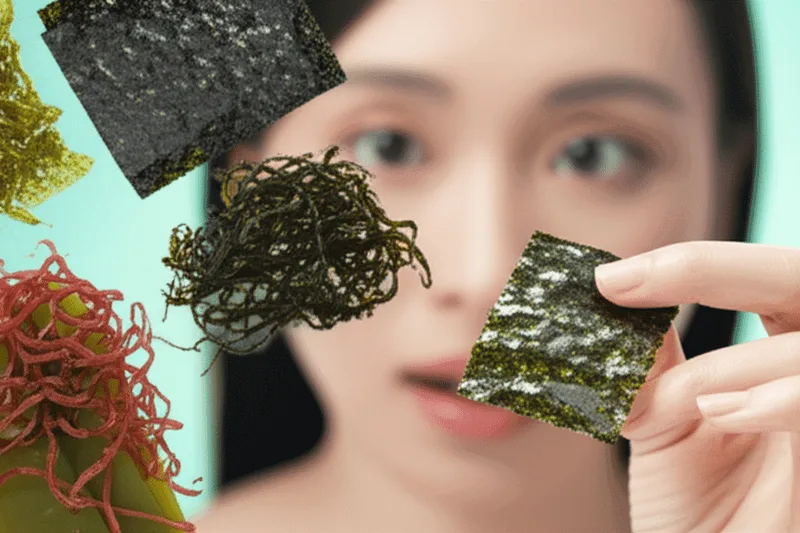
Have you ever eaten sushi, a Japanese dish? Or have you ever seen a shop selling dried, green leafy things? That's what we call seaweed. These are not just any food, they are a superfood full of nutritional value. So today, let's talk about these seaweeds.
What are these sea vegetables?
Simply put, seaweed is a variety of edible algae that grow in the sea. These algae grow by absorbing energy from sunlight and naturally absorbing valuable vitamins and minerals from seawater.
Although many people in our country are not very familiar with these, Asian countries like Japan, Korea, and China have been eating them for generations. Today, there are more than 30 types of edible algae on the market. They are mainly classified as red, green, and brown algae.
Each type has its own unique shape, taste, and nutritional composition. Let's take a look at the most common types.
| Type of seaweed | Description |
|---|---|
| Nori | This is the least flavorful type. This green nori is used to wrap sushi rolls. It is rich in health-promoting omega-3 fatty acids. It is lower in iodine than other types. |
| Kelp | This is a common name for several types of algae. It is the most consumed type of algae in the world. |
| Kombu | This is a type of brown kelp. It's a good flavoring for soups. It's also used in things like toothpaste and fertilizer. |
| Aramaic | This is also a type of brown kelp. It has a slightly sweet taste and a slightly firmer texture than other types. |
| Dulse | This is a type of red algae. It is a bit soft and easy to chew. It is high in protein. It is also used in beauty products. |
| Carrageenan | Also known as Irish moss, it is a popular substitute for gelatin in vegetarian dishes. |
These can be purchased as dried leaves, snack packets, powder, noodles, and even tablets.
Where do these come from? Are they safe to eat?
Seaweed is mainly produced and exported by Japan. So most of the seaweed that comes to Sri Lanka comes from Japan. It is cultivated commercially as well as harvested naturally from the sea.
There is something we need to be very careful about here. Seaweeds absorb valuable nutrients, but they can also absorb harmful heavy metals in seawater. This means that the sea area where these are harvested must be very clean.
These heavy metals include arsenic , lead, and cadmium. Of these, arsenic is the most commonly found harmful substance.
Therefore, before you buy a seaweed product, make sure it comes from a reputable company. In the United States, these are tested for quality by organizations like the USDA. In Sri Lanka, it is wise to choose products from a good quality, reputable brand . If you suspect any poisoning, you can immediately seek advice from the National Poison Information Center at the Colombo National Hospital .
What is the nutrition in seaweed?
Seaweeds are a storehouse of nutrients. The amount of nutrients they contain can vary depending on the type of algae, the region where they are grown, and the time of harvest. Some varieties contain up to 47% plant protein by dry weight. This is great for vegetarians .
Below are some of the nutrients commonly found in seaweed:
Health benefits of eating seaweed
By adding some seaweed to your diet, you can get a lot of nutrition in a small amount. This also has many health benefits.
- Helps with weight loss: They are very low in calories and fat . Additionally, the polysaccharide alginate found in them has been shown to limit the production of fat in the body .
- May lower blood pressure: An analysis of data from 100 studies found that eating seaweed regularly can lower blood pressure.
- Good for heart health: The same study found that seaweed consumption has a positive effect on overall heart health and may reduce the risk of certain heart diseases.
- Works against inflammation and viruses: The phytonutrients they contain, such as sulfated polysaccharides, help control inflammation and viral infections in the body.
- Reducing cancer risk: Preliminary research suggests that folic acid, found in seaweed, may help reduce the risk of estrogen-related cancers, such as colon cancer and breast cancer.
Who might find these unsuitable for eating?
Despite their benefits, they are not suitable for everyone. If you have any health problems, are taking certain medications, or are on a special diet, you should avoid eating large amounts of seaweed. If in doubt, it is best to talk to your doctor before consuming anything.
| People to avoid | Reason |
|---|---|
| People taking blood thinners such as Warfarin | Seaweed is high in vitamin K. This can interfere with the action of the drug warfarin. |
| People with kidney disease | These are very high in potassium. While this is not a problem for a healthy person, it can be harmful to kidney patients. |
| People with thyroid problems | Seaweed is very high in iodine, exceeding the daily requirement. While a moderate amount is good for thyroid health, consuming too much iodine can cause conditions like hypothyroidism. |
| Those who control salt (sodium) | Seaweeds absorb a large amount of salt (sodium) from the ocean, so they are not suitable for people on a low-salt diet. |
How do you prepare these to eat?
These are often sold in the market as dried sheets. They need to be rehydrated before eating. You can add them to the food you are cooking, even if they are dried. For example, if you add them to a soup, they will soak up the water in the soup.
Alternatively, you can soak them in a bowl of water for a while. Soak them until they are soft enough to your liking. In addition to sushi rolls, you can add them to any dish, such as soups, sandwiches, and salads. Kelp flakes can also be used instead of salt.
So, seaweed is delicious and nutritious. Even if you don't like the first type you try, try another type. The health benefits are immense.
Take-Home Message
- Sea vegetables are a highly nutritious food rich in vitamins, minerals, and protein.
- When purchasing these, make sure to choose a reliable, good quality product, as they may sometimes contain heavy metals.
- Seaweed is very beneficial for weight loss, blood pressure control, and heart health.
- If you have kidney disease, thyroid problems, or are taking blood-thinning medications, it is imperative to consult your doctor before consuming seaweed.


💬 Comments (0)
No comments yet. Be the first to share your thoughts here.
Add Your Comment