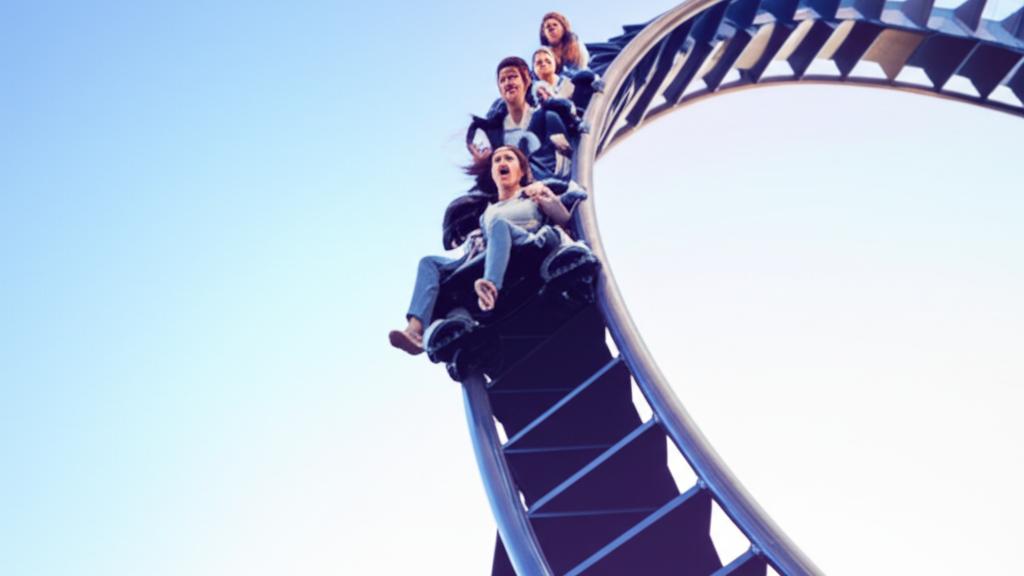
We all know that heart-pounding sensation of being truly terrified. Your heart races, your breathing quickens, your palms sweat, and you feel that distinct fluttering in your stomach. Whether it is from a chilling horror movie, a spine-tingling ghost story, or walking through a haunted attraction at night, the physical response is unmistakable. Surprisingly, some people thrive on this, actively seeking out these frightening experiences.
While many of us find even a brief glimpse of a horror scene unsettling, thrill-seekers seem to enjoy the adrenaline. Experts suggest that for these individuals, pushing the boundaries of what they can handle and achieving a sense of triumph after surviving the fear is a deeply satisfying psychological reward.
Why Are We So Drawn to the ‘Dark Side’?
What is the attraction to scary stories? According to Frank Farley, PhD, a psychologist at Temple University, “Humanity has always held a deep curiosity for the darker side of life.” Movies allow us to witness terrifying scenarios from a safe distance. Some people are fascinated by the abnormal and the mysterious, as these experiences diverge sharply from the monotony of everyday life.
Glenn Sparks, PhD, another psychologist who has spent over two decades studying how different audiences react to media, notes that some individuals have a higher need for intense, non-routine stimulation. Even if a horror movie has its downsides, the novelty of the experience provides a sense of profound satisfaction.
Interestingly, studies have shown that boys are sometimes more drawn to horror media than girls. “It is not that they enjoy being afraid itself,” Sparks explains. “Instead, they gain great satisfaction from overcoming or managing a perceived threat. They enjoy the feeling of saying, 'I survived that.'”
Often, after a horror film concludes, viewers walk out of the theater feeling a sense of relief, sometimes simply celebrating the fact that the experience is finally over, as Sparks adds.
Who Are the ‘Type T’ Personalities?
Farley, a former president of the American Psychological Association, has studied what he calls the ‘Type T’ (Thrill-seeking) personality. These individuals embrace uncertainty and intensity—activities that might leave the average person trembling. From riding roller coasters to bungee jumping, these experiences provide the ‘thrill’ they crave. “Sky divers often tell us that they are driven by that specific rush, the intensity, and the controlled fear involved,” he notes.
According to Farley, some people relish the physiological sensations of fear, such as the adrenaline rush, the elevated heart rate, and sweaty palms. He found that for roller coaster enthusiasts, the thrill is an incredibly powerful sensory experience, rivaling almost anything else in life, perhaps even intimacy itself.
| Key Reasons for Seeking Fear | Explanation |
|---|---|
| Curiosity | A desire to explore mysterious, darker, or non-routine themes. |
| Conquering Challenges | The satisfaction gained from 'surviving' a frightening experience. |
| Physical Sensation | Enjoying the adrenaline rush and physiological reactions to fear. |
| Relief | The deep sense of relief and calm that follows a terrifying event. |
What About Children?
For children, stories of ghosts or monsters can be a way to explore fear in a safe environment, as they generally understand that these creatures are imaginary. Psychologist Leon Rappoport, PhD, describes this as a symbolic ritual, allowing children to externalize and process their anxieties. “It provides a cathartic release,” he suggests.
Horror Classics and Milestones
If you enjoy a good scare, you have plenty of options. In 1998, Sparks studied people’s perceptions of the most terrifying films, identifying the “Seven Deadly Films”: Scream, Friday the 13th, The Shining, Halloween, A Nightmare on Elm Street, The Exorcist, and Poltergeist.
Of course, many people prefer to avoid horror entirely. Sparks notes that about one-third of the population falls into this category, finding no value in stories that induce paralysis-level fear.
For young men especially, watching such films can feel like a rite of passage. They often see these films as exposure to things previously off-limits. Many of these movies depict the violation of social norms. “There is an inherent attraction to the 'forbidden' nature of these films, much like the curiosity surrounding alcohol, cigarettes, or high-speed driving.”
Taking Fear to the Extreme
For those who find horror movies and novels insufficient, some services now offer an even higher level of intensity: paid, simulated kidnapping experiences.
Charging anywhere from $1,500 to $4,000, specialized companies can arrange for you to be 'kidnapped,' bound, and held in isolation for hours or days. The goal is to induce genuine fear, and experiences are often customized to the participant's specific phobias.
This represents the extreme end of the spectrum. Farley observes, “These companies perform 'pre-interviews' to identify your personal fears and capitalize on them. I see this as a form of decadent luxury—it is violent and terrifying, yet people participate voluntarily.”
So, the next time you are enjoying a horror movie or riding a roller coaster, remember that your thrill-seeking behavior is perfectly normal. Conversely, if you choose to avoid these thrills, that is also completely typical.
Take-Home Message
- Seeking out fear can be a normal, enjoyable experience driven by curiosity, the joy of overcoming challenges, and a preference for intense physical sensations.
- People with ‘Type T’ (thrill-seeker) personalities are particularly fond of the adrenaline rush that comes with intense, unpredictable situations.
- Experiencing fear in a controlled environment, like a movie, can be satisfying due to the sense of accomplishment and the subsequent relief.
- If you dislike horror, you are not alone; a significant portion of the population chooses to avoid these experiences entirely.
- Pushing fear to the extreme can be dangerous. Always know your boundaries and prioritize safety. If you find that these experiences are causing you unmanageable anxiety or distress, consulting with your primary healthcare provider is always recommended.
thrill-seeker, adrenaline rush, horror movies, mental health, psychology of fear, roller coaster