
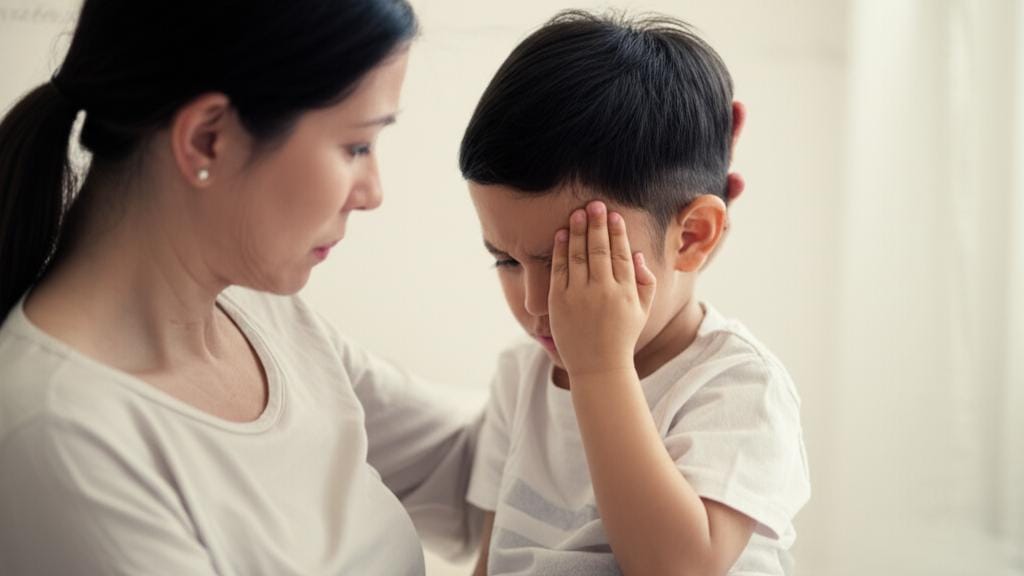
Does your child suddenly stop playing and grab his head, saying, "Mommy, my head hurts"? Is it because of a headache that he can't go to school on some days? As a parent, it's normal for you to feel a lot of fear and anxiety at times like these. You may be wondering, "Is this just a headache? Or is it something serious?" Today, we'll talk about these headaches that young children get, especially migraines .
BMI Calculator
Know your body mass index (BMI) and weight classification
Are all headaches the same?
No. There are different types of headaches that children get. Some of them are caused by stress. We call them Tension Headaches.'' But some headaches are different. They are what we call Migraines.''
Imagine, one morning your child wakes up and says his head hurts like it's going to explode. The pain is there all day, 24 hours a day. And the next day, it's the same. What if his head hurts like this for months on end? How terrifying would that be? As parents, we all have these terrifying thoughts: "Is it a brain tumor?"
Often, when a child complains of a headache, some people, sometimes even doctors, may think that it's just because they're "lazy about school." But that's not the truth. Migraines are a real, painful condition involving the nervous system .
The most important thing is to never ignore a child's headache, especially if it occurs frequently or interferes with the child's daily activities.
How to distinguish between migraine and tension headache?
There are clear differences between the two. The table below will help you get a rough idea of this. However, for an accurate diagnosis, you should definitely see a doctor .
| Characteristic | Migraine | Tension Headache |
|---|---|---|
| Nature of pain | A throbbing/pulsating, severe pain, often on one side of the head. | A dull ache that feels like a band is being tightened around the head. |
| Additional features | Nausea, vomiting, sensitivity to light and sound, dizziness. | There is usually no nausea or vomiting. |
| Child's behavior | Stop playing, go to sleep, try to stay in a dark room. | Even though there is pain, you may still be able to carry out daily activities. |
| Heredity | Often someone in the family (mother, father) has migraines. | There is little hereditary connection. |
Do infants get migraines?
Yes. Surprisingly, even infants and toddlers who can't talk can get migraines. But since they can't say "I have a headache," we need to recognize it by changes in their behavior .
- The child, who was playing well, suddenly stops playing, holds his head and cries.
- Constant vomiting for no reason.
- I often vomit while riding in cars (Carsickness). (It is said that children who frequently vomit while riding in cars are more likely to develop migraines later on.)
What are the triggers that increase migraines?
There are certain things that can cause a migraine to start suddenly. We call these Triggers. Not all children are affected by these, but here are some of the most common Triggers:
- Food: Certain foods can aggravate migraines. Cheese, peanut butter, hot dogs, chocolate, canned meats, and foods containing MSG (Ajinomoto) are the main ones.
- Sleep: Lack of sleep or sleeping too much.
- Stress: Things like exams, school problems, peer pressure.
- Hormonal changes:Migraines can occur, especially in girls after puberty, due to hormonal changes associated with the monthly menstrual cycle.
- Bright lights, strong smells, and loud noises .
What should we do? What are the treatments?
Don't panic if you find out that your child has a migraine. There are now very effective treatments for this.
1. Be careful with painkillers.
We often rush to give Paracetamol (Panadol) or Ibuprofen ) when we feel a headache. While these may help in the short term, if these painkillers are given more frequently than two days a week, it can cause a different problem.
It's called a Rebound Headache .' It's a daily headache that occurs because of taking medication. This can make the problem worse. So, if your child is constantly needing painkillers, be sure to talk to the doctor about it.
2. Seek advice from a doctor.
If you suspect your child has migraines, first see your family doctor or a pediatrician. He or she will ask you and your child about the headaches.
- When does the pain come?
- How long has it been?
- What is the pain like?
- Are there other symptoms?
- Does anyone in your family have migraines?
They will ask a lot of questions like these and, if necessary, perform tests to make an accurate diagnosis. You may be asked to keep a "headache calendar." That is, write down details such as the date, time, and foods you ate every time your child has a headache. This can be a great help in identifying Triggers.'
3. Modern treatment methods
There are now very good medications for migraines.
- Medications that stop migraines once they start: This includes classes of medications such as Triptans''.
- Migraine prevention medications: Medications taken daily if you have frequent migraines.
- Medications that control pain and nausea.
These medications are prescribed by the doctor, with the dosage adjusted according to the child's age and weight. These are not dangerous medications.
4. Non-drug treatments - Biofeedback
There are other treatments besides medication. Biofeedback is one such method. Simply put, it is a method that trains the child's mind to control the functions of his body (for example, the constriction of blood vessels). It is like self-hypnosis. The child is taught to control his pain through breathing exercises and mental concentration techniques. This method is said to be about 75% successful. Some children can recover without medication with this method. Others may need this method along with medication.
💡 Take-Home Message
- If a child, especially one under the age of 10, complains of a persistent headache, never ignore it. It is essential to seek medical advice as it can very rarely be a sign of a serious condition such as a brain tumor.
- Be aware of foods and drinks that may cause your child's headaches. You can identify these by keeping a headache diary.
- Avoid taking painkillers (Paracetamol, Ibuprofen) for more than two days a week without medical advice. This can cause 'rebound headaches'.
- Migraines are not something to be ashamed of, nor are they something for a child to pretend to be. They are a real medical condition. With proper treatment and management, a child can live a normal life.
- If you suspect your child has a migraine, see your doctor for an accurate diagnosis and treatment plan.






No comments yet. Be the first to share your question or experience below.