
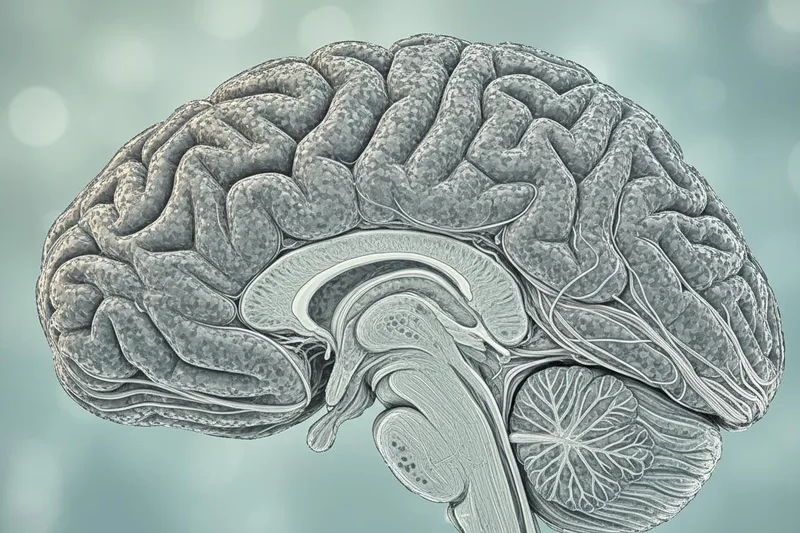
Have you ever wondered how important each part of your brain is? Today we're going to talk about a very special, very important part of your brain. It's the ``Temporal Lobe''. Simply put, this is the part that helps us use our senses to understand the world, communicate with others, recall memories, use language, and feel emotions!
What happens to the ``Temporal Lobe''?
Okay, now let's see how important this ``Temporal Lobe'' is to us, and what are the main things it does. Just think, how many things you do throughout the day it is involved in!
Memory
Inside your ``Temporal Lobe`` is a part called `` Hippocampus`` . This is the most important part of our memory and abilities. It's like the ``library`` of our brain.
Language `(Language)`
This `(Temporal Lobe)` helps you understand the meaning of words, the meaning of things. For example, when you see a cup, you recognize it as something used for drinking, that's when your `(Temporal Lobe)` works. Also, the part of the brain called `(Wernicke's area)` is located here. This is what helps you understand language and make meaningful sentences.
Emotions
Inside your Temporal Lobe is a part called the Amygdala (pronounced a-mi-g-da-la). This affects how you feel and process certain emotions.
Senses
The Temporal Lobe processes signals from your senses, especially those related to vision and hearing .
Visual recognition
Certain areas of the Temporal Lobe are very important for recognizing things you see, specifically familiar faces and familiar objects .
All of the above abilities are closely related to each other. Your senses tell you about the world around you, your memory helps you recognize familiar things, your language skills help you remember and describe your experiences, and emotions are how you feel about all of this.
Look at how important these connections between senses, memory, language skills, and emotions are to your life. Feelings like fear and anxiety are actually protective emotions (they only become mental health problems if they interfere with your life). The connections between memories and emotions help you use past experiences to recognize and avoid dangers.
Also, emotions help us learn. That's why you feel positive emotions like happiness when you receive gifts and good results, and negative emotions like sadness and disappointment when you receive bad results and unwanted results.
Where is the ``Temporal Lobe'' located?
Like the other lobes of our brain, the Temporal Lobe has a left and right side. The Temporal Lobe is the most distant part of the brain . It extends from the top of your head, just above your earlobe, just above your eyebrows, to just behind your ears .
What color is the ``Temporal Lobe''?
Like most of your brain tissue, the Temporal Lobe turns a light pinkish-gray color when blood flows through it . But when blood flow stops, the brain tissue appears gray.
How big is the ``Temporal Lobe''?
Of the five main lobes in your brain, the second largest is the temporal lobe. It makes up about 20% of your cerebral cortex. The word cortex means "bark" in Latin. The cortex is the wrinkled outer surface of your brain. It is about 2.5 millimeters thick on average.
What is the ``Temporal Lobe'' made of?
The Temporal Lobe is made up of the same specialized cell types found throughout your brain and nervous system. The basic cell types are:
- Neurons: These are the cells in your brain and nerves that can send signals to other nerve cells and relay those signals. These signals travel inside your nerve cells as electricity. Your nerve cells convert these electrical signals into chemical signals, and then convert the chemical signals back into electrical signals. Chemical signals are used to communicate from nerve cell to nerve cell.
- Glial cells: These are the support cells of your nervous system. They don't manage signals. Instead, they maintain and support nerve cells .
What are the specific areas in the ``Temporal Lobe''?
There are several very important areas in the ``Temporal Lobe'' that are worth mentioning:
- `(Amygdala)`: This is where your emotions like fear and anxiety are managed . It also contributes to the feeling you get when you receive a gift, and the feelings associated with learning.
- Hippocampus: This seahorse-shaped part of the brain is like your brain's memory library.This is where you store declarative memories. These include memories of events, memorized facts, and information. Your hippocampus also helps you recognize something – for example, an object, a sound, or a face – based on stored memories, which is called recognition memory.
- Fusiform gyrus: This structure is a very important link between the visual processing center in your occipital lobe and the memory store in your temporal lobe. This structure quickly analyzes what you see and compares it to stored memories. If it can (fully or partially) match what you see with something in your memory, it connects that memory to what you are seeing now, so you can recognize it. This is a very important area for recognizing familiar faces.
What are the common diseases and conditions that affect the ``Temporal Lobe''?
Virtually any brain disease or condition can affect your Temporal Lobe. Some conditions, especially mental health conditions, can affect it in very specific ways. Here are a few examples:
- `(Alzheimer's disease)`
- Some types of `(Amnesia)` ( memory loss )
- Brain lesions (either due to disease, surgery, or damage from medical treatment)
- Brain tumors (including cancer)
- `(Carbon monoxide poisoning)`
- Concussions and other traumatic brain injuries
- Some types of `(Aphasia)` (speech difficulties)
- Frontotemporal dementia (including conditions such as Pick's disease)
- Headaches and migraines
- `(Hippocampal sclerosis)`
- Toxic substances or poisons (heavy metals like lead or industrial chemicals like toluene)
- Sensory processing problems related to memory, for example `(Prosopagnosia)` (inability to recognize faces - `face blindness`)
- Infections (especially those that cause encephalitis)
- Mental health conditions related to feelings of fear or anxiety, especially `(Anxiety disorders)` or `(Post-traumatic stress disorder - PTSD)`
- `(Lewy body dementia)`
- `(Limbic predominant age-related TDP-43 encephalopathy - LATE)` Schizophrenia-emotional (`Schizophrenia`)
- Seizures and seizure-related conditions, for example epilepsy, especially temporal lobe epilepsy
- Stroke and Transient ischemic attack (TIA)
What are the common symptoms of conditions affecting the Temporal Lobe?
There are many symptoms that can occur when your ``Temporal Lobe`` is damaged or disrupted. There are two reasons why you may have so many symptoms:
- Your ``Temporal Lobe'' contributes to many different abilities.
- Many conditions can affect your brain in different ways, including disrupting your Temporal Lobe.
While the full list is very long, some symptoms are more common or may indicate a more serious problem . Here are a few of them:
- Memory problems
- Changes in understanding language and/or expressing language (such as speaking or writing)
- `(Alexia)` (Like `(Dyslexia)`, but more severe, and you don't develop it as a child)
- `(Acalculia)` (Like `(Alexia)`, but for numbers and mathematics; `(Dyscalculia)` is a less severe form of this, developing in childhood)
- Seizures (75% of focal seizures that cause memory loss start in your Temporal Lobe)
- Severe or frequent feelings of anxiety or worry, especially those related to distressing or traumatic memories and experiences
- Confusion
- Vision changes
What are the common tests done to check the health of the ``Temporal Lobe''?
There are many ways that healthcare providers can check the health of your ``Temporal Lobe`` or find any problems with it. These include diagnostic tests, lab tests, and ``imaging scans.`` Some of the most common tests are:
- Blood tests (These can detect a wide range of issues, from immune system problems to toxins and poisons, especially metals like copper, mercury, and lead)
- (Computed tomography - CT) scan
- Cerebrospinal fluid tests
- `(Electroencephalogram - EEG)`
- `(Electromyogram)` (nerve conduction test)
- Evoked potentials (sensory tests)
- `(Magnetic resonance imaging - MRI)`
- Neurological examination
- Neuropsychological assessment
- `(Positron emission tomography - PET) scan`
- Speech and language pathology evaluation
What are the common treatments for conditions affecting the Temporal Lobe?
Because there are so many conditions that can affect your ``Temporal Lobe'', treatments can vary greatly. Your doctor is the best person to talk to about your possible treatments and what they recommend. So it's important to seek medical advice if you have any concerns.
What can I do to keep my ``Temporal Lobe'' healthy?
There are a few things you can do to keep your ``Temporal Lobe'' working properly. Let's see what they are.
- Help your hearing:If you have hearing loss, it can not only make it difficult for you to communicate with others and hear the sounds around you. It can also lead to memory loss, dementia, and brain diseases that come with age, such as Alzheimer's disease . Therefore, it is very important to see a hearing specialist, such as an audiologist, to have your hearing checked. If you need hearing aids, use them.
- Keep your brain active: Your brain is like the rest of your body. To keep it healthy, you need to keep it busy. Keeping your brain busy is a key way to slow down the decline in mental abilities, especially memory, as you age. Do things like learn new things, solve puzzles, and read books.
- Get enough sleep: Your brain needs good, quality sleep to function properly. Not getting enough sleep, or not getting quality sleep, can lead to conditions like Alzheimer's disease. Lack of quality sleep, such as sleep apnea, can also cause thinking and memory problems (which are common in people of all ages). Prioritizing sleep is like prioritizing your brain health.
- Use tools that help your brain: Things that help you remember things – calendars, planners, alarms, smartphone apps – can help you improve your thinking and memory. While these may seem like they're slowing you down, they can actually help keep your brain active and engaged with the world around you.
In addition to these things, there are many other ways to keep your brain healthy overall. While you can't prevent many brain diseases, you can delay the onset of some conditions or reduce their severity. Here are some other things you can do to help your brain health:
- Eat a balanced diet: What you eat directly affects the health of your circulatory system. Your brain depends on your circulatory system (paralysis is an example of a condition that occurs when circulatory problems affect the brain). Too much or too little of certain vitamins can affect your brain.
- Find ways to maintain a healthy weight and be physically active: Managing your weight and activity level can help prevent or delay many chronic diseases that can affect how your brain works – especially circulatory problems like high blood pressure. Your family doctor can help you stay at a healthy weight. Being physically active is also directly good for your brain, as it stimulates the production of important signaling chemicals called neurotransmitters.
- Wear protective gear as needed:Because of their location, the temporal lobes are more susceptible to concussions and traumatic brain injuries, especially from side impacts and sudden changes in motion. Helmets, safety harnesses (such as seat belts), and other protective gear are essential to prevent brain injuries to your temporal lobe.
- Manage your chronic conditions: Many conditions that affect your brain get worse over time. However, treating these conditions can sometimes stop them or delay their worsening. Examples of these conditions include type 2 diabetes and epilepsy.
So, what is the most important thing we should take home from this story?
The ``Temporal Lobe`` of your brain is a very important part that helps you understand the world around you, communicate with others, feel emotions, and store some memories (including memories of things like the facts in this article). It is very important to take care of the health of your brain, especially the health of the ``Temporal Lobe``. Then, you can increase the likelihood that your ``Temporal Lobe`` will help you appreciate the world around you, spend happy times with others, and remember precious memories throughout your life. So, think about this wonderful part of your brain and take good care of it, okay?
👩🏽⚕️ Additional questions (FAQs)
💬 What does the temporal lobe of the brain do?
This part of our brain, which is located on either side of our ears, is primarily responsible for understanding sounds and language. It also helps us retain our memories.
💬 What happens if this part is damaged?
This can lead to the inability to understand what someone is saying (Wernicke's aphasia), difficulty remembering new things, and sometimes even temporal lobe epilepsy.
💬 How to protect this part of the brain?
Taking precautions against head injuries (wearing a helmet), controlling high blood pressure, and eating healthy can protect all the nerves in the brain.
` Brain, temporal lobe, memory, language, emotions, nerves, brain health


💬 Comments (0)
No comments yet. Be the first to share your thoughts here.
Add Your Comment