

Have you ever been out of the loop for a moment and your child suddenly disappears? While this can happen to any parent, it is much more common for a child on the autism spectrum . In medical terms, we call this condition 'Autism Elopement'. Simply put, it is when a child suddenly runs away from someone who is watching them, even when they are being watched. The biggest danger in this is that some of these children have an incredible attraction to water. This is why they are tempted to go to a nearby lake, river, stream, or swimming pool. For this reason, the main cause of death for such children who get lost is drowning.
Why is this situation so dangerous? (Autism Elopement)
These children can disappear at any time of the year. But the risk is even greater during the summer, when the sun is at its strongest. This is because we spend more time outdoors and traveling. Imagine, when the whole family is having a BBQ, playing outside, or vacationing at a hotel near the beach, a child can suddenly disappear.
Many people, perhaps even those in families with an autistic child, are unaware of this risk. The National Center for Missing and Exploited Children in the United States has conducted research on this. They say that 84% of accidental deaths among children with autism are due to drowning .
A 2012 study published in the journal Pediatrics found that the majority of parents of autistic children ( nearly 50%) said their child had tried to disappear after the age of 4. Also, 24% of the children who had disappeared had been in danger of drowning . Another 65% had been in danger of being in a car accident . These children may be fascinated by water as well as cars, trains, fire engines, and road signs.
Why do these children seek out quiet places, especially water?
It's hard to say exactly why this is happening, but experts say there are some clues.
"One thing we see is that these children are trying to get away from places that are stressful for them, that is, places that are noisy, crowded, or crowded. They go to a quiet place. Water is usually a quiet, peaceful place. That's why they are drawn to that."
Not just water, they may be tempted to go anywhere quiet, like a forest or inside an abandoned vehicle.
A heartbreaking experience
Beth Dilg, a mother in Maryland, lost her 7-year-old autistic daughter, Savannah, to drowning. One cold day, Beth went to the bathroom for a few minutes while her 11-year-old son was assigned to watch the two younger children. But Savannah, along with her 2-year-old brother, left the house.
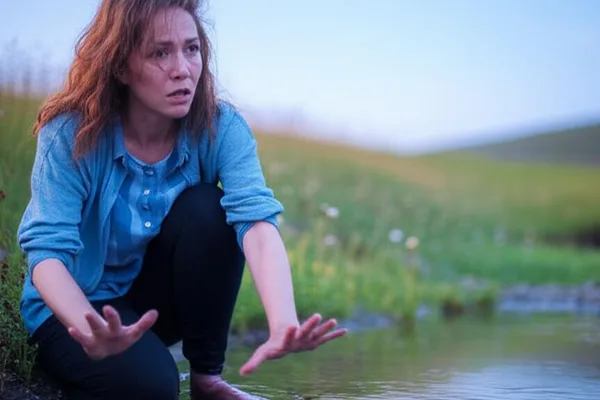
When Beth came out, the two children were gone. She searched the entire yard for Savannah, who could barely speak, but she did not return. She ran to a nearby pond and saw the two children in the water. Although her 2-year-old son was saved by his bicycle helmet, Savannah was unconscious when she pulled him out of the water.
This can happen to any family. No matter how many protective measures parents take, a child can disappear in the blink of an eye.
"These autistic children are very intelligent. They may not be able to talk, but they have a unique intelligence. So you always have to be one step ahead of them ." - Beth Dilg
What do you do if a child gets lost?
Finding a missing child like this is complicated. They don't talk, so they won't respond if someone calls their name. So, if your child goes missing, don't go looking for them alone.
Call the police emergency number 119 immediately.
Remember, every second counts when a child is missing. Police and first responders are specially trained to search for missing children. They first check nearby water bodies, ponds, and streams.
Things we can do to prevent accidents
There are many things you can do to protect your child from this kind of danger. Following these tips can make a big difference.
| Safety trick | What to do is simple. |
|---|---|
| Home security | Install alarms that make a sound when doors and windows are opened. Lock them at the top so that they are out of reach of children. Put a visual cue, such as a 'Stop' sign, on the door. |
| Personal ID card | Wear an ID card with your child's name, autism status, and parent's phone number on it. If you can't wear it, you can attach it to the shoelace. But remember that your child may go without shoes. |
| Identifying Triggers | Find out why your child is trying to run away from home. Is it because of noise? Is it because of anxiety? If you identify such a reason, you can calm your child down or give him headphones when he hears disturbing noises. |
| Safety skills (swimming) | Swimming training is essential. The noise and excitement of a regular swimming class may be unbearable for a child. Therefore, get private swimming lessons from someone who understands children with autism. In the final lesson, practice swimming while fully clothed and wearing shoes. Because many children jump into the water without their clothes on. |
| Group monitoring | When there are a lot of adults around, like at a family event, everyone thinks someone will take care of the child. But in reality, the opposite happens. So, assign the responsibility of taking care of the child to one person at a time. After a while, transfer the responsibility to someone else. That way, someone will always be paying attention to the child. |
Prepare for an emergency in advance.
If your child suddenly goes missing, prepare these things in advance to help you find them quickly.
- Keep up-to-date photos: Keep a few photos of your child on your phone that show their full face and head. If your child goes missing, you can immediately send these photos to the police.
- Create an emergency information sheet: This should include the child's name, age, condition, whether or not they can talk, things that might attract them (like water, vehicles), and details about any reservoirs, ponds, or streams near the house. This will allow you to quickly provide this information to the police.
If you have any further questions about this, talk to your family doctor. He or she can give you further guidance.
Take-Home Message
- Autism elopement is a real and serious risk.
- Because these children are strongly attracted to water, the risk of drowning is very high.
- Prevention is the best way to prevent accidents. Protect your home, have your child wear an ID card, and definitely practice swimming.
- If your child goes missing, call the police immediately at 119 without delay. Do not go looking for them alone.
- During family events and outdoor trips, assign the responsibility of looking after the child to one specific person.




💬 Comments (0)
No comments yet. Be the first to share your thoughts here.
Add Your Comment