
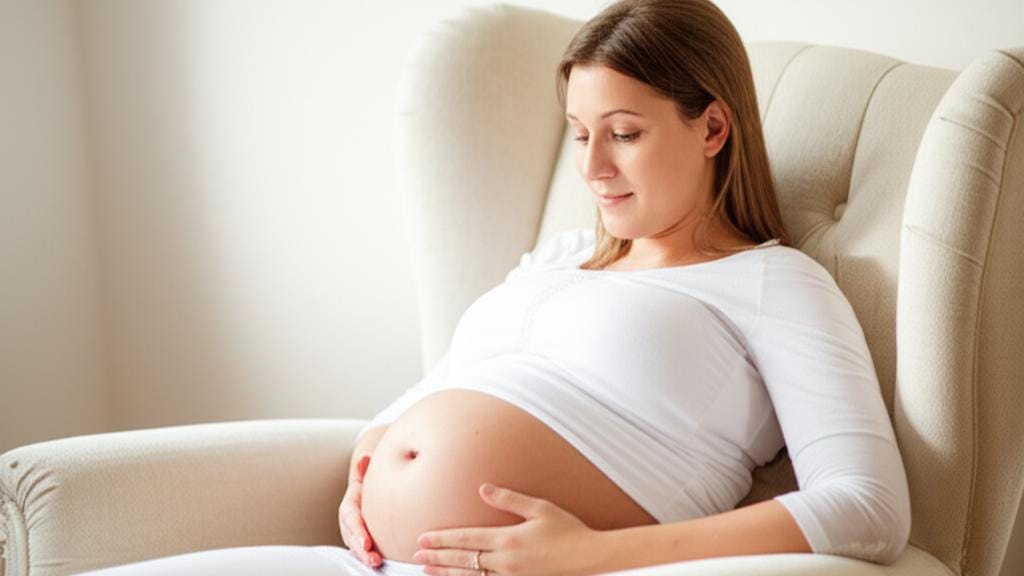
Have you reached your second or third trimester and noticed something unexpected? When you look in the mirror, your belly button—which has always stayed tucked inward—might look like it has popped right out!
It might even show clearly through your favorite t-shirt or dress. When you touch it, the skin might feel much more sensitive, or you might even feel a mild itch. Feeling a bit surprised or confused when you see this change for the first time is completely normal.
Do not worry at all. This is a very common physical change that millions of expectant mothers experience. Let us dive in and talk about everything you need to know about your changing belly button during pregnancy.
Key Takeaways for Expectant Mothers
- Your belly button often pops out during the second or third trimester because your growing uterus pushes outward against your abdominal wall.
- This change is entirely normal, temporary, and harmless for the vast majority of pregnant women.
- Common symptoms include extra skin sensitivity, mild itching, and a slight change in how your navel looks.
- You can manage minor discomforts by keeping the area clean, using gentle unscented moisturizers, and wearing loose, breathable cotton clothing.
- Watch out for red flags like sharp pain, swelling, redness, or signs of an umbilical hernia, and call your doctor right away if they occur.
Baby's due date (EDD)
Calculate the due date based on the last menstrual period
Why Your Belly Button Sticks Out During Pregnancy
The main reason your belly button sticks out is that your baby is growing larger every single week. That sounds very simple, right? Let us break down the exact physical process so you can understand it better.
As your belly grows larger day by day, your uterus expands to make room for your developing baby. This expanding uterus places a significant amount of downward and outward pressure on your abdominal wall. Think of it like someone gently pushing outward against a stretched fabric wall from the inside.
Because of this constant internal pressure, the muscles in your stomach stretch out, and your skin stretches right along with them. Your belly button is actually a natural weak spot in your body. It is the exact place where your umbilical cord attached you to your mother when you were inside the womb.
Think of your belly button as a permanent scar on your abdomen. Because this spot is structurally less rigid than the surrounding abdominal tissue, the pressure from inside pushes it outward. Your classic innie belly button transforms into an outie belly button as your pregnancy advances.
Remember, this is never a disease or a medical problem. It is simply a temporary physical change that happens to your body while you grow a new life. After your baby is born, your body will slowly return to its pre-pregnancy state, and your belly button will usually settle back down.
Minor Discomforts That Come With a Protruding Belly Button
The protruding belly button itself is not the only thing you might notice. Along with this physical shift, you might feel a few minor discomforts in that exact area of your skin.
- Extra skin sensitivity: For months or years, the delicate skin inside your belly button stayed safely tucked away and protected. Now, that sensitive skin is pushed outward where it constantly rubs against your clothing. Also, your belly skin stretches thin to accommodate your growing baby, making the nerve endings closer to the surface. This can make the navel area feel very sensitive, sometimes causing a tickling sensation or mild discomfort when clothing brushes against it.
- Itching around the navel: Itching is a very common part of pregnancy as your skin stretches across your expanding belly. The skin right around and inside your protruding belly button stretches and tightens, which often triggers mild to moderate itching.
- Changes in visual appearance: Many pregnant women develop a dark vertical line running down the center of their abdomen, known medically as linea nigra. When this dark line crosses right over your protruding belly button, it can make the navel look even more distinct and noticeable.
What You Can Do to Ease These Discomforts
Even though this physical change is completely normal, it can sometimes cause minor daily annoyances or skin irritation. Fortunately, you can take several simple steps to soothe your skin and manage these discomforts at home safely.
| Things to Do (Do's) | Things to Avoid (Don'ts) |
|---|---|
| Keep the area clean: Wash your belly button gently with mild soap and warm water during your daily bath or shower. Afterwards, dry the area thoroughly with a soft towel to prevent moisture buildup. | Do not scratch the skin: No matter how intense the itching feels, avoid scratching your belly button with your fingernails. Scratching can break the delicate skin and lead to bacterial infections. |
| Moisturize the skin: Apply a gentle moisturizer to keep dryness at bay and soothe stretching skin. Choose an unscented, hypoallergenic lotion specifically formulated for pregnant women to avoid irritation. Ask your doctor for a product recommendation if you are unsure. | Do not wear tight clothes: Avoid tight-fitting pants, waistbands, or shapewear that presses directly into your stomach and pushes hard against your protruding navel. |
| Wear loose clothing: Choose soft, breathable clothes made from natural fibers like cotton. Loose clothing prevents tight friction against your sensitive protruding navel and keeps you cool. | Do not use harsh soaps or lotions: Stay away from strong chemical soaps, heavily scented body washes, or perfumed lotions around your belly button, as these products can dry out and irritate the sensitive skin. |
| Use protective coverings: If your clothing rubs uncomfortably against your belly button, you can place a soft bandage over it or wear a supportive maternity belly band. | Do not panic: Remind yourself daily that this is a normal part of pregnancy. Do not let unnecessary worry cause you added emotional stress or anxiety. |
When You Should See a Doctor
While belly button changes are almost always harmless during pregnancy, certain warning signs require prompt medical evaluation. If you notice any unusual symptoms or severe discomfort, you must contact your doctor right away.
⚠️ Emergency Red Flags & When to Call for Help
If you experience any of the following symptoms, contact your doctor right away or seek emergency medical care:
- Severe or sharp pain: Intense, sharp pain around your belly button that worsens when you cough, sneeze, or lift heavy objects. This can be a sign of an umbilical hernia, where a small part of your intestine pushes through the weakened abdominal wall.
- Signs of infection: Redness, swelling, warmth to the touch, or pus draining from your belly button.
- Spontaneous bleeding: Bleeding from the belly button without any visible scratch or skin injury.
- General pregnancy warnings: Severe abdominal cramping, persistent lower back pain, or rhythmic contractions.
- Vaginal fluid or blood loss: Any fluid leakage or bleeding from the vagina is an urgent emergency. Go right away to the nearest hospital Emergency Department (ER) or call 911 (US/Canada) or 999 (UK).
Will Your Belly Button Go Back to Normal After the Baby Is Born?
This is one of the most common questions on every expectant mother's mind. In the vast majority of cases, the answer is a resounding yes!
Once you deliver your baby and your uterus gradually returns to its normal non-pregnant size, the internal pressure on your abdominal wall disappears. As that pressure subsides, your protruding belly button will slowly move back inward. This recovery process can take anywhere from a few weeks to several months following childbirth.
However, every woman's body heals differently. In some cases, the skin and connective tissue may remain slightly stretched, leaving your belly button looking a bit different than it did before pregnancy. This is also completely normal and harmless.
If several months pass after delivery and your belly button remains pushed out or causes persistent pain, be sure to mention it during your postpartum doctor visit or speak with your primary doctor.
💡 Take-Home Message
- Belly button protrusion and increased sensitivity during the second and third trimesters of pregnancy are completely normal and temporary physical changes.
- Maintaining good hygiene and applying gentle, unscented moisturizers helps soothe stretched and irritated skin.
- Wearing loose, breathable cotton clothing prevents friction and protects your sensitive navel throughout the day.
- Watch for warning signs like severe pain, localized swelling, redness, or signs of an umbilical hernia, and contact your doctor right away if they appear.
- Most women find that their belly button returns to its normal appearance within a few months after giving birth.






No comments yet. Be the first to share your question or experience below.