
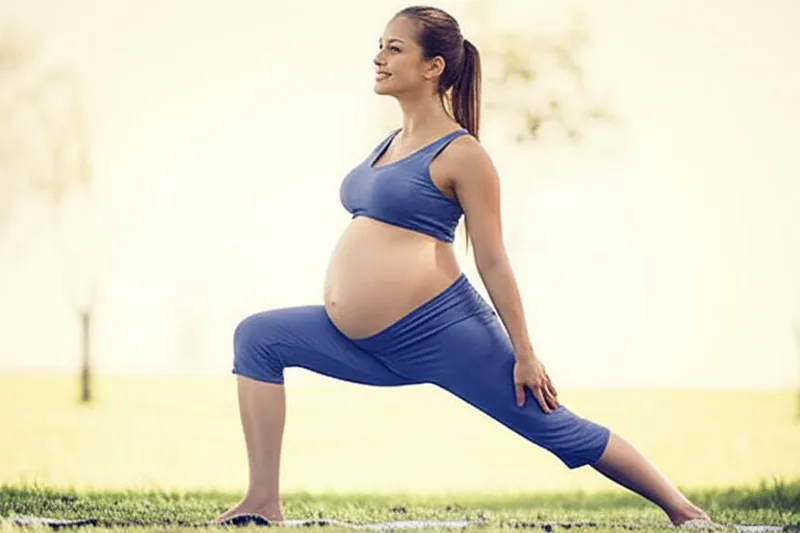
When you find out you're expecting a baby, you're probably wondering, "Should I exercise during this time?" Some people are afraid, while others think it's a good idea to exercise. In fact, exercising during pregnancy has many benefits for your health and that of your baby. Let's talk about this today.
Why is it really good to exercise during pregnancy?
Regular exercise throughout your pregnancy will not only help you stay healthy, but it will also help you feel great. Simply put, here are some of the benefits.
- Maintain good posture: As your baby grows, their body balance changes. Exercise can help them maintain good posture.
- Back pain and fatigue are reduced: Many mothers experience back pain during this time. They also just feel tired. Exercise provides great relief from these.
- Diabetes during pregnancy can be prevented: Some people develop diabetes only during pregnancy. We call it gestational diabetes . There is evidence that exercise can reduce this risk.
- Reduces stress: With the hormonal changes that occur during this time, you may sometimes feel stressed and anxious. Exercise is the best solution to this.
- Gains stamina for labor and delivery: Labor and delivery require a lot of stamina. Exercise can help build that stamina.
The most important thing is to talk to your doctor before you start any exercise program and ask if it is appropriate for your condition.
Who can exercise? Who can't?
In general, if you were already exercising before you got pregnant, you can continue doing the same things without any major changes. However, you may need to make some small changes. For example, you may need to switch from high-impact exercises like jumping and running to low-impact exercises.
Even if you've never exercised before, there's nothing to be afraid of. After consulting your doctor , you can safely start an exercise program. But when you're just starting out, don't go for very strenuous or difficult exercises. Things like brisk walking and swimming are the safest to start with.
However, for some people with certain health conditions, exercise is not a good idea. In such cases, your doctor may tell you to stop exercising for a while.
| Things to be careful about when exercising | |
|---|---|
| Avoid exercising if you have these conditions. | |
| Heart disease | Hemodynamically significant heart disease |
| Lung diseases | Restrictive lung disease |
| Cervical weakness | Incompetent cervix/cerclage |
| Risk of premature birth | There is a risk of premature birth in cases such as twins. |
| Bleeding | Persistent bleeding in the second or third trimester of pregnancy |
| Placental problems | Placenta previa after 26 weeks |
| Other problems | Ruptured membranes or preeclampsia |
| If you have these conditions, be sure to seek medical advice before exercising. | |
Severe anemia, uncontrolled diabetes (Type 1), uncontrolled high blood pressure, severe obesity or underweight (BMI <12), chronic bronchitis, heavy smoking. | |
What are safe exercises during pregnancy?
Most exercises are safe during this time, as long as you exercise carefully and don't overexert yourself.
The best and safest exercises:
- Swimming
- Brisk walking
- Indoor stationary bicycling
- Low-impact aerobics done under a certified instructor
- Yoga or Pilates
- Strength training exercises using light weights
These exercises have a low risk of injury, work the entire body, and can be continued even after the baby is born.
Some simple exercise methods
1. Stretching
Doing simple stretches like this before and after exercising will help your muscles become more flexible.
- Neck rotation: Release your neck and shoulders and lower your head. Then rotate your head to the right shoulder, back to the center, and then to the left shoulder.
- Shoulder rotation: Bring both shoulders forward, rotate them up, bring them back, and lower them.
- Leg swings: Sit on the floor with your legs spread wide and swing your legs up and down.
2. Kegel Exercises
This is a very important exercise. It strengthens the muscles that support your uterus, bladder, and bowels. It is very helpful in preparing for childbirth and in recovering after having a baby.
It's very easy to do. Imagine you're trying to stop urinating. When you do that, the muscles in your lower abdomen tighten, right? That's what Kegel exercises are called. No one will even see you doing this. You can do it anywhere! About 5 times a day, squeeze 10 times for 5 seconds and then relax.
3. Birthing Ball Exercises
This is a larger, more sturdy ball than a regular exercise ball. Sitting on it will strengthen your posture and abdominal muscles. It will also help your baby get into the correct position.
Things you should never do during pregnancy
Some exercises and activities can be harmful to both you and your baby during this time.
- Exercise to lose weight: Your weight should be gaining in a healthy way during this time. You should think about losing weight after you have the baby.
- Sports that can cause stomach injuries: Sports like football and basketball have a high risk of causing stomach injuries. Therefore, these should definitely be avoided.
- Activities that can cause falls: Things like skiing and horseback riding require good balance. These are risky because balance decreases as your belly grows. Riding a regular bike can also be a bit risky.
- Exercising too hard: When exercising, you should be able to talk normally without getting out of breath. If you can't, you're overexerting yourself.
- Jumping and jumping exercises: Since joints are loose during this time, there is a greater chance of injury.
- Things that make your body feel too hot: Too hot is not good for your baby. So if you exercise on hot days, choose a time like morning or evening. Avoid things like hot yoga. Drink plenty of water.
- Exercises while lying on your back: A few minutes is fine. However, as your uterus grows, lying on your back can interfere with blood flow to your baby. So, avoid lying on your back for more than a few minutes.
When to stop exercising and talk to your doctor
Exercise is good for everyone. But it's even more important to listen to your body's signals. If you experience any of the symptoms below, stop exercising immediately.
| Risk characteristics | What to do |
|---|---|
| Shortness of breath, extreme fatigue, dizziness, back or hip pain. | Stop exercising immediately and rest. If symptoms persist, call your doctor. |
| Symptoms of preterm labor: - Contractions that don't stop even after resting - Vaginal bleeding - Unusual abdominal pain - Vaginal discharge | Stop exercising immediately and go to your doctor or the nearest hospital emergency room (ETU). |
| Other serious symptoms: - Fainting - Chest pain - Rapid heartbeat - Sudden swelling of the ankles, hands, or face | Stop exercising immediately and call your doctor. |
Take-Home Message
- Exercising during pregnancy is very beneficial for both you and your baby. But it needs to be done safely.
- Before starting any exercise program, talk to your doctor to make sure it's appropriate for your health.
- Completely avoid exercises that hit your stomach, cause you to fall, or are too strenuous.
- Simple exercises like brisk walking, swimming, and yoga are very safe.
- If you experience dizziness, shortness of breath, pain, or bleeding while exercising, stop exercising immediately and call your doctor.
- Listen to your body. Rest if you are tired. Never force yourself to exercise.


💬 Comments (0)
No comments yet. Be the first to share your thoughts here.
Add Your Comment