
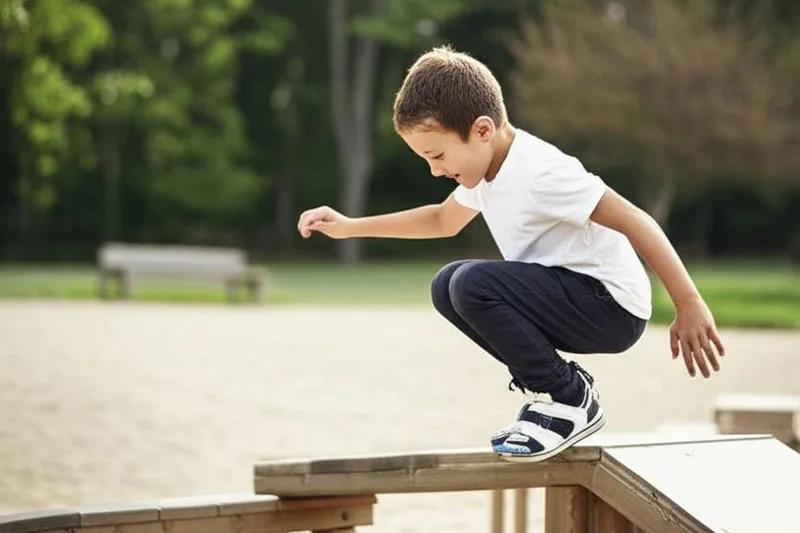
Does your child with ADHD struggle to stay in one place for a moment? We know how difficult it is to care for a child who is constantly running around and fidgeting when asked to stay in one place. As a parent, you may be wondering, "Why is my child like this?" But you are not alone. ADHD ( Attention-Deficit/Hyperactivity Disorder ) is not a child's fault or a parenting flaw. It is a medical condition related to brain function. Along with medication and counseling to manage the condition, exercise is a great way to help your child use up that extra energy.
What are the benefits of exercise for a child with ADHD?
One of the main characteristics of children with ADHD is this restless, mischievous behavior. They can't sit still because they need to release this extra energy in their bodies. So, not only does exercise release this energy, research has found that exercise can help with many other problems associated with ADHD.
Simply put, keeping your child active every day helps with things like:
- Lack of focus: When doing homework or listening to the teacher, attention is less likely to be distracted.
- Impulsivity: Being able to control things like doing things on the spur of the moment and answering a question before the end.
- Poor social skills: Learning to play with other children and work as a team.
Most importantly, daily exercise , as an adjunct to traditional treatments such as doctor-prescribed medication and counseling, can provide very good results for a child's ADHD symptoms .
Health experts recommend that children get at least 60 minutes of moderate to intense exercise a day. That could be anything from biking, swimming, playing soccer, or dancing. But some research shows that spending time outdoors in nature can help calm children with ADHD. In one study, just a 20-minute walk in a park improved the attention span of children with ADHD.
The relationship between exercise and brain function
Exercise is not just about building muscle. It also helps keep our brains healthy. Imagine, when a child exercises, the amount and composition of chemicals produced by their brain changes. We call these chemicals neurotransmitters . One of these neurotransmitters that is directly related to attention is dopamine .
What's really amazing is that stimulant medicines for ADHD also increase dopamine levels in the brain. So that tells us that exercise has the same effect on the brain as medication. That means exercise is a natural way to stimulate the brain .
Research has shown that after children with ADHD exercise, they score higher on tests that measure attention. They also report less impulsivity. This is especially true for children who are not taking stimulant medications.
Researchers believe that there are several key ways that exercise affects a child's brain. Let's look at it this way.
| The method of influence | Simple explanation |
|---|---|
| Blood flow to the brain | Exercise increases blood flow to the brain. Children with ADHD may experience decreased blood flow to the parts of the brain involved in thinking, planning, emotion regulation, and behavior. Exercise can help prevent this condition. |
| Blood vessels and brain structure | Exercise improves the health of the delicate blood vessels in the brain and the overall structure of the brain. This directly affects the child's thinking ability. |
| Brain function | Exercise increases the activity of parts of the brain involved in behavior and attention, just like giving the brain a 'workout'. |
Exercise helps a child's thinking and behavior
One area that is particularly difficult for children with ADHD is executive function . Simply put, it is our ability to plan, organize, and complete something step by step.
This lack of ability is why your child may forget to finish homework, forget to pack their lunch for school, or start cleaning their room but then stop and do something else. The good news is that exercise can improve this executive functioning in children with ADHD.
Also, many children with ADHD face problems in social relationships and their behavior. Playing a team sport provides a great opportunity to improve both of these areas.
Research has shown that children who exercise regularly are less likely to be punished for inappropriate behavior in class, such as interrupting others (e.g., suddenly jumping in while talking, calling others names, or hitting others).
Because of all these benefits, when exercise and ADHD medications are used together, the effectiveness of the medications is increased. Sometimes, even children who do not respond well to medication can get great relief from exercise.
More reasons to encourage your child to exercise
In addition to helping with ADHD symptoms, there are many other good reasons to get your child involved in exercise. Living a regular active lifestyle also has benefits such as:
- Maintaining a healthy weight.
- Keeping blood pressure and cholesterol levels normal.
- Reducing the risk of diabetes.
- Improved self-confidence and self-esteem.
Exercise is only one part of a complete treatment plan for ADHD. This treatment plan may include medication and therapy. So, be sure to discuss it with your pediatrician, psychiatrist, or psychologist to develop the best ADHD treatment plan for your child.
Take-Home Message
- ADHD is not just a child's bad behavior or mischief, it is a medical condition related to brain function.
- Exercise is a great adjunct to ADHD treatment, but it is not a substitute for medical treatment.
- Try to keep your child active for at least 60 minutes every day. Outdoor activities are especially beneficial.
- Exercise improves a child's attention, behavior, thinking skills, and self-confidence.
- Always consult with your doctor to determine the best treatment plan for your child.


💬 Comments (0)
No comments yet. Be the first to share your thoughts here.
Add Your Comment