
Understanding herniated disc surgery and recovery time is one of the biggest priorities when sharp, electric pain shoots from your lower back or neck straight down into your leg or arm. When conservative treatments stop giving relief, knowing what happens in the operating room—and how quickly you can safely drive, return to work, or pick up your groceries—takes away much of the anxiety surrounding spine care. We doctors talk with patients every day who worry that back surgery automatically means months flat in bed, yet modern minimally invasive techniques have completely transformed how quickly people bounce back.
Think about it for a second: the goal of disc surgery isn't to rebuild your entire backbone, but simply to free a pinched nerve root that is crying out for space. In the United States, United Kingdom, Canada, and Australia, most outpatient keyhole disc procedures allow you to stand up and walk down the hospital corridor just hours after waking from anesthesia. Pretty surprising, right?
At the same time, feeling rapid relief from nerve pain doesn't mean the deeper tissues of your spine have finished knitting back together. Walking through the exact surgical mechanisms, normal healing ranges, preparation rules, and practical home habits helps you protect your repair and avoid accidental setbacks.
📌 Key Takeaways at a Glance
- Surgery Is Rarely the First Step: Around 85% to 90% of people with a slipped disc improve within 6 to 12 weeks through physical therapy, targeted medications, and guided movement via their Primary Care Physician (PCP) or family GP clinic.
- Fast Initial Mobility: After standard keyhole disc surgery (lumbar microdiscectomy), most patients go home within 24 hours and return to desk or remote computer work in 2 to 4 weeks.
- Full Tissue Healing Window: While shooting leg pain often improves within days, the outer disc ring needs 6 to 12 weeks to scar over firmly, and heavy manual labor or contact sports typically wait until week 8 to 12.
- Procedure Type Shapes Your Timeline: Ultra-minimally invasive endoscopic discectomy can shorten early recovery to 1 to 3 weeks, whereas adding a spinal fusion extends bone healing to 3 to 6 months.
- Urgent Nerve Warnings Matter: Sudden loss of bladder or bowel control, numbness in your groin area, or rapidly worsening foot weakness requires calling 911 (US and Canada), 999 (UK), or 000 (Australia) right away.
What Does Herniated Disc Surgery and Recovery Time Mean for Your Spine?
Herniated disc surgery and recovery time refers to targeted nerve-decompression procedures, most commonly lumbar microdiscectomy, paired with a typical healing timeline of 2 to 6 weeks for desk work and 6 to 12 weeks for full tissue strength. Most patients walk within hours of surgery and feel immediate leg-pain relief.
When we doctors discuss this clinical pathway with you, we separate two very different timelines happening inside your body at once. The first timeline is neural recovery—how fast your irritated spinal nerve stops sending burning pain, pins-and-needles, or numbness down your limb once mechanical pressure is removed. Sharp shooting pain, often called pinched nerve root pain (radiculopathy or sciatica), frequently eases within the first few days because blood flow returns to the compressed nerve fibers right away.
Numbness or muscle tingling, however, recovers at roughly 1 millimeter per day along the nerve pathway, meaning mild toe tingling can take several months to fade completely. Have you ever wondered why your surgeon still restricts heavy lifting even when your leg feels 90% better by week two? That brings us to the second timeline: structural soft-tissue healing, where the small opening in your spinal disc needs a full 6 to 12 weeks to form durable collagen scar tissue.
How Does a Herniated Disc Differ From a Bulging Disc, and How Does Surgery Fix It?
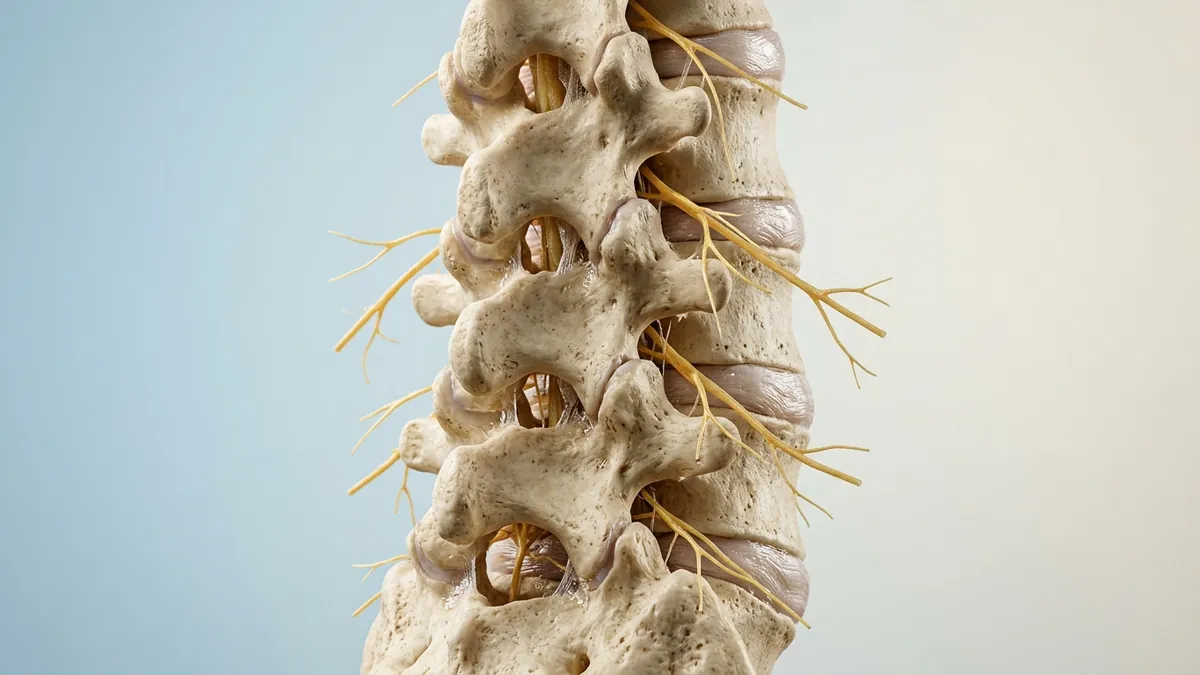
Between each of the bones in your spine (vertebrae) sits a shock-absorbing cushion called an intervertebral disc. Look closely at what happens inside your spine here: every disc is built a bit like a jelly doughnut, featuring a tough, multi-layered outer tire of collagen fibers (annulus fibrosus) wrapped around a hydrated, gel-like core (nucleus pulposus). Over time, age-related wear, repetitive forward bending with twisting, heavy lifting, or nicotine exposure weakens those outer collagen rings.
Patients searching online often ask about bulging disc surgery recovery time versus slipped disc surgery, so let's clarify the clinical difference:
- Bulging Disc (Contained Disc Protrusion): The outer fibrous ring stays intact, but sags outward evenly around its circumference like a slightly flat tire. Most mild bulges cause zero symptoms unless they narrow an already tight nerve tunnel.
- Herniated Disc Extrusion or Rupture): A tear opens through the tough outer ring, allowing the inner gel core to squeeze out into the spinal canal. Not only does that gel physically pinch the exiting spinal nerve root, it also releases inflammatory proteins like tumor necrosis factor-alpha that chemically irritate the nerve.
- Closely Related Mimics (Differential Diagnoses): Before recommending any operation, we doctors rule out bony spinal canal narrowing (lumbar spinal stenosis), sacroiliac joint dysfunction, hip osteoarthritis, diabetic nerve pain (peripheral neuropathy), and deep buttock muscle nerve trapping (piriformis syndrome).
During standard decompression surgery, the spine specialist removes only the escaped fragment of disc material pressing on the nerve—leaving roughly 85% to 90% of your healthy cushion intact to keep supporting your spine. Makes sense, right?
When Do We Doctors Recommend Surgery, and Which Procedure Options Exist?
When you first visit your Primary Care Physician (PCP) or family GP clinic with radiating back or neck pain, we start with a thorough neurological exam—checking your straight-leg raise angle, ankle and knee reflexes, big-toe lifting strength, and skin sensation. Unless emergency red flags are present, clinical guidelines across North America, the UK, and Australia recommend 6 to 12 weeks of structured conservative care first, combining physical therapy, short-term anti-inflammatory medicine, nerve-calming agents, or a targeted steroid injection.
If severe disabling pain persists past 6 to 12 weeks, or progressive muscle weakness develops—such as your foot slapping the pavement when you walk (foot drop)—your doctor arranges a magnetic resonance scan (MRI) and refers you to an orthopedic spine surgeon or neurosurgeon. Crucially, an MRI finding alone never justifies surgery; the scan must match your exact nerve symptoms on physical exam.
Pre-operative preparation rules also protect your outcome. Stopping smoking or vaping at least 4 weeks beforehand boosts oxygen flow to spinal tissues, keeping hemoglobin A1c below 7.5% to 8.0% lowers infection risk in patients with diabetes, and pausing blood thinners (under strict doctor supervision) prevents bleeding near delicate nerves. Depending on disc location and spine stability, surgeons choose from four main procedures:
- Lumbar Microdiscectomy: The gold-standard keyhole procedure through a 1-inch (2.5 cm) incision using a surgical microscope to pluck free the herniated fragment.
- Endoscopic Discectomy: An ultra-thin camera tube (7–8 mm) splits muscle fibers rather than detaching them, minimizing soreness.
- Laminotomy or Laminectomy: Removes a tiny window of bone (lamina) when bony narrowing accompanies a large bulged or herniated disc.
- Cervical Artificial Disc Replacement or Spinal Fusion (ACDF / Lumbar Fusion): Used primarily in the neck—where the whole disc must be cleared from the front—or when vertebrae slip out of alignment (spondylolisthesis).
What Is the Normal Recovery Time for Bulging Disc Surgery and Herniated Disc Procedures?
The normal recovery time for bulging disc surgery or lumbar microdiscectomy follows four clear clinical phases: walking within 4 to 6 hours post-op, returning to driving and desk work in 2 to 4 weeks, starting active core rehabilitation at weeks 4 to 6, and reaching full unrestricted lifting by weeks 8 to 12.
Be honest—have you caught yourself wondering if you could sneak back to mowing the lawn or lifting heavy laundry baskets in week two once your sciatica disappears? We rarely stop to think about how thin that newly healing disc wall is right after surgery, do we? During the first 14 days, surgical incision skin heals and nerve swelling subsides, yet the annular opening where the fragment exited remains open and vulnerable to high internal spinal pressure.
Sitting upright slouched on a soft couch actually raises pressure inside your lower lumbar discs by roughly 40% compared with standing or walking! That is why surgeons limit continuous sitting to 20-to-30-minute blocks during weeks 1 and 2, encouraging short, frequent 5-to-10-minute walks down your hallway or sidewalk instead. By weeks 3 to 6, formal physical therapy introduces gentle neutral-spine stabilization. Between weeks 6 and 12, collagen remodeling restores tensile strength, lowering the lifetime risk of recurrent disc herniation at the same level—which normally sits between 5% and 10%—to the lowest possible margin. If you needed a multi-level laminectomy or spinal bone fusion, allow 3 to 6 months for solid bone bridging before high-impact sports.
How Do Surgery Types, Recovery Stages, and Daily Milestones Compare?
Whether you are researching surgery for bulging disc recovery time or planning childcare and time off work for an upcoming microdiscectomy, seeing how different operations and milestone stages line up makes planning much simpler. Here is a practical two-column breakdown we doctors use to guide patients through each option and stage:
| Procedure Type or Recovery Stage | Clinical Meaning & Practical Next Steps |
|---|---|
| Endoscopic Discectomy (1–3 Weeks Early Recovery) | Uses an ultra-narrow camera tube through muscle-sparing dilation, causing minimal incision pain and blood loss. Full internal disc scar strength still requires 6 to 8 weeks. What you should do: Resume light desk tasks in 7 to 14 days if comfortable, but still honor lifting limits under 10 lbs (4.5 kg) until your surgeon clears you at follow-up. |
| Lumbar Microdiscectomy (2–6 Weeks Desk; 8–12 Weeks Full) | The most widely performed procedure for lower-back nerve root compression, delivering 85% to 90% relief of radiating leg pain with same-day or overnight hospital discharge. What you should do: Walk short flat distances several times daily starting day 1, limit sitting to 20–30 minutes at a time early on, and begin guided physical therapy around week 4. |
| Cervical Disc Surgery (ACDF or Disc Replacement) (2–4 Weeks Desk; 6–12 Weeks Full) | Treats pinched neck nerves causing arm pain or hand weakness through a small front-of-neck incision. Temporary mild throat soreness or hoarseness for a few days is common. What you should do: Eat soft foods like yogurt, soup, and scrambled eggs for the first 3 to 5 days, wear any prescribed neck collar as directed, and avoid overhead lifting. |
| Decompression With Spinal Fusion (4–6 Weeks Light; 3–6 Months Bone Healing) | Stabilizes slipping or severely worn vertebrae using bone graft and hardware so two segments heal into one solid unit. What you should do: Strictly avoid non-steroidal anti-inflammatory drugs like ibuprofen or naproxen for 3 months unless approved, as they can slow bone graft fusion, and avoid all nicotine. |
| Driving & Commuting Milestone (Typically Weeks 1–3) | Safe driving requires zero opioid pain medications in your system plus quick, pain-free right-foot brake reflexes and comfortable shoulder-checking mobility. What you should do: Test your emergency braking motion in a parked car off prescription painkillers before driving short local errands, and use a small lumbar support roll on your car seat. |
| Manual Labor, Golf & Running (Typically Weeks 8–12+) | Rotational sports, heavy lifting over 25 lbs (11 kg), and repetitive impact test the newly formed collagen scar over your disc space. What you should do: Complete a structured core and hip-hinge rehabilitation program with your physical therapist and obtain explicit clearance from your spine surgeon before returning to full load. |
How Can You Speed Up Healing Safely at Home Without Re-Injuring Your Spine?
Recall that 6-to-12-week outer-ring healing window we covered a moment ago? What you do in your bedroom, kitchen, and home office during those first few weeks makes all the difference. First, master the "BLT Rule" for the initial 4 to 6 weeks: no Bending forward at the waist, no Lifting anything heavier than a gallon jug of milk (about 8 to 10 lbs or 4 kg), and no Twisting your torso while your feet stay planted. When getting in and out of bed, use the "log-roll" method—roll onto your side keeping your shoulders and hips aligned together, drop your lower legs off the mattress edge, and push yourself upright with your arms.
Nutrition and bowel comfort play a surprisingly huge role too. Prescription pain tablets taken during days 1 to 4 slow gut movement, and straining on the toilet spikes pressure inside your spinal canal! Keep stools soft by drinking 6 to 8 glasses of water daily alongside high-fiber everyday foods like warm morning oatmeal, berries, prunes, leafy greens, and whole-grain toast, or ask your pharmacist about a gentle stool softener like docusate or polyethylene glycol. Pair those foods with lean healing protein—such as grilled salmon, roast chicken, eggs, Greek yogurt, cottage cheese, or lentil soup—to supply the amino acids your body uses to weave strong collagen across the surgical site.
See? That's exactly why we doctors emphasize smart daily setup—like putting kitchen mugs, slip-on walking shoes, and phone chargers at waist height before surgery day—so your back gets an effortless vacation while it heals.
✔️ What You Should Do & ❌ What to Avoid
- ✔️ Do take short, frequent walks on flat ground: Start with 5 to 10 minutes three or four times a day around your home or neighborhood sidewalk, gradually building up to 30 to 45 minutes daily by week 4 to prevent blood clots and nourish spinal tissues.
- ✔️ Do keep your surgical incision clean and dry: Follow your discharge instructions for showering—usually permitted 48 to 72 hours post-op with waterproof dressings patted gently dry—and check daily for redness.
- ✔️ Do sleep in a spine-neutral position: Rest on your side with a supportive pillow tucked between your knees, or on your back with a pillow propped underneath your knees to take tension off your sciatic nerve.
- ❌ Don't soak in bathtubs, hot tubs, or swimming pools early on: Submerging an incision before the skin completely seals (usually 2 to 3 weeks) invites bacterial wound infection.
- ❌ Don't sit for hours in low, deep sofas or long car rides: Stand up to walk and gently stretch every 25 to 30 minutes when working at a computer or watching television.
- ❌ Don't smoke, vape, or use nicotine patches during recovery: Nicotine constricts tiny blood vessels feeding your intervertebral discs, raising the risk of recurrent disc herniation and poor healing.
🚨 When to Seek Immediate Emergency Care (Red-Flag Symptoms)
If you or someone near you develops any of these red-flag symptoms, do not wait — call 911 (or 999 in the UK / 000 in Australia) immediately or go straight to the nearest hospital Emergency Room (ER / A&E):
- Bladder or Bowel Changes (Cauda Equina Warning): New inability to pass urine, overflowing urinary incontinence, or loss of bowel control—this signals urgent compression of lower spinal nerve roots requiring emergency evaluation.
- Saddle Numbness: Sudden loss of feeling or strange numbness across your groin, buttocks, genital area, or inner thighs (the exact areas that would touch a horse saddle).
- Sudden or Worsening Limb Weakness: New inability to lift the front of your foot drop), knees buckling beneath you, or dropping objects unexpectedly after neck surgery.
- Clear Fluid Leaking or Severe Positional Headache: Watery, clear or pinkish fluid seeping from your incision accompanied by a pounding headache that worsens sharply whenever you sit or stand upright (possible spinal fluid leak).
- Signs of Deep Infection or Blood Clot: Fever above 101°F (38.3°C), spreading wound redness or pus, a painful swollen calf (deep vein thrombosis), or sudden shortness of breath and chest pain (pulmonary embolism)—for non-life-threatening urgent advice in the UK, you can also call 111, or visit a local Urgent Care center if mild wound questions arise.
💡 Key Take-Home Message
- Most herniated and bulging discs settle without surgery, and when decompression is needed, keyhole procedures relieve shooting nerve pain in 85% to 90% of well-selected patients.
- Plan on 2 to 4 weeks before returning to desk work and 8 to 12 weeks before heavy lifting, remembering that vanishing leg pain happens weeks before your disc's outer ring finishes scarring closed.
- Walking daily, avoiding bending-lifting-twisting early on, and staying alert to nerve or wound warning signs puts you firmly in control of a lasting recovery.





No comments yet. Be the first to share your question or experience below.