
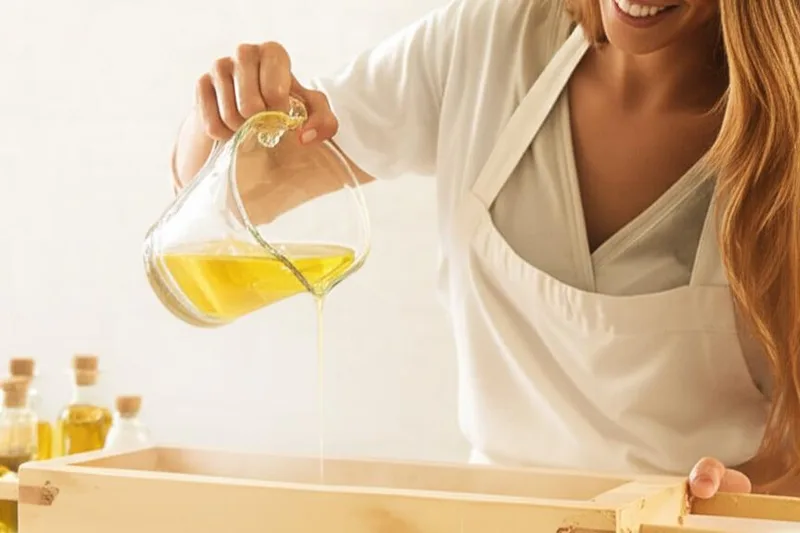
When we buy soap from the store, we think about its beautiful color and scent. But have you ever thought about how great it would be to make your own bar of soap at home , with your favorite scent and the best possible skin care product? Many people think that making soap is a difficult task that requires a lot of chemical knowledge. But in fact, with a little patience and a little bit of practice, this is something you can do at home and enjoy.
What do you need to make soap?
Simply put, soap is the result of a chemical reaction between fat and a caustic chemical. We call this reaction saponification. So there are two main ingredients to making soap.
1. Fat or Oil: Vegetable oils like coconut oil, palm oil, olive oil, or animal fats can be used for this.
2. Lye: This is the caustic chemical that reacts with fat to form soap .
However, if you are new to this, there is an easier way than working with lye directly. That is to use a `(Glycerin)` soap base. Glycerin is a substance that is formed during the making of soap, which is very good for the skin, and retains moisture. It is very easy and safe to make this base by melting it, adding a desired scent and color, and pouring it into a mold.
But if you want to make soap from scratch, you need to have a little understanding of the ingredients used.
| Raw material | Important information |
|---|---|
| Fat or oil (Fat or Oil) | You can use one type of oil or a mixture of several oils, such as coconut oil, olive oil, or palm oil. It's easiest to start with one type of oil when you're first starting out. |
| Lye (Lye) | There are two main types of these: - Sodium hydroxide is used to make solid soap (bars). - Potassium hydroxide is used to make liquid soap. |
| Distilled water (Distilled Water) | Distilled water is used to dilute the lye. The minerals in regular tap water can interfere with the reaction. |
| Extras (Enhancements) | You can add essential oils for fragrance, special pigments for soap for color, and natural ingredients (aloe vera, turmeric, coffee powder) to the soap. |
To make about 250 grams of soap, you can use this ratio: 225 grams of oil, 31 grams of lye, and 96 grams of distilled water . However, these ratios vary slightly depending on the type of oil used.
Safety comes first!
This is the most important part. Lye is a very strong chemical that can burn the skin and damage the eyes. So you definitely need to think about safety when doing this job.
If you're using a glycerin base, this risk is nonexistent. But if you're working with lye, these things are a must:
- Safety Goggles: These are essential to protect your eyes.
- Rubber Gloves: To prevent lye from getting on your hands.
- Coveralls and an apron: Prevent spills.
- A well-ventilated area: It's not a good idea to inhale the fumes that come out when lye reacts with water. So do this near a window or outdoors.
| Equipment to be used | Equipment not to be used |
|---|---|
| Bowls and spoons made of glass, plastic, or stainless steel. | Do not use anything made of aluminum or zinc . Lye will react with them. |
| Thermometer, measuring cups, plastic soap molds. | Although wooden spoons can be used, they can deteriorate over time due to the lye. |
Very important: If lye accidentally comes into contact with your skin, gets into your eyes, or is ingested by someone , go to the nearest hospital Emergency Department (ETU) immediately. You can also call the National Poisons Information Centre at the Colombo National Hospital for more information.
Okay, now let's make soap!
Put on all your safety gear and let's get started.
1. Step 1: Slowly add the lye to the distilled water in a container. Never add water to the container with the lye. Stir well until the lye dissolves. This mixture will get very hot. It will also smoke. So be careful. Now let this mixture simmer until it reaches about 43 degrees Celsius (110°F).
2. Step 2: In a separate container, heat your chosen oil to the same temperature (43 Celsius).
3. Step 3: Once the lye mixture and oil are at the same temperature, slowly pour the lye mixture into the oil container. Continue to stir for about 15 minutes. It's even easier if you have a hand blender.
4. Step 4: Stir for a while, let it sit for a few minutes, and stir again. This will gradually thicken the mixture to a custard-like consistency. This is when you want to add any essential oils or coloring you like.
5. Step Five: Now pour this soap mixture into molds and leave it in a well-ventilated place for two to three days. Once the soap has hardened, remove it from the mold using gloves and cut it into the desired shape.
6. The last and most important step: Let these cut pieces of soap dry (cure) at room temperature for about 2-3 weeks. Do not use the soap or touch it with bare hands during this time. Because the saponification reaction is not complete, it can still burn the skin.
Very easy method: Let's make it with a glycerin base
If all these steps seem difficult to you, making soap from a `(Glycerin)` base is very easy.
- Cut the glycerin base into pieces and melt it in the microwave or using a double boiler.
- Add your favorite fragrance and color and mix well.
- It should have been put in molds and left to cool for about two hours.
- This soap can be used immediately after making. There is no need for a curing process.
Why should we make soap at home?
This is not just a hobby. Homemade soap has many benefits for your skin.
- Better for the skin: The natural `(Glycerin)` that is formed during the making of soap is a very good thing for the skin, which keeps the skin moisturized. Glycerin is even used for some skin conditions, for example, psoriasis. But remember, if you have a skin condition like psoriasis, you should definitely consult your doctor before using this kind of homemade soap . Most of the soaps in the store are not really soap, but synthetic detergents. They do not contain this natural glycerin.
- Customizable: You can add any scent, color, or oil you want to create a soap that suits your skin. You don't have to limit yourself to what's available in the store.
So, soap making is a craft that, if you're a little careful, can yield beautiful results. Try it yourself!
Take-Home Message
- Although making soap at home is possible, it requires patience and care.
- Lye is a very dangerous chemical, so it is essential to wear protective equipment such as safety glasses and gloves.
- If you are new to this, it is easiest and safest to start with a glycerin "melt and pour" base.
- If you are making soap from scratch, it is essential to let it cure for several weeks before using it.
- Always work in a well-ventilated area. In case of an accident, seek medical advice immediately.


💬 Comments (0)
No comments yet. Be the first to share your thoughts here.
Add Your Comment