
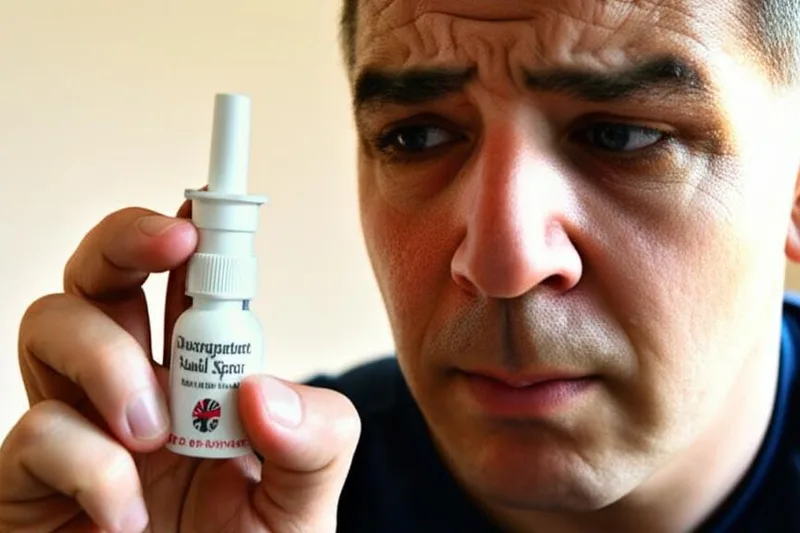
Have you ever used a nasal spray from a pharmacy because your nose is stuffy and you have difficulty breathing? It opens your nose and gives you great relief, right? But after a few days, the relief gradually decreases and you find yourself needing to use the spray more and more? Perhaps you have increased the number of times you use the spray. This is not unique to you. This is what we are talking about today.
This is what we call "rebound".
Imagine, our sister Sandhya has a stuffy nose due to allergies. She started using a nasal spray she bought from the pharmacy. It worked perfectly for the first two or three days. But after about a week, the duration of the spray's effectiveness gradually decreased. So she started spraying it several times a day. Surprisingly, when she did that, her stuffy nose got worse, not better .
Simply put, your nose opens up a lot after you spray it, but when the medicine wears off, it becomes even more stuffy than before. This is what is called "Rebound Phenomenon" in medical science. The official name for this condition is `(Rhinitis Medicamentosa)`. The only reason for this is to use certain types of decongestant nasal sprays for several days in a row.
Why is this happening?
These sprays contain chemicals that shrink the blood vessels inside the nose. When these blood vessels shrink, the swelling inside the nose decreases and breathing becomes easier. Since the spray is applied directly to the nose, relief is also provided very quickly.
However, after several days of continuous use, the blood vessels in the nose stop responding to the medicine. They become "addicted" to it. Then, no matter how many sprays you use, it won't work. As the medicine wears off, the body swells the blood vessels even more, blocking the nose. This can be a vicious cycle that can last for months, even years.
How do you know if you also have this problem?
If you look at any nasal spray bottle, it clearly says, "Do not use for more than 3 to 5 days at a time." But many people think, "What if I use it for another two or three days?" But that's a terrible mistake.
The longer you use this spray, the more likely you are to develop this rebound condition. This can eventually lead to serious, long-term health problems like ``chronic sinusitis``.
Check to see if you have any of the following symptoms. If you have any of these, be sure to see your doctor for advice.
| What you feel (symptom) | What does that say? |
|---|---|
| The only problem is the nose. | Usually, allergies have other symptoms like itchy, watery eyes, etc. But in this case, there is only an uncomfortable, persistent nasal congestion. |
| Can't find a reason. | Your nasal congestion doesn't change with the weather or other triggers like dust. If your nasal congestion is constant throughout the day, it's less likely to be caused by allergies. |
| The spray is useless now. | Even if you increase the frequency and dose of the spray, the nasal congestion will continue to worsen. The relief will last for a very short time. |
| Other symptoms appear when stopped | When you stop using the spray, you experience withdrawal symptoms such as headaches, insomnia, and restlessness. |
How can you avoid becoming addicted to this habit?
Before facing this problem, there are several ways to avoid it.
1. Try other medications: There are some oral antihistamines and decongestants. Their chemical composition is different, so this rebound risk does not occur. But remember , some pills are not suitable for people with high blood pressure . So be sure to ask your doctor before using any medication.
2. Use other methods: Use saline nasal rinses. These are available at pharmacies. They only wash away mucus and dirt inside the nose. They do not contain chemicals that cause the rebound effect.
3. Follow the directions exactly: Follow the instructions on the spray exactly. Use it about every 12 hours, and don't use it for more than 3-5 days at a time.
How do you get out of this vicious cycle?
If you are already facing this problem, the only permanent solution to get rid of it is to stop using the nasal spray completely .
This is not as easy as it sounds. The first week in particular can be very difficult. You may experience a very stuffy nose, difficulty breathing, and headaches, which can be very uncomfortable.
So don't try to do this alone. Talk to your doctor about this. He or she will help you get through this difficult time.
A doctor can help you manage this discomfort. Sometimes, a short-term course of oral steroids may be prescribed to help control the severe nasal congestion that occurs after you stop using the spray. They may also refer you to other allergy medications or other alternative treatments . The most important thing is to follow your doctor's advice and try to get rid of it.
Take-Home Message
- Decongestant nasal sprays should only be used for a very short period of time, a maximum of 3-5 days.
- Using it for several days in a row can make your nasal congestion worse (rebound congestion).
- If your nose is constantly stuffy and the relief from the spray has diminished, you may have this condition.
- The only way to break this cycle is to stop using the spray. This can be difficult, so always talk to your doctor.
- The doctor can help you manage this difficult time.




💬 Comments (0)
No comments yet. Be the first to share your thoughts here.
Add Your Comment