

For many of us, food is a source of comfort. And, on special occasions, we all tend to eat a little more than we normally would. However, the condition we are going to talk about today, called ``Binge Eating Disorder '', is very different. What happens is that we have no way of controlling the amount of food we eat. No matter how full we are or how uncomfortable we feel, we cannot stop eating.
What exactly is ``Binge Eating Disorder''?
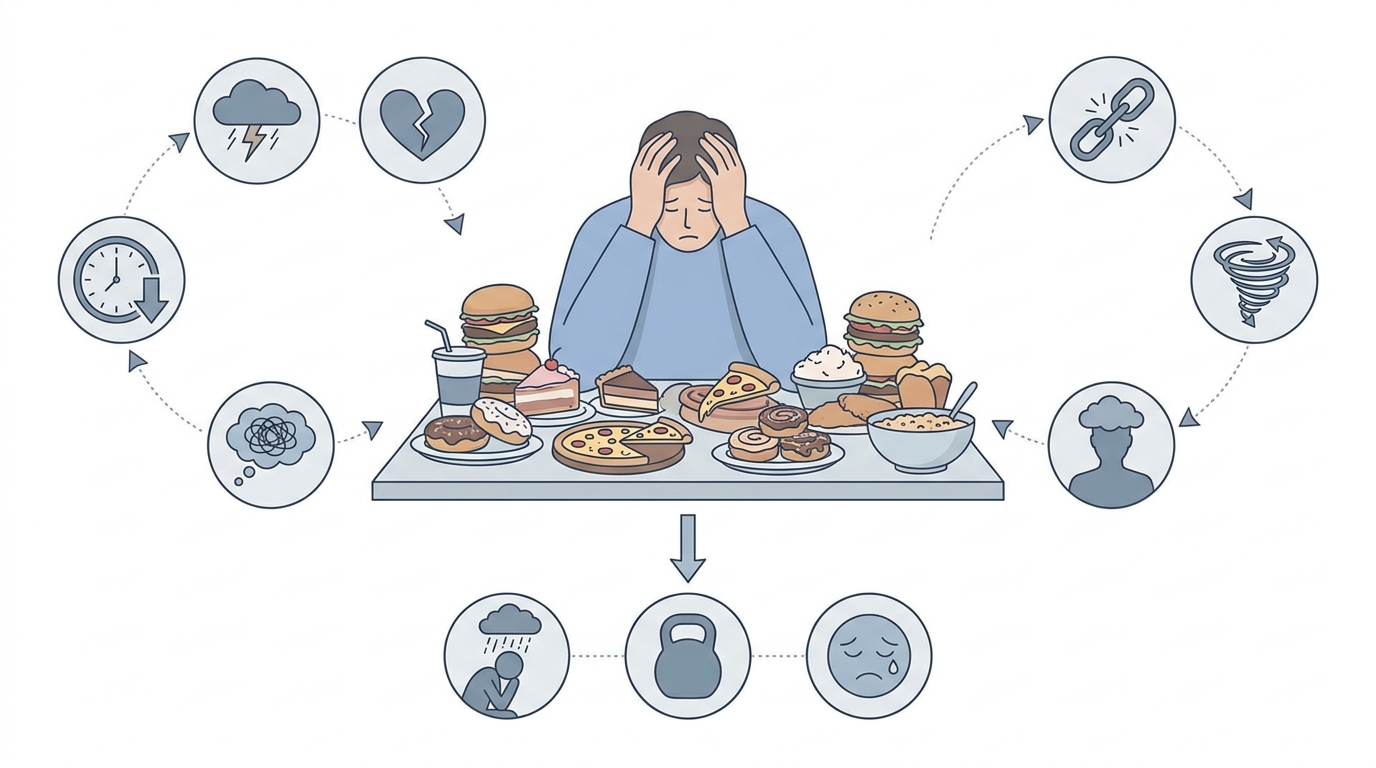
Simply put, `(Binge Eating Disorder)` is a mental and behavioral problem related to food. A person with this condition feels like they have no control over what they eat. They eat an unimaginably large amount of food in one sitting. If this happens at least once a week for several months , it may be `(Binge Eating Disorder)`.
When people binge eat, they may feel a sense of calm and relief from eating for a moment. They may also be using food to relieve stress or anxiety. However, after eating, the opposite happens. They experience intense anxiety, guilt, and regret . Many people with binge eating disorder may gain weight. However, it is important to remember that this condition can also occur in people of normal weight.
What are the symptoms of this condition? How do you recognize it?
People with binge eating disorder are usually unhappy with their body weight. Many of them may also suffer from depression .
You will also see these features:
- Eating a lot of food at once, very quickly . As if someone is coming to snatch it away.
- After eating, hiding things like food boxes and wrappers in the room because you don't want others to see them.
- Body weight fluctuates suddenly. It's like you gain weight and then lose weight again .
- Skipping main meals, eating at unusual times (for example, in the middle of the night), and getting used to eating alone and in isolation .
- Having a history of turning to food when feeling stressed, such as family disputes, rejection from friends, or problems at school or work.
People with binge eating disorder may experience feelings that are common among people with other eating disorders, such as depression, anxiety, guilt, and shame . They may avoid social activities such as school, work, and friends because they are embarrassed by their binge eating habits or are unhappy with their body shape and weight.
Imagine, if a small child or young child eats this way, parents may first realize the problem when a large amount of food in the kitchen or fridge suddenly disappears.
Are ``Binge Eating Disorder'' and ``Bulimia'' two different things?
Yes, these are two different conditions. In a condition called `(Bulimia Nervosa)`, people also eat uncontrollably (binge eating). However, they then try to get rid of the excess food, which means losing weight , vomiting, using laxatives , or exercising excessively . However, people with `(Binge Eating Disorder)` usually do not engage in such "compensatory" behaviors.
Why does this situation occur? What are the reasons?
The exact cause of Binge Eating Disorder is not yet known , but it is believed to be a combination of factors.
These may include:
- Genetics : If someone in the family has had these conditions, that can also have an impact.
- Family eating habits: The way some families use food and their attitudes towards food can also contribute to this.
- Emotional: When unable to deal with feelings like sadness, anger, loneliness , or stress, some people turn to food as a way to comfort themselves.
- Improper eating patterns: Skipping main meals, eating during the day and not eating at night, etc. can lead to excessive hunger and the temptation to eat uncontrollably.
People with Binge Eating Disorder are more likely to have other mental health problems. For example:
- Depression
- Anxiety
- Post-Traumatic Stress Disorder (PTSD)
- Attention deficit hyperactivity disorder ( ADHD )
It's hard to say exactly how many young people suffer from this condition, because many people feel guilty and ashamed about their disordered eating, and they don't want to talk about it or ask for help.
So what do we do?
If you think you have these symptoms, or suspect that someone you know has this problem, the most important thing is to talk about it and ask for help.
Remember, this is not your fault. This is a condition that can be managed with treatment.
- Talk to someone you trust: It could be your parents , a sibling, a close friend, a teacher. It can be a great relief to share what's on your mind with someone.
- See a doctor: Talk to your family doctor or a mental health specialist about this. They can properly assess you and refer you for treatment if necessary.
- Counseling and Therapy: Talk therapy can be very helpful in managing this condition. Cognitive Behavioral Therapy (CBT) is an effective treatment method used for this.
- A healthy lifestyle: Things like a balanced diet, regular exercise, and adequate sleep can help with overall health and help manage this condition.
Finally, things to remember (Take-Home Message)
Binge Eating Disorder is not something to be ashamed of or hide. It is a medical condition. With the right understanding, support, and treatment, you too can manage this condition well and live a healthy, happy life.
You are not alone. Don't be afraid to ask for help. The sooner you get help, the sooner you can recover.
` Binge Eating Disorder, Binge Eating, Eating Control, Mental Health, Eating Disorders, Sri Lanka, Sinhala Medical Articles
Doctor's Note
Binge Eating Disorder (BED) is a serious behavioral disorder caused by stress, anxiety or pressure. Here the person cannot control his food and eats too much food in a very short period of time. Due to the intense shame and guilt that follows, they are tempted to eat secretly. As this condition is a major cause of obesity, diabetes and heart disease, psychiatric treatment and nutritional advice are essential.
❓ Some more questions you may encounter (FAQ)
What is the difference between binge eating and normal overeating?▼
In binge eating, it is impossible to control the amount or speed of eating (Loss of control), and there is a strong feeling of guilt and mental regret after eating.
What are the treatments for binge eating disorder?▼
Behavioral therapy (Cognitive Behavioral Therapy - CBT), stress management and, when necessary, medication prescribed by a doctor are used.
How can families help someone with binge eating disorder?▼
It's important to avoid blaming or shaming, listen to their psychological problems, and help guide them to professional medical care.


💬 Comments (0)
No comments yet. Be the first to share your thoughts here.
Add Your Comment