

Hello! Your little one is two months old now, isn't it? It's amazing how time flies! During these two months, your baby's checkup with the doctor or midwife is very important. Today, let's talk about what happens at this checkup, what you should expect, and how to take care of your baby until the next checkup.
What does the doctor look for during this checkup?
When you take your baby to the clinic, the doctor or nurse will take care of a few things. Don't worry, all of this is done for the good of you and your baby.
Measuring baby's growth
First, they measure the baby's weight, height, and head circumference and record them on a growth chart . This is how the doctor can see if the baby's growth is appropriate for his age and healthy. This is like a "progress report" for the baby.
Asks you questions, listens to your problems
The doctor will ask you a few questions about your baby's daily routine. If you have any questions, concerns, or concerns, this is the best time to ask.
- Breastfeeding pattern: The doctor will definitely ask about the baby's breastfeeding pattern. Your baby may be going without milk for a little longer now than before. But sometimes they may have "cluster feedings" where they want milk in a row. This is normal.
- If breastfeeding : A baby this age usually breastfeeds about 8 times a day.
- If you are feeding formula: Your baby will need about 26-28 ounces (780-840 milliliters) of formula per day.
Remember, not all babies are the same. Feed according to your baby's hunger .
- Urination and defecation: Your baby should have wet diapers several times a day. The number of times they defecate may have decreased a bit by now.
- Breastfed babies' poop should usually be yellow in color, slightly liquid, boneless, and soft.
- Formula-fed babies should have a slightly firm stool, but not as hard as a rock. If they have symptoms of constipation, tell your doctor.
- Sleep: Your baby may now be starting to stay awake a little longer during the day and sleep more at night.
- A breastfed baby can sleep for about 4-5 hours straight at night.
- A formula -fed baby may sleep for 5-6 hours straight.
- But even at this age , it's normal to wake up once or twice at night to drink milk.
- Developmental Milestones: By two months, babies usually start doing certain things. These are what we call developmental milestones .
- Do they make other small sounds (cooing, gurgling) besides crying?
- Does it startle or react to loud noises?
- Do you feel calmer when you talk or take more?
- Are you looking straight at your face?
- Do you stare at a toy for even a few seconds at a time?
- When you smile, talk, or play, do you smile back? (This is called a social smile, it's a beautiful thing!)
- Does your baby lift his head slightly when he is on his stomach (tummy time)?
- Can you move your arms and legs well?
- Does holding your hands together make you open them for a while?
If your baby isn't doing any of these things, or if you feel like they're not doing something they used to, be sure to talk to your doctor about it. Not all babies develop at the same rate, but your doctor can make sure everything is okay.
Complete physical examination
Next, the doctor will completely undress the baby (you'll do this in front of them, don't be afraid) and examine them. During this:
- Eyes are examined.
- They listen to the heart with a stethoscope and check the pulse.
- Checks to see if the hips are properly positioned.
- Attention is also paid to the baby's movements and muscle tone.
Special tests (Screening tests) if necessary
The doctor will review the results of some screening tests done at the hospital where the baby was born. Sometimes, if necessary, those tests may be repeated.
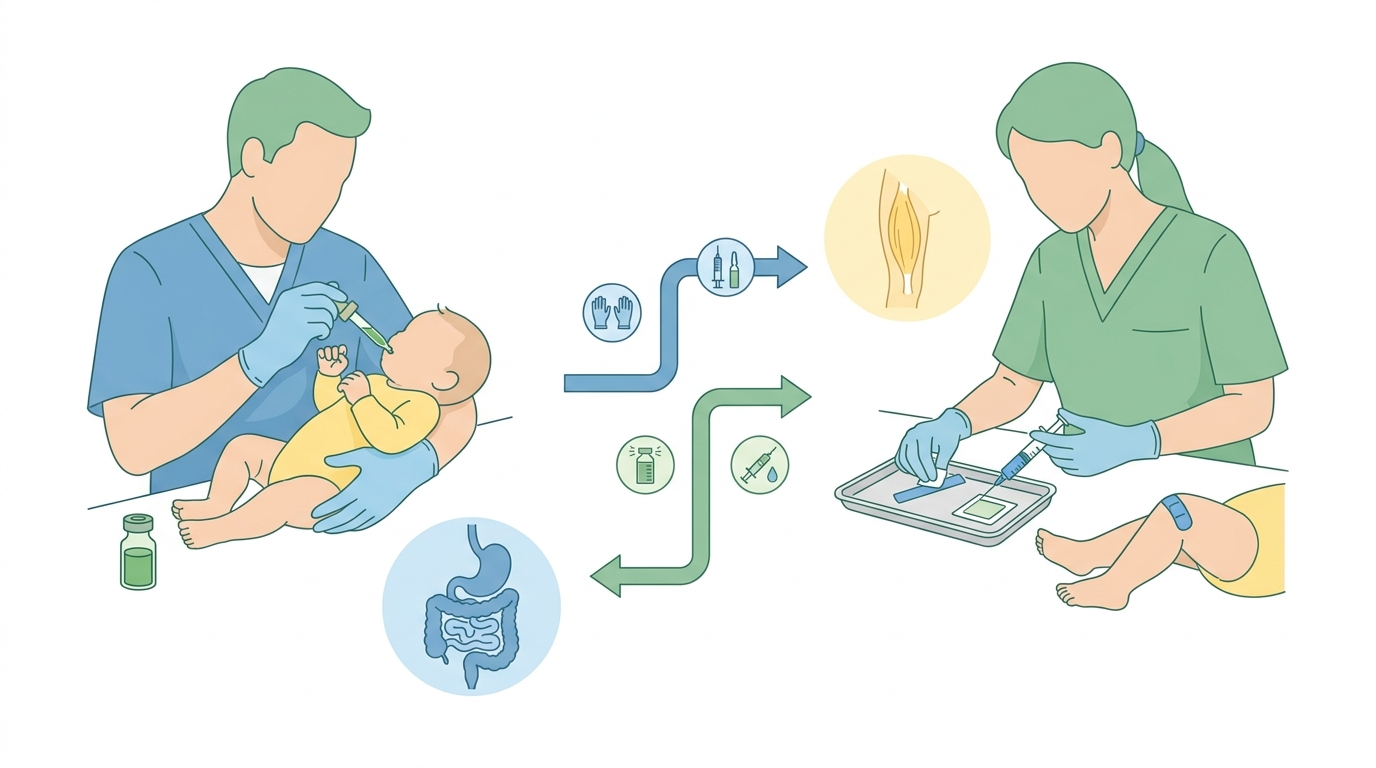
Giving vaccines
Vaccinations are very important to protect your baby from serious diseases . Therefore, it is essential to give them the right vaccines on time. There are usually a few vaccines that are given every two months. The vaccination schedule may vary slightly from doctor to doctor, so talk to your doctor about it.
Attention to the mother's mental health
Postpartum depression , a condition that mothers experience after having a baby, is more common than you might think. That's why your doctor may ask you to fill out a short questionnaire to find out about your mental state. If you're feeling anxious, sad, or worried, don't hide it and tell your doctor. It's nothing to be ashamed of, and you can get help.
Keep these things in mind until your next checkup (in 4 months).
Okay, now the two-month checkup is over. The next big checkup is when the baby is four months old. Until then, there are a few things you need to take care of.
Let's take care of food and drink.
- Don't start solids yet.That means no porridge, mashed rice, or fruit juice. The baby still needs only breast milk or approved formula.
- Pay attention to your baby's hunger and fullness cues. Don't force feed.
- If you are breastfeeding:
- If possible, give only breast milk for 6 months (no other formula, water, or solid foods are recommended during this period).
- If necessary, you can give expressed breast milk in a bottle. If you are going to work soon, this is a good time to introduce your baby to the bottle.
- Talk to your doctor about giving your baby vitamin D drops. Some babies may need to be given this in addition.
- Continue to take a prenatal vitamin or a regular multivitamin every day.
- If giving formula: Choose an iron -fortified formula .
- If your baby is bottle-feeding, don't do these things:
- Do not allow your baby to drink alone by propping the bottle against a pillow or cloth. This can cause choking.
- Do not put your baby to sleep with a bottle in his mouth. This can damage his teeth and cause earwax.
General care and development of the baby
- Wash your hands thoroughly with soap and water before touching your baby. Ask other people who come into your home to do the same. Keep your baby away from people who are sick as much as possible.
- Hold your baby close and take care of his needs. The saying "baby gets spoiled when you hold him" is a lie. Your love and warmth are very important to your baby.
- Talk to your baby, sing songs, read books. Babies learn best when you talk to them and play with them.
- While your baby is awake, try "tummy time" by turning him on his stomach for a few minutes while you're watching him. This will help strengthen the muscles in his neck and back. But if he seems tired or bored, turn him back to the other side.
- Limit the amount of time your baby spends in an infant seat, bouncer, or swing. Too much of this is not good for your baby's development.
- It is normal for babies to cry for no reason (fussy periods). But some babies cry for hours a day, uncontrollably. We call this colic . This usually starts around 3 weeks of age in a healthy baby, peaks around 6 weeks, and subsides around 3 months. If the baby is breastfeeding well and gaining weight, this is not a big problem, but it can be a very stressful time for mothers.
- It's normal to feel tired, overwhelmed, and sometimes sad when you're a new mother. But if these feelings are very strong , if you're constantly sad, angry about everything, worried, or anxious , definitely talk to your doctor or family health worker. This could be postpartum depression , and there is treatment for it.
- If you have any concerns about your living situation (e.g., food, shelter, health insurance), talk to your doctor about those as well. They can tell you about community resources and refer you to a social worker if necessary.
Safety is the most important thing!
When you have a small baby at home, you have to think twice about safety.
- To save your baby from the dangerous condition known as Sudden Infant Death Syndrome (SIDS), be sure to do these things:
- Always put your baby to sleep on their back in a crib or bassinet on a firm, flat mattress. Do not put your baby to sleep on their stomach or side. Do not place crib bumpers, large blankets, pillows, or soft toys around your baby in the crib. These things can cause suffocation.
- Breastfeed your baby if possible. Breastfeeding has been found to reduce the risk of SIDS .
- Until your baby's first birthday, at least for 6 months, sleep in a separate crib in your room, next to your bed. Avoid bed-sharing.
- Keep the room temperature comfortable and prevent your baby from overheating. Dress your baby appropriately for the room temperature, and don't overdress him. Don't cover his head while he's sleeping. Always check to see if he's sweating or feeling hot to the touch.
- You may want to consider giving your baby a pacifier while he sleeps. Some studies suggest that sucking on a pacifier may reduce the risk of SIDS . But don't force it if your baby refuses. If the pacifier is swallowed while sleeping, you don't need to put it back in. If you are breastfeeding, don't give a pacifier until breastfeeding is well established (about 3-4 weeks).
- Do not let your baby sleep on anything that is not designed for babies to sleep on (e.g. car seats, sofas, nursing pillows, infant loungers).
- Do not use any special devices (e.g., sleep positioners, home monitors that measure baby's heart rate and breathing) that claim to reduce the risk of SIDS . There are currently no proven products that can do this.
- Make sure that all items used to sleep your baby, such as the crib and mattress, meet accepted safety standards (e.g., approved by an agency like the US Consumer Product Safety Commission (CPSC) ).
- Do not use infant walkers. They are very dangerous and can cause serious injuries. Walkers do not help your baby walk, and may actually delay their ability to walk.
- In a few days, your baby will start to touch, touch, and put everything in his mouth. So , keep small items (like coins, buttons), medicines, and poisonous items like cleaning fluids out of reach of your baby.
- Keep your baby away from toys with cords, wires, and loops. These can become entangled around the neck.
- Never leave your baby alone while he is awake, especially in high places (on a bed, sofa) or in a bathtub.
- Never shake your baby for any reason! It can cause bleeding in the baby's brain, loss of vision, serious brain damage, and even death. If you ever feel so angry or stressed about your baby that you can't handle it and are afraid that you'll hurt your baby, put your baby in a safe place (like a crib), step back a bit, breathe, and calm down. Talk to a trusted friend, relative, or your doctor for help.
- Always place your baby in the back seat, in a rear-facing car seat, when traveling in the car. Never leave your baby alone in the car, even for a minute.
- If you or anyone in your household smokes, quit completely. Do not use electronic cigarettes (e-cigarettes) near your baby. Smoking near your baby increases the risk of SIDS and respiratory illnesses.
- Protect your baby from the sun as much as possible. Cover your baby well with clothing and keep him in the shade. Sunscreen is not generally recommended for babies under 6 months of age. However, if shade and clothing are not enough, a very small amount of sunscreen can be applied to a baby under 6 months of age (on small exposed areas such as the hands and face) with the advice of a doctor.
Summary: The most important thing to remember
So, I hope you now have a good idea about your baby's two-month checkup and how to care for your baby lovingly and safely until the next checkup.
The most important thing is to talk to your doctor or family health worker if you have any questions or concerns. Don't think, "I don't know if I'm stupid to ask this." Every new mother and father has these kinds of questions and fears.
Pay attention to your baby's growth and health. You are doing all this for your baby. Good luck to you!
` Baby Health, Two-Month Checkup, Baby Development, Baby Vaccinations, Breastfeeding, SIDS, Baby Safety, Well-Child Visit, Baby Milestones, Postpartum Depression
Doctor's Note
The first series of major immunizations (2-Month Immunizations) are given when the baby is 2 months old. DPT, IPV, Hepatitis B, and Rotavirus vaccines will be administered here. Before administering the vaccine, the doctor checks the baby's lungs, heart and hip joints. A slight fever, body ache or redness at the injection site may occur after the injection, which is normal (give paracetamol only on medical advice).
❓ Some more questions you may encounter (FAQ)
What vaccines are given to the baby at 2 months?▼
Triple vaccine (DPT), polio (IPV), hepatitis B, Hib vaccine, and oral rotavirus drops.
What to do if the baby has a fever after vaccination?▼
Give paracetamol liquid only as prescribed by the doctor. Gently wipe the body and dress the baby in light clothes.
What social development should a baby show at 2 months?▼
Looking at the mother and smiling (Social smile), making noises when laughing, and slowly trying to keep the head straight are basic.





💬 Comments (0)
No comments yet. Be the first to share your thoughts here.
Add Your Comment